Artwork
The Preaching of John the Baptist in the Wilderness
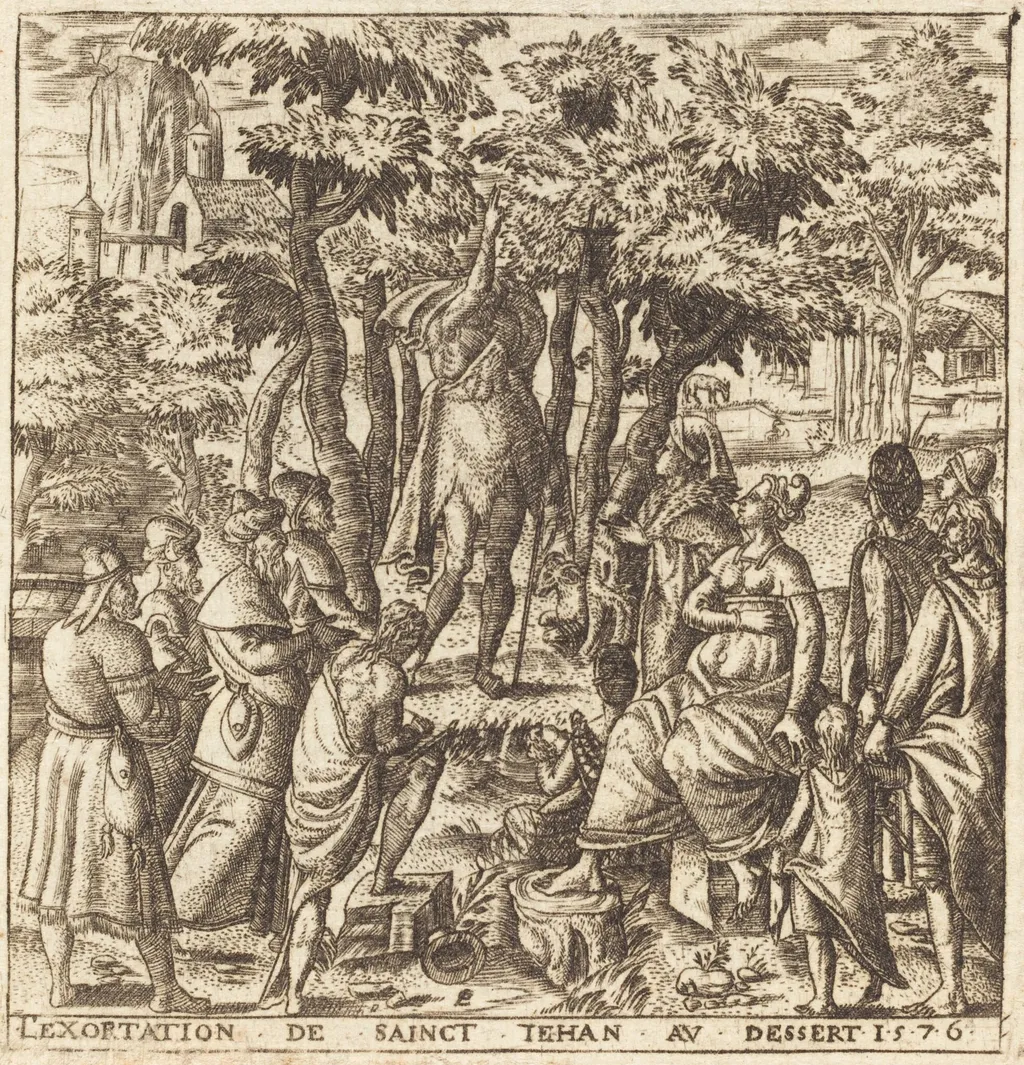
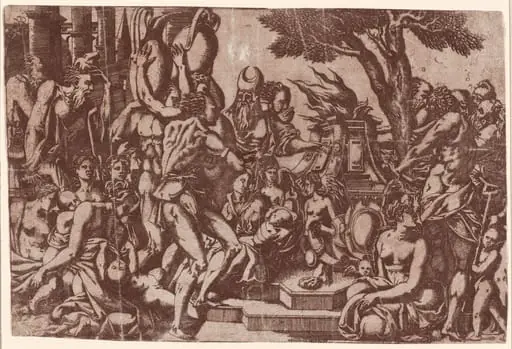
The Preaching of John the Baptist in the Wilderness is an ink print by the Renaissance artist Léonard Gaultier. It dates from 1578 and is held in the collection of the National Gallery of Art.
About this work
Overview
Executed entirely with a graver, the image presents a biblical tableau in which John the Baptist addresses a gathered crowd amid a dense, untamed woodland.
Leonard Gaultier’s print, titled *The Preaching of John the Baptist in the Wilderness*, is an engraving dating from the late 1570s. Executed entirely with a graver, the image presents a biblical tableau in which John the Baptist addresses a gathered crowd amid a dense, untamed woodland. The composition is tightly organized, with the central figure holding a scroll and surrounded by listeners seated or kneeling under trees.
Subject & Meaning
The work illustrates the New Testament episode in which John the Baptist delivers his sermon to a mixed assembly of followers in a remote setting. By placing the preacher amid rugged foliage, Gaultier emphasizes the theme of prophetic authority emerging from the wilderness, a visual metaphor for spiritual renewal away from urban confines.
Technique & Style
Gaultier employs a meticulous line engraving, using fine, parallel strokes to model the textures of clothing, foliage, and terrain. The lines are rendered with a formal, almost rigid precision characteristic of the Wierix and Crispyn van de Passe schools, creating a clear but somewhat stiff representation that prioritizes detail over fluidity.
History & Provenance
Born in Mainz around 1561, Gaultier worked primarily in Paris until his death in 1641. His output aligns with the French engraving tradition of the late sixteenth century, and this particular print reflects his association with the circles of Wierix and van de Passe, who were known for their exacting line work and religious subjects.
Context
The engraving belongs to a period when biblical narratives were frequently reproduced for devotional use and private contemplation. The emphasis on line and detail mirrors the broader Northern European print culture of the time, which valued clarity of narrative and the capacity to disseminate religious imagery across a growing literate audience.
Artist & collection
Artist
Léonard Gaultier, or, as he sometimes signed himself, Galter, a French engraver, was born at Mainz about 1561, and died in Paris in 1641.

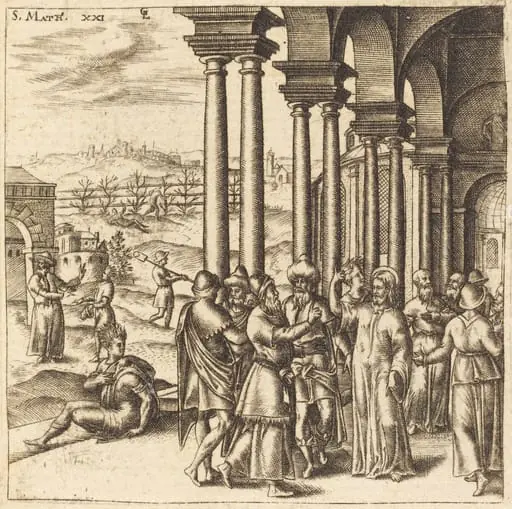
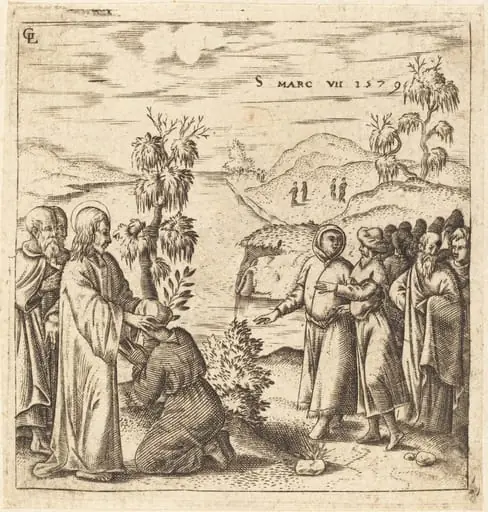 Christ Healing a Deaf Man
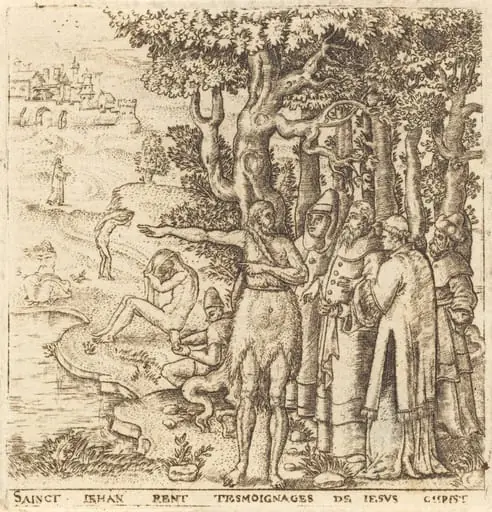 John the Baptist Testifies for Christ
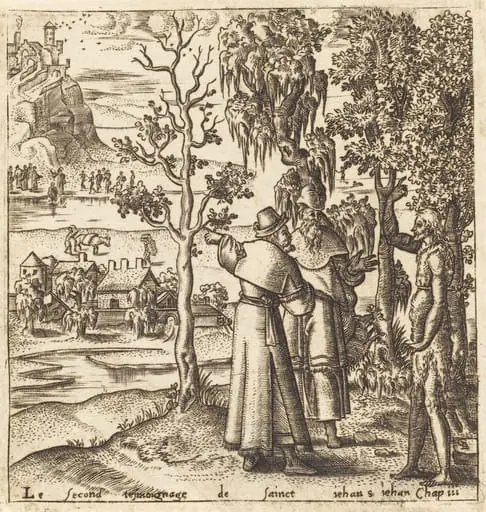 The Testimony of John
 The Judgment of Paris
 Christ and the Sabbath Laws
 The Parable of the Laborers in the Vineyard
 The Lord Sweetens the Waters of Marah
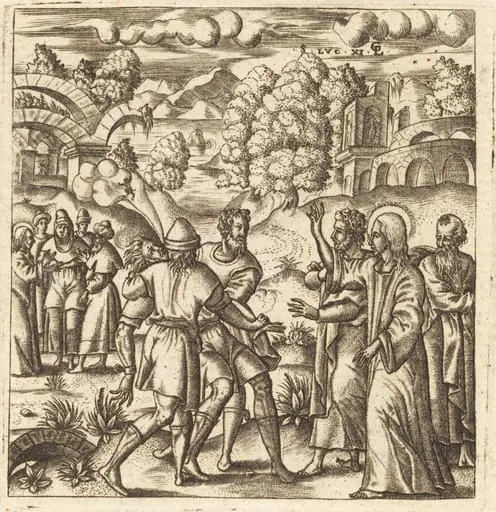 Christ Heals a Dumb Man
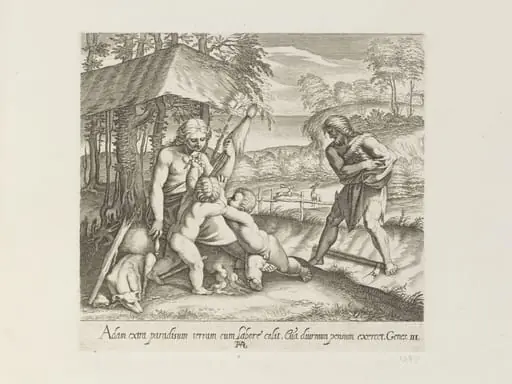 Adam cultivating the Earth
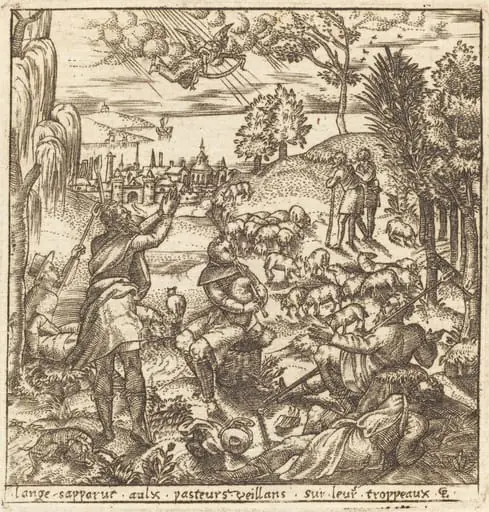 The Annunciation to the Shepherds
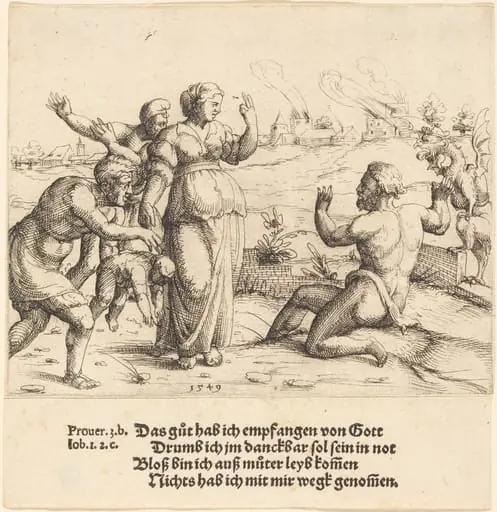 Job Learns of His Misfortunes
 Sacrifice to Priapus