Artwork
Henry II de Bourbon, Prince de Conde
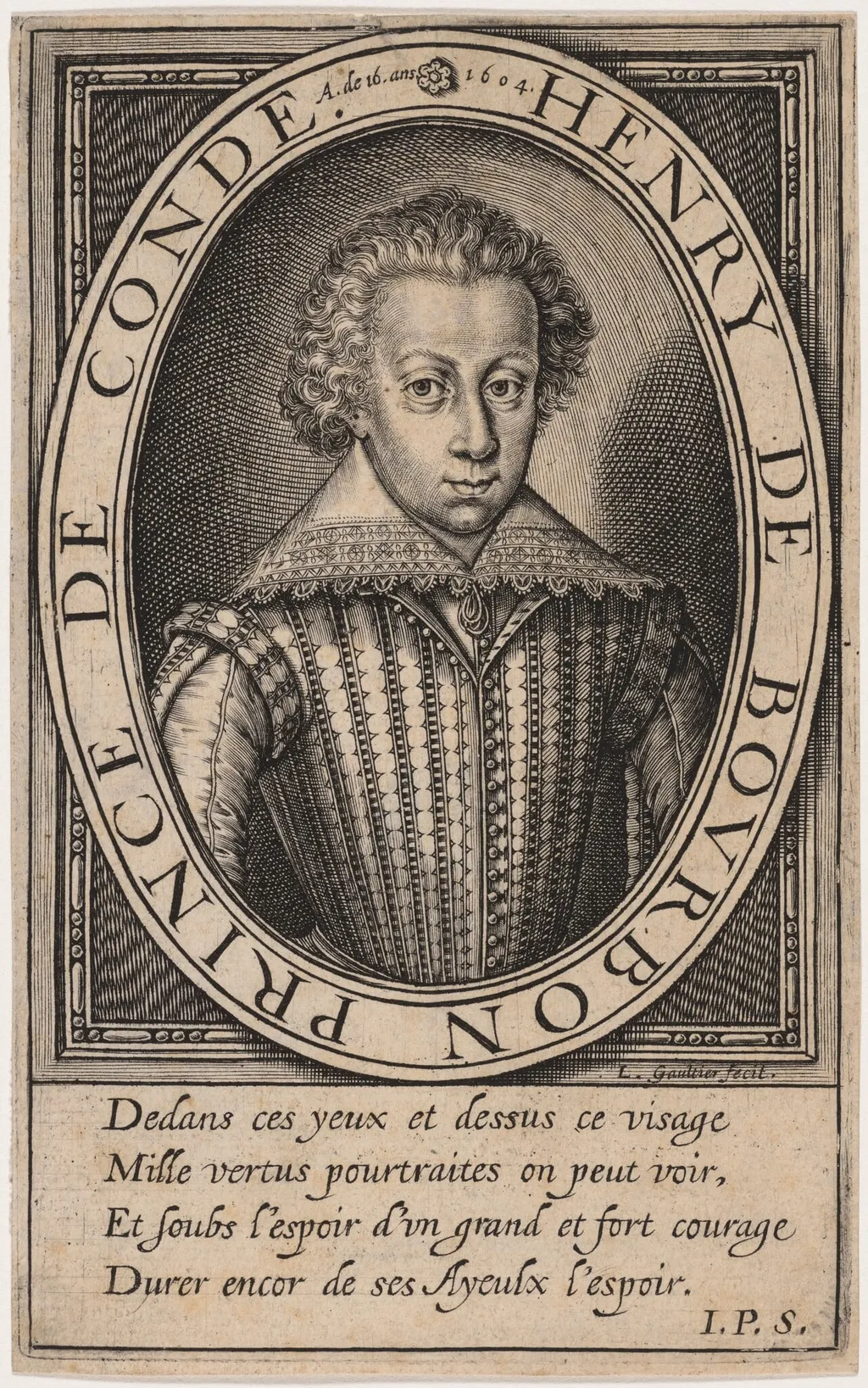
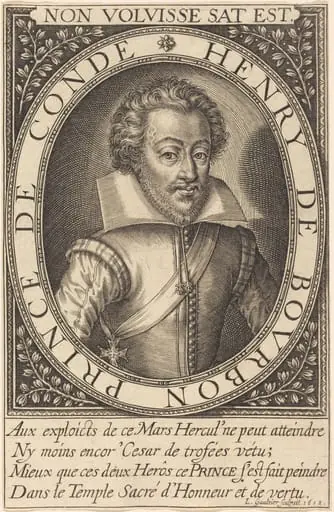
Henry II de Bourbon, Prince de Conde is an ink print by the Baroque artist Léonard Gaultier. It dates from 1604 and is held in the collection of the National Gallery of Art.
About this work
The words around the picture say "Henry II de Bourbon, Prince de Conde" and "1604".
This is an engraving of a man in a fancy shirt with a big collar. He has curly hair and is looking at us. The background is dark, and there are words around the edge of the oval picture.
The man's shirt has lots of details like buttons and patterns. The words around the picture say "Henry II de Bourbon, Prince de Conde" and "1604".
If you like this kind of art, you might want to look up the Baroque movement.
Overview
This engraving, created by Léonard Gaultier in 1604, is a portrait of Henry II de Bourbon, Prince de Condé. It is a characteristic example of Gaultier's work, showcasing his skill with the graver.
Subject & Meaning
The portrait depicts Henry II de Bourbon, Prince de Condé, in formal attire, with intricate details on his shirt and a prominent collar. The dark background and oval framing emphasize the subject's presence.
Technique & Style
Gaultier's engraving is notable for its precise lines, achieved entirely with the graver. The work reflects the formal style of his contemporaries, such as the Wierix and Crispyn van de Passe families, and is representative of Gaultier's prolific output as both an original designer and reproducer.
History & Provenance
Léonard Gaultier, born in Mainz around 1561, was active in Paris until his death in 1641. This engraving, dated 1604, is one of many produced during his career.
Context
The portrait is associated with the broader artistic trends of its time, including the Baroque movement, which emphasized dramatic and detailed representations.
Artist & collection
Artist
Léonard Gaultier, or, as he sometimes signed himself, Galter, a French engraver, was born at Mainz about 1561, and died in Paris in 1641.