Artwork
Henry II de Bourbon, Prince de Conde
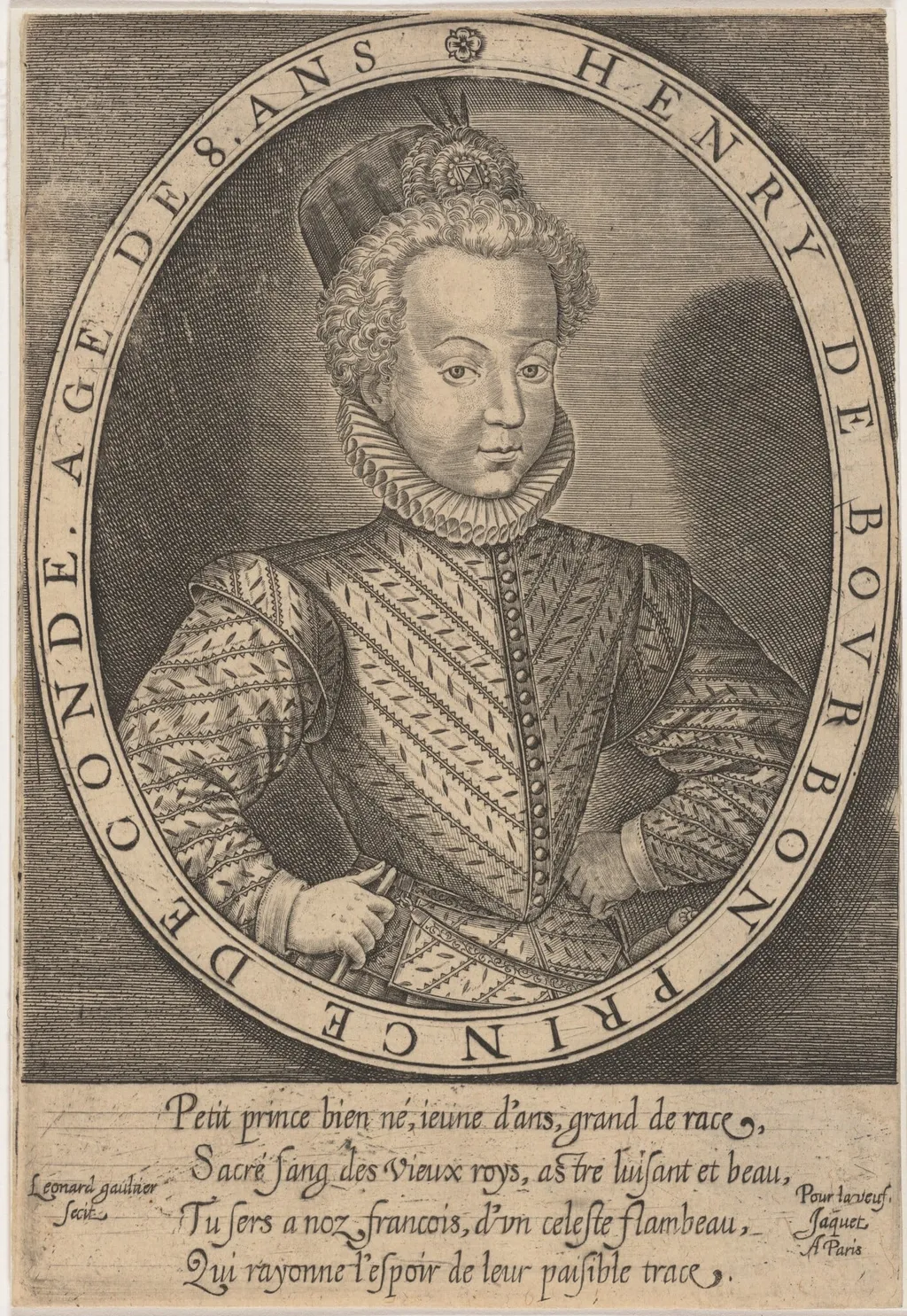
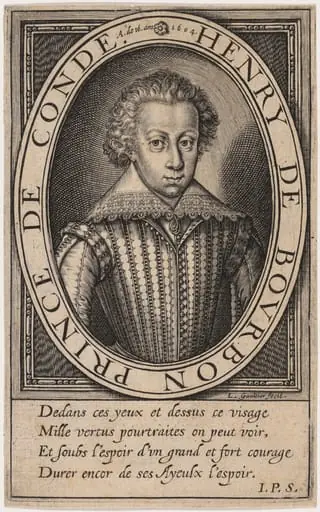
Henry II de Bourbon, Prince de Conde is an ink print by the Baroque artist Léonard Gaultier. It dates from 1604 and is held in the collection of the National Gallery of Art.
About this work
Overview
Gaultier, active in Paris, employed the burin to create fine, controlled lines, a technique typical of Northern European printmakers of the period.
This 1604 engraving by Léonard Gaultier portrays Henry II de Bourbon, Prince de Condé, a prominent French nobleman of the early 17th century. Executed in black ink on paper, the work is a portrait medallion framed by a circular border inscribed with French verse. Gaultier, active in Paris, employed the burin to create fine, controlled lines, a technique typical of Northern European printmakers of the period. The image is devoid of decorative background, focusing attention on the sitter’s likeness and regalia.
Subject & Meaning
Henry II de Bourbon, Prince de Condé, is depicted as a young aristocrat in formal attire, emphasizing his lineage and status. His right hand rests on a shield bearing the Bourbon coat of arms, a clear symbol of noble identity. The surrounding poetic text, common in portrait engravings of the time, functions as both tribute and identifier, reinforcing his position within the French nobility. The composition avoids overt symbolism, instead conveying dignity through restraint and precision.
Technique & Style
Gaultier rendered the portrait using only the burin, a tool that cuts fine lines directly into a copper plate. The result is a tightly controlled network of hatching and crosshatching that defines texture in the lace collar, fabric patterns, and curls of hair. The style is formal and linear, with no tonal gradations, reflecting the influence of Flemish and Dutch engravers like the Wierix and van de Passe families. The circular format and inscribed border follow conventions of commemorative portraiture.
History & Provenance
Created in 1604, the engraving was likely produced to circulate among elite circles as a visual record of the prince’s status. Gaultier, a French engraver of German origin, worked primarily in Paris and was known for his portraits of nobility and clergy. While the specific commissioning patron is unrecorded, such prints were often distributed to allies or used in dynastic propaganda. The work survives in multiple institutional collections, indicating its early and sustained circulation.
Context
In early 17th-century France, engraved portraits served as tools of social and political visibility for the nobility. With the Wars of Religion recently concluded, families like the Bourbons sought to reinforce their legitimacy through visual culture. Gaultier’s work aligns with a broader trend of using print to disseminate aristocratic imagery, particularly in the absence of widespread portraiture in paint. The medium allowed for replication and distribution beyond courtly circles.
Legacy
Gaultier’s engraving exemplifies the precision and restraint of French printmaking before the rise of etching’s tonal possibilities. While not widely reproduced in modern scholarship, it remains a representative artifact of noble portraiture in the early Baroque era. The work contributes to understanding how aristocratic identity was visually constructed and circulated through print, influencing later generations of French engravers who continued to refine the genre.
Artist & collection
Artist
Léonard Gaultier, or, as he sometimes signed himself, Galter, a French engraver, was born at Mainz about 1561, and died in Paris in 1641.