Artwork
L'Ange anatomique (The Anatomical Angel) or Dissection of a Woman's Back
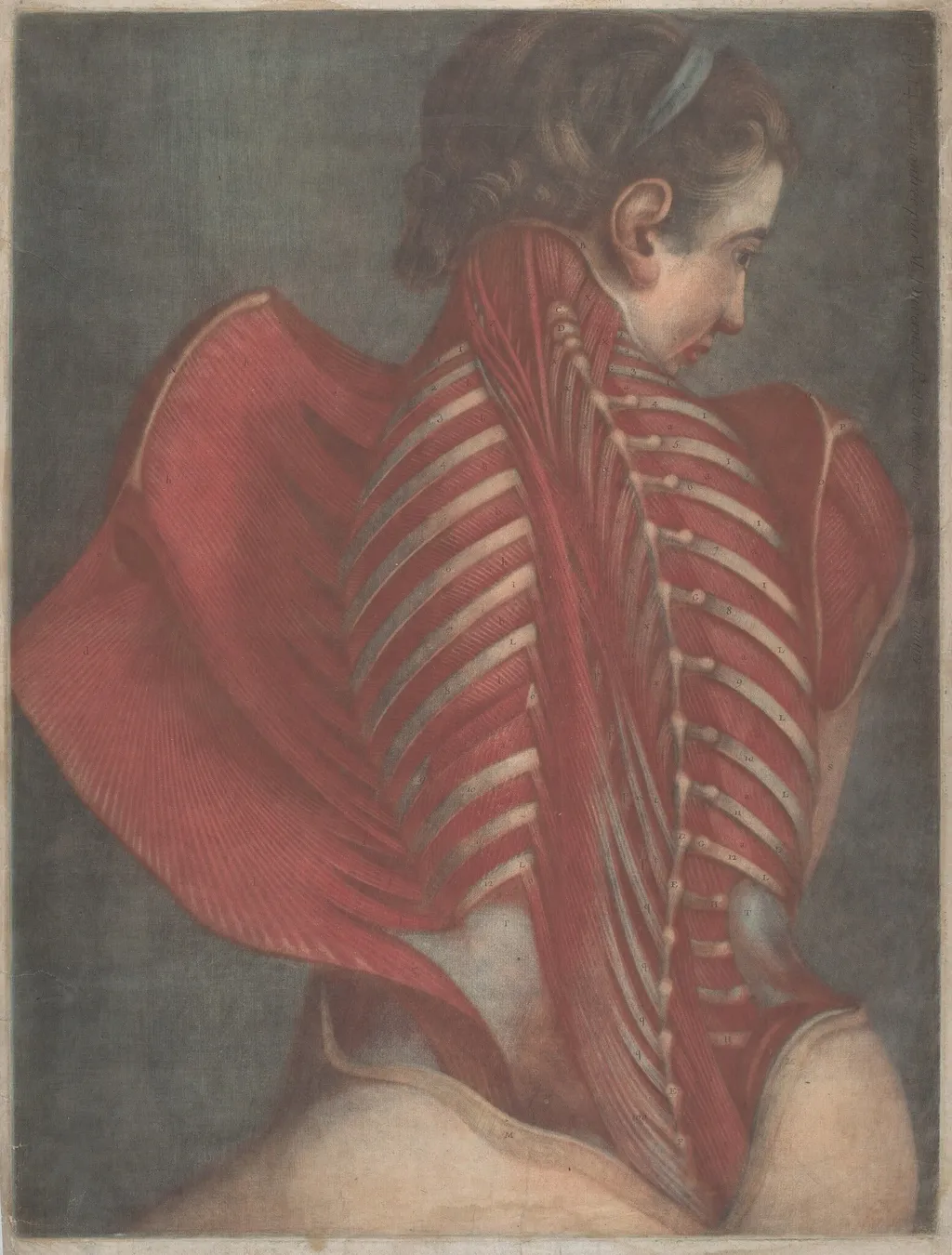
L'Ange anatomique (The Anatomical Angel) or Dissection of a Woman's Back is an ink print by the Baroque artist Jacques-Fabien Gautier Dagoty. It dates from 1746 and is held in the collection of the National Gallery of Art.
About this work
This print shows a nude woman’s back turned to us. Her skin is split open. Ribbons of muscle peel back like red cloth.
In 1746, artists rarely studied real anatomy. Dagoty cut a dead body to draw this winged figure, mixing art with science. The wings, made of skin, look almost beautiful.
See it for yourself at the National Gallery of Art, Washington.
Overview
Jacques‑Fabien Gautier Dagoty’s print, titled L’Ange anatomique (The Anatomical Angel) or Dissection of a Woman’s Back, is a color mezzotint executed on laid paper in 1746. The work presents a nude female figure viewed from behind, her back opened to reveal the underlying musculature, while a pair of delicate, wing‑like extensions emerge from the exposed flesh.
Subject & Meaning
The composition juxtaposes the clinical exposure of human anatomy with the ethereal suggestion of an angelic form. By rendering the muscles as flowing ribbons that resemble red drapery, Dagoty invites contemplation of the boundary between scientific observation and aesthetic representation, hinting at a union of bodily truth and spiritual symbolism.
Technique & Style
Dagoty employed the mezzotint process, a tonal printing method that allows for subtle gradations of light and shadow. The use of color on the laid paper enhances the depth of the flesh tones and accentuates the translucency of the wing‑like skin, creating a visual effect that balances realism with a near‑luminous quality.
History & Provenance
Created in the mid‑eighteenth century, a period when direct anatomical study was uncommon among artists, the print reflects Dagoty’s personal engagement with dissection as a source of study. The work now forms part of the collection of the National Gallery of Art in Washington, D.C., where it is displayed for public viewing.
Context
In 1746, the Enlightenment’s emphasis on empirical inquiry began to influence artistic practice, yet few painters or printmakers incorporated actual cadaveric observation into their work. Dagoty’s decision to dissect a corpse for reference places the print within a broader movement toward integrating scientific methods into visual art.
Artist & collection


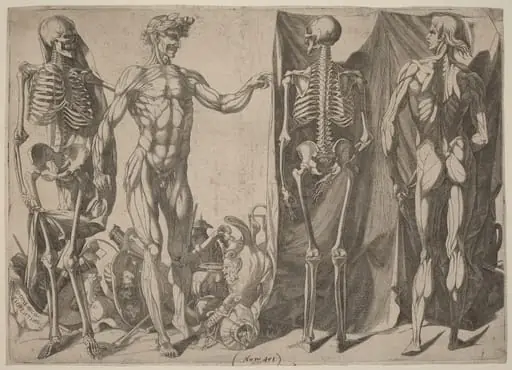 Squelettes et Ecorches
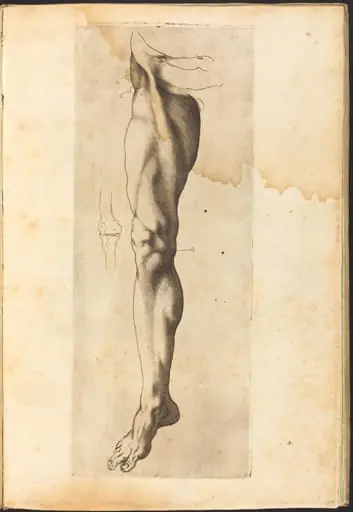 Print from Drawing Book
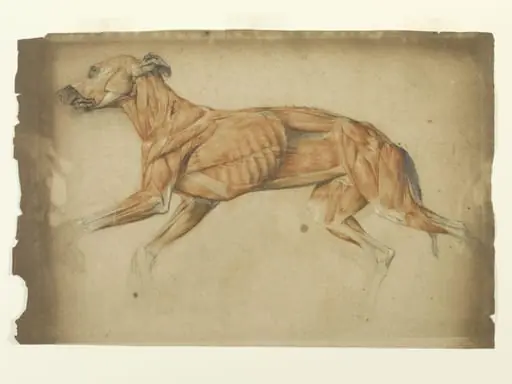 Ecorche drawing of a greyhound
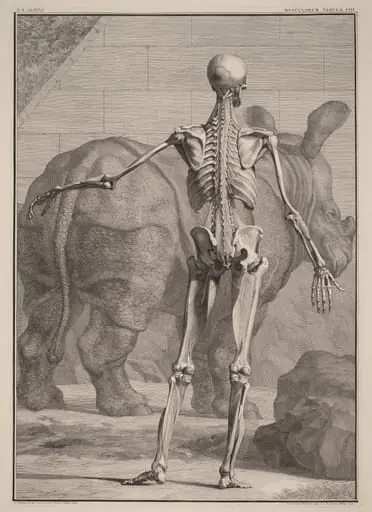 Musculorum Tabula VIII
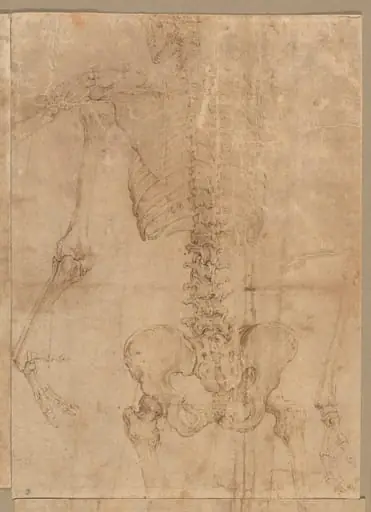 Upper Half of Skeleton from the Back
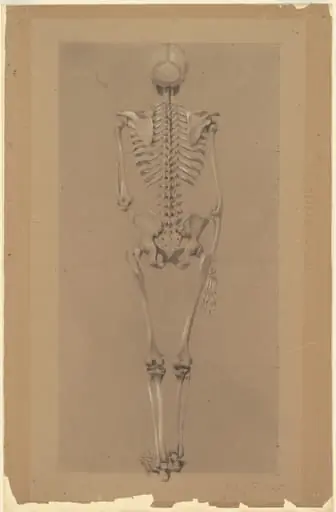 Rear View of a Skeleton
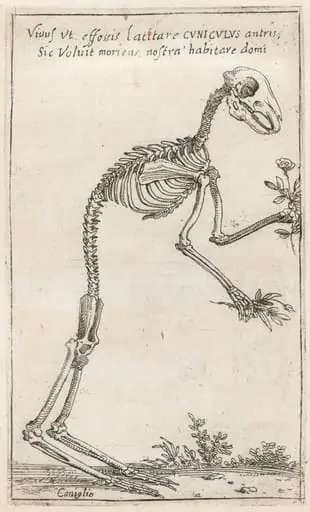 Skeleton of a Rabbit
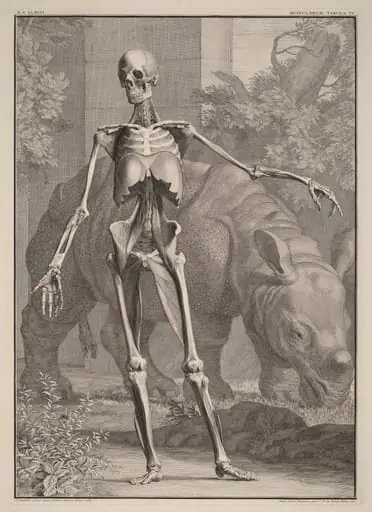 Musculorum Tabula IV
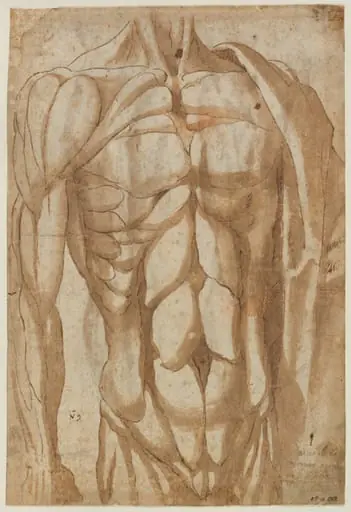 Study of a Flayed Torso (verso)
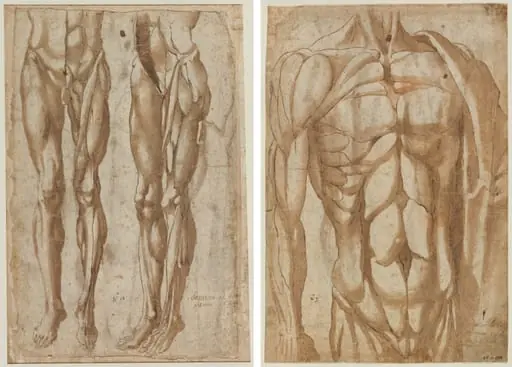 Two Studies of a Flayed Man (recto) Study of a Flayed Torso (verso)
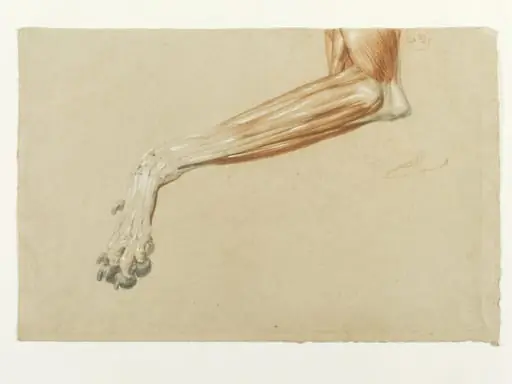 Ecorche drawing of a dog's leg
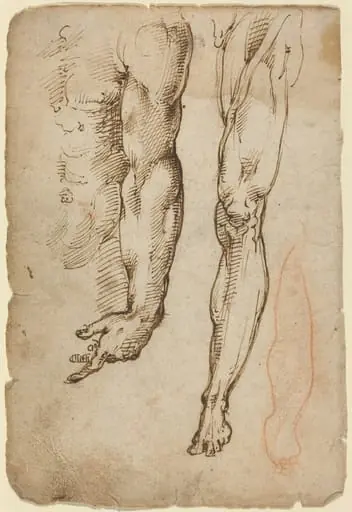 Anatomical Studies