Artwork
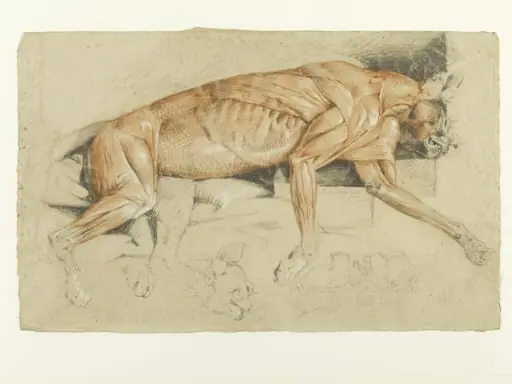
Ecorche drawing of a greyhound
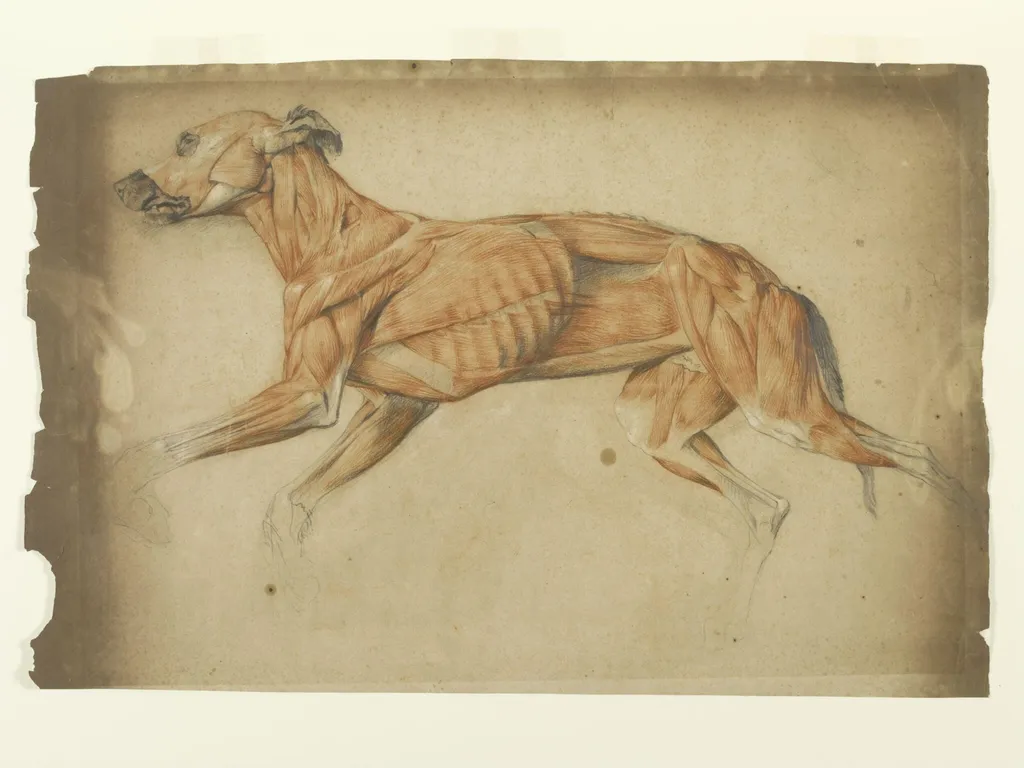
Ecorche drawing of a greyhound is a drawing by the Romanticist artist Edwin Landseer. It dates from 1819 and is held in the collection of the Victoria and Albert Museum.
About this work
Look up the technique of cross-hatching to see how artists shade like Landseer did.
This drawing shows a greyhound’s muscles and bones without skin.
Sir Edwin Landseer made it as a study around 1820.
He wanted to understand animal bodies inside and out.
Landseer worked with a surgeon who taught anatomy.
He also watched live animals in a London zoo.
His careful sketches became the basis for his famous paintings.
Look up the technique of cross-hatching to see how artists shade like Landseer did.
Overview
This drawing is an anatomical study of a greyhound, created by Sir Edwin Landseer around 1820. It depicts the animal's muscles and bones without skin, showcasing Landseer's detailed understanding of animal anatomy.
Technique & Style
The drawing demonstrates Landseer's skillful use of shading techniques, likely including cross-hatching, to convey the texture and depth of the greyhound's underlying structures. The level of detail suggests a thorough study of the animal's anatomy.
Subject & Meaning
As an écorché study, the drawing focuses on revealing the internal anatomy of the greyhound, stripping away the skin to expose the muscles and bones. This approach allowed Landseer to gain a deeper understanding of animal bodies, which he could then apply to his paintings.
History & Provenance
Created between 1817 and 1821, this drawing is one of a group of eight anatomical studies of dogs and cats by Landseer held by the V&A. It reflects the artist's early and intense interest in anatomy, developed through formal studies and observations of live animals.
Artist & collection

Artist
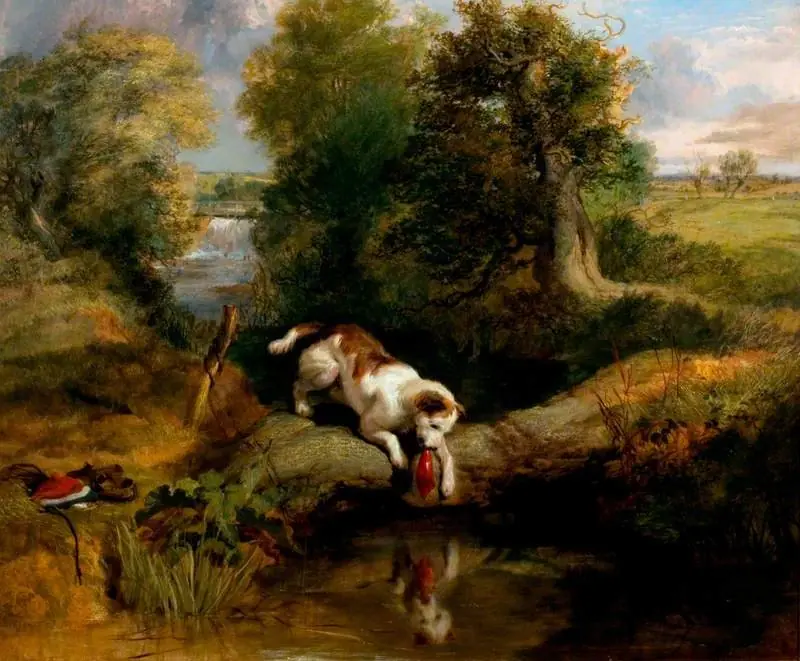
Sir Edwin Henry Landseer was an English painter and sculptor, well known for his paintings of animals – particularly horses, dogs, and stags. His best-known work is the lion sculptures at the base of Nelson's Column in Trafalgar Square.

 Ecorche drawing of a wild cat
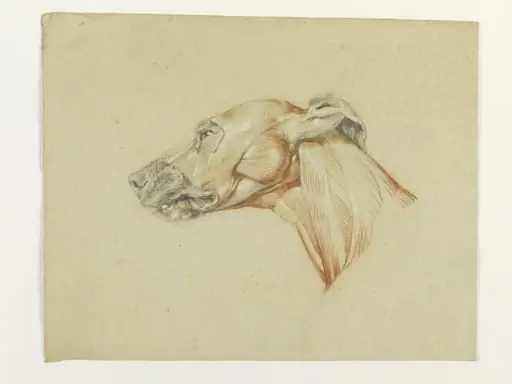 Ecorche drawing of the head of a greyhound
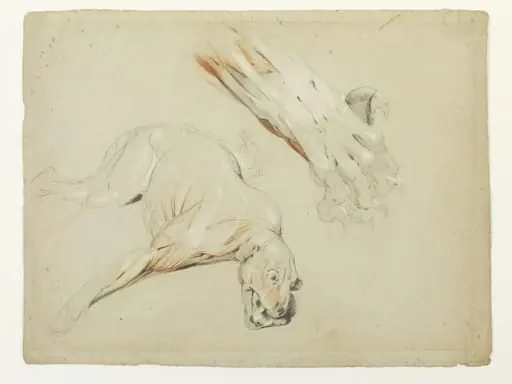 Ecorche drawing of a dog and enlarged detail of a paw
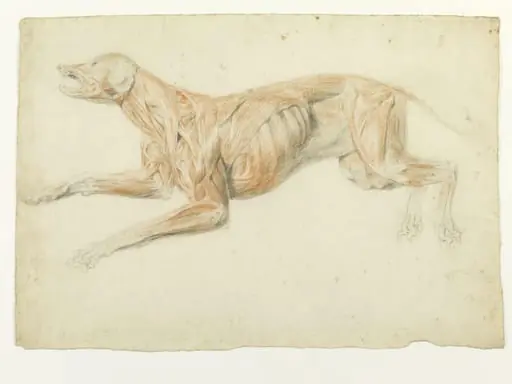 Ecorche drawing of a dog
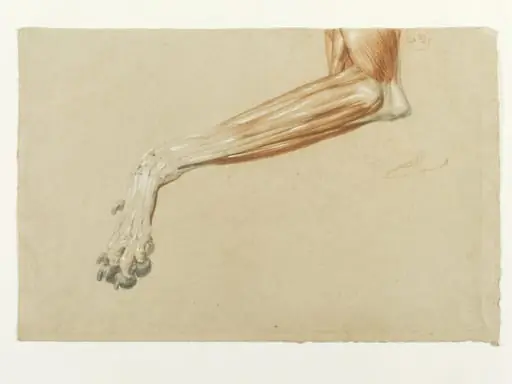 Ecorche drawing of a dog's leg
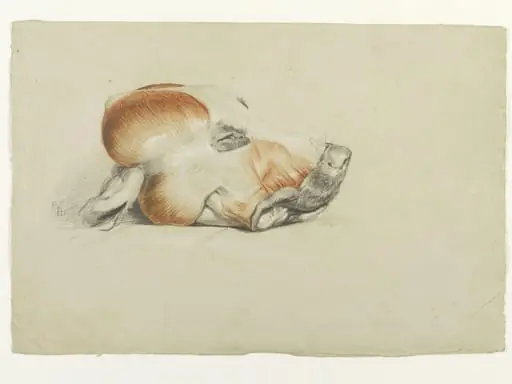 Ecorche drawing of the head of a dog
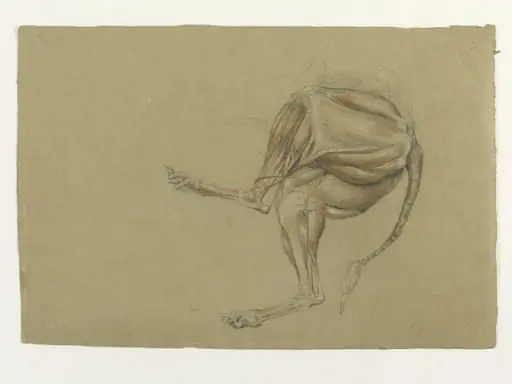 Ecorche drawing of the hind legs of a dog
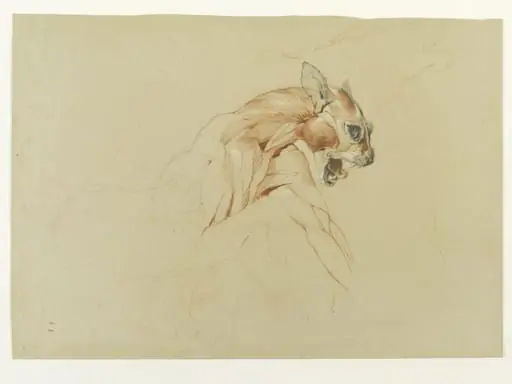 Ecorche drawing of the head and upper body of a wild cat
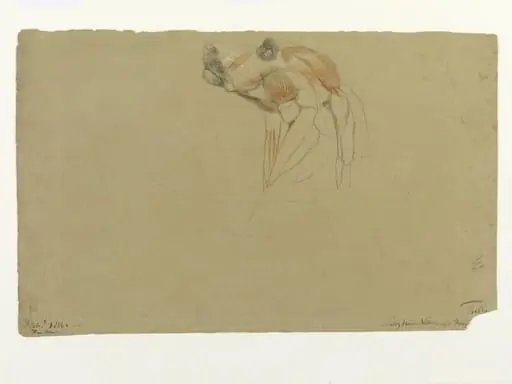 Ecorche drawing of the head of a dog
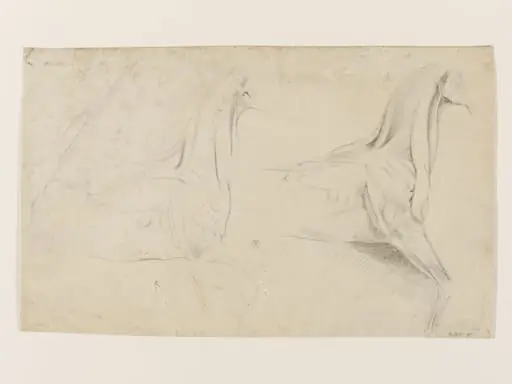 Ecorché study of a horse
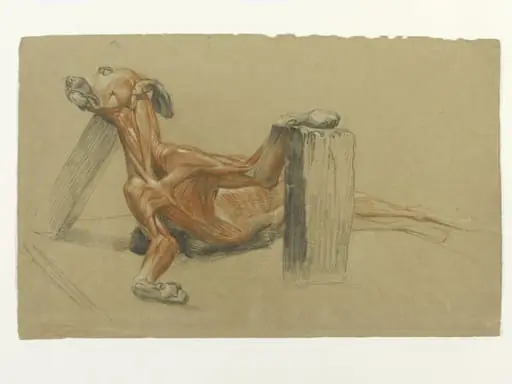 Ecorche drawing of a greyhound supported by planks