Artwork
Still Life with Bread and Sweetmeats
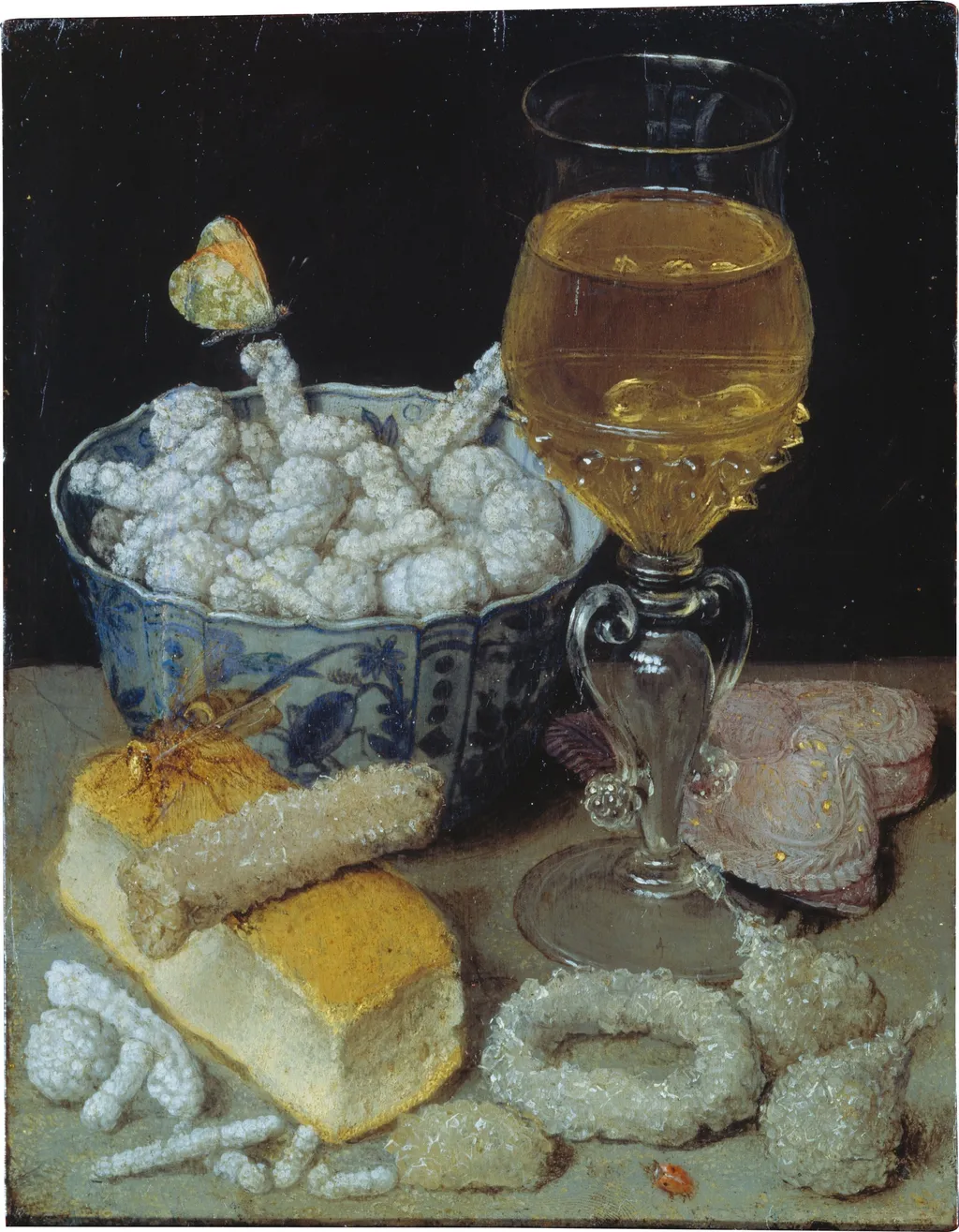
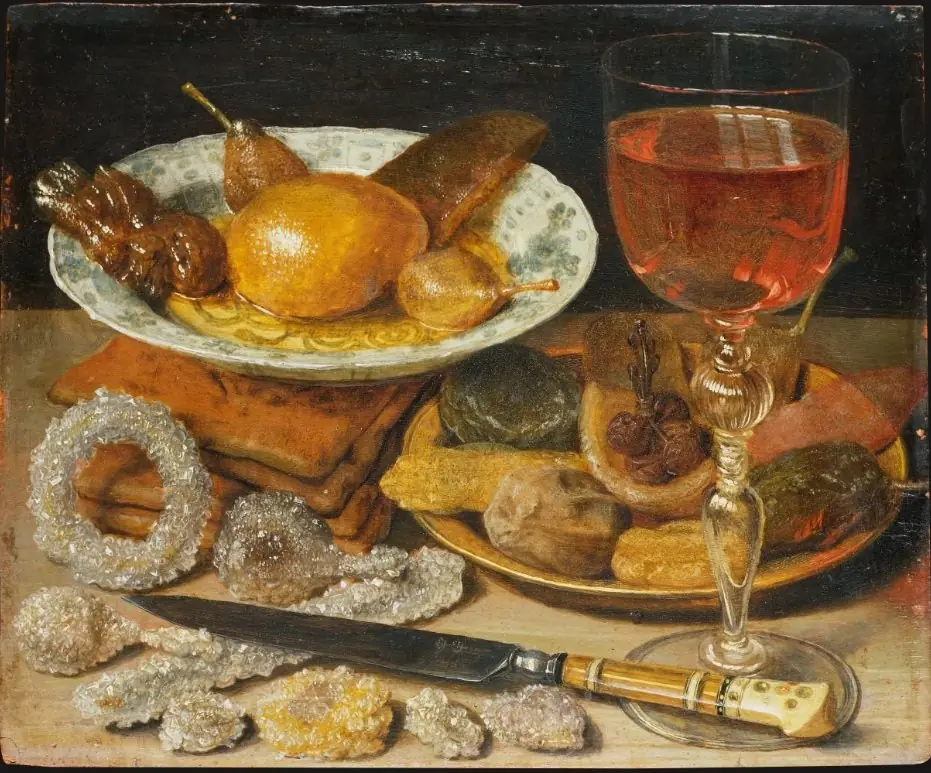
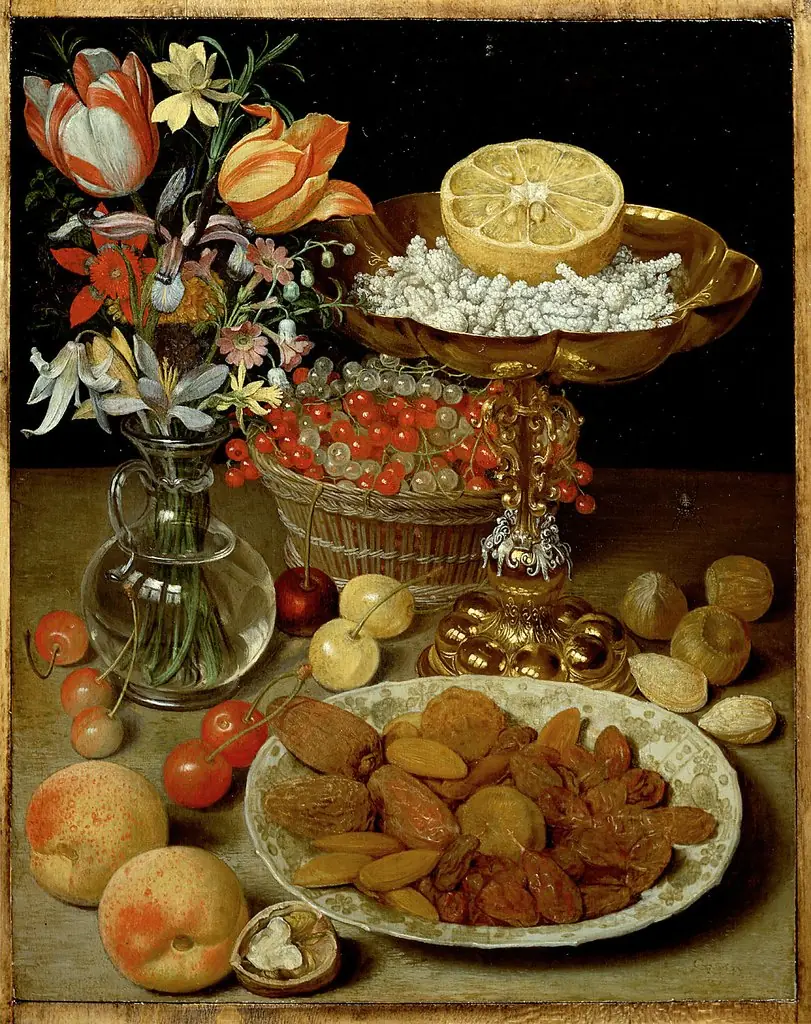
Still Life with Bread and Sweetmeats is an oil painting by the Dutch Golden Age artist Georg Flegel. It dates from 1633 and is held in the collection of the Städel Museum.
About this work
Overview
The composition, rendered with meticulous precision, reflects the quiet elegance of early 17th-century Northern European still-life traditions.
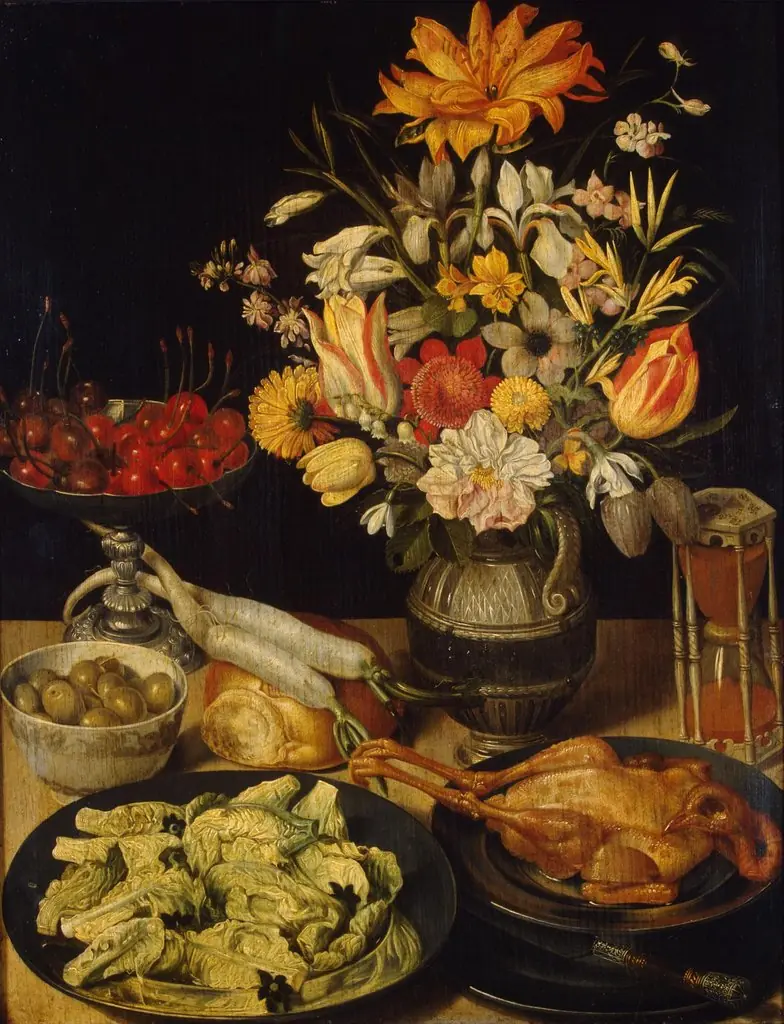
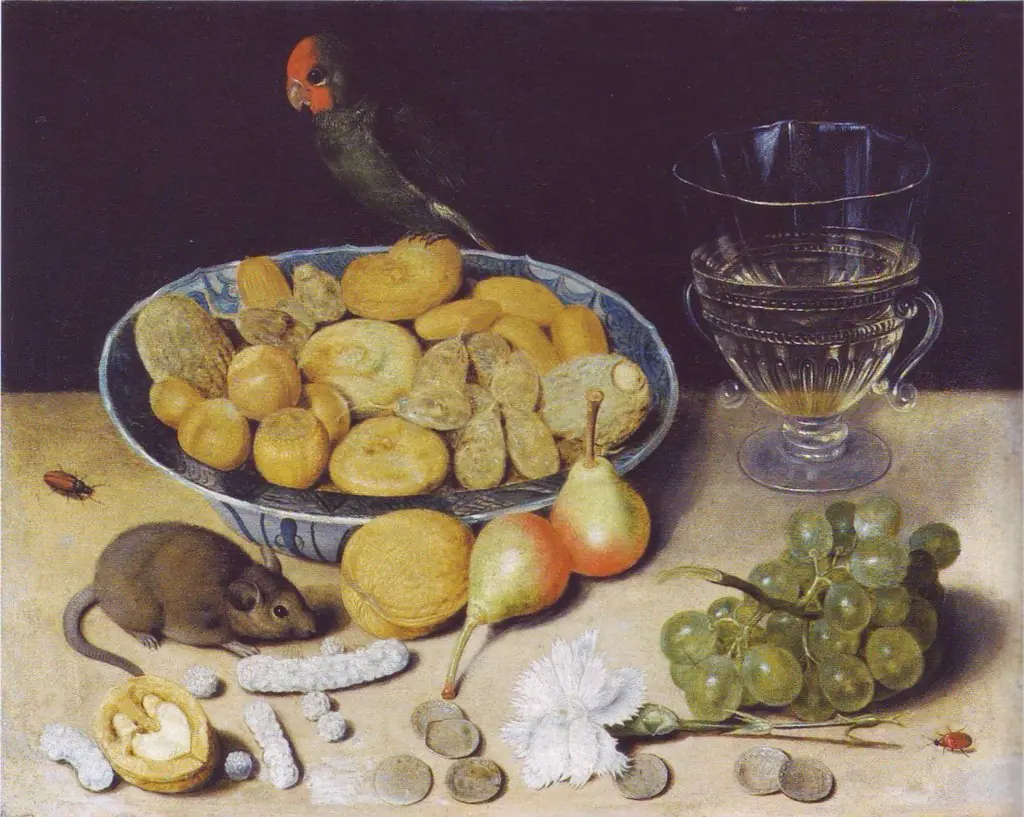
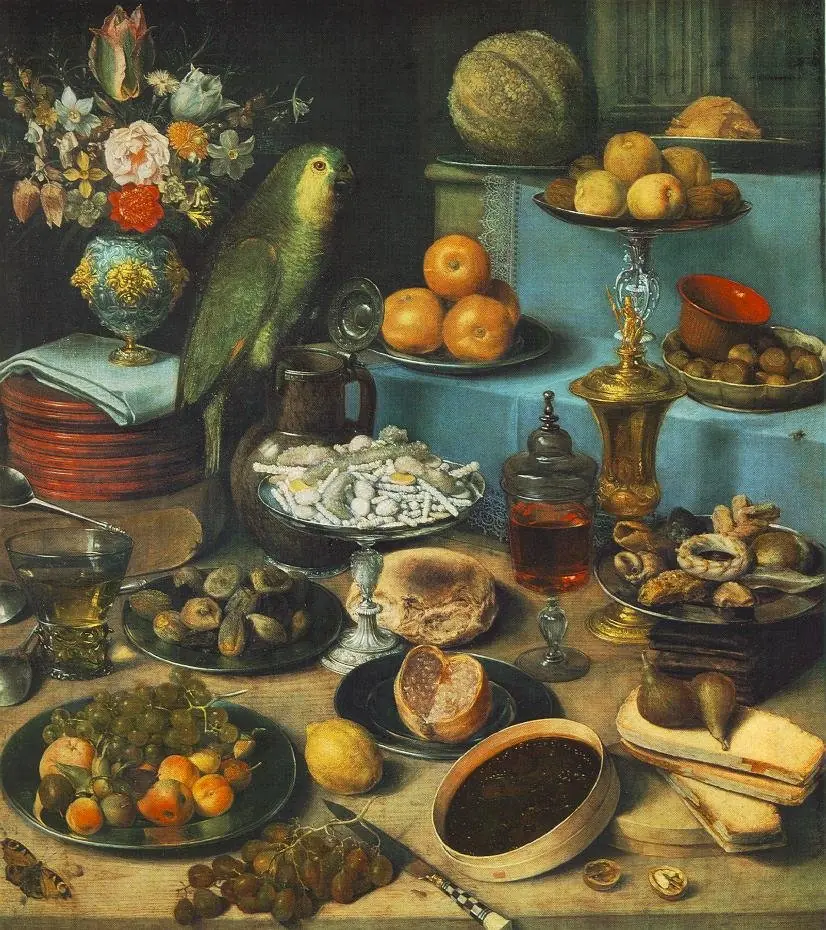
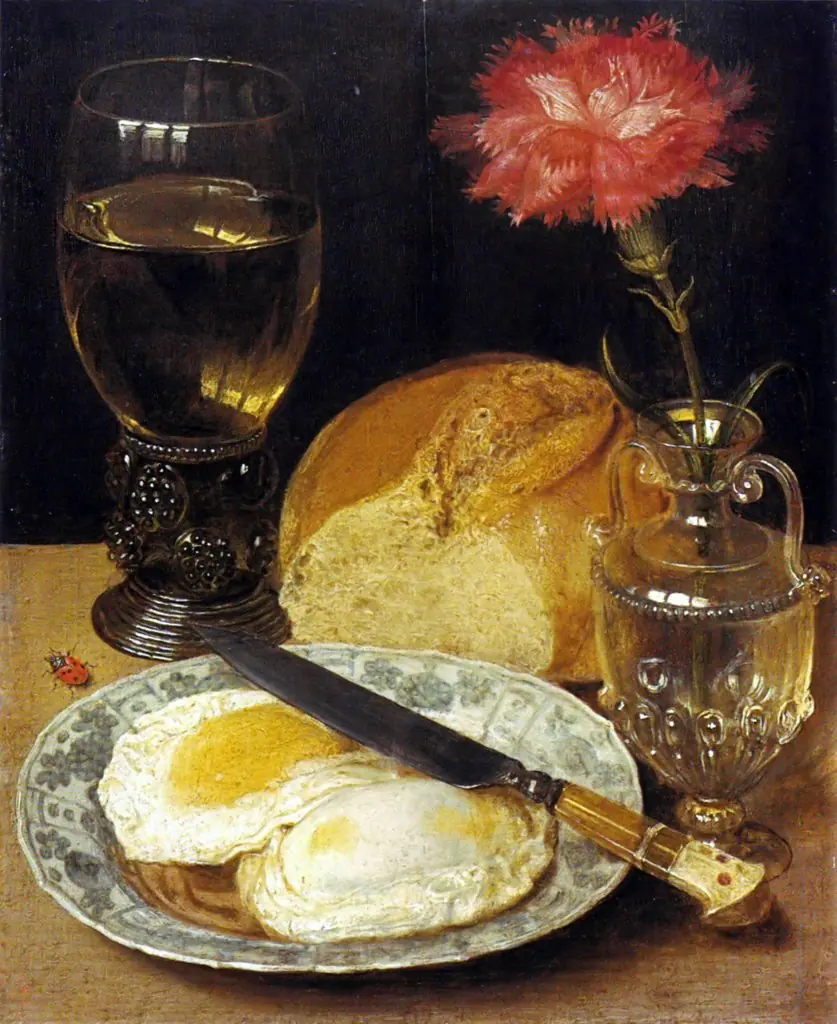
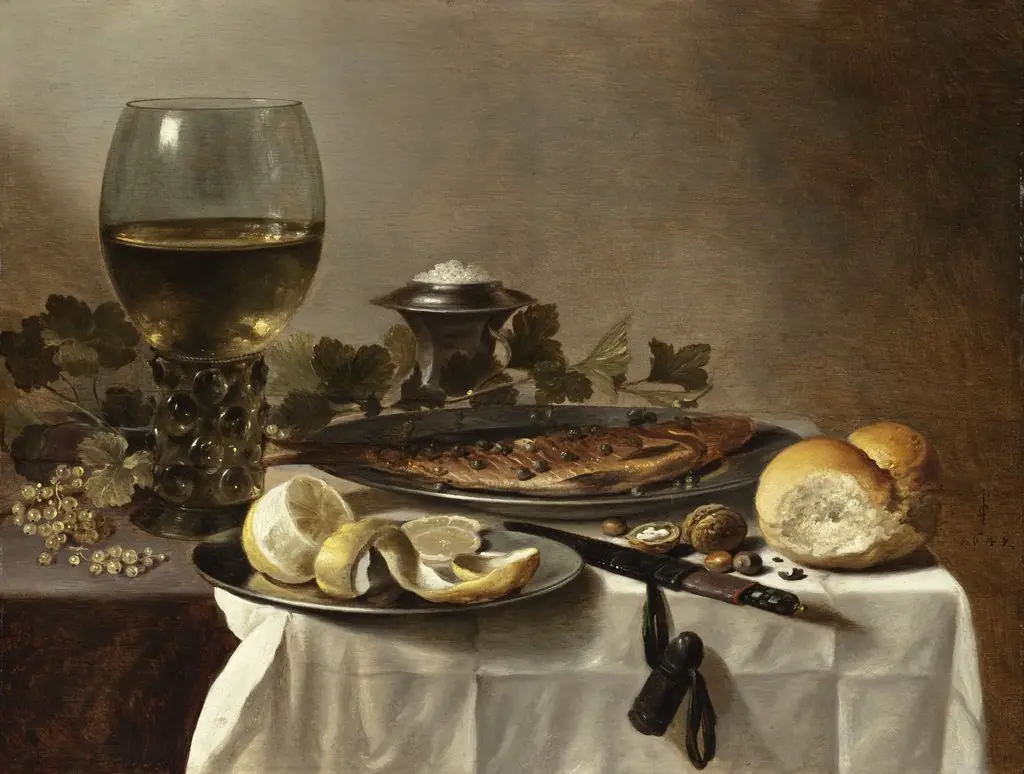
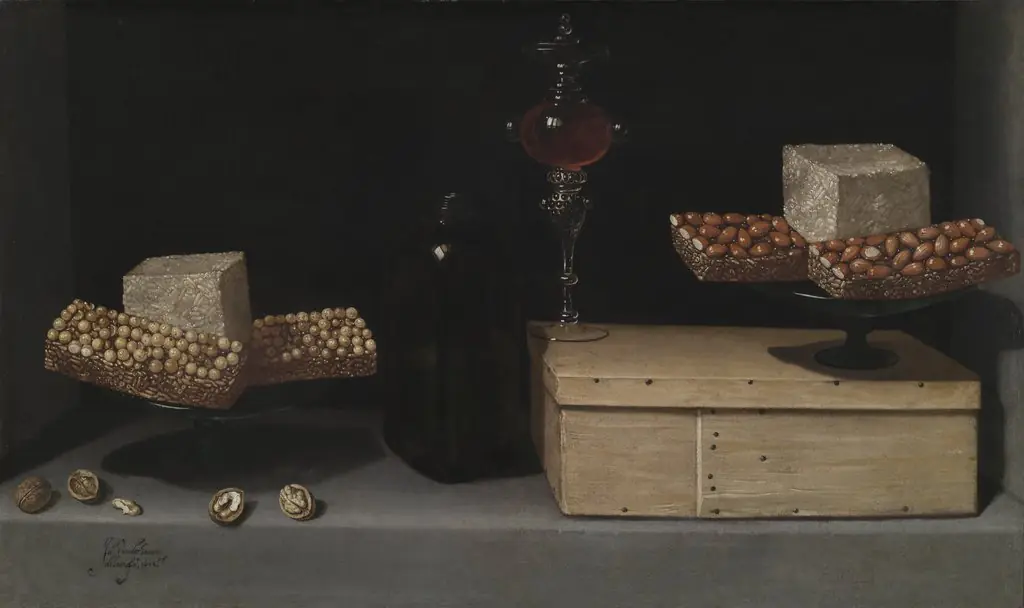
Painted in 1633 by Georg Flegel, this oil-on-panel still life presents a modest arrangement of everyday foodstuffs: a loaf of bread, a bowl of sweetmeats, and a wine glass. Flegel, active in Frankfurt, was among the earliest German artists to specialize in this genre. The composition, rendered with meticulous precision, reflects the quiet elegance of early 17th-century Northern European still-life traditions.
Subject & Meaning
The objects—bread, sugared treats, and wine—represent sustenance and indulgence, common themes in Northern European still lifes. A butterfly resting on the bowl introduces a fleeting, ephemeral element, subtly hinting at transience. The absence of human figures directs focus to the material world, inviting contemplation of abundance, decay, and the passage of time.
Technique & Style
Flegel employed fine brushwork to capture textures: the crust of the bread, the granular sugar on the sweets, and the glassy sheen of the wine. The bowl’s blue floral decoration and the wine’s faint bubbles are rendered with delicate attention. A dark, unmodulated background isolates the objects, enhancing their three-dimensionality and emphasizing the precision of his observation.
History & Provenance
The painting has remained in the Städel Museum’s collection since at least the 19th century, likely acquired during the museum’s early expansion of Dutch and German genre works. Flegel’s reputation as a leading still-life painter in Frankfurt ensured his works were collected locally, and this piece exemplifies the continuity of his output during the 1630s.
Context
While often associated with the Dutch Golden Age, Flegel’s work emerged from a distinct German tradition of detailed, unembellished still life. His paintings responded to growing urban demand for domestic imagery, reflecting Protestant values that favored restraint and observation over grandeur. This piece aligns with contemporaneous works that elevated ordinary objects through careful rendering.
Legacy
Flegel’s influence extended to later German and Dutch still-life painters who adopted his focus on texture and quiet composition. His work helped establish still life as a legitimate genre in Central Europe, distinct from the more symbolic or allegorical approaches of the Netherlands. This painting remains a key example of early 17th-century German realism.
Own this work as a print
Artist & collection
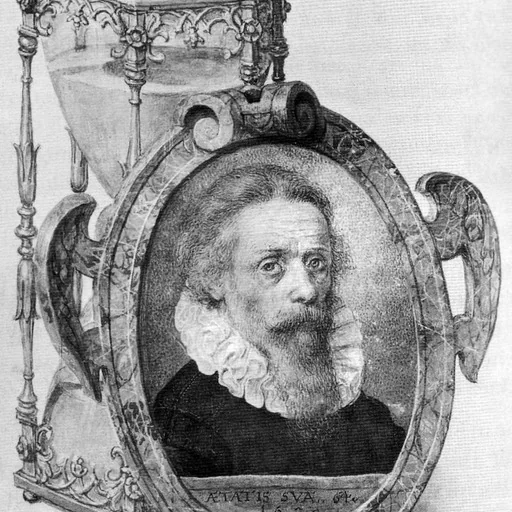
Artist
Georg Flegel (c. 1566 – 23 March 1638) was a German painter, best known for his still-life works. Born in Olomouc, he later worked in Frankfurt, where he became a leading figure in early German still-life painting.