Artwork
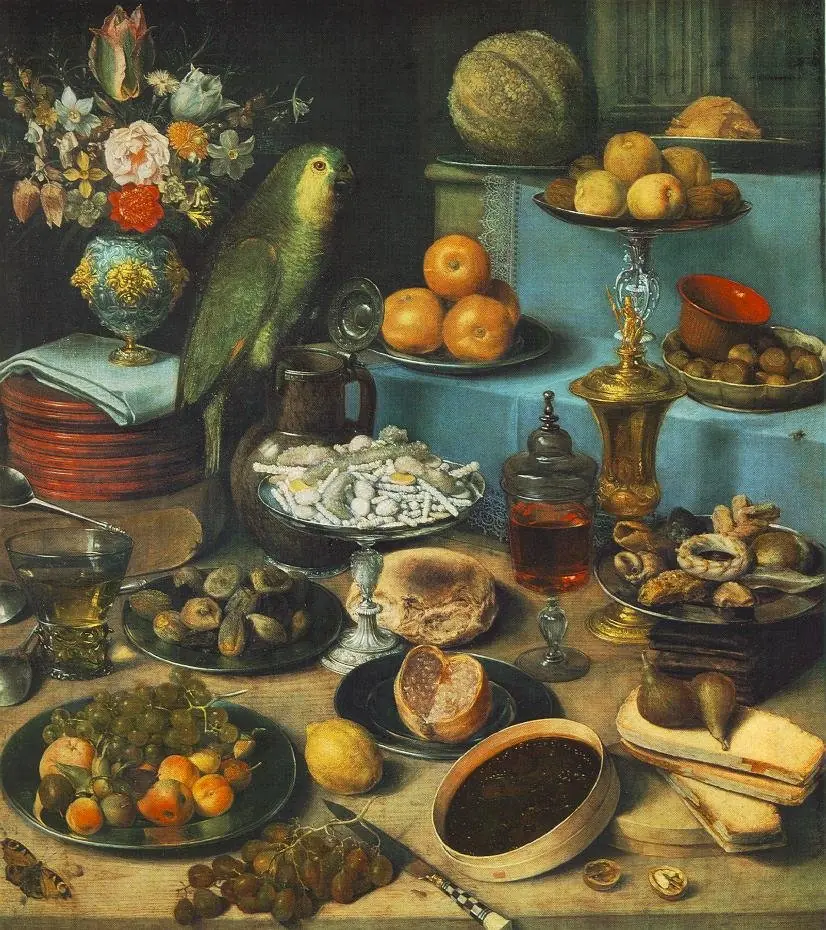
Dessertstilleben mit Blumenstrauß
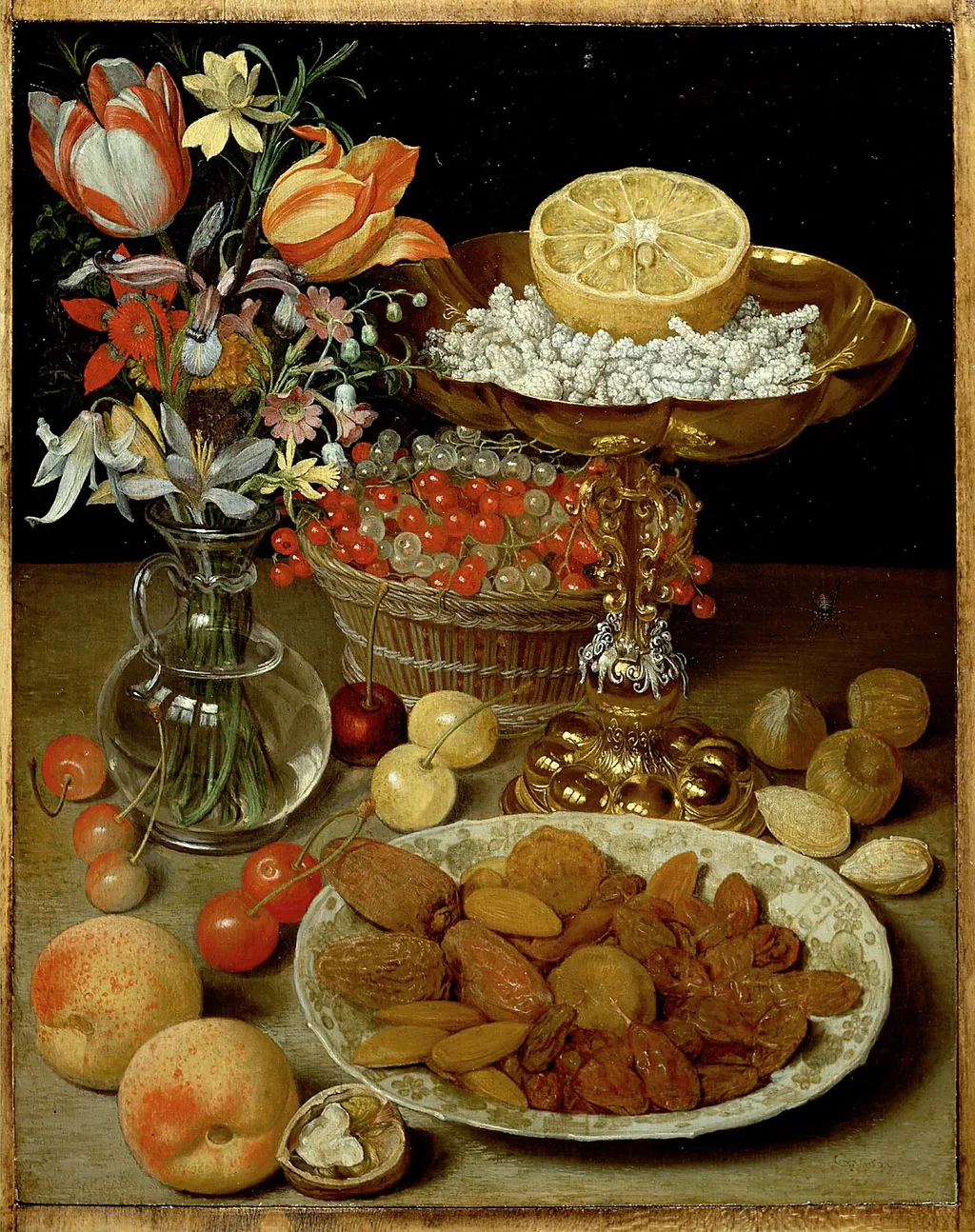
Dessertstilleben mit Blumenstrauß is an unspecified painting by the Dutch Golden Age artist Georg Flegel. It dates from 1632 and is held in the collection of the Kunsthistorisches Museum.
About this work
Overview
Created in 1632 by German still‑life specialist Georg Flegel, this oil painting presents an elaborate arrangement of fruit, nuts, and flowers set against a dark backdrop. The composition balances a bowl of dried produce, a plate of apricots, a vase of tulips and lilies, and a golden dish holding white grains and a sliced lemon, conveying a sense of material richness.
Subject & Meaning
The work assembles everyday luxuries—fresh and dried fruit, nuts, and ornamental blossoms—to celebrate abundance and the fleeting beauty of nature’s bounty. By juxtaposing perishable items with sturdy grains, the painting hints at themes of transience and sustenance, a common moral undercurrent in early seventeenth‑century still‑life art.
Technique & Style
Flegel employs meticulous brushwork to render textures: the velvety petals, the glossy skins of fruit, and the rough shells of nuts. A controlled chiaroscuro modelled by a dark background intensifies colour saturation and creates a convincing spatial recession, while subtle highlights suggest a single, directional light source typical of Dutch‑influenced realism.
History & Provenance
The painting resides in the collection of the Kunsthistorisches Museum in Vienna. Though Flegel was born in Olomouc and worked mainly in Frankfurt, his oeuvre reflects the broader Dutch Golden Age still‑life tradition that circulated across Central Europe during the early 1600s.
Own this work as a print
Artist & collection
Artist
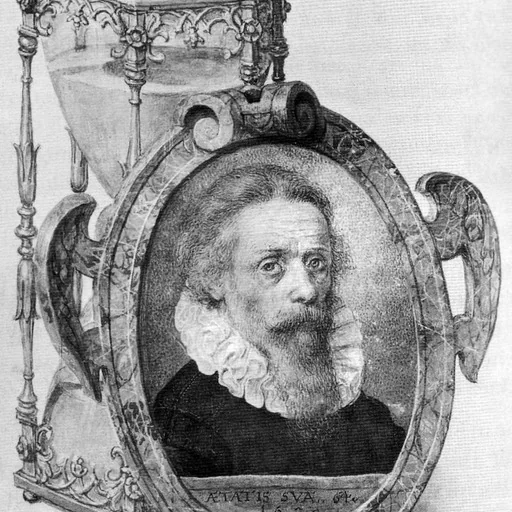
Georg Flegel (c. 1566 – 23 March 1638) was a German painter, best known for his still-life works. Born in Olomouc, he later worked in Frankfurt, where he became a leading figure in early German still-life painting.

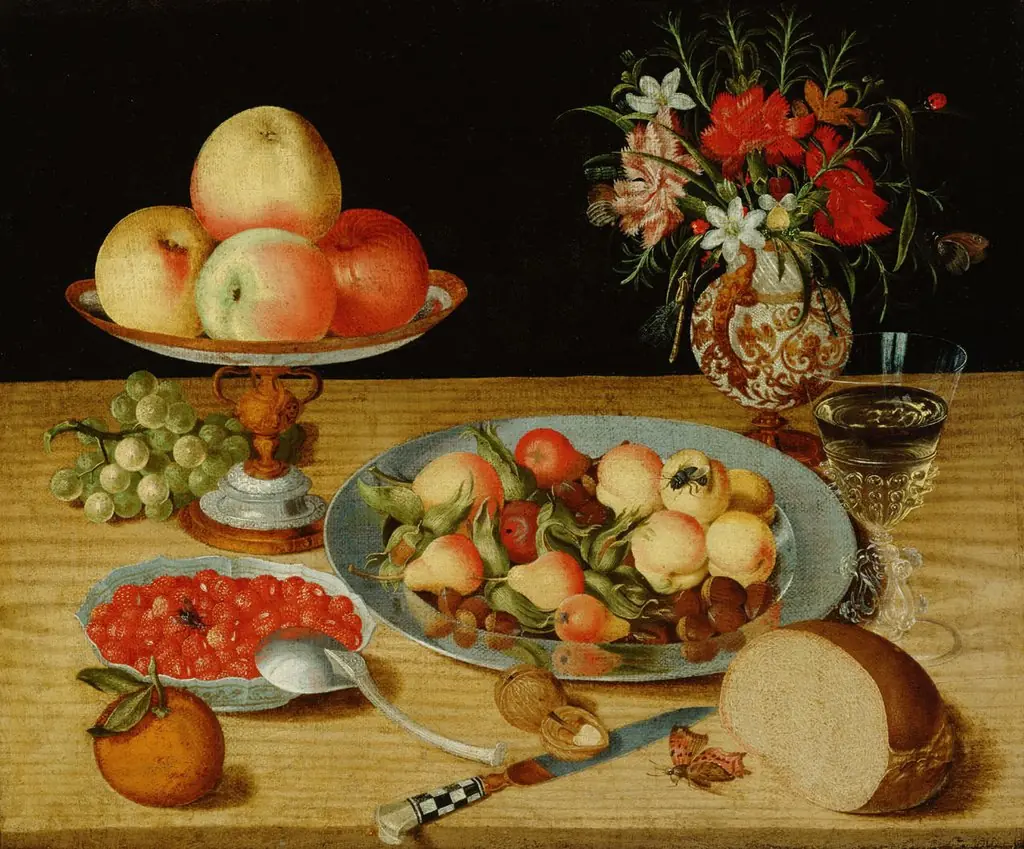 Still life with fruit, wine glass and vase of flowers
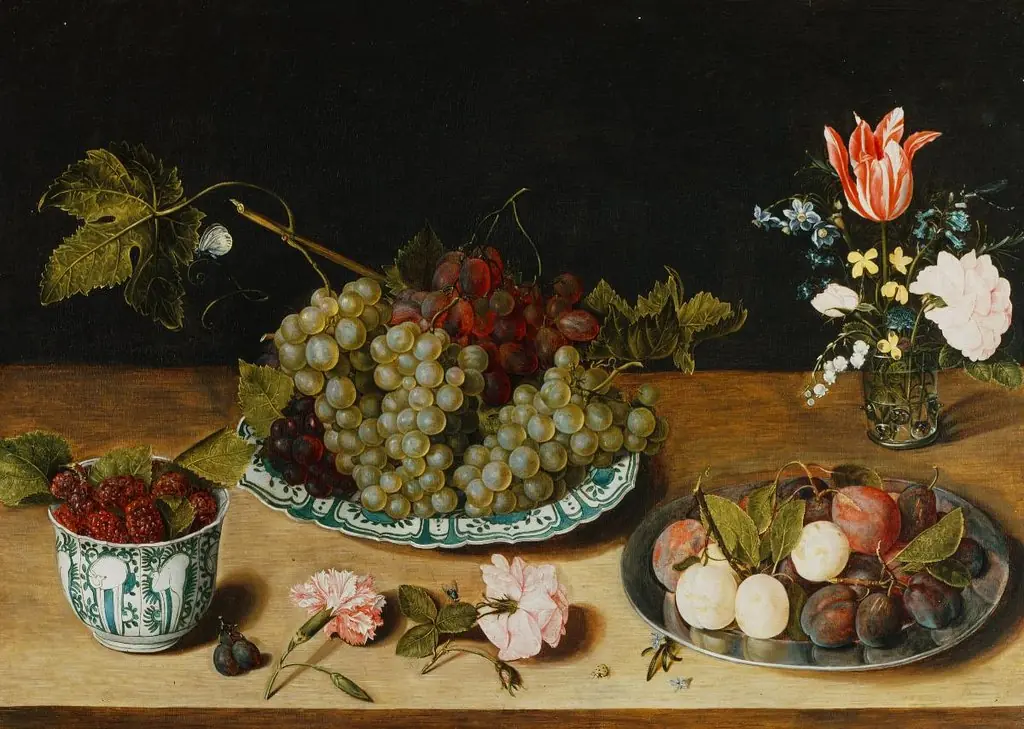 Stillleben mit Früchten und Blumensträusslein
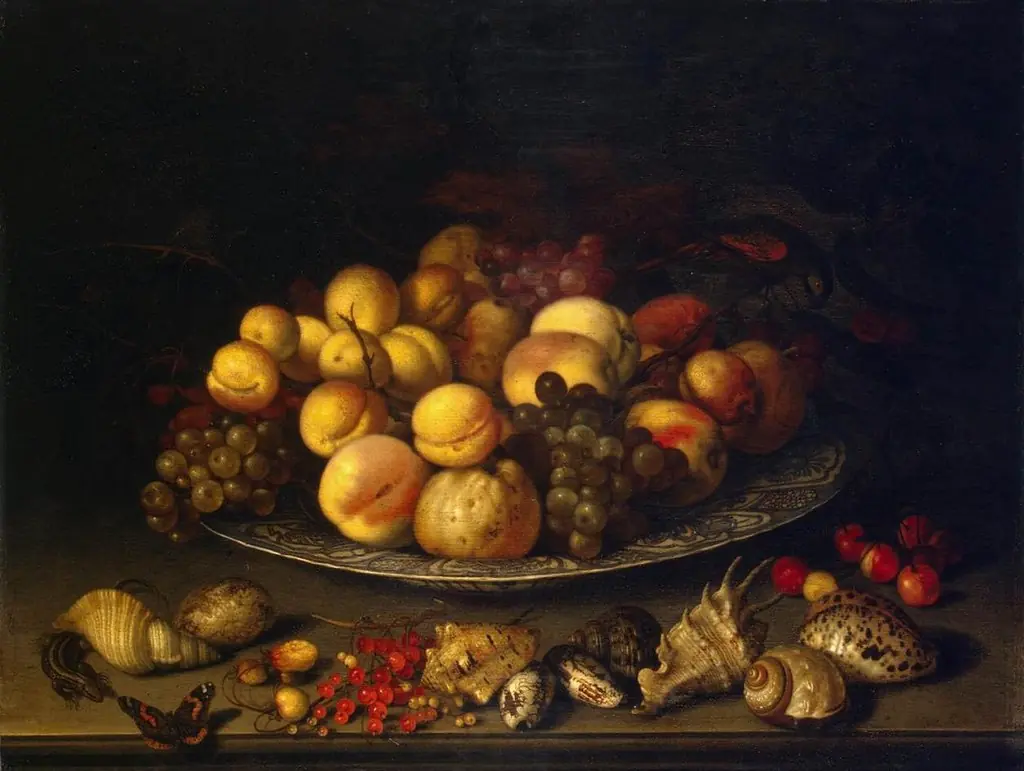 Plate with Fruits and Shells
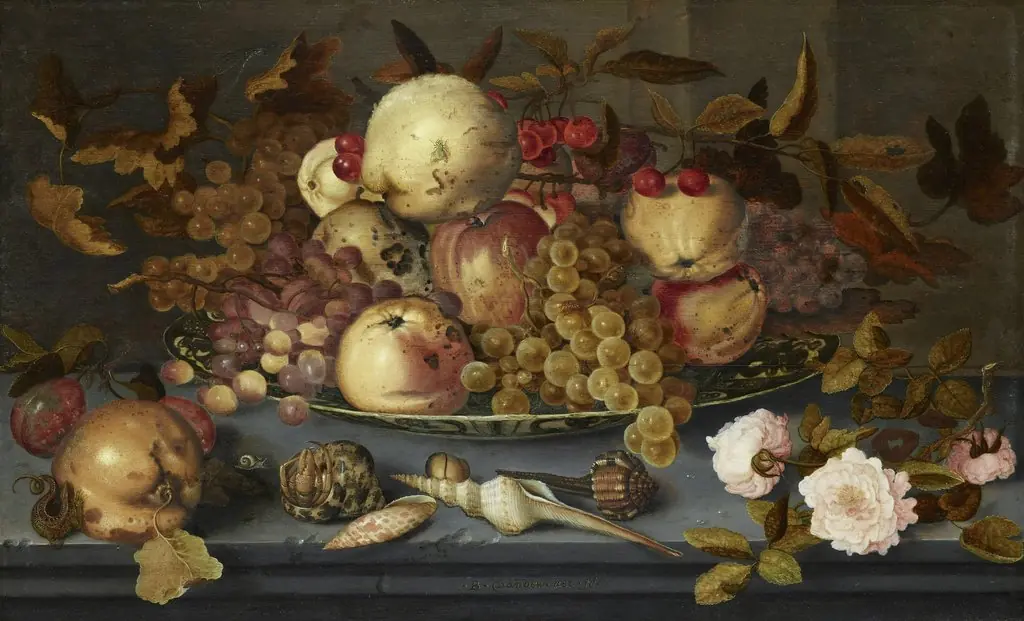 Still-life with Dish of Fruit
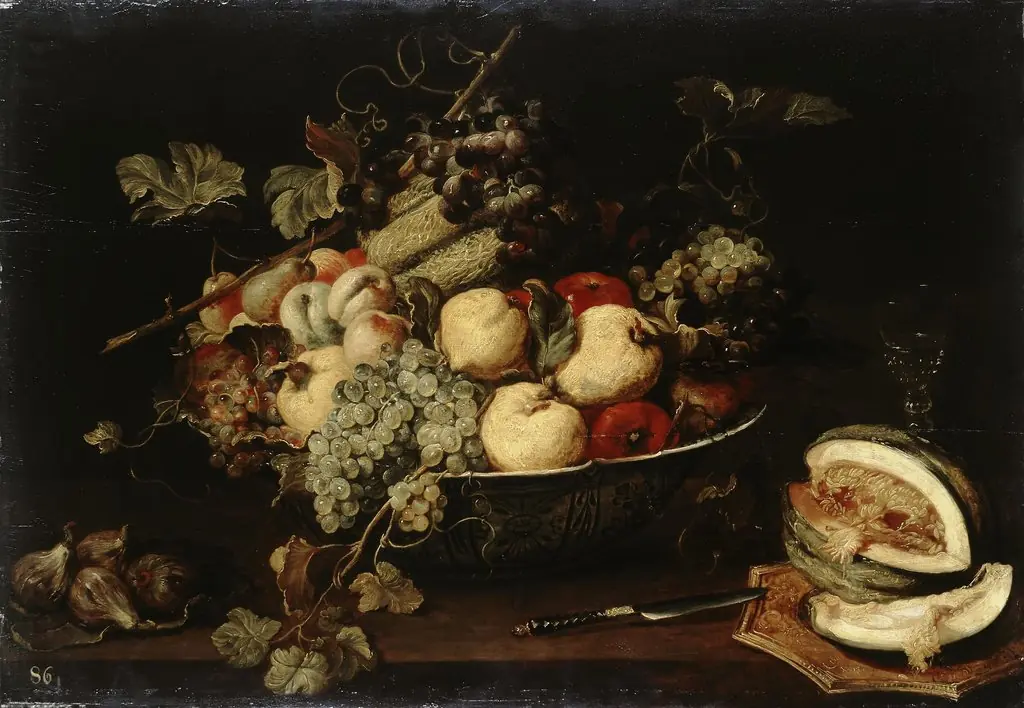 Fruit in a Bowl and a Sliced Melon
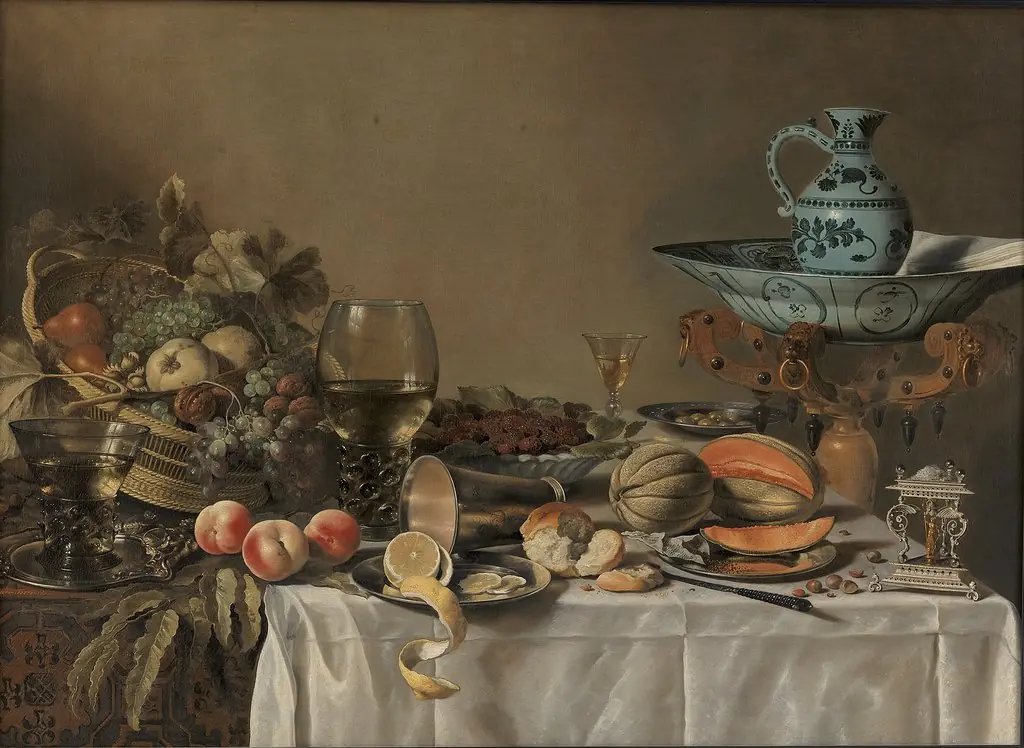 Still Life
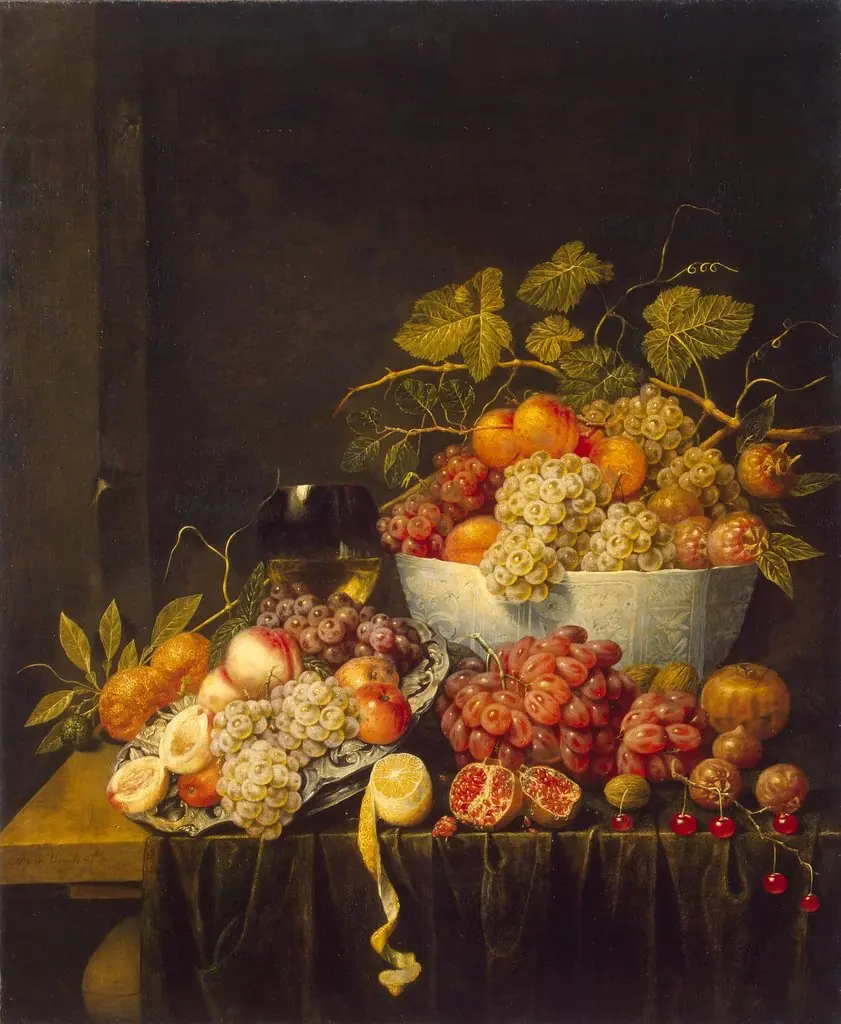 Still Life with Grapes
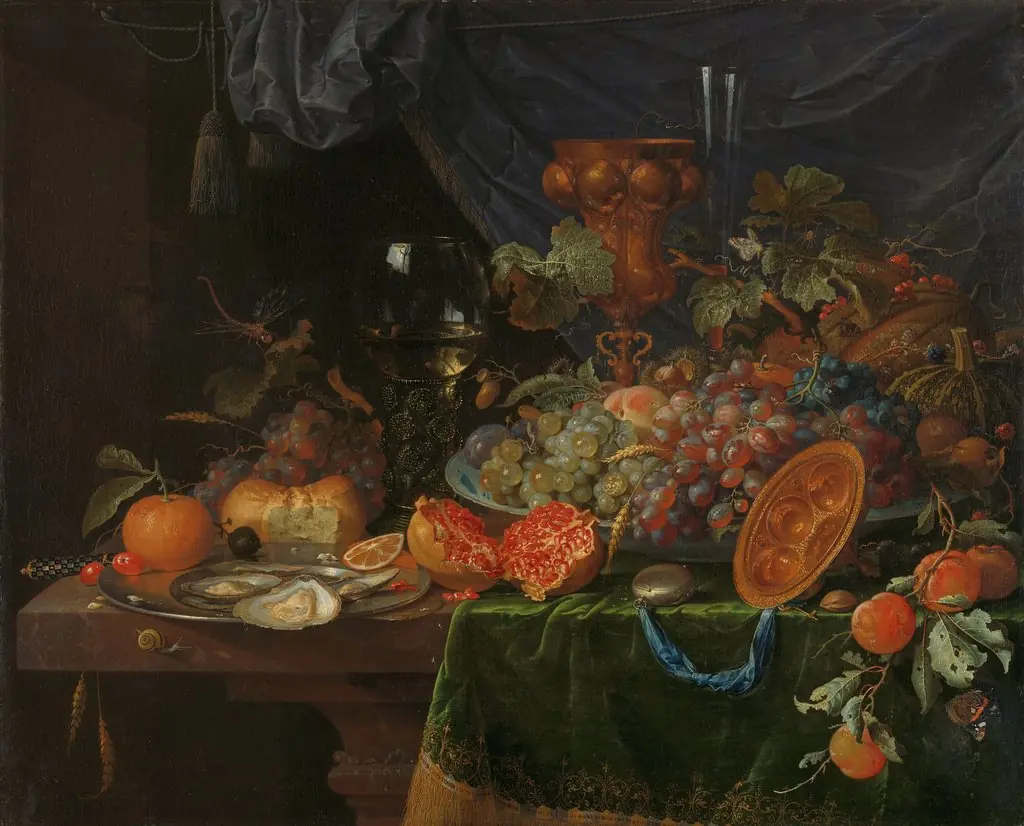 Still life with fruit and oysters
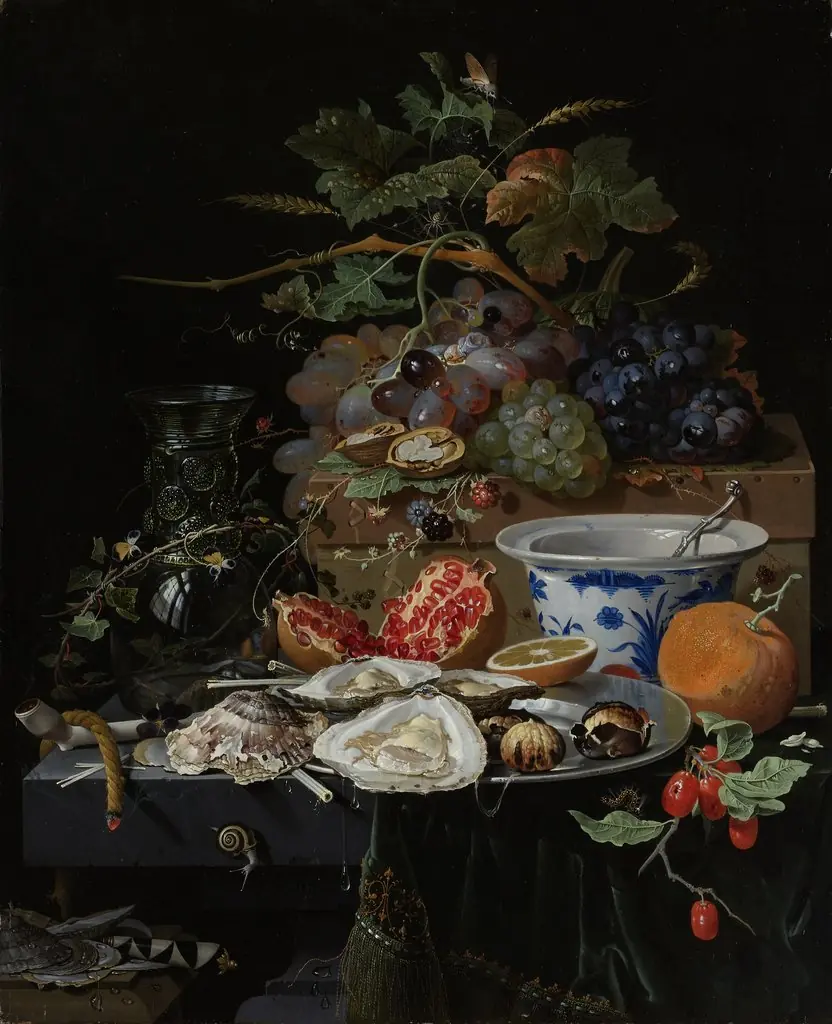 Still Life with Fruit, Oysters and a Porcelain Bowl
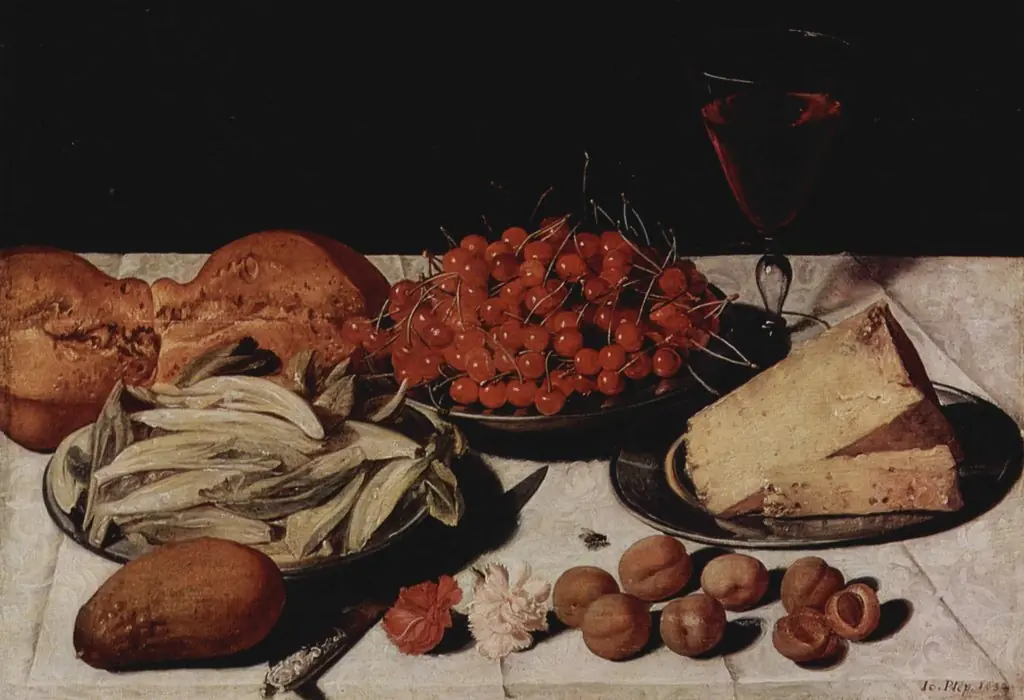 Still Life
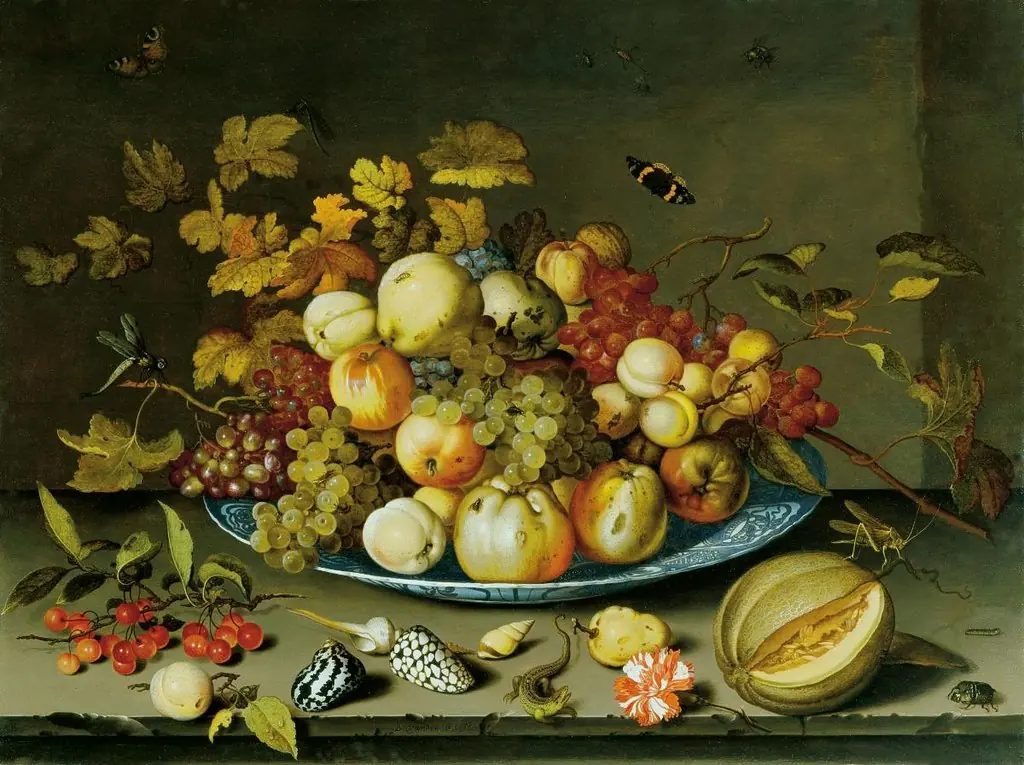 Stillleben mit Früchten, Muscheln und Insekten