Artwork
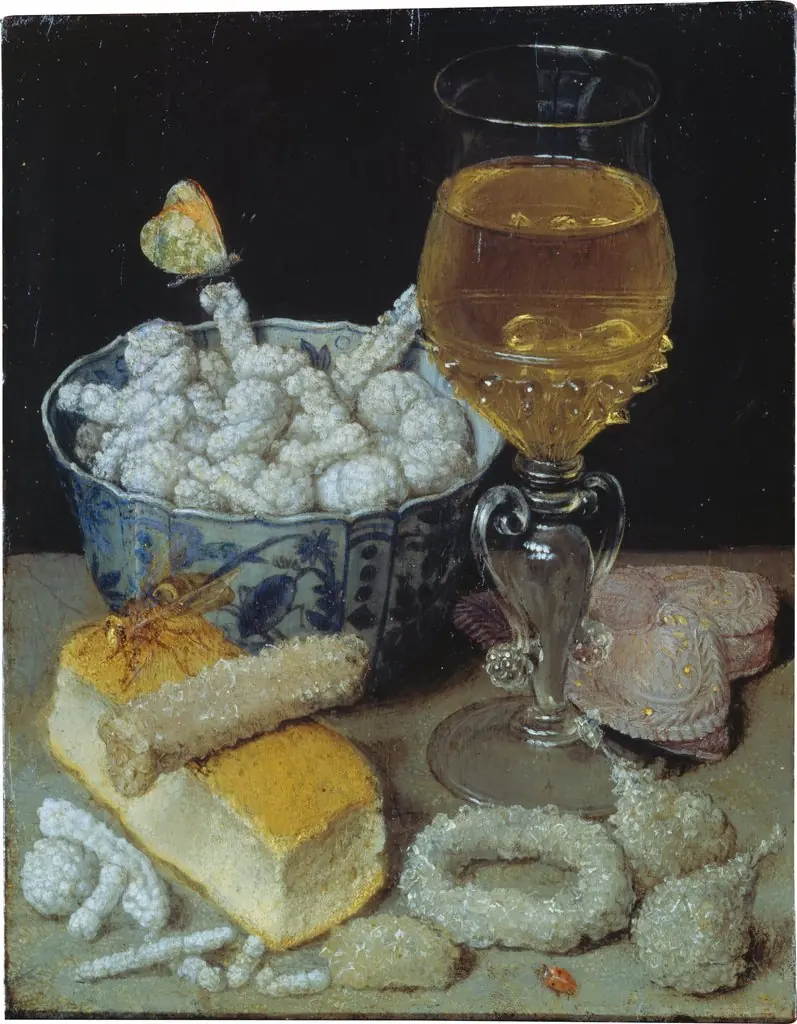
Still Life with Sweetmeats
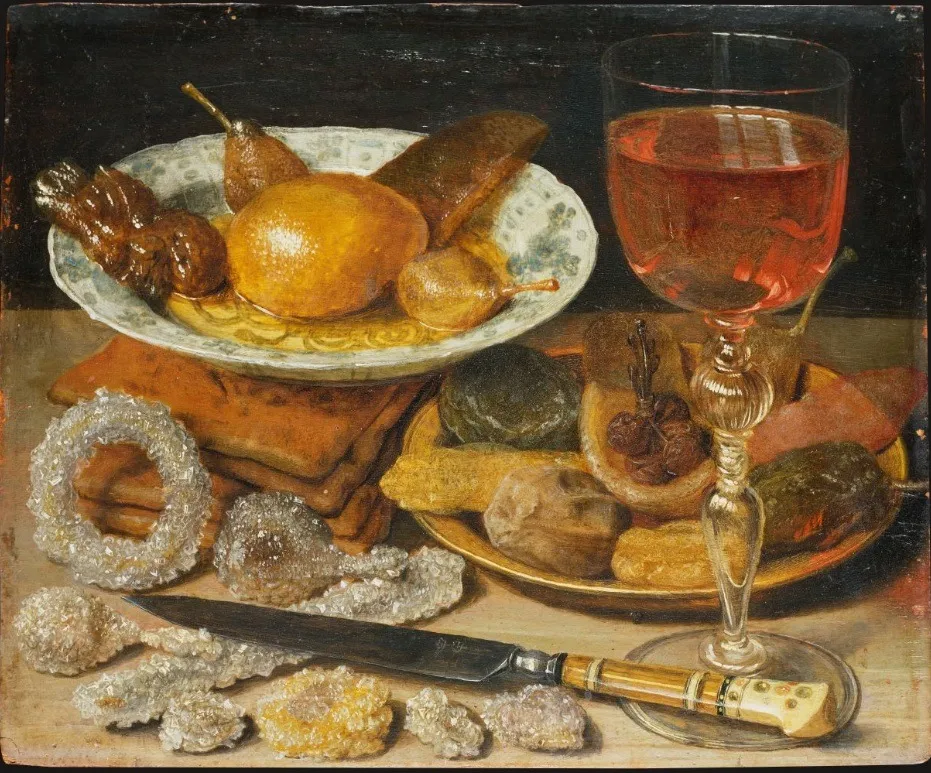
Still Life with Sweetmeats is an oil painting by the Dutch Golden Age artist Georg Flegel. It dates from 1636 and is held in the collection of the Städel Museum.
About this work
Overview
Still Life with Sweetmeats, painted in 1636 by Georg Flegel, is a representative work of German still-life art from the early 17th century. Executed in oil paint, it showcases Flegel's meticulous attention to detail in depicting everyday objects.
Subject & Meaning
The painting features a modest arrangement of edible items and utensils on a table, including confectionery, a pear, a wine glass, and a prominently placed knife with an ornate handle. This composition reflects the tradition of rendering ordinary subjects in a realistic manner, characteristic of the Dutch Golden Age influence on Flegel's work despite his German base.
Technique & Style
Flegel employed a realistic style, emphasizing texture and the play of light on various surfaces. The use of chiaroscuro, with its strong light-dark contrasts, enhances the sense of depth and volume, contributing to the overall realism of the piece.
History & Provenance
Created in 1636, the painting is attributed to Georg Flegel, a pivotal figure in the development of German still-life painting during the early 17th century. While associated with the Dutch Golden Age tradition, Flegel operated primarily in Frankfurt, Germany.
Context
Still Life with Sweetmeats situates itself within the broader European still-life tradition of the 17th century, reflecting the era's fascination with the detailed representation of mundane life and objects. Despite geographical distance, it aligns closely with the aesthetic values of the Dutch Golden Age.
Legacy
This work exemplifies Flegel's contribution to the evolution of still-life painting in Germany, demonstrating his skill in capturing the intricacies of light, texture, and everyday life, thereby influencing subsequent generations of still-life artists.
Artist & collection
Artist
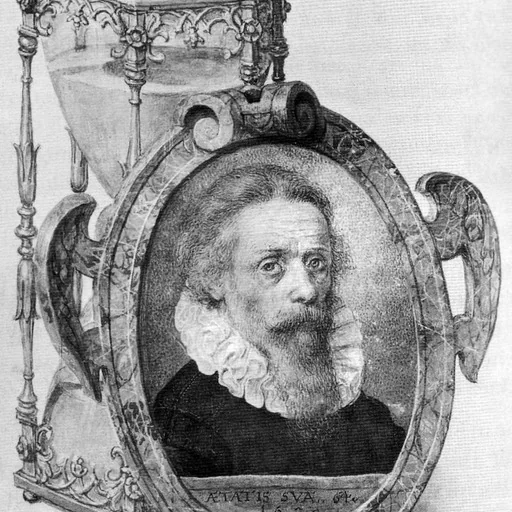
Georg Flegel (c. 1566 – 23 March 1638) was a German painter, best known for his still-life works. Born in Olomouc, he later worked in Frankfurt, where he became a leading figure in early German still-life painting.

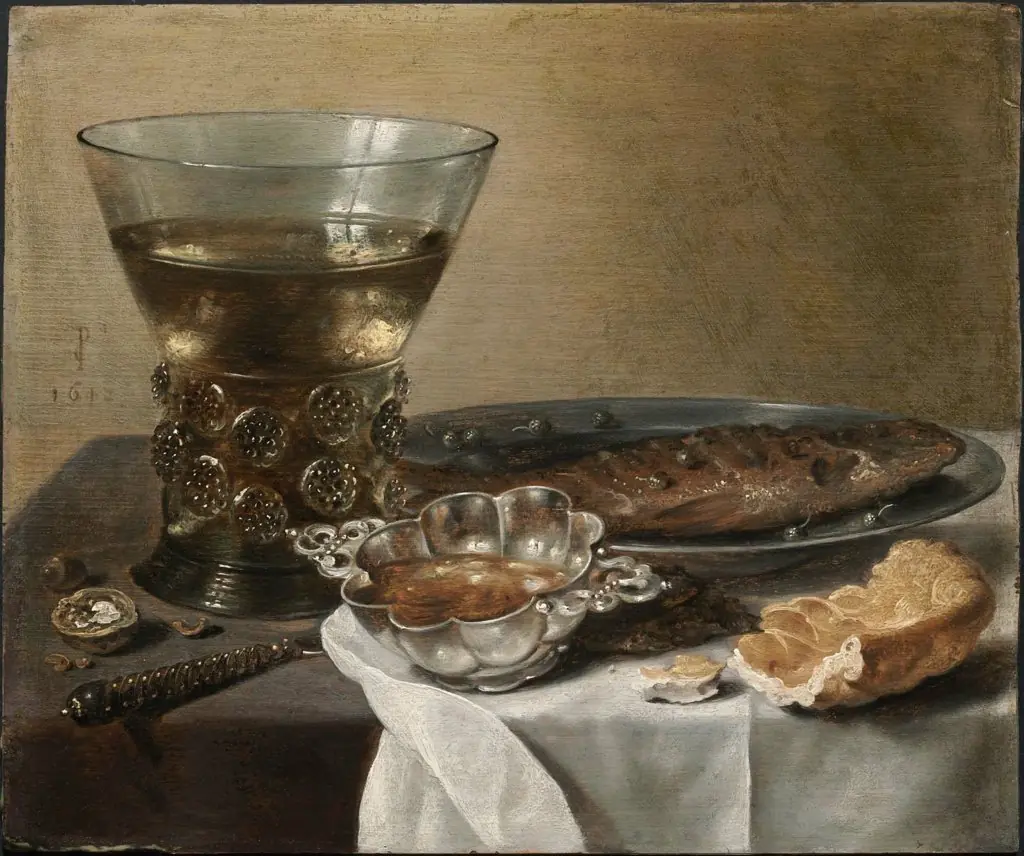 Still Life with Silver Brandy Bowl, Wine Glass, Herring, and Bread
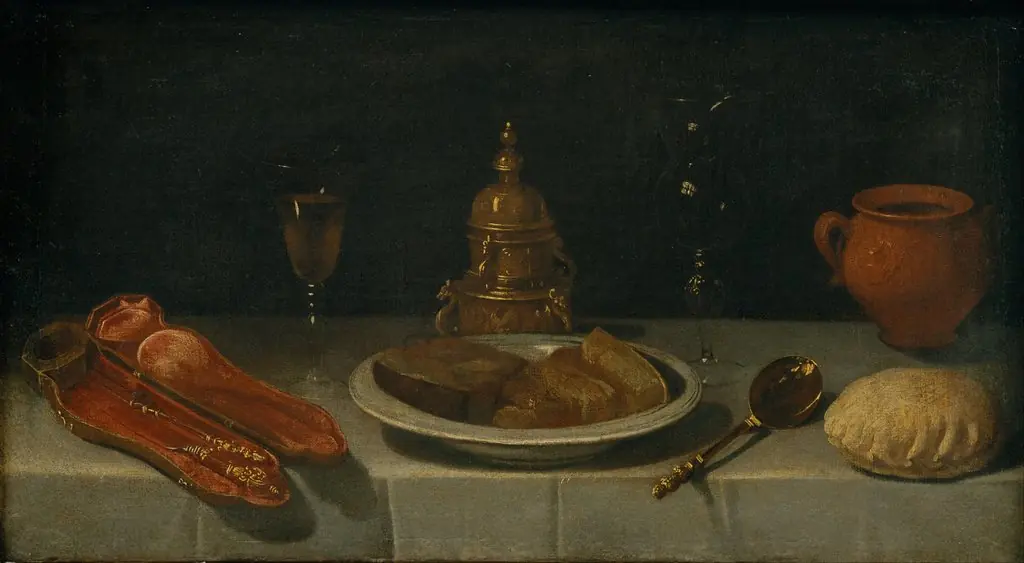 Still Life and Laid Table
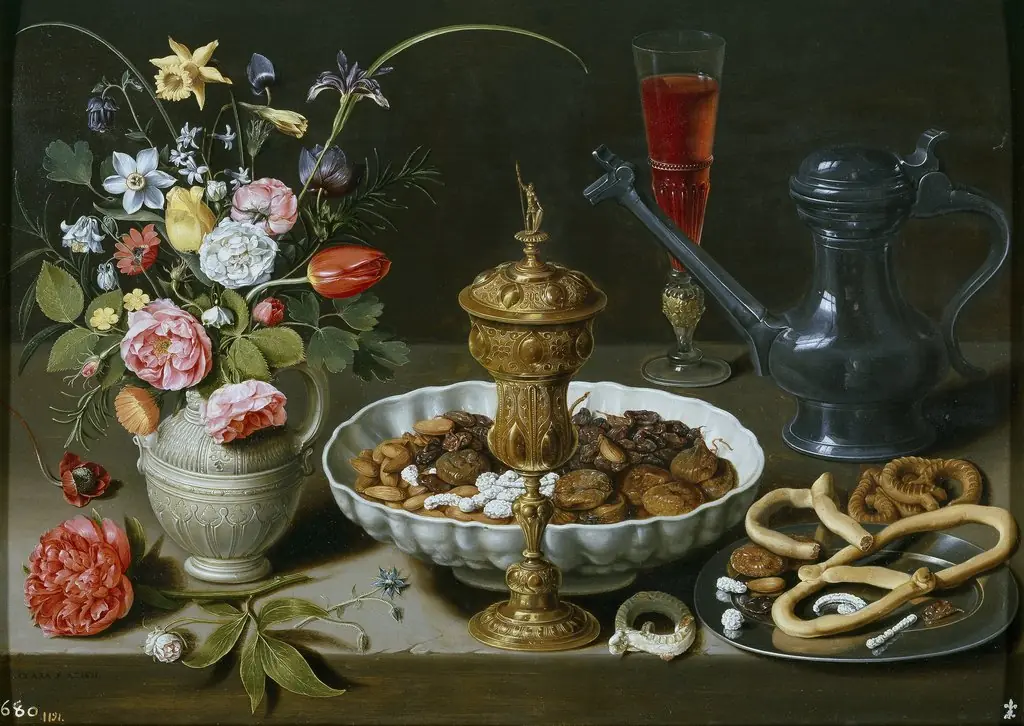 Still life with flowers, goblet and dainties
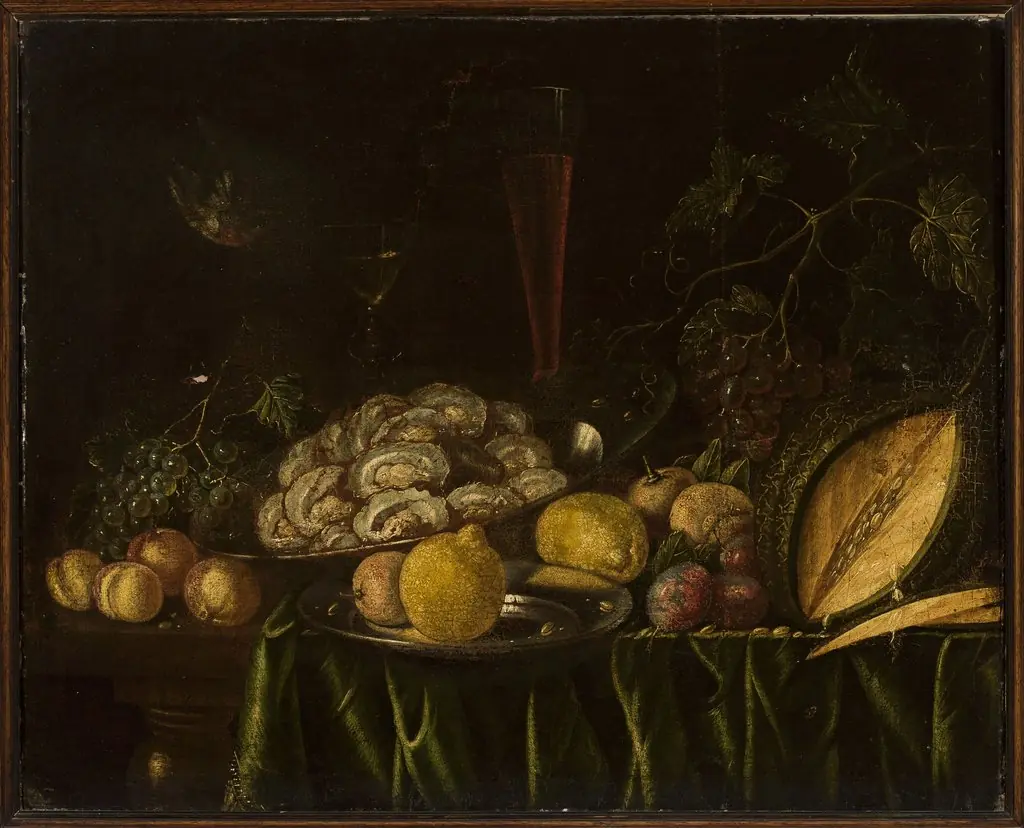 Still life with – fruit, mussels and a bird
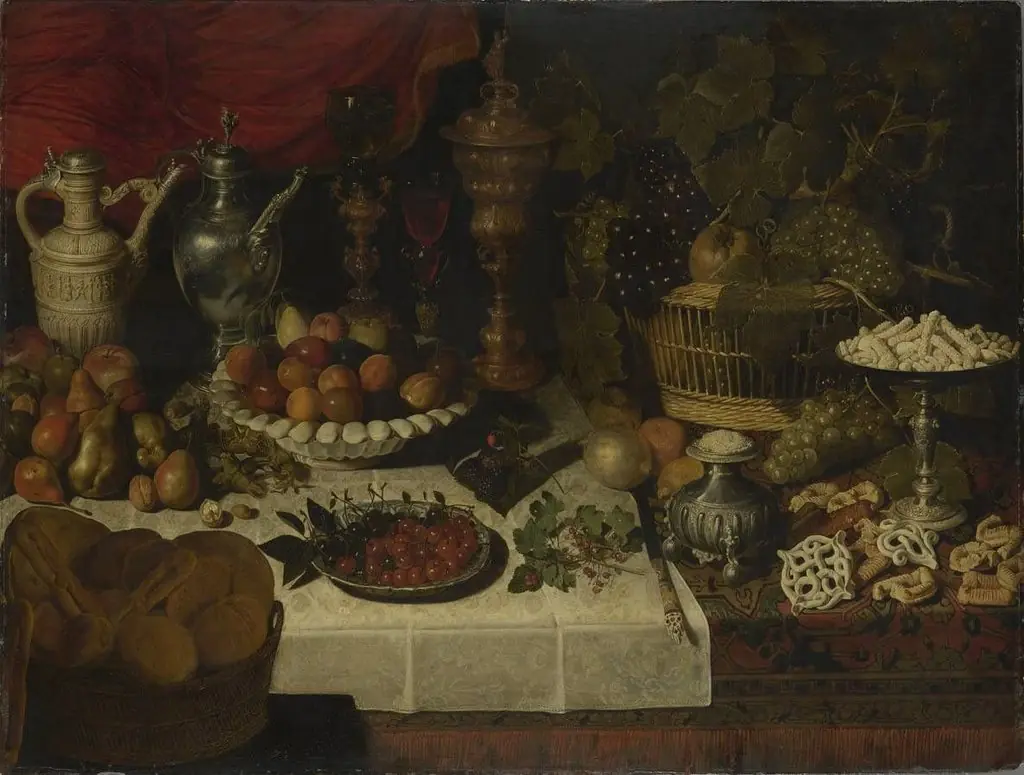 Stillleben mit Tafelgerät und Früchten
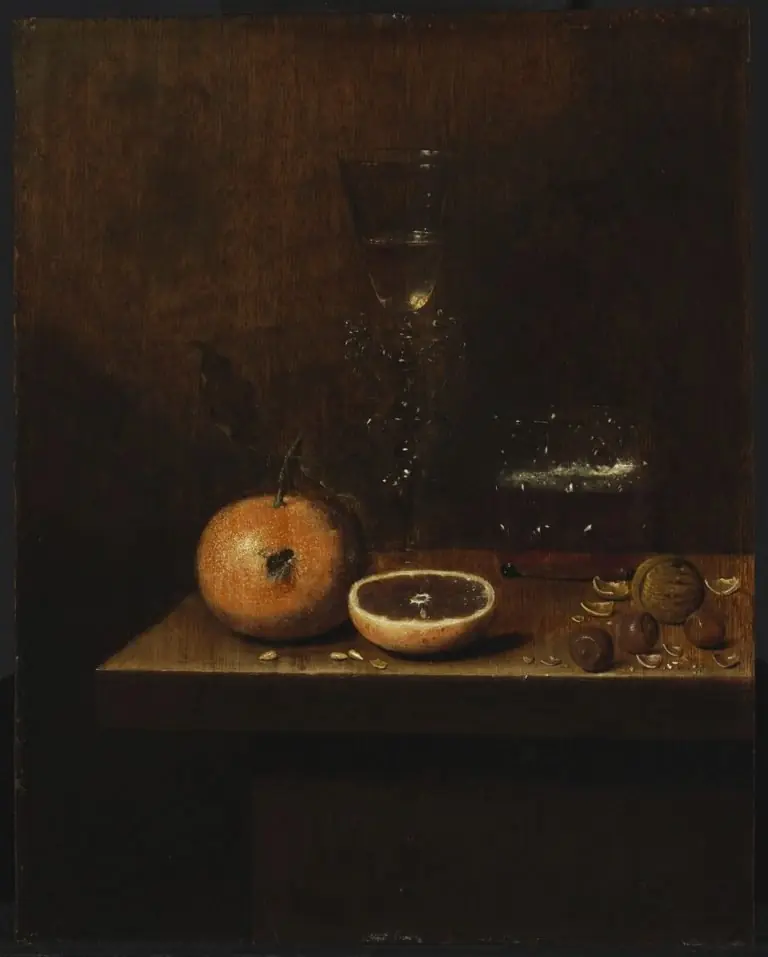 Still Life with Orange and Venetian Glass
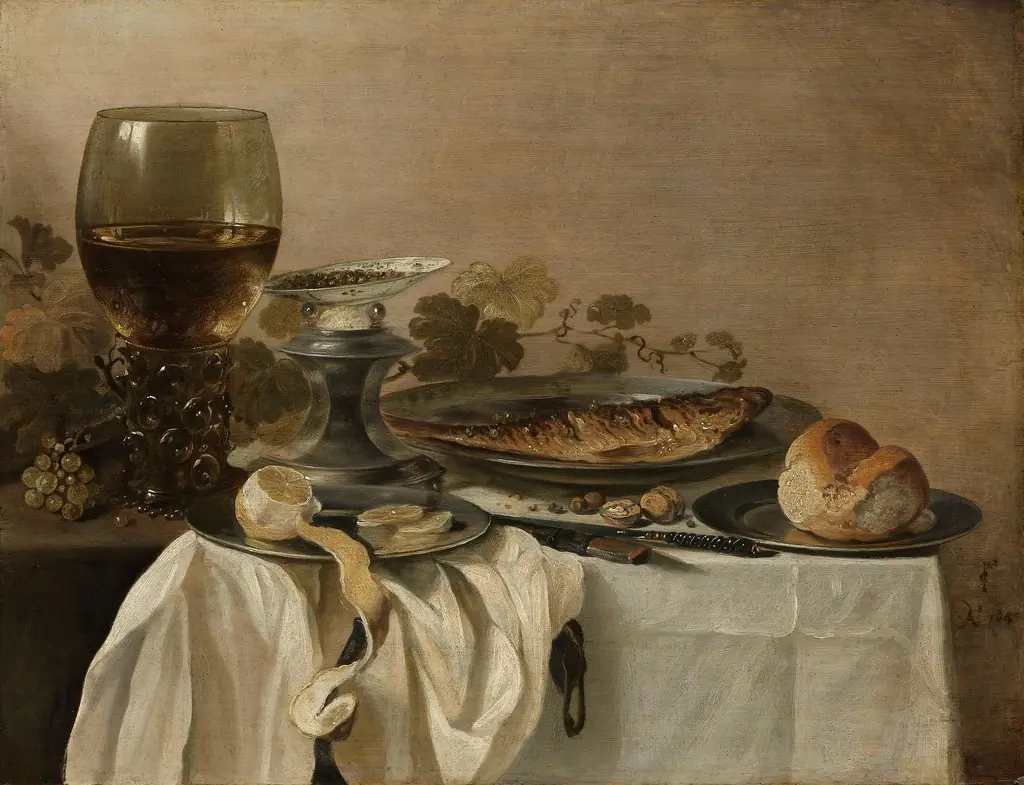 Still life with a fish
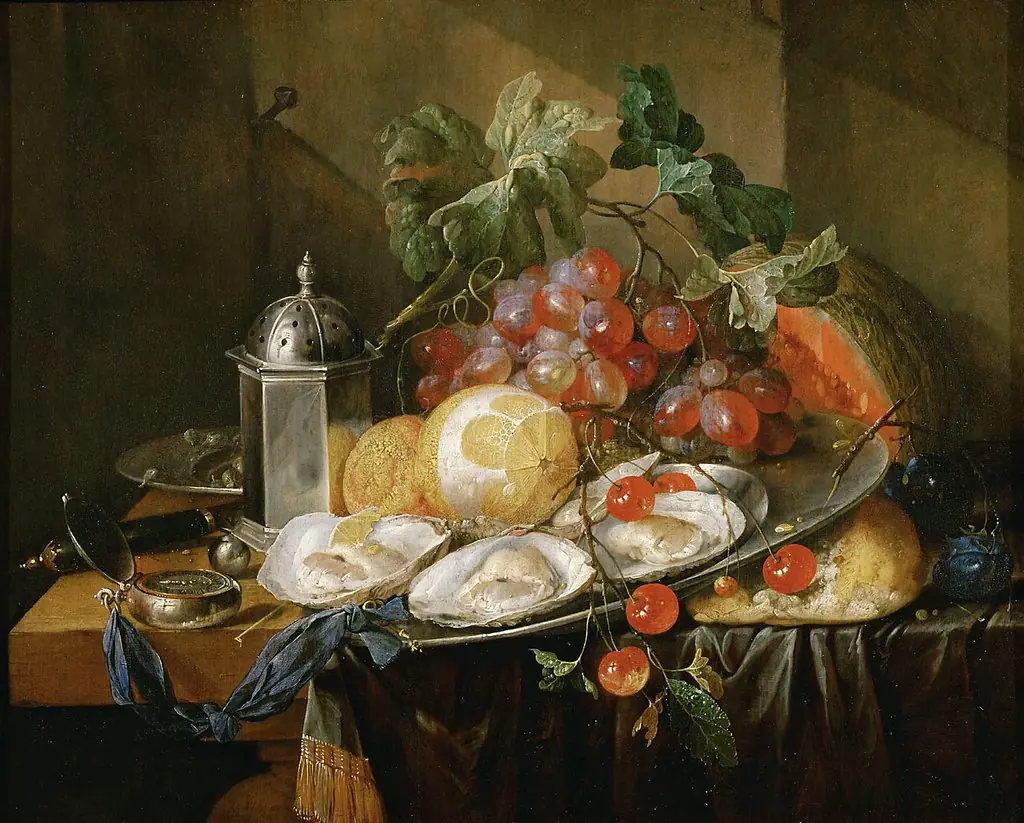 Fruit Still Life with Oysters