Artwork
Legs of the Sea
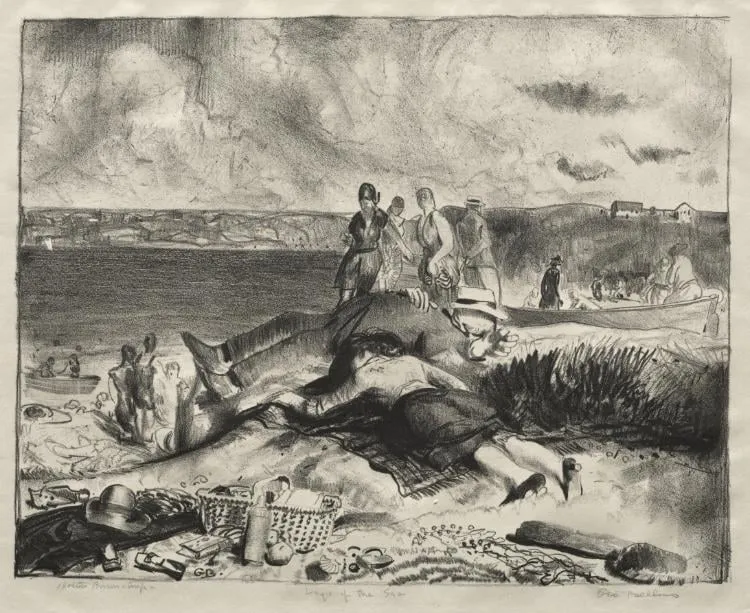
Legs of the Sea is a print by George Bellows. It dates from 1921 and is held in the collection of the Cleveland Museum of Art.
About this work
Overview
Created in 1921, *Legs of the Sea* is a print by American realist George Bellows, whose reputation rests on vigorous depictions of early‑twentieth‑century life. The work is part of the Cleveland Museum of Art’s collection and presents a coastal scene in which a large, unidentified sea creature dominates the shoreline, drawing the attention of a small crowd.
Subject & Meaning
The central figure—a massive, beached animal, possibly a whale or a large fish—anchors the composition, its outstretched fins or limbs spreading across the sand. Surrounding figures, rendered in muted tones, suggest a communal curiosity or concern, hinting at themes of nature’s intrusion into human spaces and the collective response to the extraordinary.
Technique & Style
Bellows employs bold, expressive brushwork translated into the print medium, using a limited palette of blues, grays, and earth tones to convey atmosphere. Strong chiaroscuro contrasts illuminate the creature’s bulk against a cloudy sky and distant water, creating a sense of volume and dramatic tension within the flat surface.
History & Provenance
The print was produced shortly after Bellows’ most celebrated urban series, marking a brief foray into marine subject matter. It entered the Cleveland Museum of Art’s holdings through a mid‑20th‑century acquisition, where it has remained on view as part of the museum’s American art collection.
Context
While Bellows is best known for his gritty New York City scenes, *Legs of the Sea* reflects his broader interest in the American landscape and its occasional confrontations with the untamed. The work aligns with the realist impulse of the era, emphasizing direct observation and the unvarnished portrayal of everyday events.
Artist & collection

Artist
George Wesley Bellows (August 12 or August 19, 1882 – January 8, 1925) was an American realist painter, known for his bold depictions of urban life in New York City.

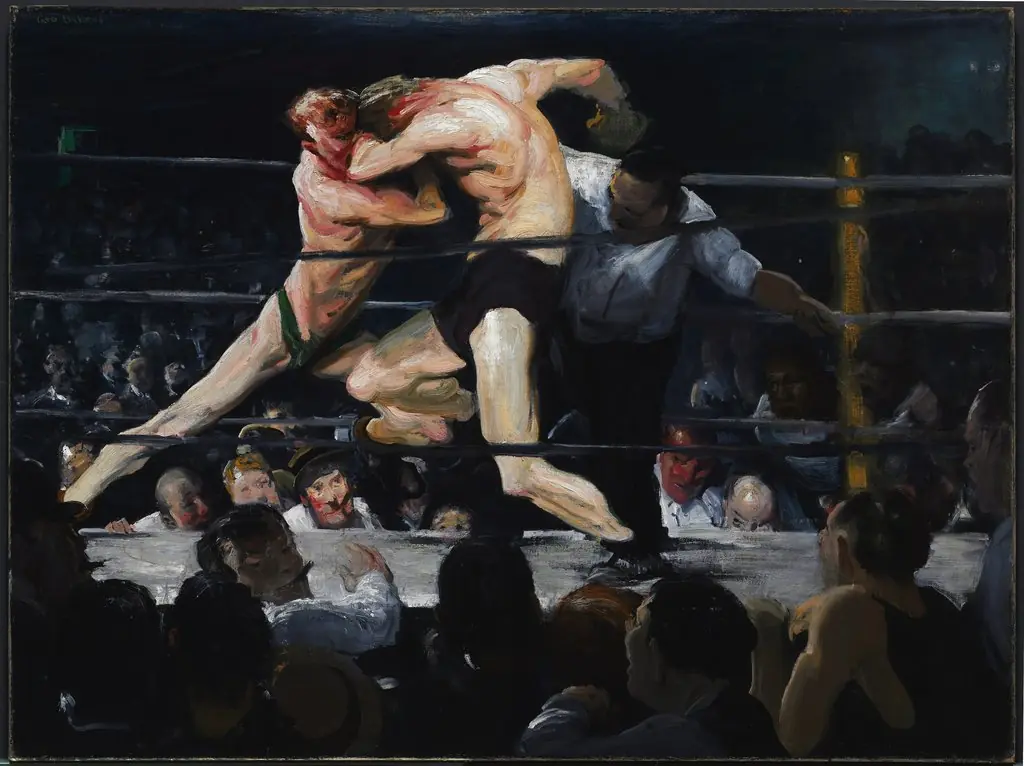
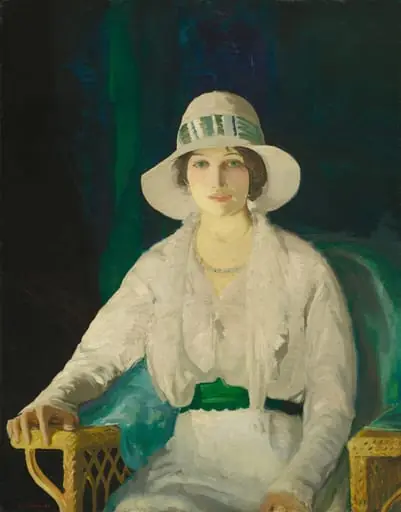
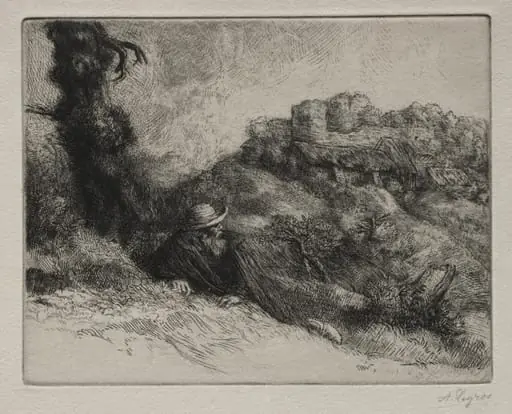 Le Châteaux des Revenants
 An Unknown
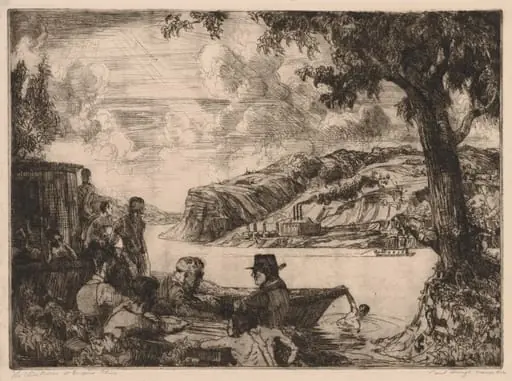 Ohio River at Empire, Ohio
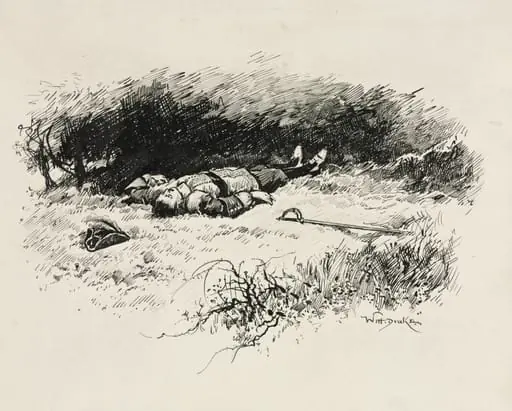 Tail Piece for Chapter XXI from "Lorna Doone"
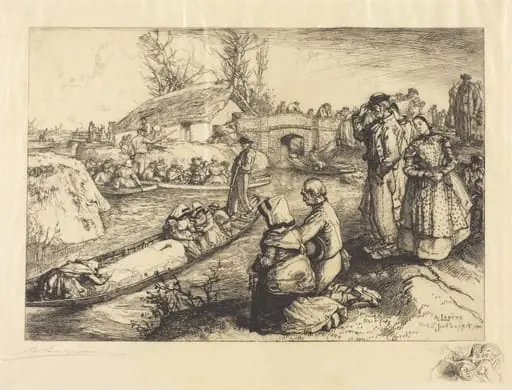 Burial in the Vendeen Marsh (Un enterrement dans le marais Vendeen)
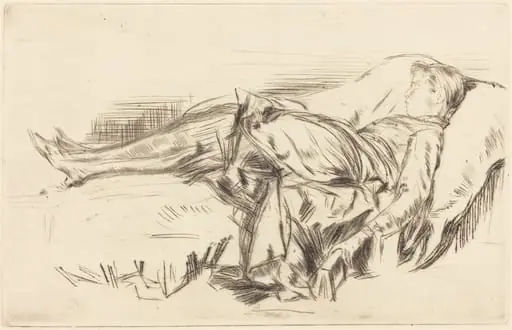 A Child on a Couch, No.2
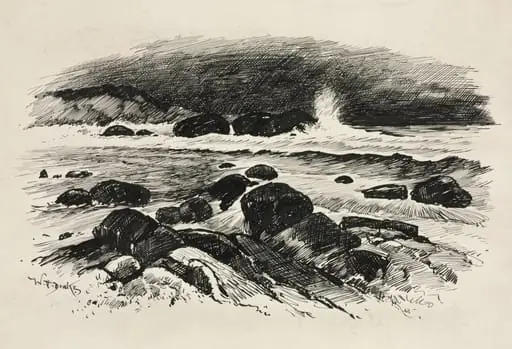 Tail Piece for Chapter XII from "Lorna Doone"
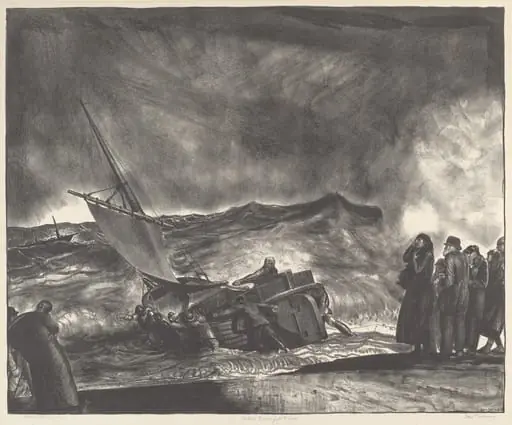 Allan Donn Puts to Sea
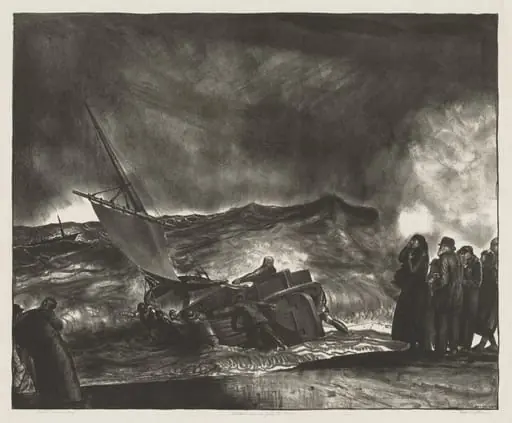 Allan Donn Puts to Sea
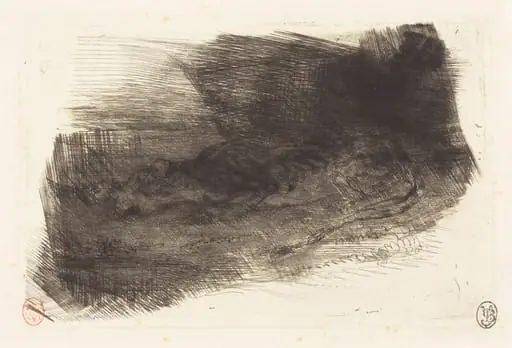 Tiger Sleeping at the Entrance to its Lair (Tigre couché à l'entrée de son antre)
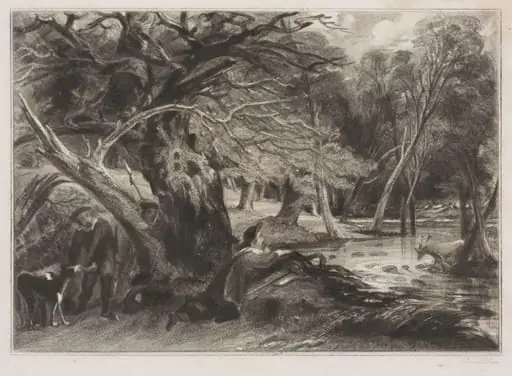 Jaques and the Wounded Stag
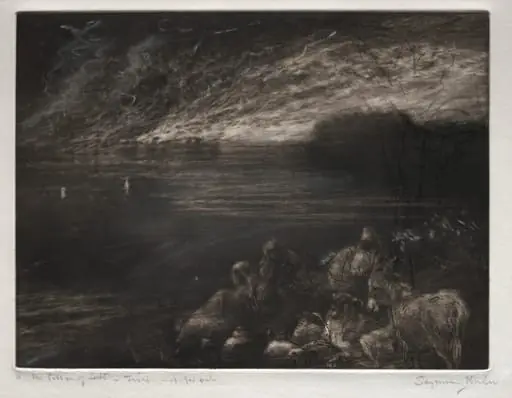 The Pillar of Salt