Artwork
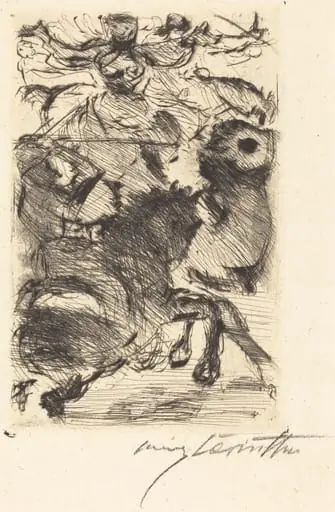
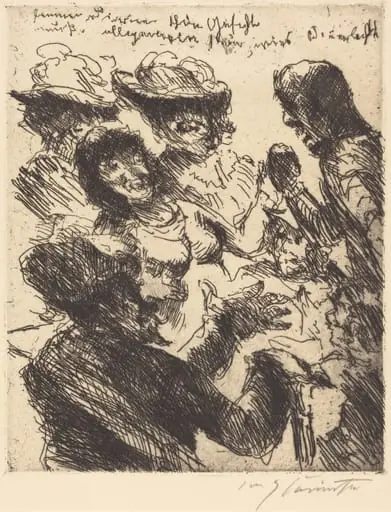
"Vater, es wird nicht gut ablaufen, bleiben wir von dem soldatenhaufen" ("Father, This Won't Turn Out Well, We should stay away from the gang of soldiers")
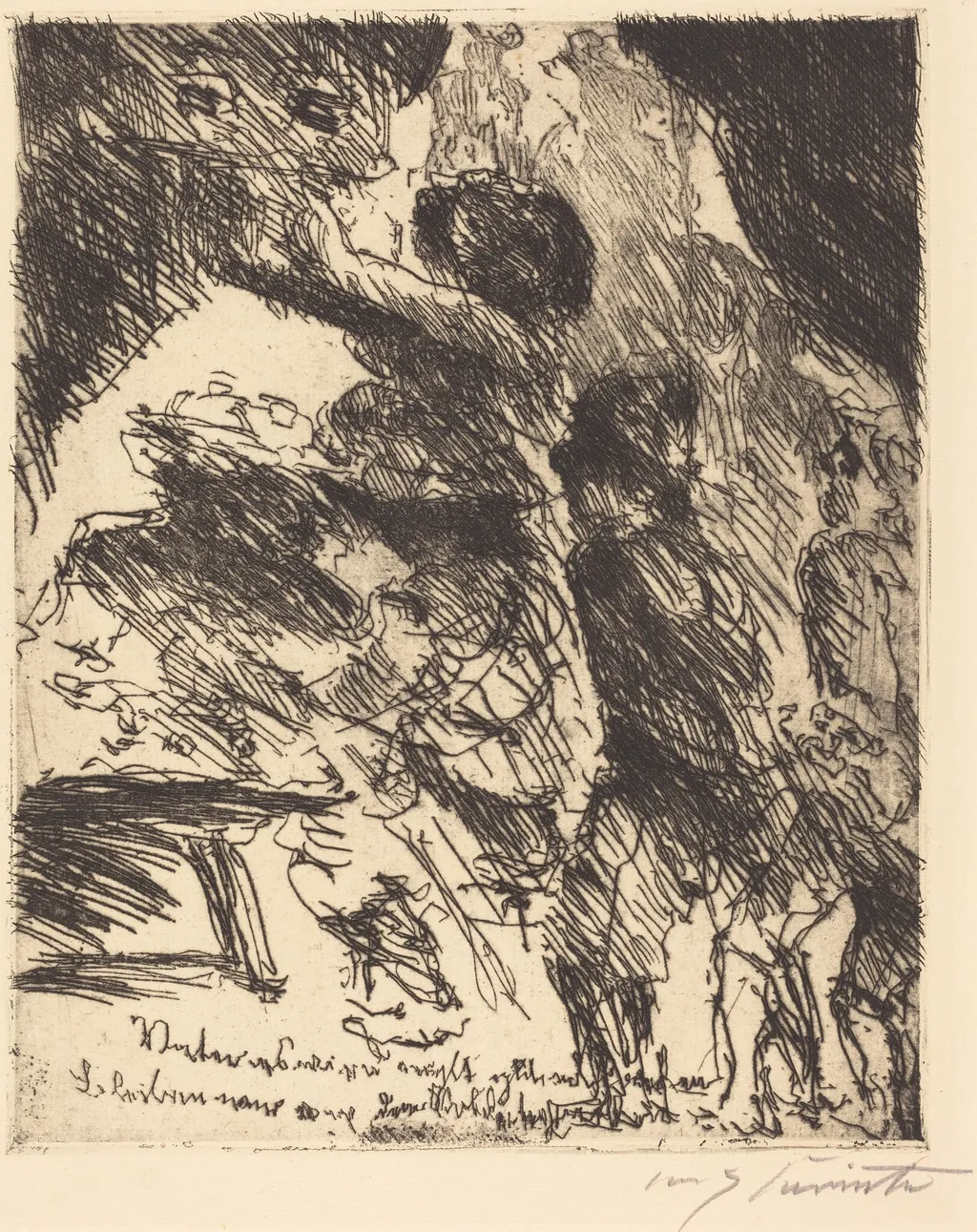
"Vater, es wird nicht gut ablaufen, bleiben wir von dem soldatenhaufen" ("Father, This Won't Turn Out Well, We should stay away from the gang of soldiers") is an ink print by Lovis Corinth. It dates from 1923 and is held in the collection of the National Gallery of Art.
About this work
Overview
Vater, es wird nicht gut ablaufen, bleiben wir von dem soldatenhaufen is a 1923 etching by German artist Lovis Corinth, executed in black on laid paper. Characterized by jagged, expressive lines, the work captures a chaotic scene of concern related to a group of soldiers.
Subject & Meaning
The etching depicts a tumultuous scene where a figure expresses apprehension about approaching a crowd of soldiers, conveyed through urgent, chaotic visual elements. The subject matter reflects concern or warning in the face of militarized groups.
Technique & Style
Corinth employed etching techniques, utilizing carved grooves to achieve deep shadows. The piece features a predominantly black palette with varying line weights, from thick and dark to faint, suggesting rapid or emotionally charged execution. This style aligns with Corinth's post-1911 shift towards a looser, more expressive approach, blending elements of impressionism and expressionism.
History & Provenance
Created in 1923, the etching is part of Corinth's later work, following his leadership of the Berlin Secession and a stylistic evolution post-stroke in 1911. Specific provenance details are not provided.
Context
The work's themes of militarism and caution may reflect the tumultuous period in Germany during the early 1920s, marked by political instability and the aftermath of World War I. Corinth's style, meanwhile, situates the piece within the broader European modernist movement.
Legacy
As part of Corinth's graphic oeuvre, the etching contributes to his reputation for synthesizing impressionist and expressionist techniques in printmaking, though its specific impact or notable exhibitions are not detailed here.
Artist & collection

Artist
Lovis Corinth was a German artist and writer whose mature work as a painter and printmaker realized a synthesis of impressionism and expressionism.

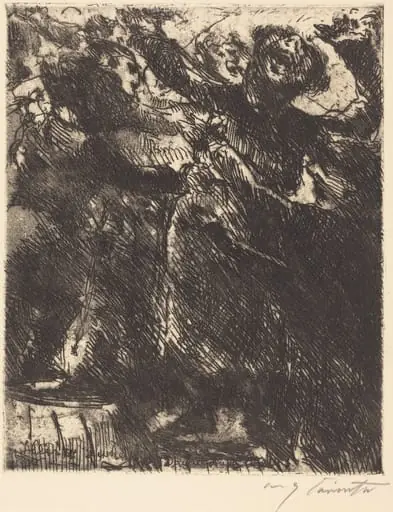 Kapuzinerpredigt—"Hetzt sich lieber herum mit der Dirn'" (The Capuchin's Sermon—"He Prefers to Run Around with a Girl")
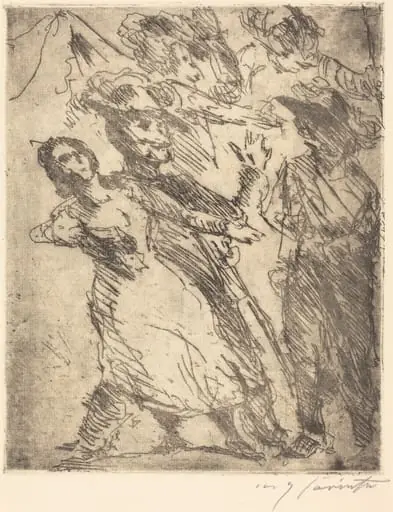 Kavaliere mit einer frau (Cavaliers with a Woman)
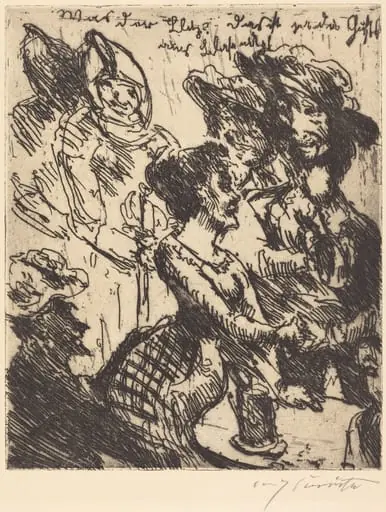 "Was der blitz! Das ist ja die gustel von blasewitz" ("What's That! It's Gustel von Blasewitz")
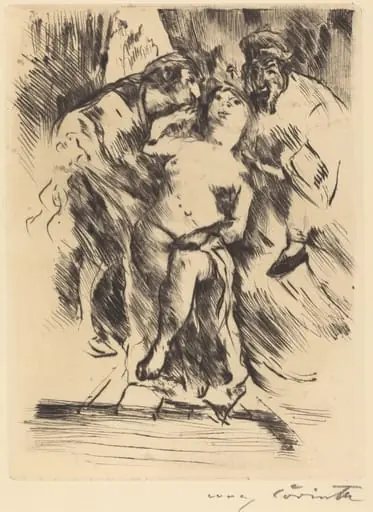 Susanna im Bade (Susanna in the Bath)
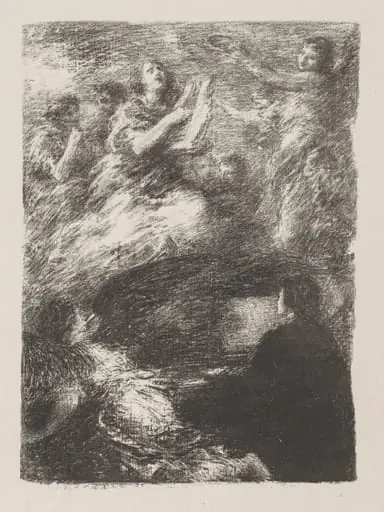 Last Theme of Robert Schumann
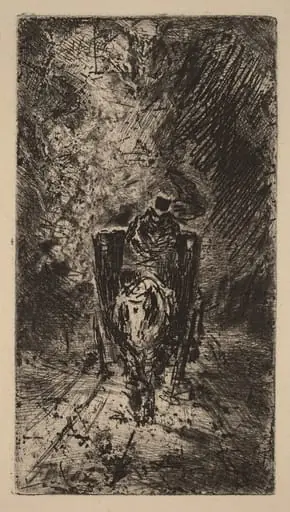 Spleen et Idéal
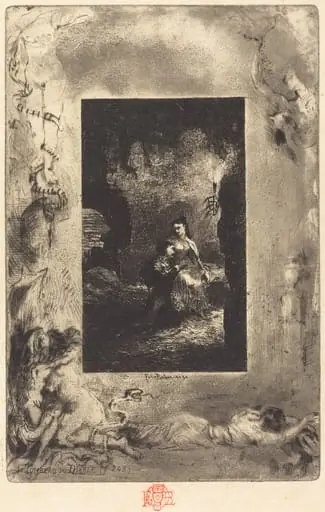 Le Tombeau du Diable (The Devil's Tomb)
 Adhba die Kamelin (Adhba the Camel)
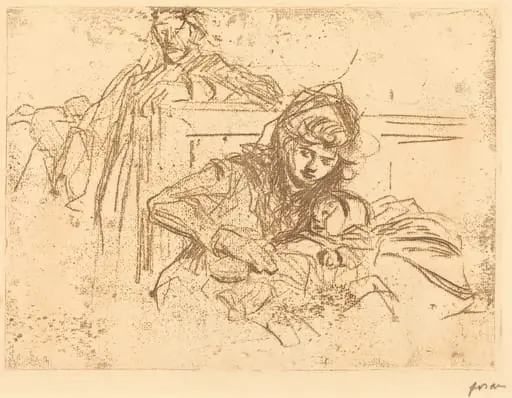 Témoins à l'audience (1ère planche) (Evidence at the Hearing) (first plate)
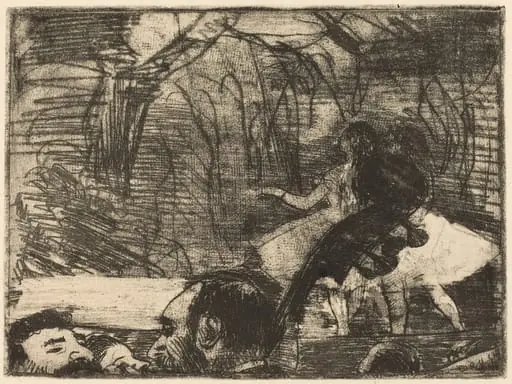 On Stage I
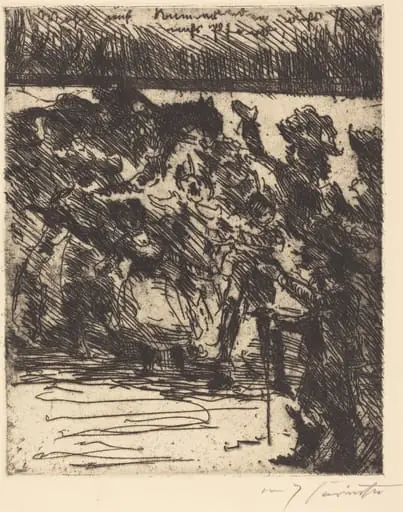 "Wohl auf, kameraden, aufs pferd, aufs pferd! Ins feld, in die freiheit gezogen!" ("Come On, Comrades, to Horse, to Horse! To Battle, Bound for Liberty!")
 "Einer dirne schön gesicht muss allgemein sein wie's sonnenlicht" ("A Pretty Girl's Face is Like the Sunshine")