Artwork
The Sand Team
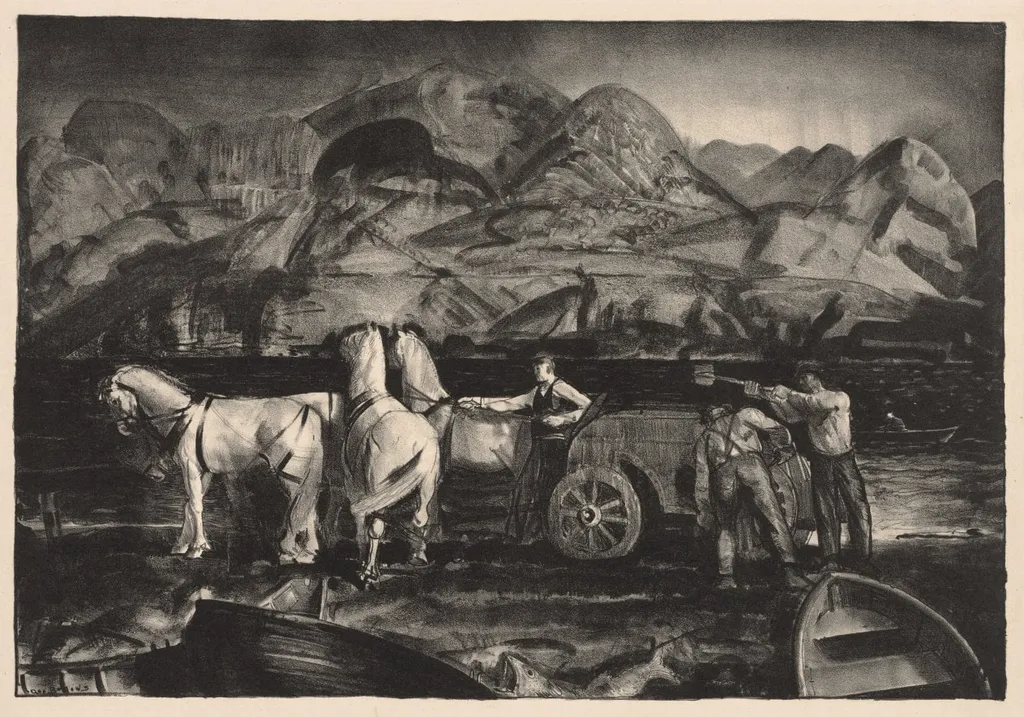
The Sand Team is a print by George Bellows. It dates from 1919 and is held in the collection of the Cleveland Museum of Art.
About this work
Overview
Unlike his more famous oil paintings, this print reflects his continued interest in the physicality of work and the dignity of laborers.
Painted in 1919, *The Sand Team* is a lithograph by George Bellows that captures a moment of manual labor in an urban setting. Unlike his more famous oil paintings, this print reflects his continued interest in the physicality of work and the dignity of laborers. The composition is tightly focused on three men and two horses, engaged in the arduous task of moving material along a rough path. Bellows’s choice of printmaking allowed for broader distribution of his social observations.
Subject & Meaning
The scene depicts laborers hauling sand, likely for construction or street maintenance, near a distant urban fringe. The men’s postures convey exhaustion and resolve, their bodies bent under the weight of their task. The title suggests a specific occupational role—'sand team' was a common term for crews handling bulk materials in early 20th-century cities. Bellows presents them without sentimentality, emphasizing endurance over heroism.
Technique & Style
Bellows employed bold, angular lines and high-contrast tonal shifts to render texture and movement. The horses’ musculature and the men’s clothing are defined by sharp shadows and stark highlights, creating a sense of weight and grit. The lithographic medium allowed for rapid, expressive mark-making, reinforcing the immediacy of the scene. Background elements are minimized, directing attention to the physical strain of the foreground figures.
History & Provenance
Created during Bellows’s active years with the Ashcan School, *The Sand Team* was produced as part of a series of prints documenting working-class life. It was likely issued through commercial print publishers to reach a wider audience beyond gallery patrons. The work entered public collections in the mid-20th century and is now held in institutions such as the Metropolitan Museum of Art and the Smithsonian American Art Museum.
Context
In 1919, postwar America saw rapid urban expansion and increased demand for infrastructure labor. Bellows, already known for scenes of boxing and tenement life, turned his attention to the unseen workers sustaining city growth. His prints from this period reflect a broader cultural interest in labor conditions, coinciding with rising union activity and social reform movements.
Legacy
Though less celebrated than his oil paintings, *The Sand Team* exemplifies Bellows’s commitment to portraying the realities of industrial labor. The print influenced later socially conscious artists who used graphic media to highlight working-class struggles. Its directness and technical economy remain studied for their ability to convey dignity through unadorned observation.
Artist & collection
Artist
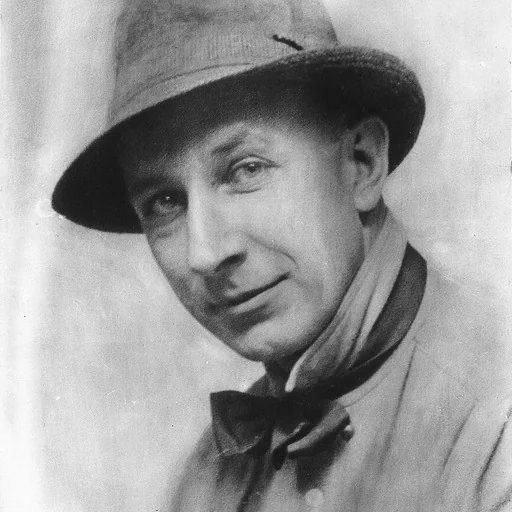
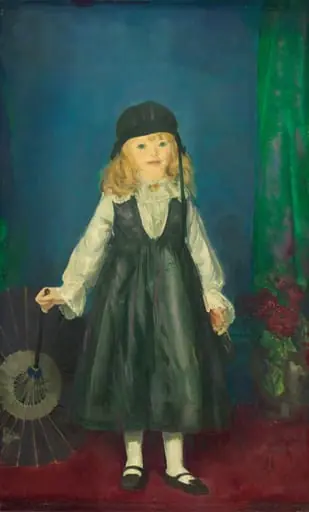
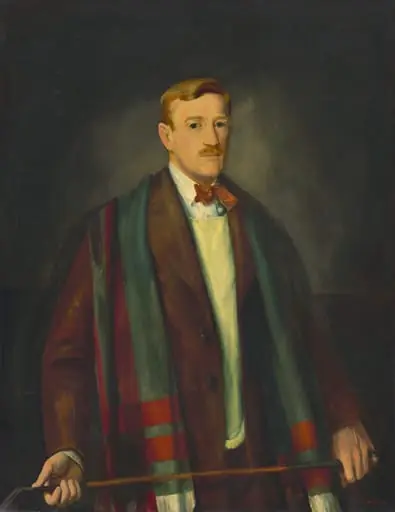
George Wesley Bellows (August 12 or August 19, 1882 – January 8, 1925) was an American realist painter, known for his bold depictions of urban life in New York City.

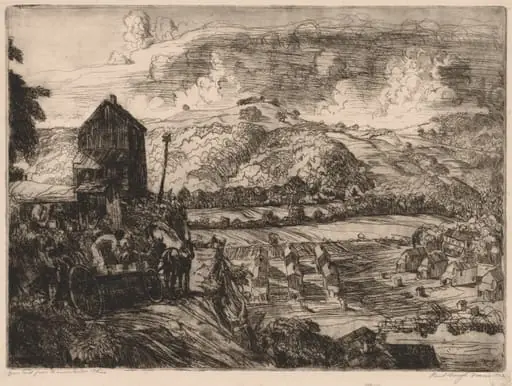 Our Hill from Dumstown, Ohio
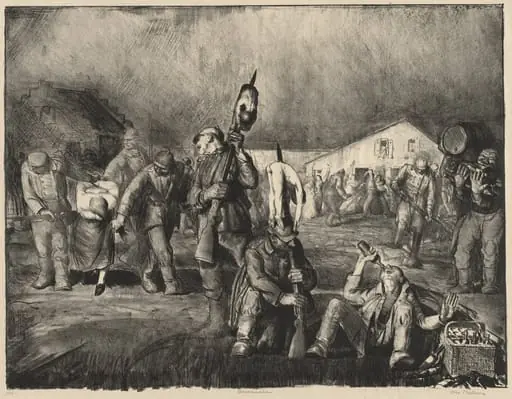 War Series: The Bacchanale
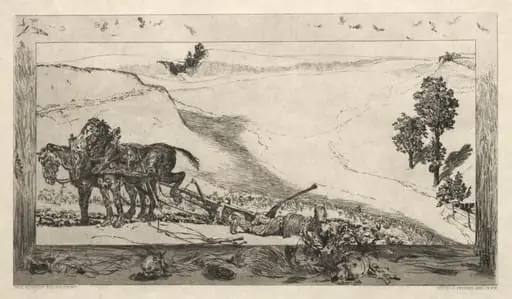 Vom Tode I (Opus II, 1889) No. 7
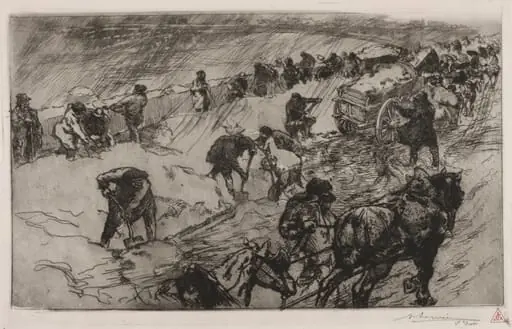 Combat contre la Neige, Quai aux Fleurs
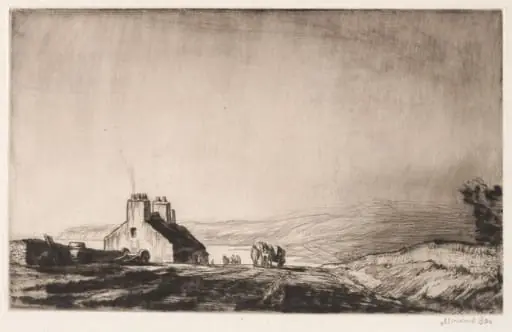 The Ballantrae Road, Ayrshire, Scotland
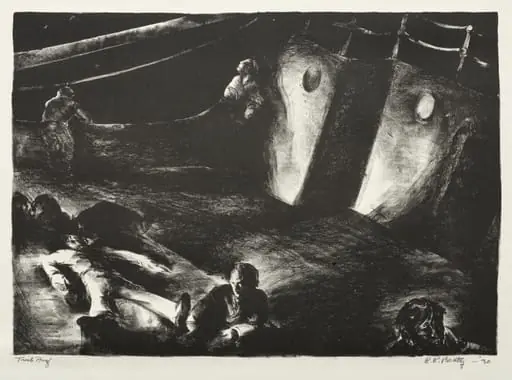 S. S. Glencairn: The Moon of the Caribbes
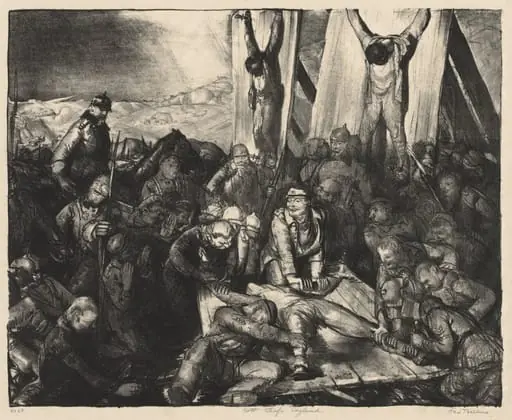 War Series: Gott Strafe, England
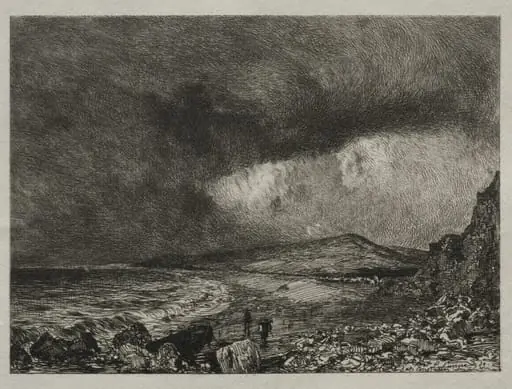 The Bay of Weymouth
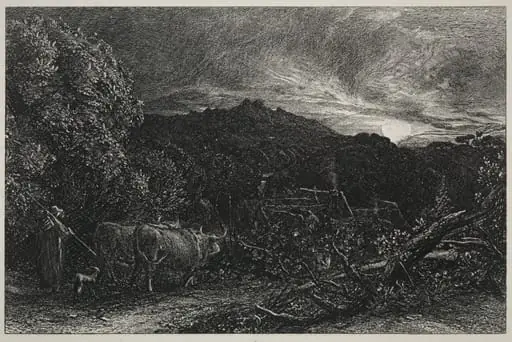 The Weary Plowman
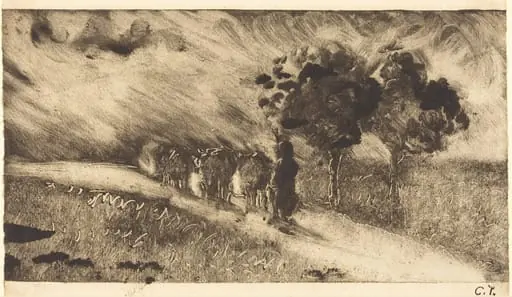 Herding the Cows at Dusk (Vachère le soir)
 The Weary Ploughman
 Allan Donn Puts to Sea