Artwork
The Weary Ploughman
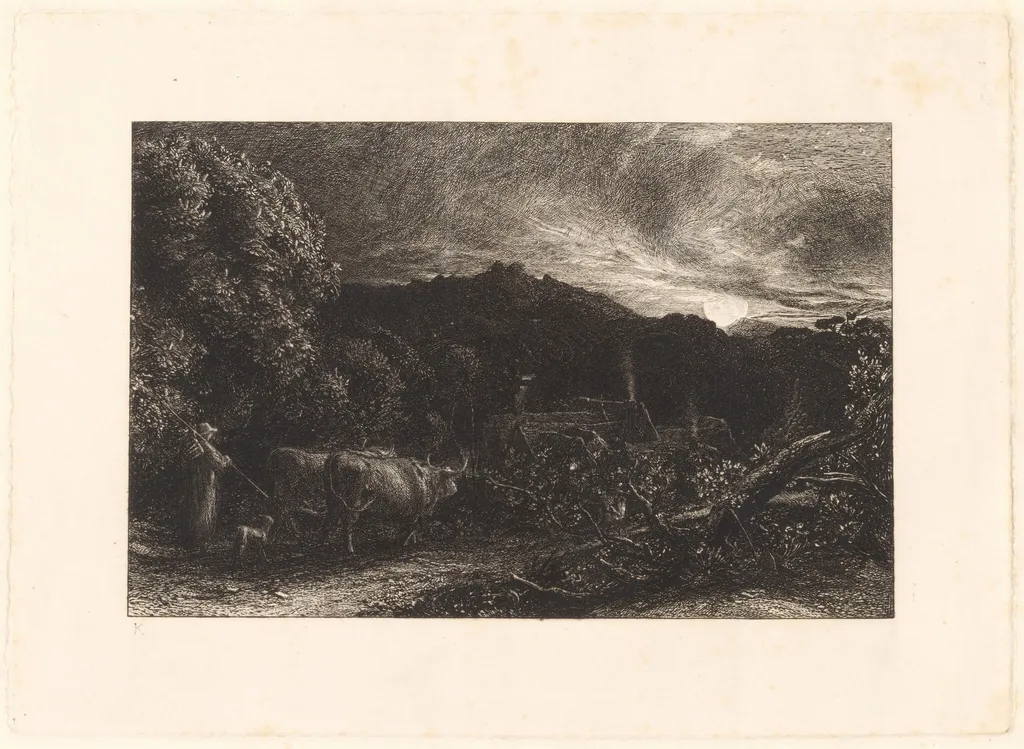
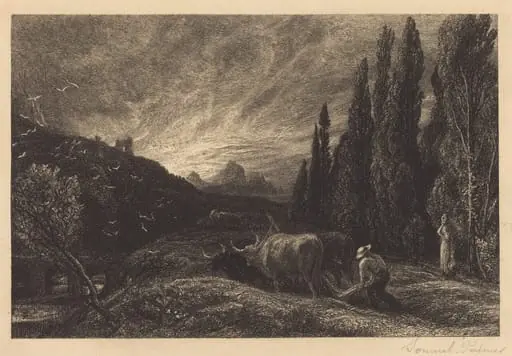
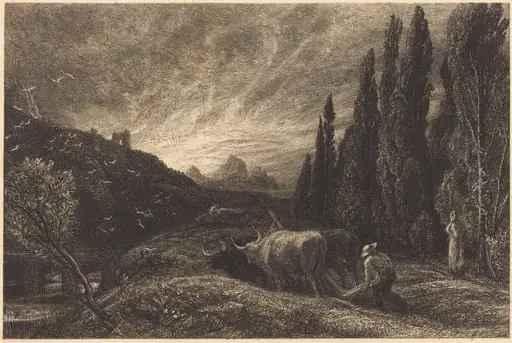
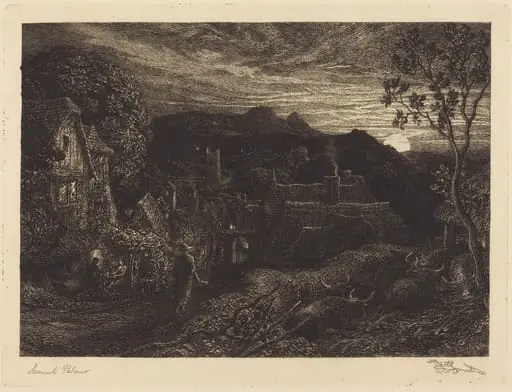
The Weary Ploughman is an ink print by the Impressionist artist Samuel Palmer. It dates from 1858 and is held in the collection of the Rosenwald Collection.
About this work
Overview
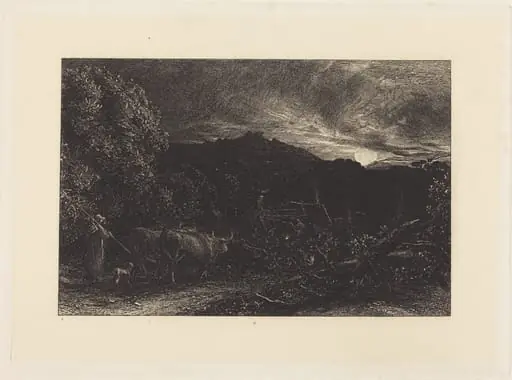
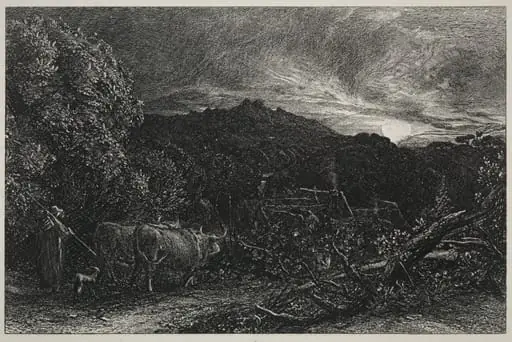
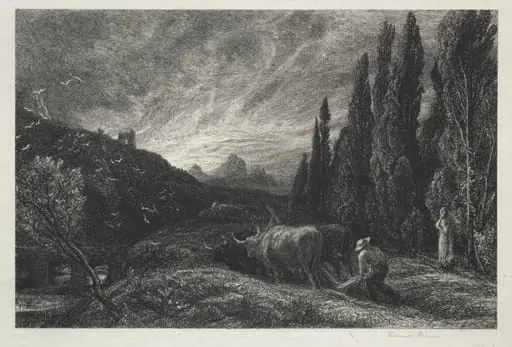
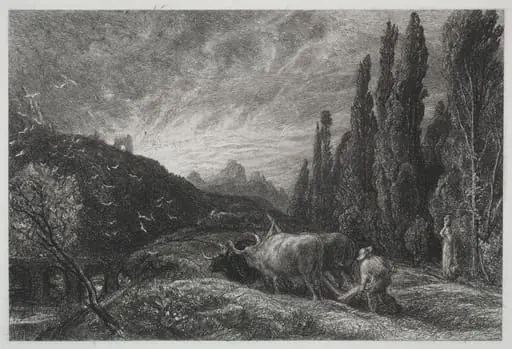
Samuel Palmer’s 1858 etching *The Weary Ploughman* presents a solitary agricultural worker guiding two oxen through a dimly lit forest. Rendered in monochrome on wove paper, the image captures the transition from day to night, with a muted sky and a faintly visible cottage emitting a thin plume of smoke.
Subject & Meaning
The composition centers on a fatigued farmer, his posture and the dragging oxen suggesting the relentless demands of field labor. The surrounding tangled foliage and the encroaching darkness amplify a sense of isolation, evoking the quiet perseverance inherent in rural existence at day’s end.
Technique & Style
Palmer employed delicate, intersecting lines to model the bark of trees and the coarse texture of the oxen’s hides, typical of his etching practice. The tonal gradations achieved through varied acid bites on the metal plate create atmospheric depth, while the stark contrast between light and shadow reinforces the work’s somber mood.
History & Provenance
Created during the later phase of Palmer’s career, the print reflects his sustained interest in landscape and labor themes that defined much of his output. It was issued as part of a series of etchings exploring English countryside life, and copies have since entered public and private collections, illustrating the artist’s continued relevance to 19th‑century British printmaking.
Artist & collection
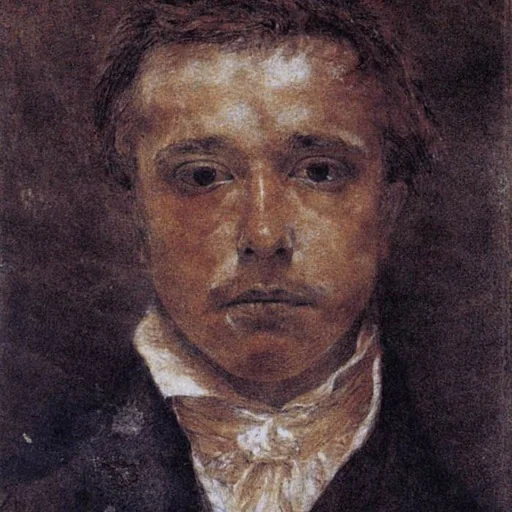
Artist
Samuel Palmer Hon.RE (Hon. Fellow of the Society of Painter-Etchers) (27 January 1805 – 24 May 1881) was a British landscape painter, etcher and printmaker. He was also a prolific writer. Palmer was a key figure in…