Artwork
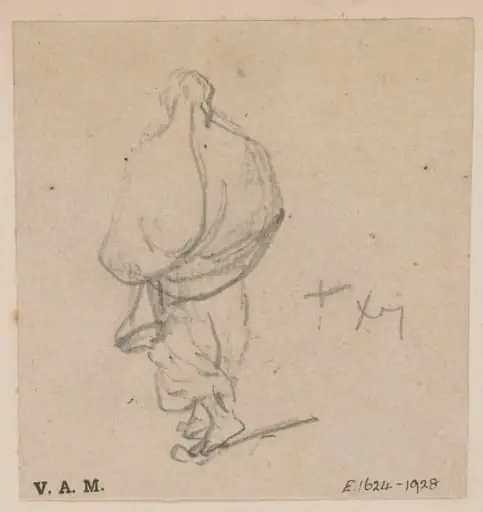
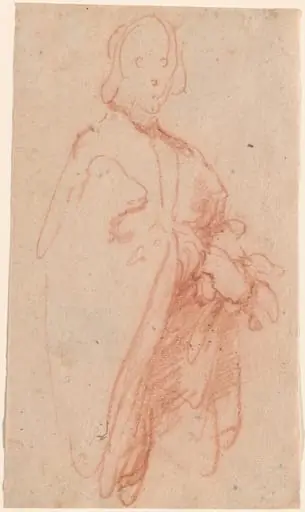
A priest seen from behind
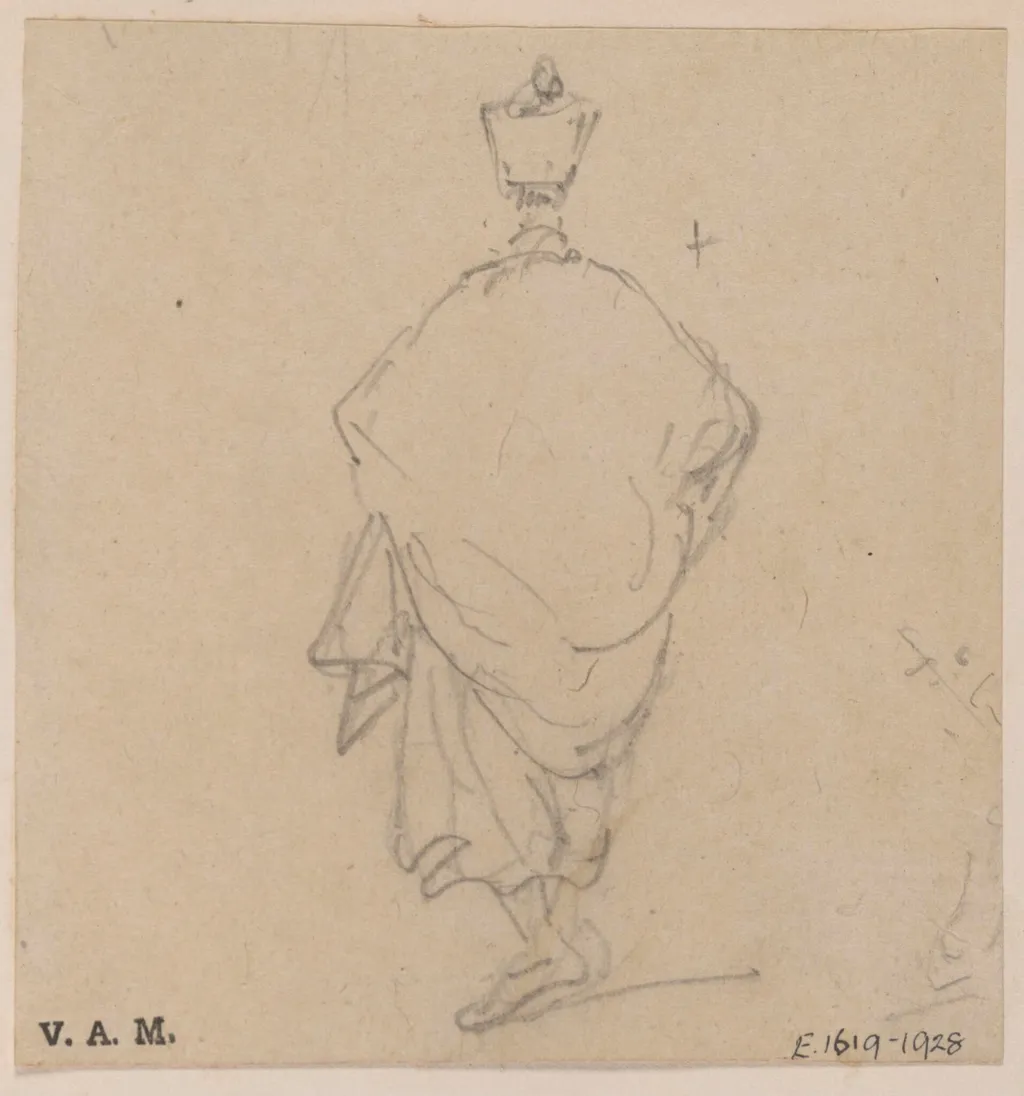
A priest seen from behind is a drawing by the Romanticist artist George Chinnery. It dates from 19 and is held in the collection of the Victoria and Albert Museum.
About this work
George Chinnery made this drawing of a Roman Catholic priest in 1825. It’s a work on paper, just one figure seen from behind. The priest wears a black biretta, a square cap.
This was drawn during the Romantic era. Chinnery spent years in India and China, so he knew how to capture people in quick, lively lines.
Look up the technique called cross-hatching next.
Overview
This drawing, created by George Chinnery in 1825, depicts a single figure viewed from behind. The work is executed on paper and features a Roman Catholic priest wearing a distinctive black biretta.
Technique & Style
The drawing showcases Chinnery's skill in capturing a subject with swift, expressive lines. The use of cross-hatching, a technique involving layered hatching at different angles, adds depth and texture to the image, reflecting Chinnery's experience in quickly rendering people during his years in India and China.
Context
Created during the Romantic era, this drawing reflects the period's emphasis on capturing the human experience and the individual character of its subjects.
Artist & collection
Artist
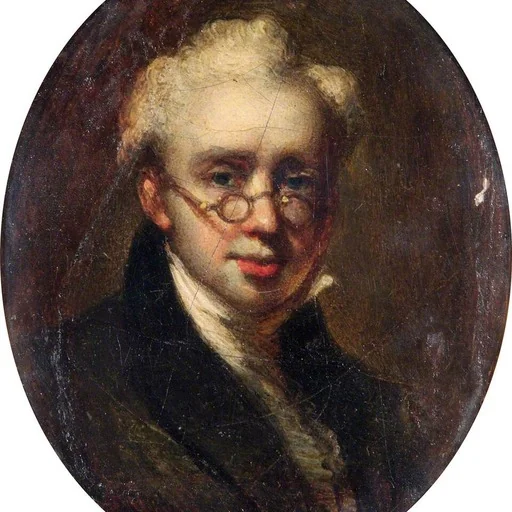
George Chinnery (Chinese: 錢納利; 5 January 1774 – 30 May 1852) was an English painter who spent most of his life in Asia, especially India and southern China.

![Kneeling Figure in a Hooded Robe [verso], by Hubert Robert](https://artifactworldgallery.com/img/hubert-robert--kneeling-figure-in-a-hooded-robe-verso--596ef6edbdb6ce00-w320.webp)
![Statue of a Roman Woman (Female Deity?) Seen from the Side [verso], by Hubert Robert](https://artifactworldgallery.com/img/hubert-robert--statue-of-a-roman-woman-female-deity-seen-from-the-side-vers--4bf9208a795411cc-w320.webp)