Artwork
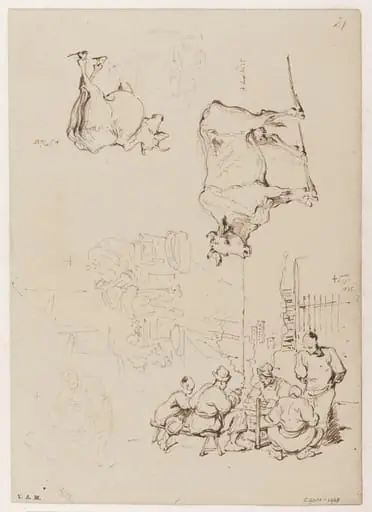
Kneeling figues by a temple mast, Macau
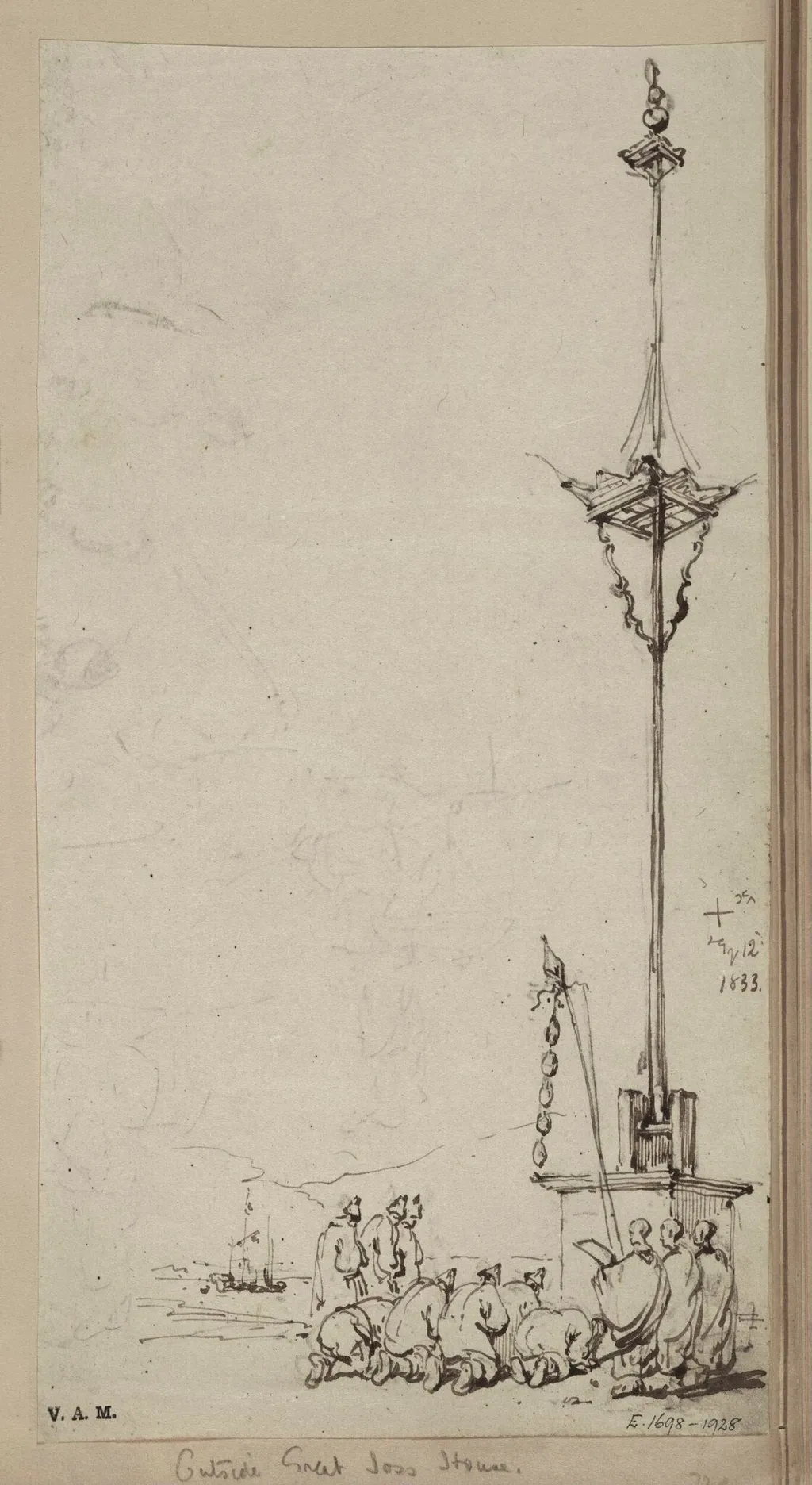
Kneeling figues by a temple mast, Macau is a drawing by the Romanticist artist George Chinnery. It dates from 11 and is held in the collection of the Victoria and Albert Museum.
About this work
This is a drawing from 1833 showing a group of people in Chinese conical hats. Some stand, some kneel with heads bowed near a temple mast. It’s a quiet scene outside the A-Ma temple in Macau.
The artist used Romanticism’s expressive style to capture a moment of reverence. The figures’ postures suggest respect or prayer before the temple.
Next, look up the Victoria and Albert Museum.
Overview
The scene centers on one of the temple’s vertical masts, framing the figures in a composition that emphasizes stillness and solemnity.
This 1833 drawing depicts a quiet moment outside the A-Ma Temple in Macau, showing a small group of individuals in conical hats, some standing, others kneeling with heads lowered. The scene centers on one of the temple’s vertical masts, framing the figures in a composition that emphasizes stillness and solemnity. Executed in pencil or ink, the work captures a fleeting instance of devotion in a colonial port city.
Subject & Meaning
The figures, dressed in traditional attire, appear engaged in quiet reverence. Their bowed heads and kneeling postures suggest prayer or contemplation, possibly reflecting local religious practice at the temple dedicated to the sea goddess A-Ma. The presence of standing figures may indicate temple attendants or pilgrims awaiting their turn, reinforcing the site’s role as a place of ritual and communal devotion.
Technique & Style
The artist employs a restrained, linear approach typical of early 19th-century travel sketches, with subtle tonal variations to suggest depth and texture. While not overtly dramatic, the composition conveys emotional weight through posture and spatial arrangement. The soft modeling of forms and attention to gesture reflect Romantic-era sensitivity to human expression, even within a documentary framework.
History & Provenance
The drawing is held in the collection of the Victoria and Albert Museum, acquired as part of a group of works documenting Macau’s cultural landscape during the early colonial period. Likely created by a European traveler or artist stationed in the region, it contributes to a visual archive of Macau’s religious life under Portuguese administration in the 1830s.
Context
In 1833, Macau was a key trading post where Chinese and Portuguese cultures intersected. The A-Ma Temple, one of the oldest in the territory, remained a vital center of local worship despite foreign presence. This drawing captures a moment when indigenous religious practices persisted visibly alongside colonial structures, offering a rare glimpse into daily spiritual life beyond official records.
Legacy
As one of few surviving visual records of A-Ma Temple rituals from this period, the drawing serves as an anthropological document. It preserves details of dress, posture, and spatial use that textual sources often omit. Its preservation in a major European museum underscores its value as evidence of cross-cultural observation during a time of shifting power and identity in coastal China.
Artist & collection
Artist
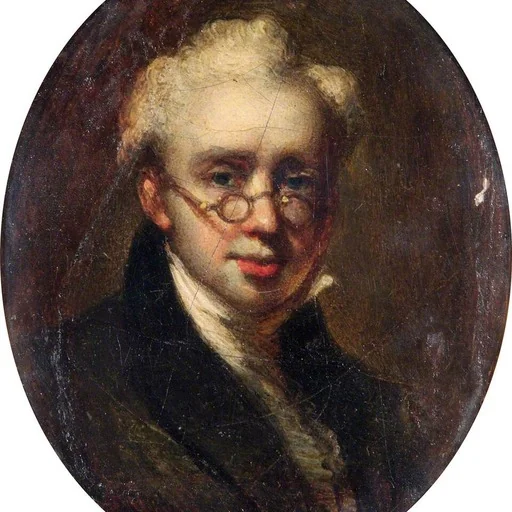
George Chinnery (Chinese: 錢納利; 5 January 1774 – 30 May 1852) was an English painter who spent most of his life in Asia, especially India and southern China.

 Figures eating at a food stall
 Etruscan Bronze Candlestick
 Drawings of a squared column and an arch
 The Vatican Obelisk
 Hands folded on the back of a chair
 Two Church Facades
 A Bishop's Crozier
 Drawing of capital
 Doors and windows
 Ancient Ruins on the Bank of the Tiber
 Design for a Gothic Fountain
 Mastheads and a mast base