Artwork
Ancient Ruins on the Bank of the Tiber
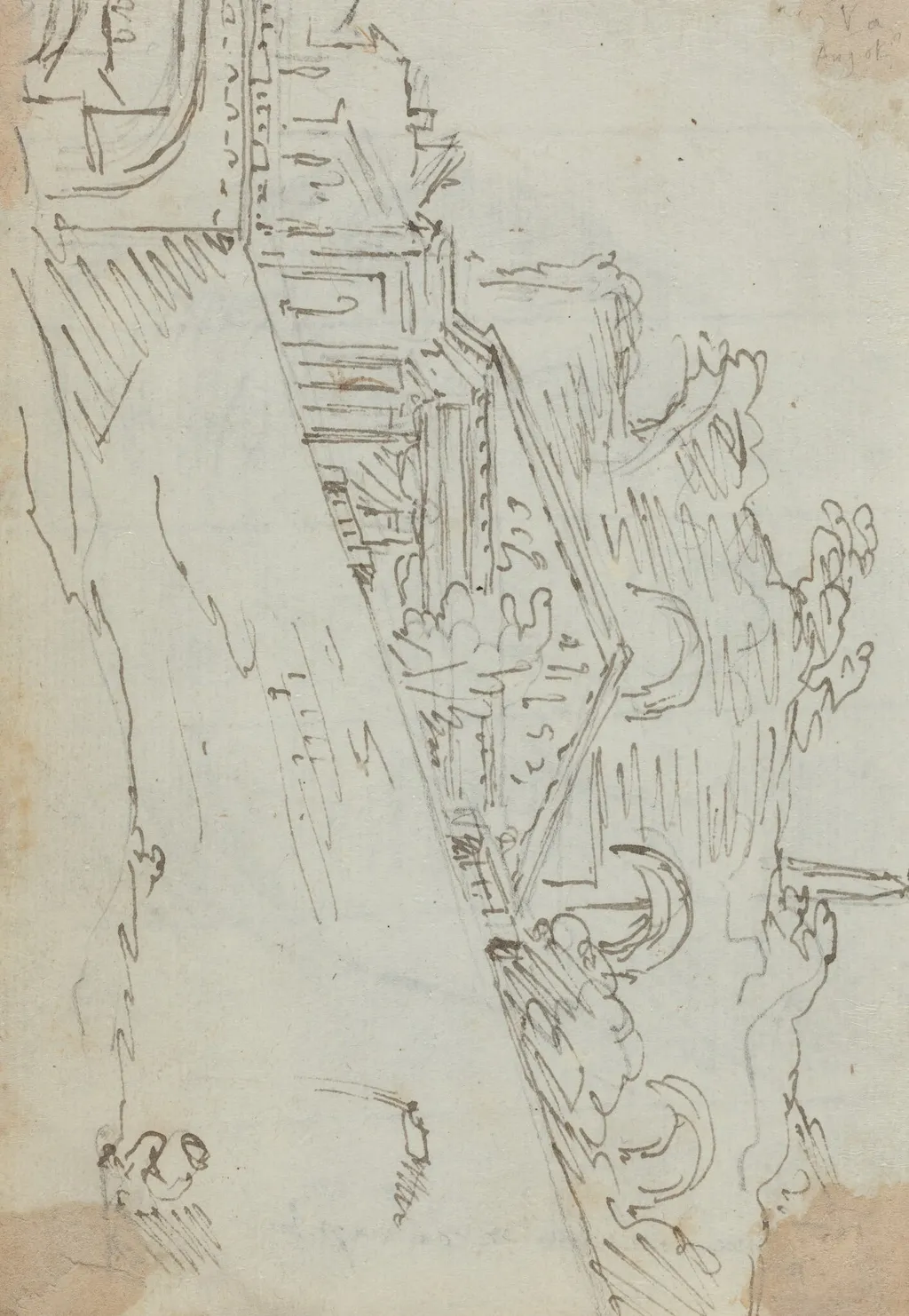
Ancient Ruins on the Bank of the Tiber is a chalk drawing by the Romanticist artist Augustin Pajou. It dates from 1754 and is held in the collection of the National Gallery of Art.
About this work
Overview
Created in 1754, this drawing by Augustin Pajou captures a quiet stretch of the Tiber River lined with the remnants of antiquity.
Created in 1754, this drawing by Augustin Pajou captures a quiet stretch of the Tiber River lined with the remnants of antiquity. Executed in pen and brown ink over black chalk on laid paper, it reflects the artist’s early engagement with Roman topography. The work belongs to a tradition of topographical sketches made by artists studying classical ruins, combining observation with a restrained aesthetic sensibility.
Subject & Meaning
The scene portrays fragmented Roman architecture—columns, arches, and masonry—partially reclaimed by nature. Structures stand in varying states of collapse, suggesting the passage of time and the impermanence of human achievement. The inclusion of sparse trees and undergrowth softens the ruins, evoking a mood of quiet endurance rather than grandeur or ruinous spectacle.
Technique & Style
Pajou employed black chalk for broad tonal foundations, then refined contours and shadows with pen and brown ink. The layered medium allowed for both structural definition and atmospheric nuance. The paper’s laid texture subtly enhances the sense of age and materiality, aligning the support with the subject’s historical weight. The handling is precise yet unembellished, favoring clarity over dramatic effect.
History & Provenance
Made during Pajou’s formative years in Rome, the drawing likely served as a study for later sculptural commissions or academic exercises. It was produced before his return to France and rise as a royal sculptor. The work remained within private collections until entering a public institution, where it now stands as evidence of his early artistic development and engagement with classical antiquity.
Context
In mid-18th-century Rome, artists and travelers routinely sketched ruins as part of the Grand Tour tradition. Pajou’s work aligns with this practice, though it avoids the theatricality of later Romantic interpretations. His focus on quiet decay reflects a scholarly interest in architectural form rather than emotional response, situating the drawing within Enlightenment-era antiquarianism.
Legacy
Though Pajou is better known for his neoclassical sculpture, this drawing reveals his foundational sensitivity to spatial composition and historical texture. It contributes to the broader corpus of 18th-century topographical drawings that informed architectural and archaeological understanding. Its modest scale and restrained execution offer a counterpoint to more monumental treatments of antiquity in later periods.
Artist & collection
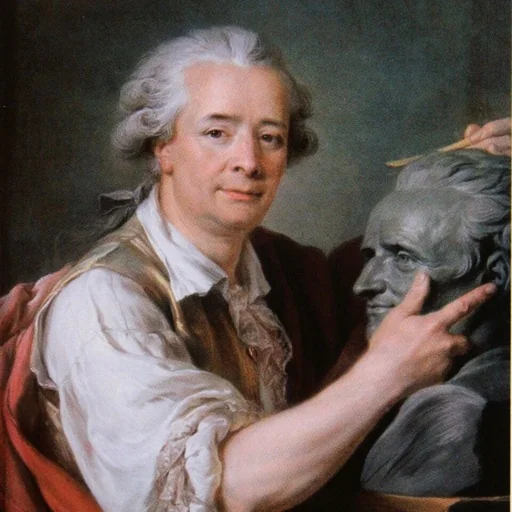
Artist
Augustin Pajou (French pronunciation: ; 19 September 1730 – 8 May 1809) was a French sculptor, born in Paris. At eighteen he won the Prix de Rome, and at thirty exhibited his Pluton tenant Cerbère enchaîné (now in the Louvre).

![The Ripetta in Rome [verso], by Augustin Pajou](https://artifactworldgallery.com/img/augustin-pajou--the-ripetta-in-rome-verso--4bc04e9c9476a91b-w320.webp)
![Angel from the Assumption [recto], by Augustin Pajou](https://artifactworldgallery.com/img/augustin-pajou--angel-from-the-assumption-recto--59871eebf02790c8-w320.webp)
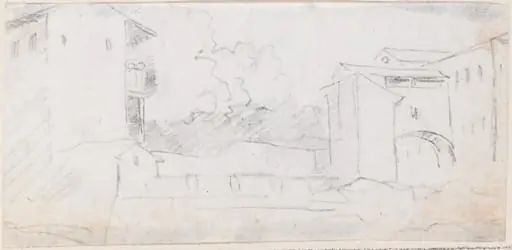 Italian City Scene
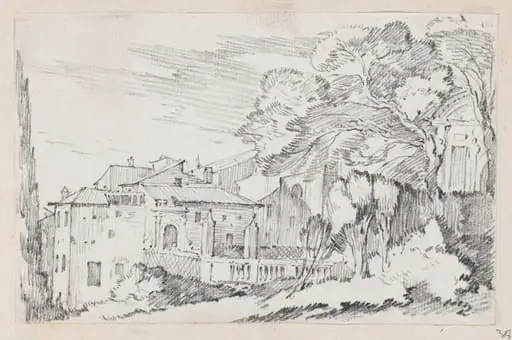 Houses and a Garden on a Hillside in Italy
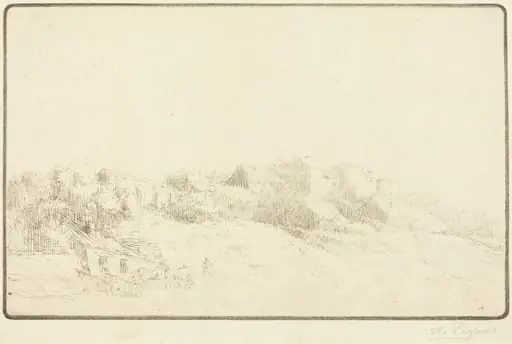 Saint Maurice in Bourgogne (Saint Maurice en Bourgogne)
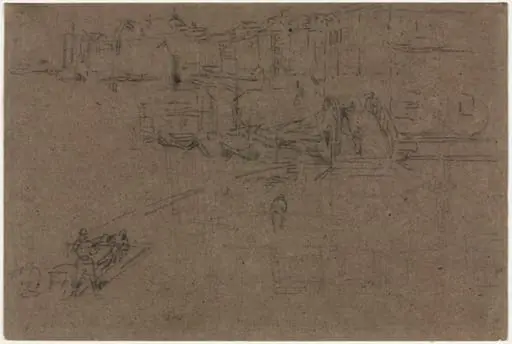 The Riva, Venice
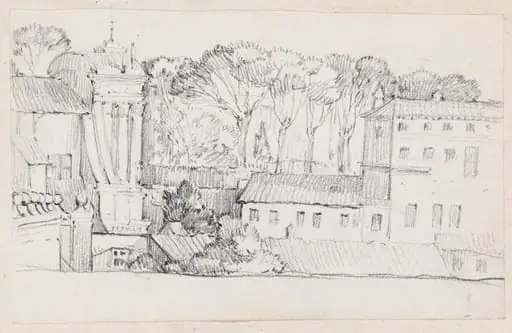 Roman Rooftops
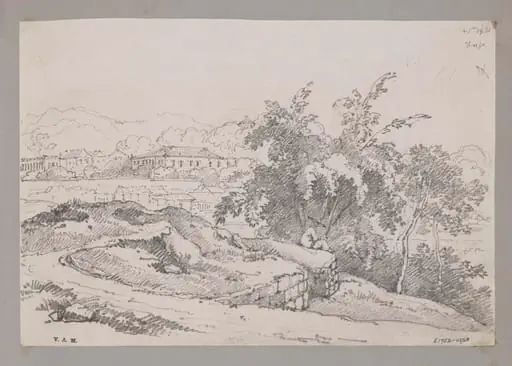 The Casa, Macao, in the gardens of which is Camoens' Cave (the residence of Lady Pereira), Macao
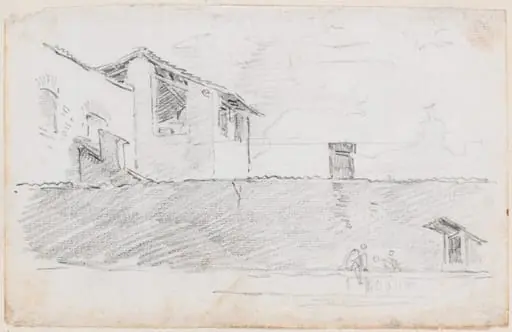 Housetops behind a Wall
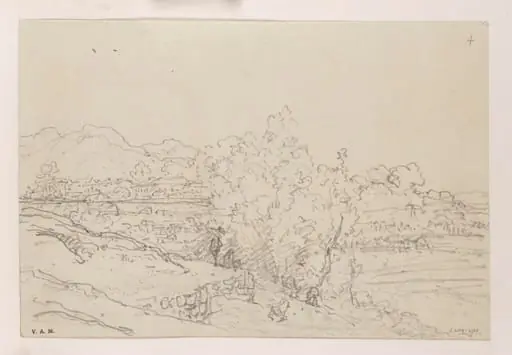 Fields and trees, with the city of Macau in the distance
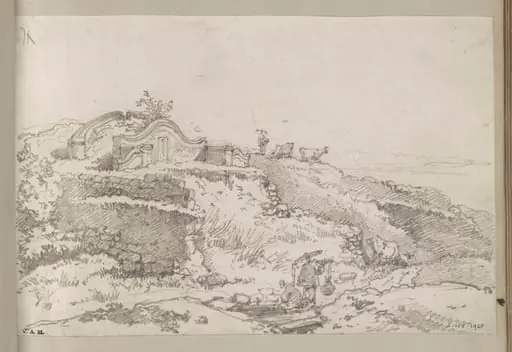 A Chinese tomb on a hillside, Macau
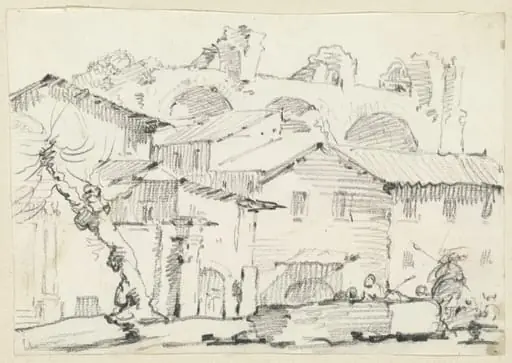 Houses on the North Side of the Forum with the Basilica of Maxentius Beyond
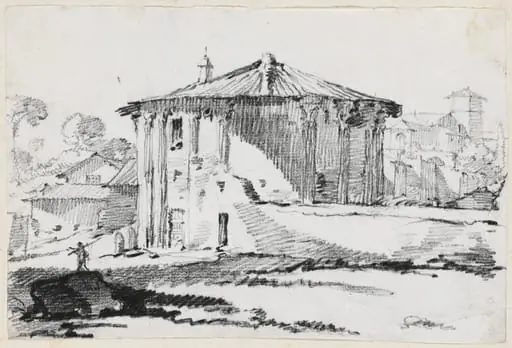 The Round Temple on the Piazza Bocca della Verità, Rome