Artwork
Portrait of Valerian G. Madatov (1782-1829)
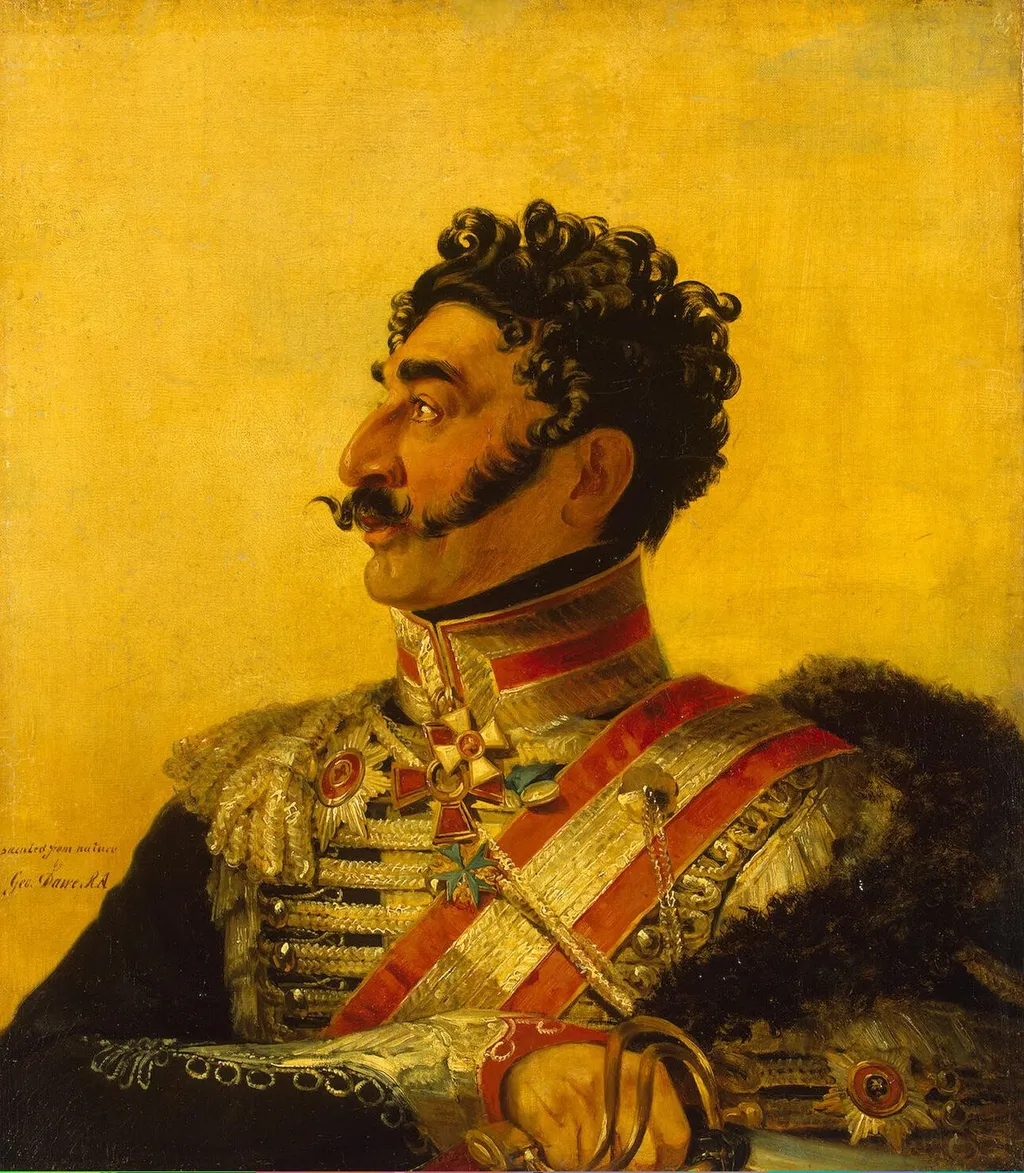
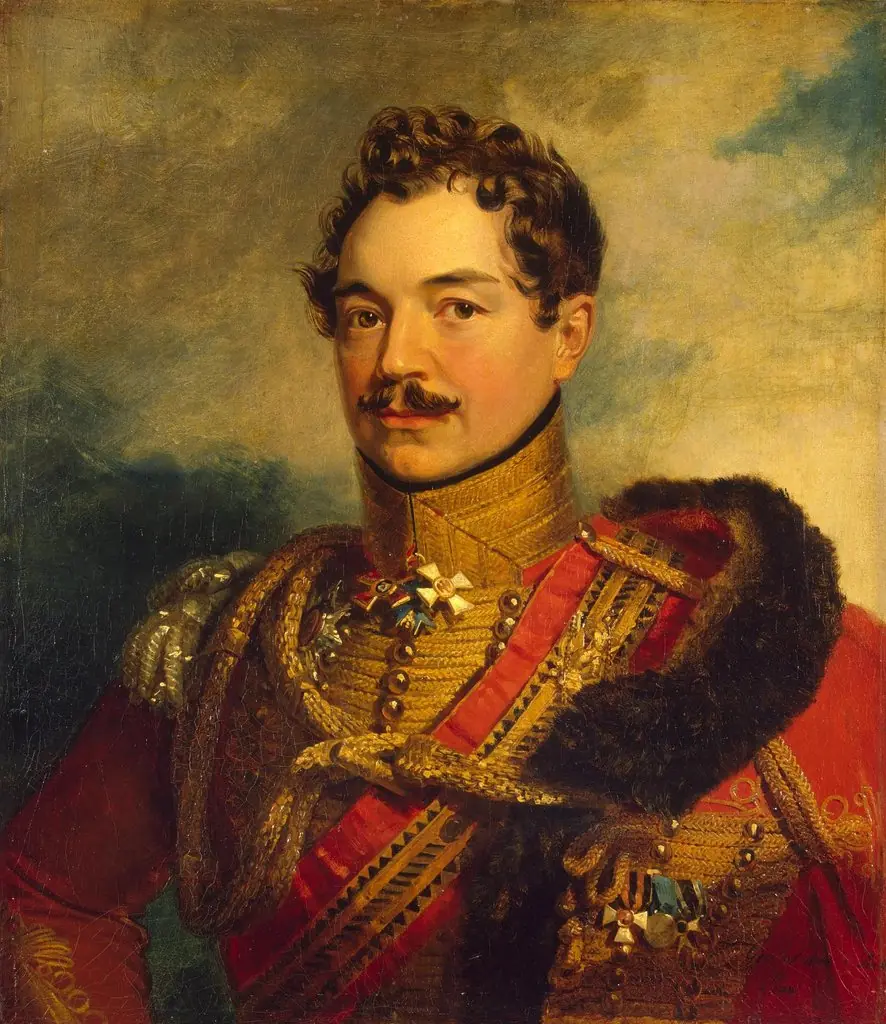
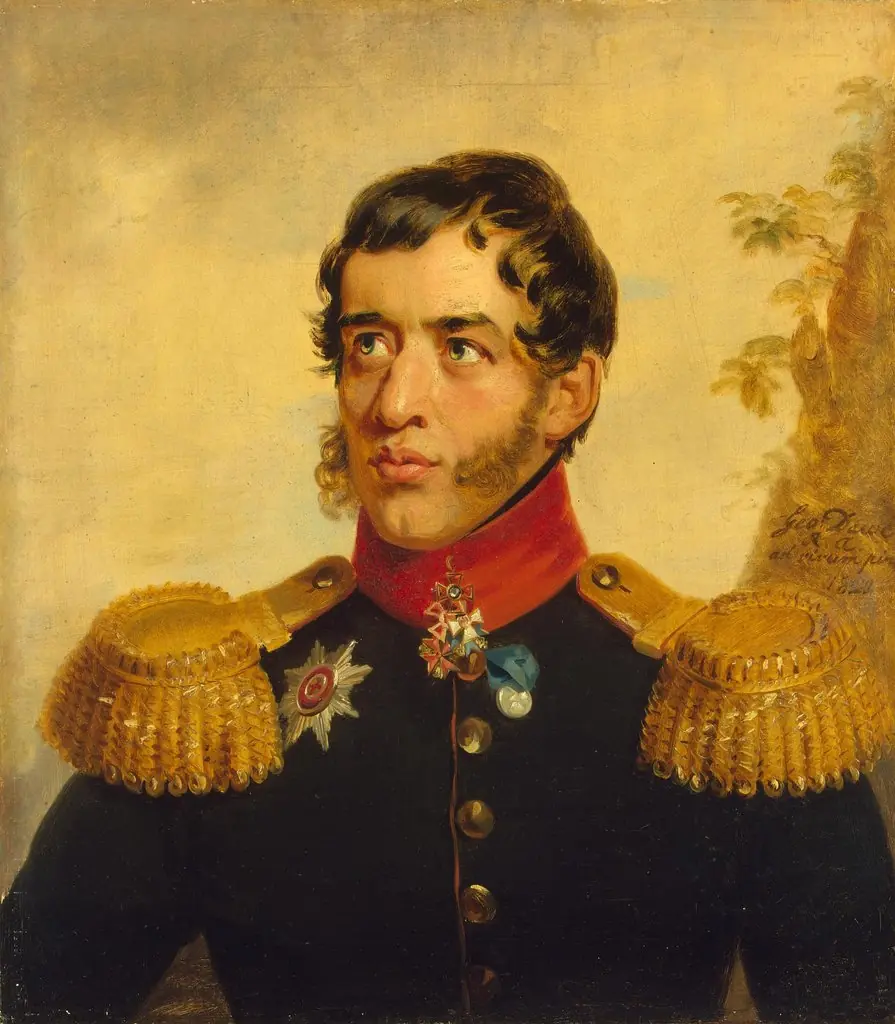
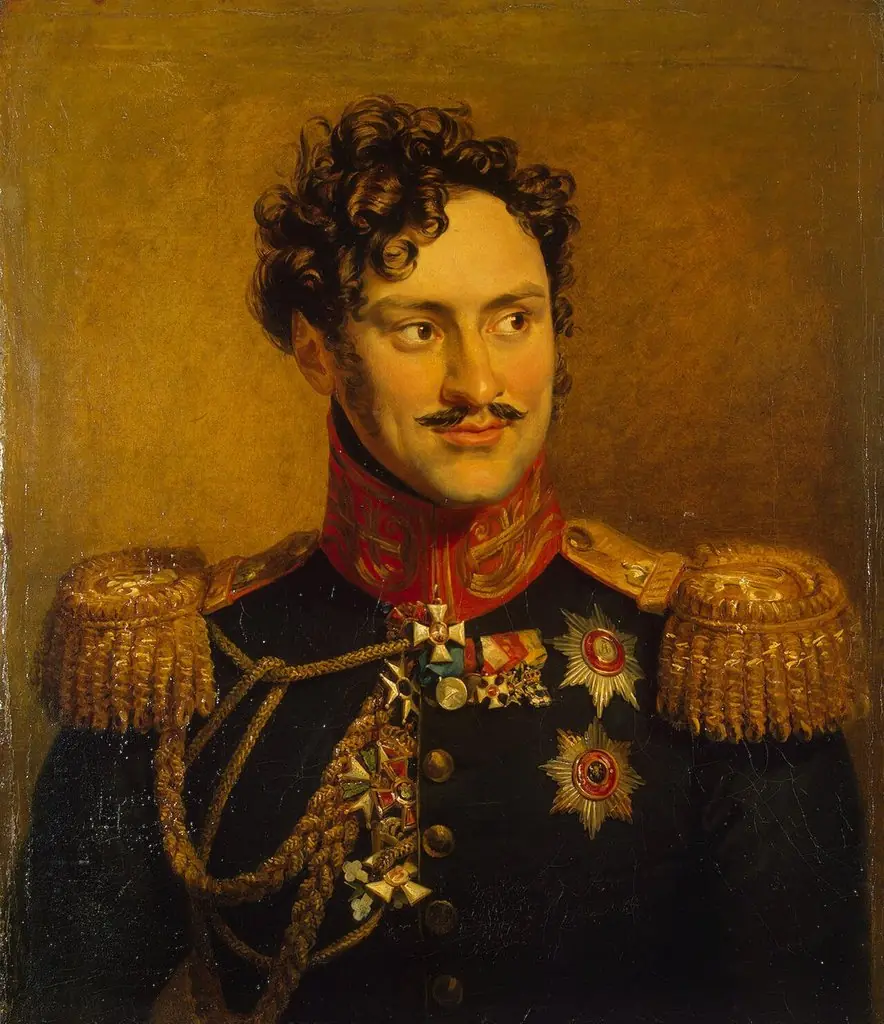
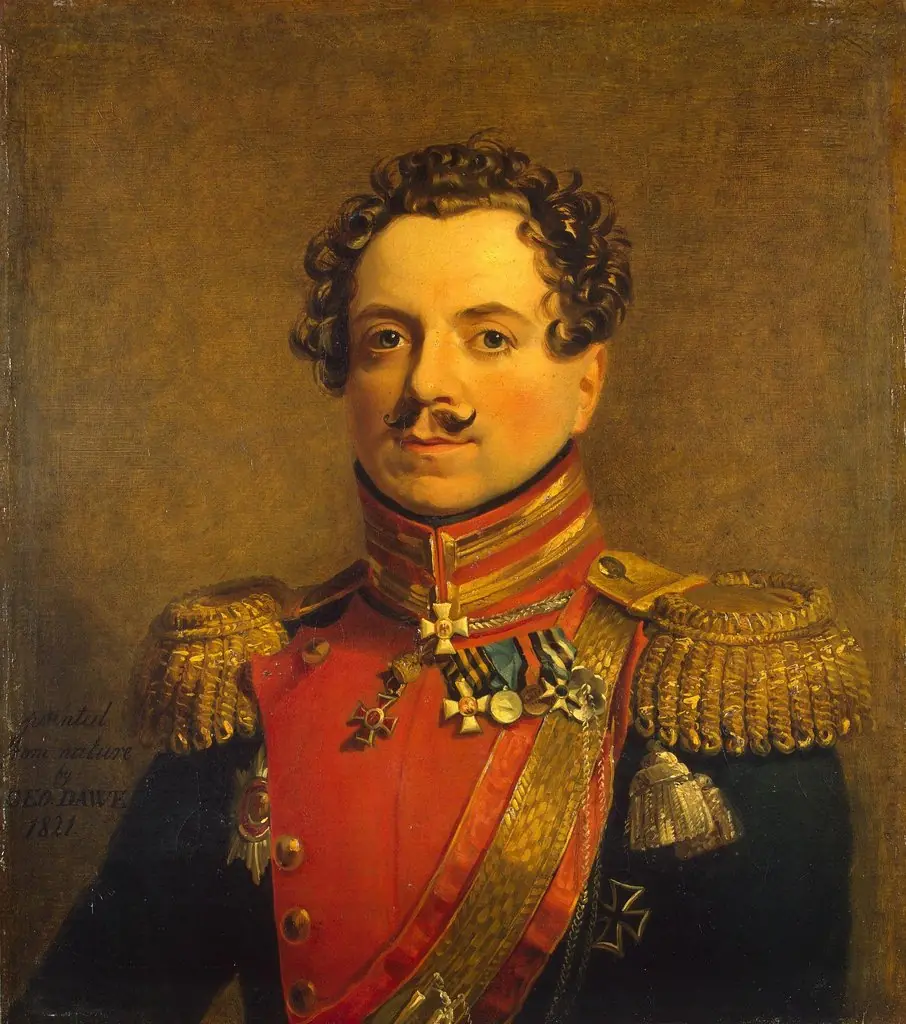
Portrait of Valerian G. Madatov (1782-1829) is an oil painting by George Dawe. It dates from 1822 and is held in the collection of the Hermitage Museum.
About this work
Overview
Painted in 1822 by the English artist George Dawe, this oil portrait depicts Russian general Valerian G. Madatov. Dawe, who relocated to Saint Petersburg in 1819, became known for his military portraits in imperial Russia. The work is part of the State Hermitage Museum’s collection, where it remains as one of many commissioned likenesses of Russian officers from the Napoleonic era.
Subject & Meaning
The portrait emphasizes his rank and honors through elaborate uniform details—medals, sashes, and ornate buttons—conveying status and service.
Valerian Madatov was a decorated general who served in the Russian army during the Napoleonic Wars. The portrait emphasizes his rank and honors through elaborate uniform details—medals, sashes, and ornate buttons—conveying status and service. His stern expression and direct gaze suggest authority and resolve, aligning with the era’s expectation that military leaders be portrayed as disciplined and resolute.
Technique & Style
Dawe employed chiaroscuro to model Madatov’s face with subtle gradations of light and shadow, lending depth and volume to his features. The rendering of the fur collar and metallic embellishments on the uniform demonstrates careful attention to texture and reflective surfaces. The plain, dark background eliminates distraction, directing focus entirely to the subject’s presence and attire.
History & Provenance
Commissioned during Dawe’s tenure in Saint Petersburg, the portrait was likely created as part of a larger project to document Russian military leaders. It entered the Hermitage’s collection shortly after completion, remaining in state custody since. Dawe’s reputation in Russia, supported by cultural figures like Pushkin, ensured his works were preserved within imperial institutions.
Context
In early 19th-century Russia, portraiture served both personal and political functions, reinforcing the image of the state’s military elite. Dawe’s style, influenced by British academic traditions, was adapted to Russian tastes, blending realism with ceremonial grandeur. This portrait reflects the broader trend of using art to legitimize and memorialize service to the empire.
Legacy
The portrait endures as a representative example of Dawe’s Russian period and the visual culture of military commemoration under Tsar Alexander I. While not widely exhibited outside the Hermitage, it contributes to the historical record of Russian officers and the cross-cultural exchange of artistic practices between Britain and Russia in the post-Napoleonic era.
Artist & collection
Artist
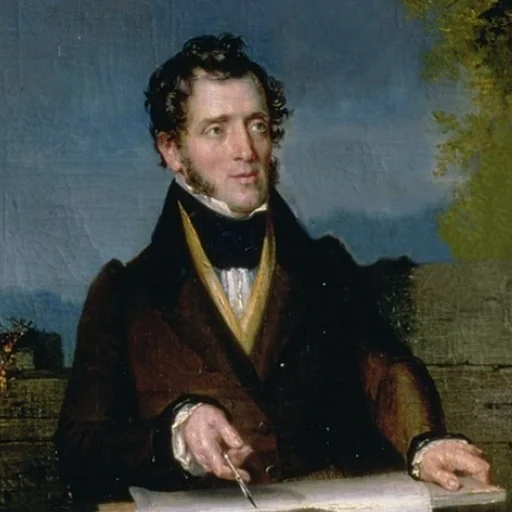
George Dawe (6 February 1781 – 15 October 1829) was an English portraitist who painted 329 portraits of Russian generals active during Napoleon's invasion of Russia for the Military Gallery of the Winter Palace.

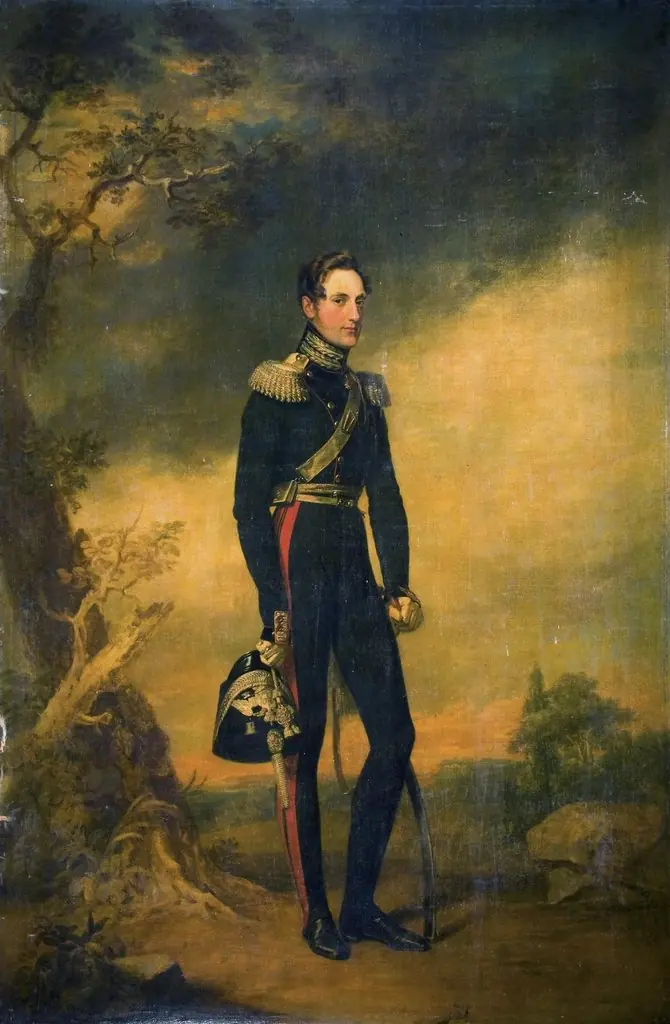 Portrait of Grand Duke Nikolai Pavlovich
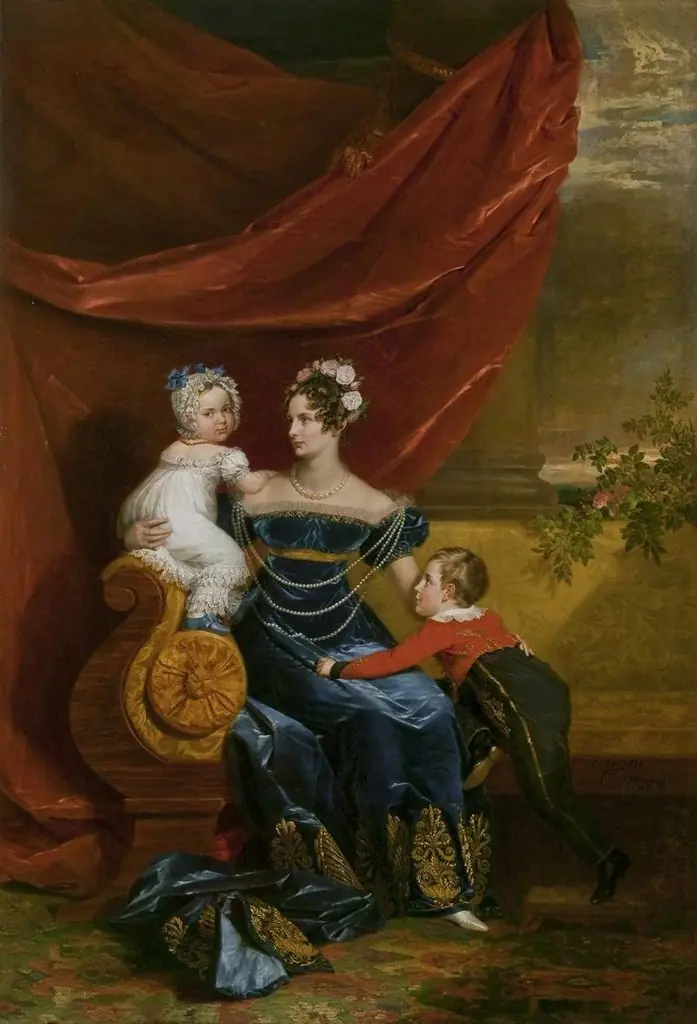 Portrait of Grand Duchess Alexandra Fiodorovna with Children
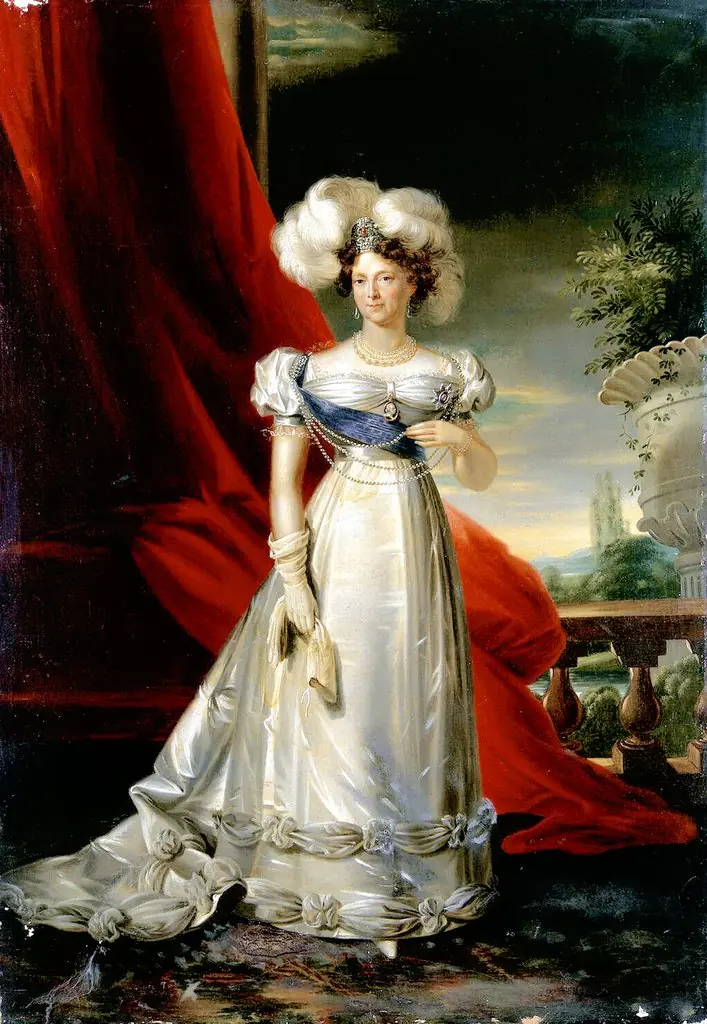 Portrait of the Empress Dowager Maria Feodorovna
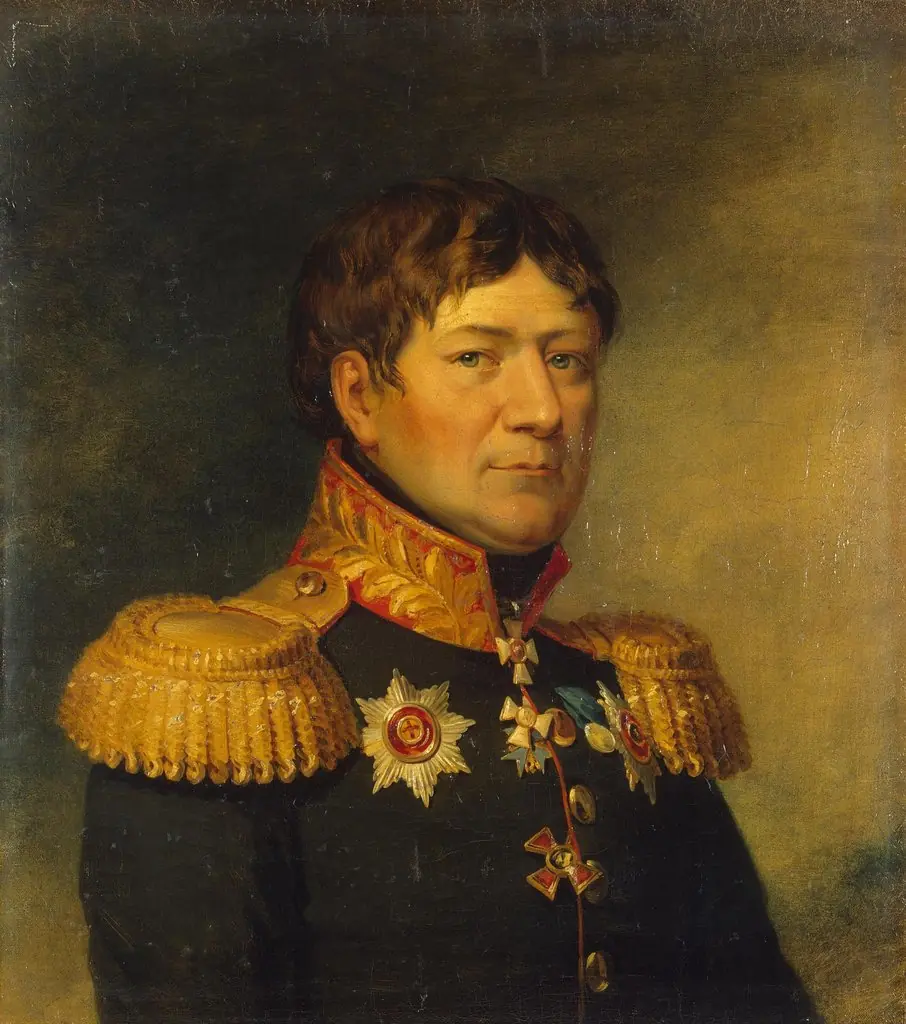 Portrait of Yegor M. Pillar (1767-1830)
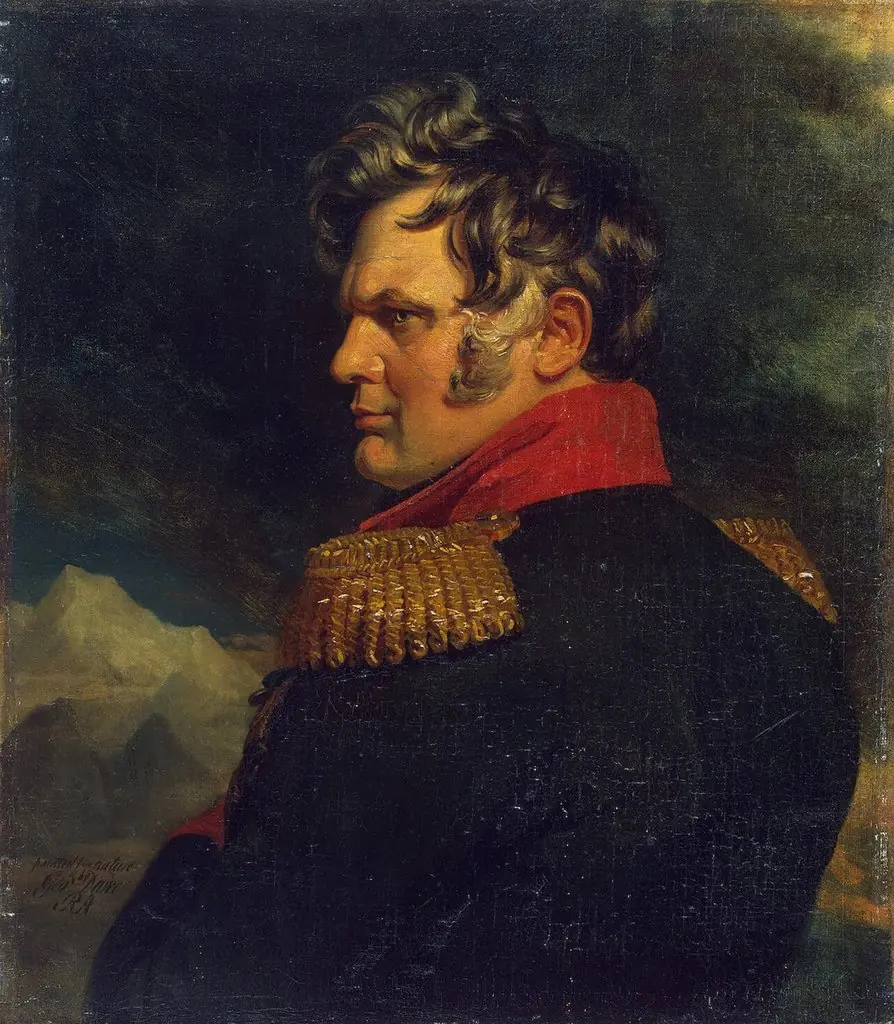 Portrait of Alexei P. Yermolov (1772/77-1861)
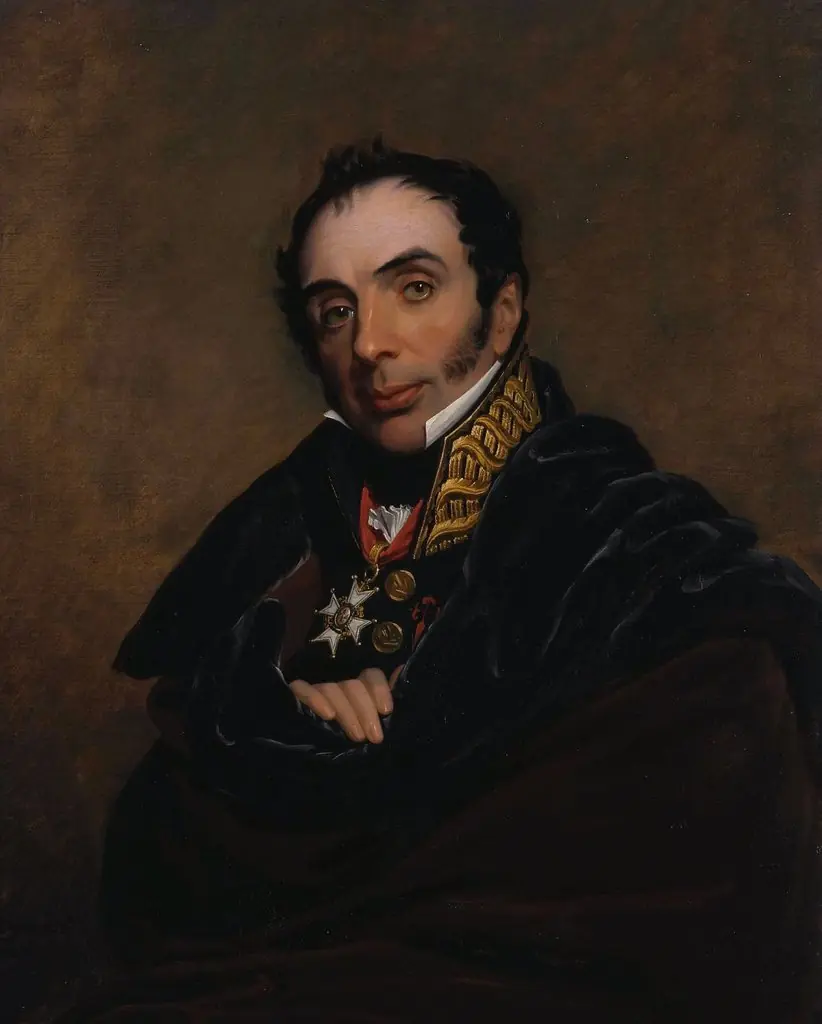 Portrait of Miguel Ricardo de Alava
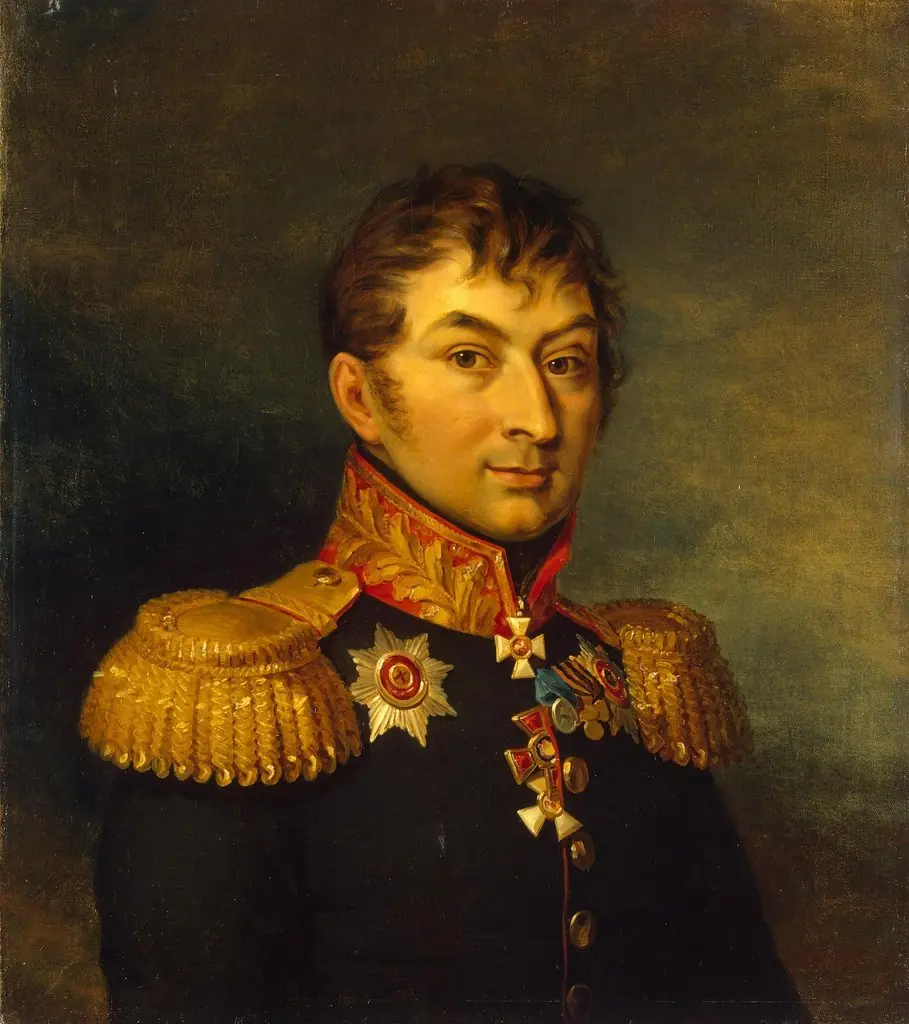 Portrait of Ivan D. Panchulidzev (1759-1815) (1st)
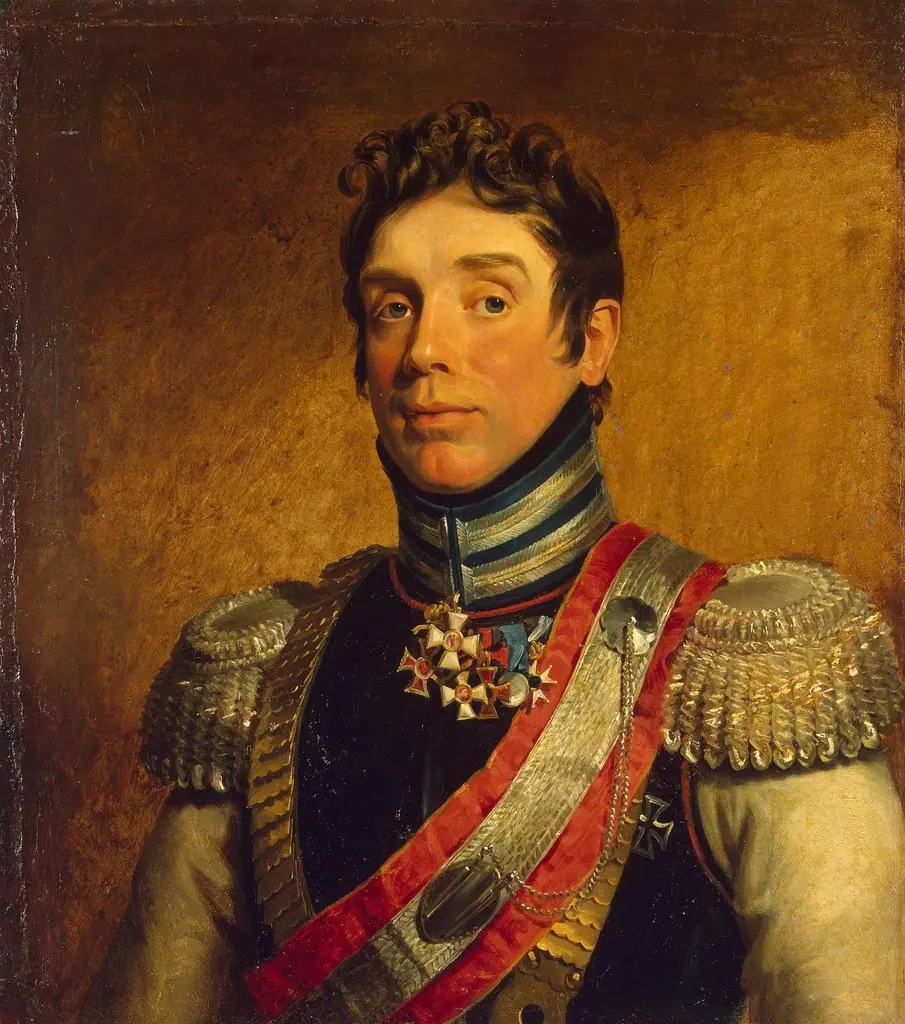 Portrait of Karl V. Budberg (1774-1829)