Artwork
The Rider on the Black Horse
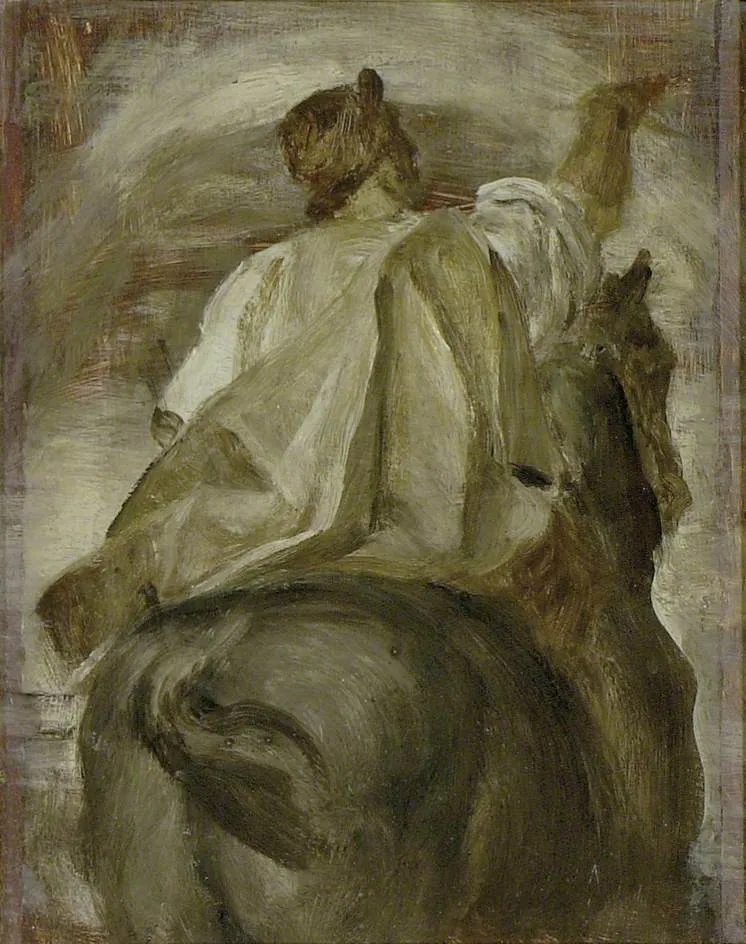
The Rider on the Black Horse is an oil painting by the Impressionist artist George Frederic Watts. It dates from 1875 and is held in the collection of the Ashmolean Museum.
About this work
Overview
Painted in 1875 by George Frederic Watts, this oil-on-canvas work depicts a solitary figure atop a dark horse, both turned away from the viewer.
Painted in 1875 by George Frederic Watts, this oil-on-canvas work depicts a solitary figure atop a dark horse, both turned away from the viewer. Watts, known for allegorical themes, created this piece as part of a broader exploration of existential ideas. Though often linked to Symbolism, its technique reflects a tactile handling of paint that diverges from strict Impressionist norms. The painting resides in the Ashmolean Museum’s collection.
Subject & Meaning
The rider, cloaked in light fabric and facing away, evokes anonymity and introspection. The black horse, powerful yet motionless, suggests burden or inevitability. Together, they form a silent allegory—possibly of fate, isolation, or the human condition—consistent with Watts’s broader 'House of Life' project. No narrative is spelled out; instead, the image invites contemplation through ambiguity and restraint.
Technique & Style
Watts employed thick, visible brushwork to model form and texture, emphasizing the contrast between the rider’s pale garments and the horse’s dark silhouette. The background is softly rendered, allowing the figures to emerge through tonal shifts rather than detailed definition. This approach prioritizes emotional resonance over realism, blending academic training with a more expressive, atmospheric sensibility.
History & Provenance
Completed in 1875, the painting entered the Ashmolean Museum’s collection in the late 19th century, likely through direct acquisition or donation linked to Watts’s network. It was never widely exhibited during his lifetime, remaining a private meditation within his symbolic oeuvre. Its presence in the museum reflects institutional recognition of his allegorical vision, even as public attention favored his more famous works.
Context
Watts worked amid Victorian debates about morality, mortality, and spiritual uncertainty. While contemporaries pursued realism or aestheticism, he sought universal themes through mythic imagery. *The Rider on the Black Horse* aligns with his unfinished 'House of Life' series, which aimed to map the human journey through symbolic figures. Its quiet intensity contrasts with the era’s narrative-driven art.
Legacy
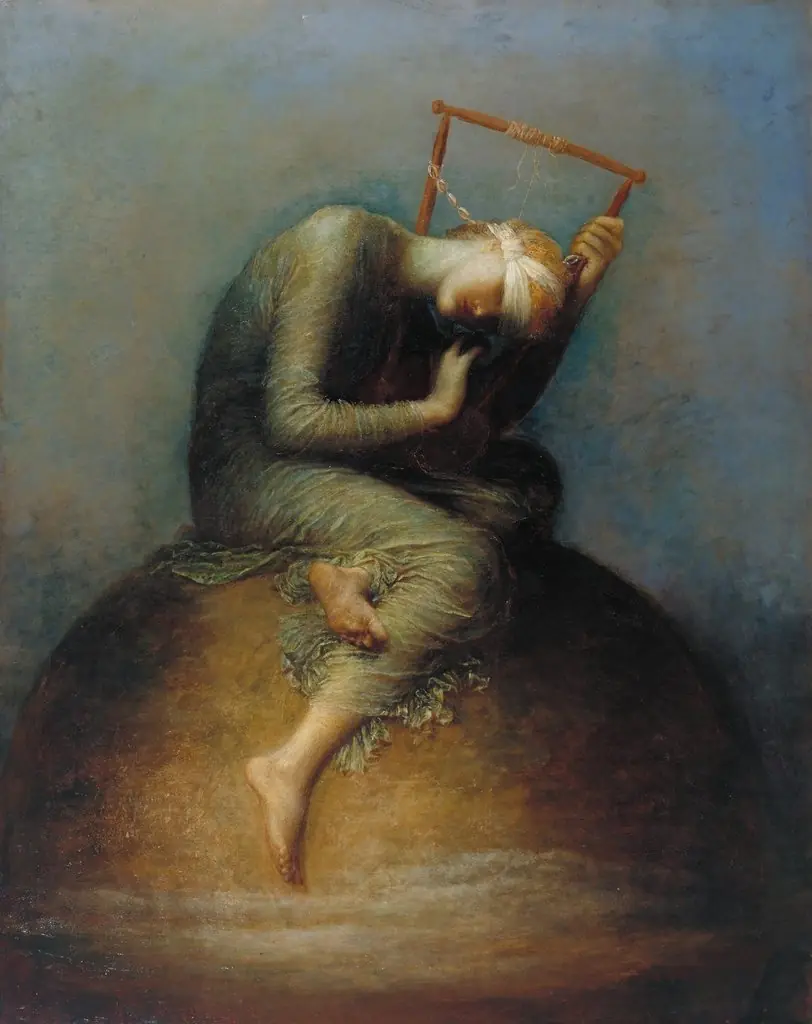
Though less known than Watts’s *Hope* or *Love and Life*, this painting exemplifies his commitment to conveying abstract ideas through restrained visual language. It influenced later Symbolist painters who valued mood over detail. Today, it stands as a quiet testament to his belief in art as a vehicle for philosophical inquiry, rather than mere representation.
Artist & collection
Artist
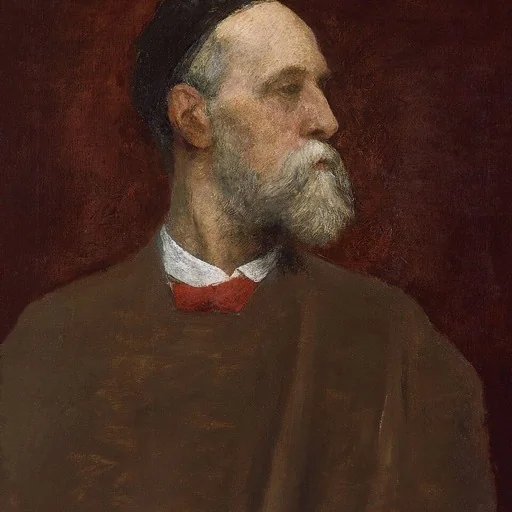
George Frederic Watts (23 February 1817 – 1 July 1904) was a British painter and sculptor associated with the Symbolist movement.

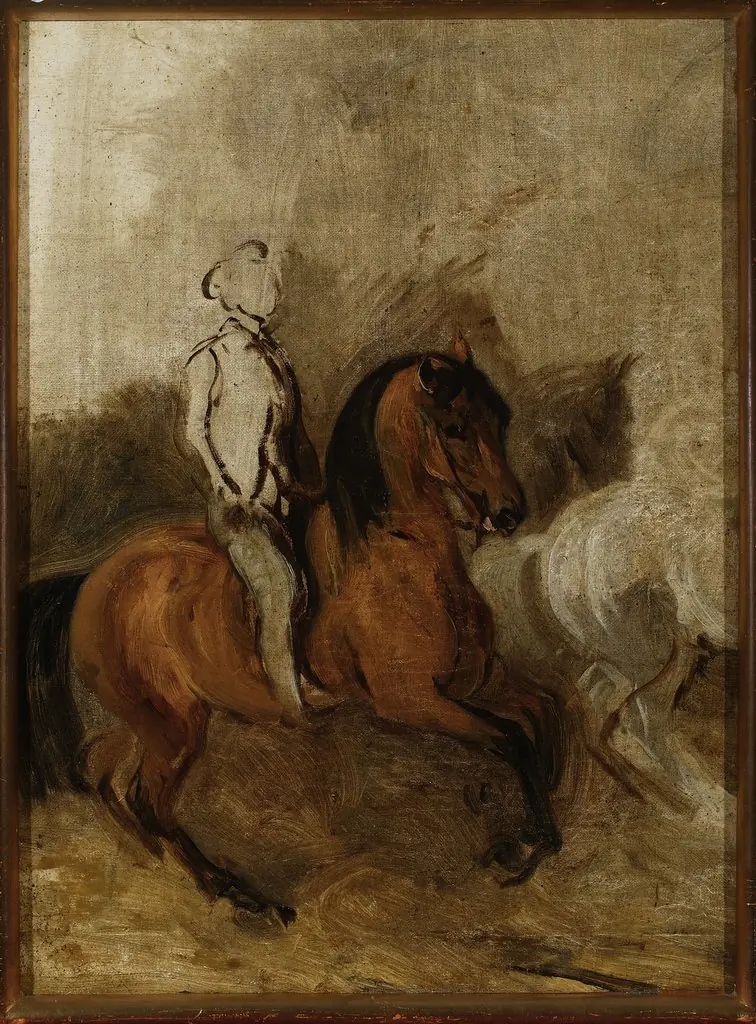 Horseman, sketch
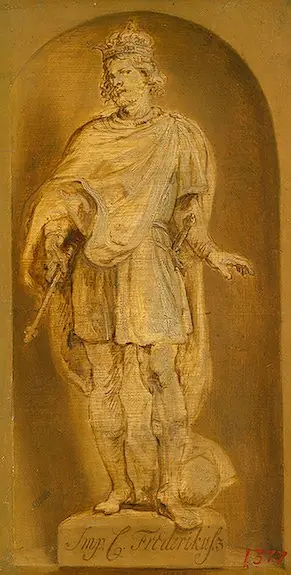 Statue of Frederick III in a niche
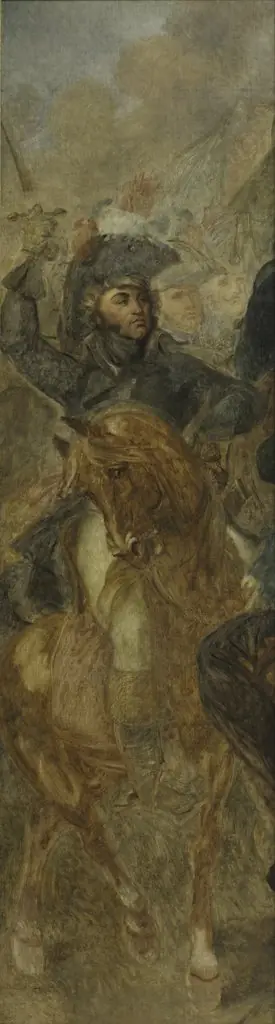 General Jean-Baptiste Kléber (Sketch for "The Battle of the Pyramids")
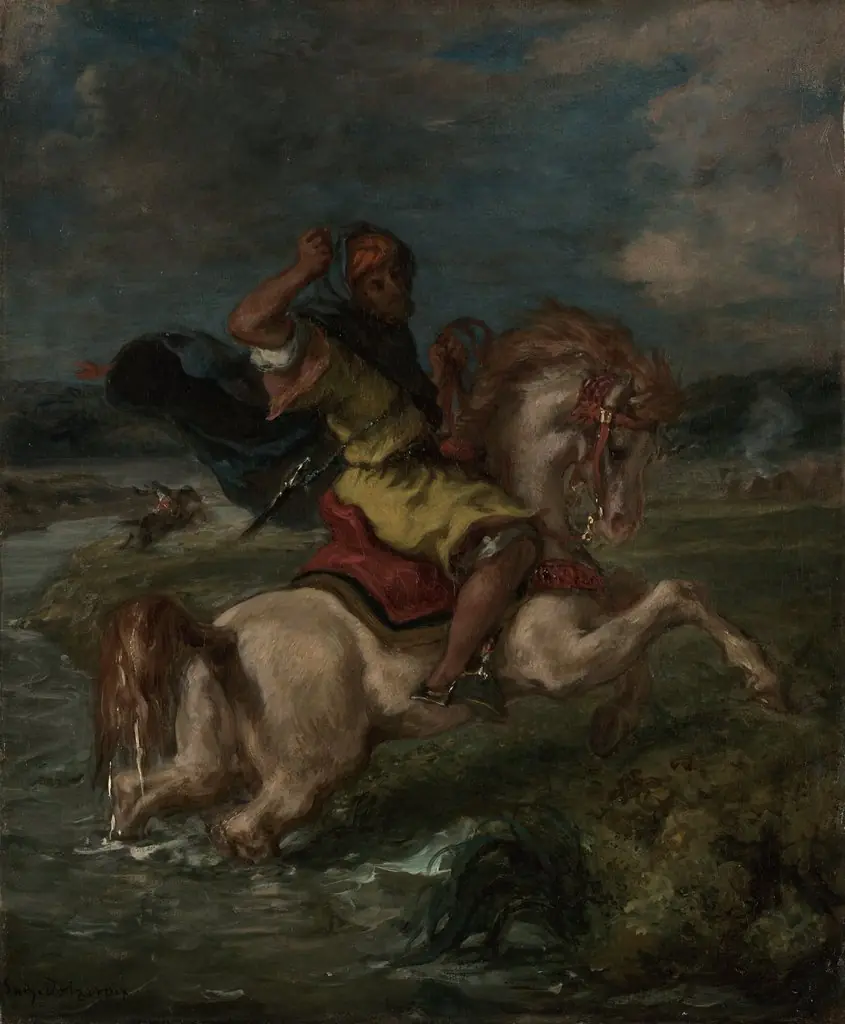 Moroccan Horseman Crossing a Ford
 Ceres
Ceres Scene from Ancient History
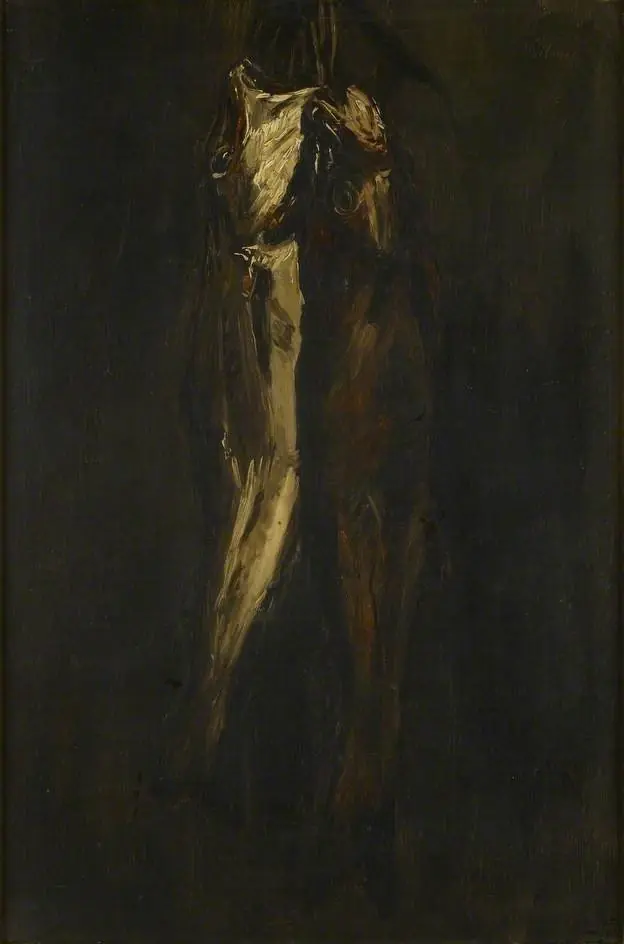 Still Life of Herrings suspended on a Wall
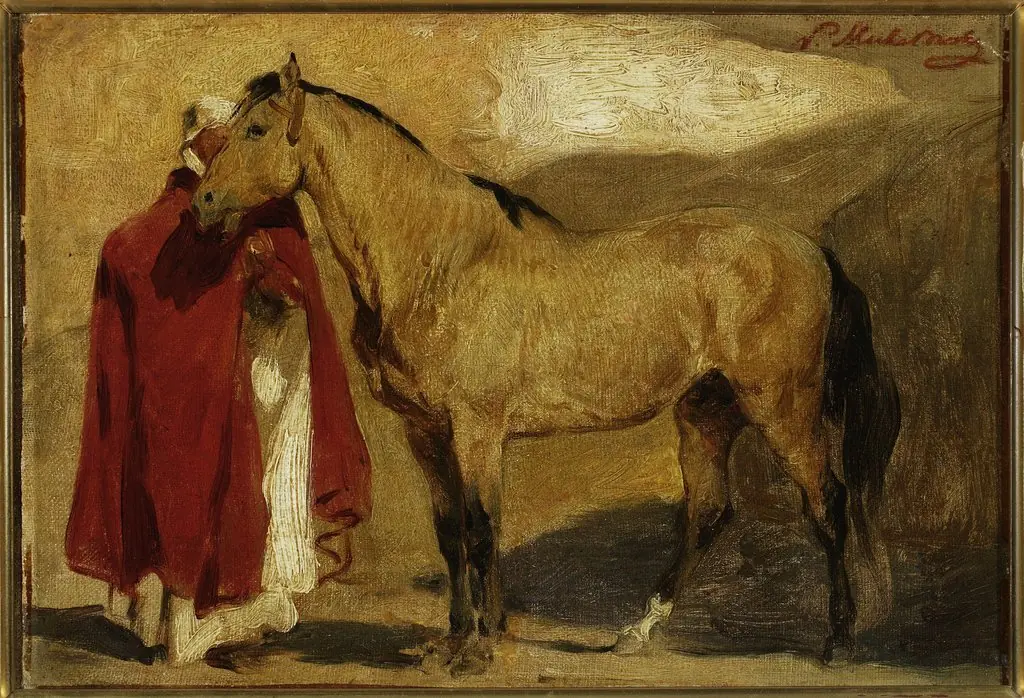 Moroccan man with a horse
 Saint-Martin partageant son manteau avec un pauvre
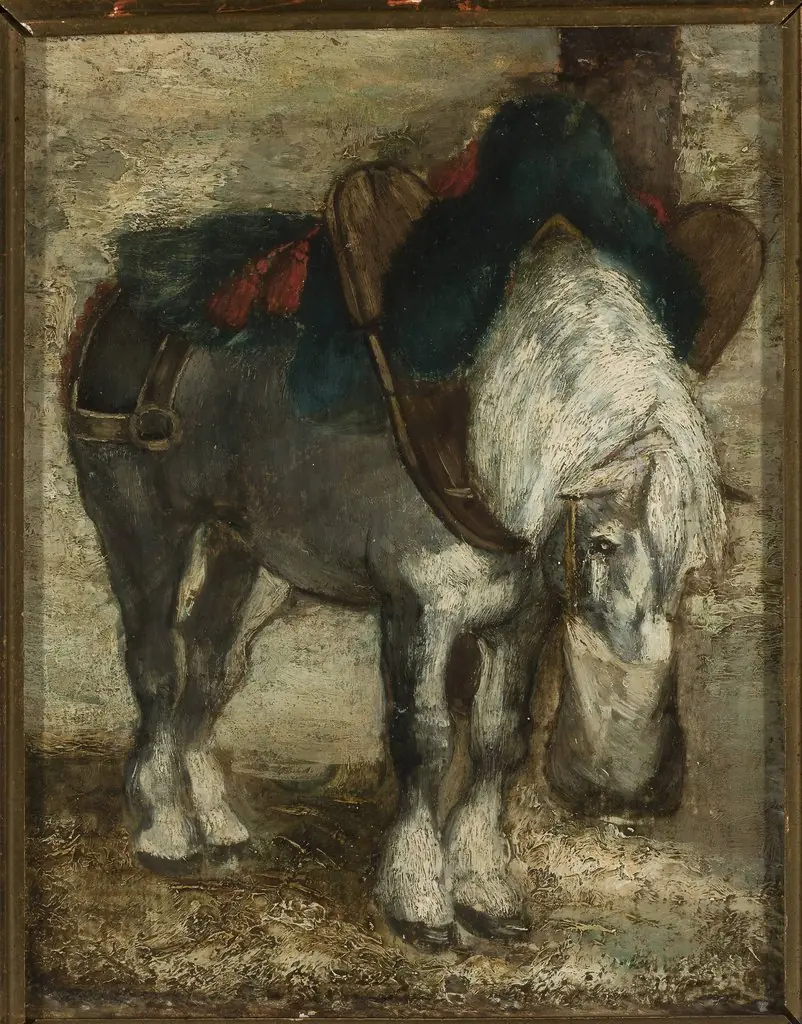 Percheron harnessed