Artwork
Buying Fish
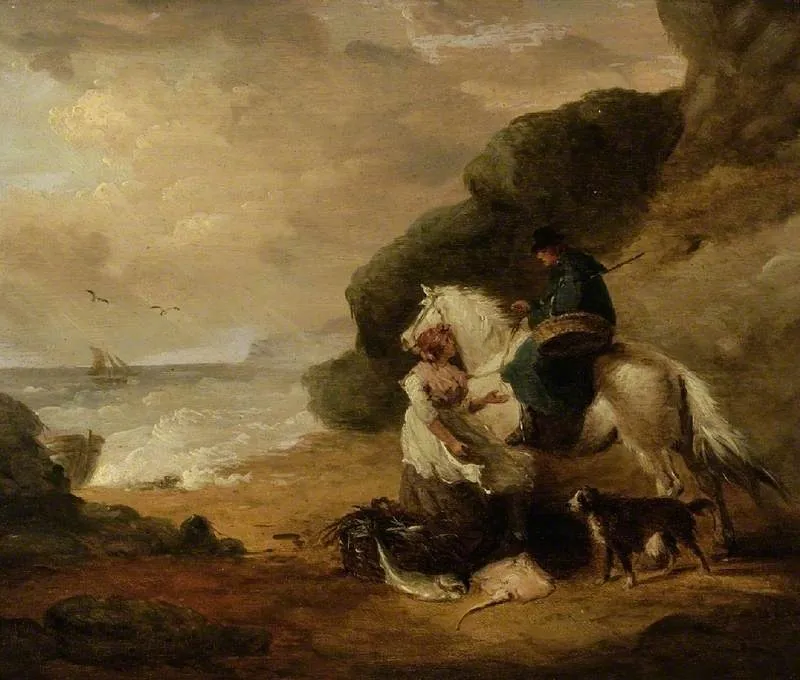
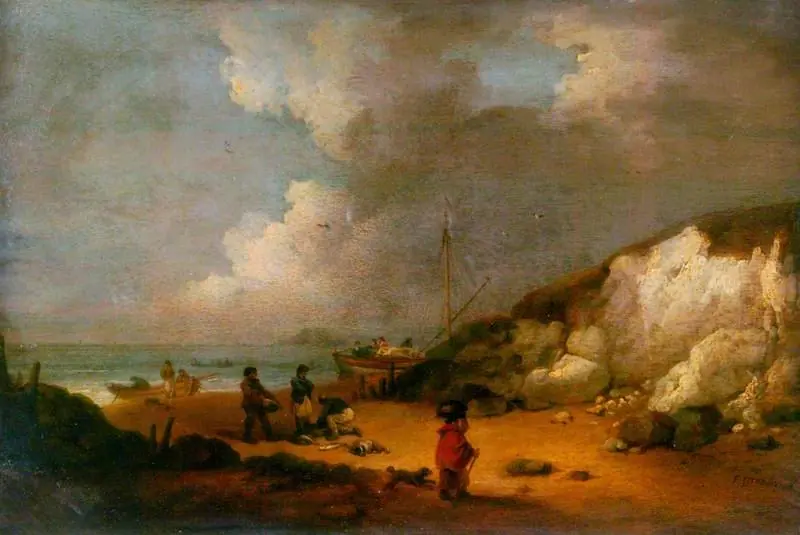
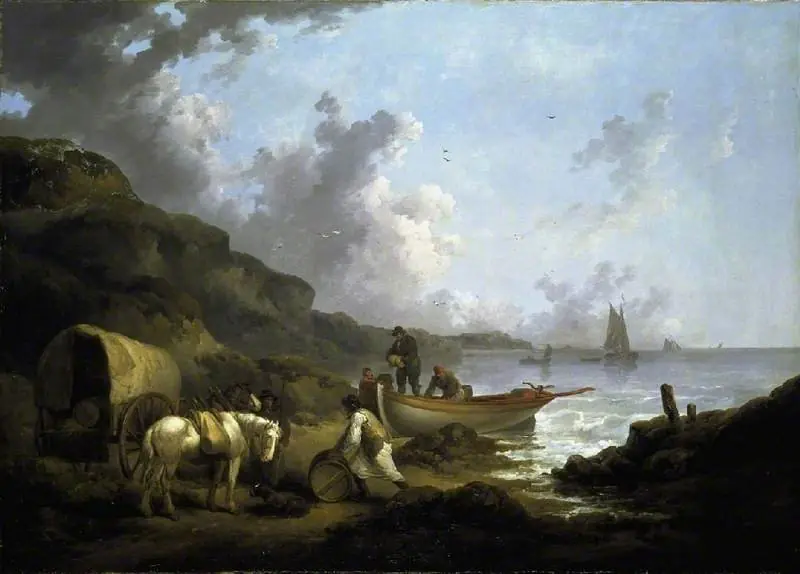
Buying Fish is an oil painting by George Morland. It dates from 1793 and is held in the collection of the Fitzwilliam Museum.
About this work
Overview
Painted around 1793 in oil, *Buying Fish* is a genre scene by George Morland, an artist known for rural life and atmospheric landscapes.
Painted around 1793 in oil, *Buying Fish* is a genre scene by George Morland, an artist known for rural life and atmospheric landscapes. The work captures a quiet transaction between a woman on horseback and a man on foot, framed by a coastal cliff and overcast sky. Morland’s frequent depiction of everyday moments, often reproduced as prints, made his imagery widely accessible, though he himself faced financial hardship despite his productivity.
Subject & Meaning
The painting portrays a momentary exchange: a woman, seated on a white horse and holding a basket, observes a fish laid on the ground by a man in dark attire. A dog rests nearby, adding to the sense of an unposed, private encounter. No grand narrative is implied; instead, the scene suggests the quiet commerce of coastal life, where sustenance and labor intersect without ceremony, emphasizing ordinary human interaction over drama.
Technique & Style
Morland employs soft, feathery brushwork for the horse’s coat and the woman’s dress, contrasting with the heavier, muted tones of the rocky cliff. Chiaroscuro defines form and space, guiding the eye from the illuminated figures to the dimmer background. The loose handling of fabric and fur lends immediacy, while the subdued palette and atmospheric sky reflect Dutch landscape traditions, grounding the scene in naturalistic observation rather than idealization.
History & Provenance
The painting entered the collection of the Fitzwilliam Museum in Cambridge, where it remains today. Morland’s works were widely disseminated through prints during his lifetime, often without his financial benefit, as publishers capitalized on his popularity. Despite his prolific output and public recognition, he died in debt, leaving behind a body of work that outlived his personal struggles.
Context
In late 18th-century Britain, genre painting gained traction as interest in rural and working-class life grew. Morland’s scenes aligned with this trend, offering unromanticized glimpses of peasants, smugglers, and fishermen. His style, indebted to Dutch 17th-century painters, resonated with audiences seeking authenticity over grandeur, even as his own life remained marked by instability and economic precarity.
Legacy
Morland’s influence lies in his quiet, unembellished portrayal of everyday rural existence, which helped shape British genre painting. Though overshadowed by contemporaries in critical acclaim, his accessible compositions and empathetic observation of common people ensured enduring interest. *Buying Fish* exemplifies his ability to transform mundane moments into enduring visual records of 18th-century life.
Artist & collection
Artist
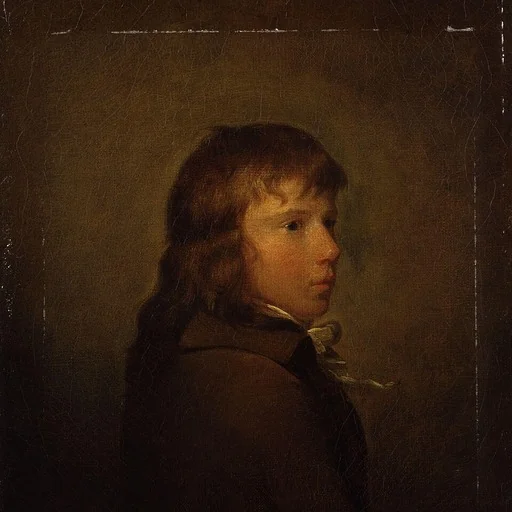
George Morland (26 June 1763 – 29 October 1804) was an English painter. His early work was influenced by Francis Wheatley, but after the 1790s he came into his own style. His best compositions focus on rustic scenes:…