Artwork
Johnny Going to the Fair
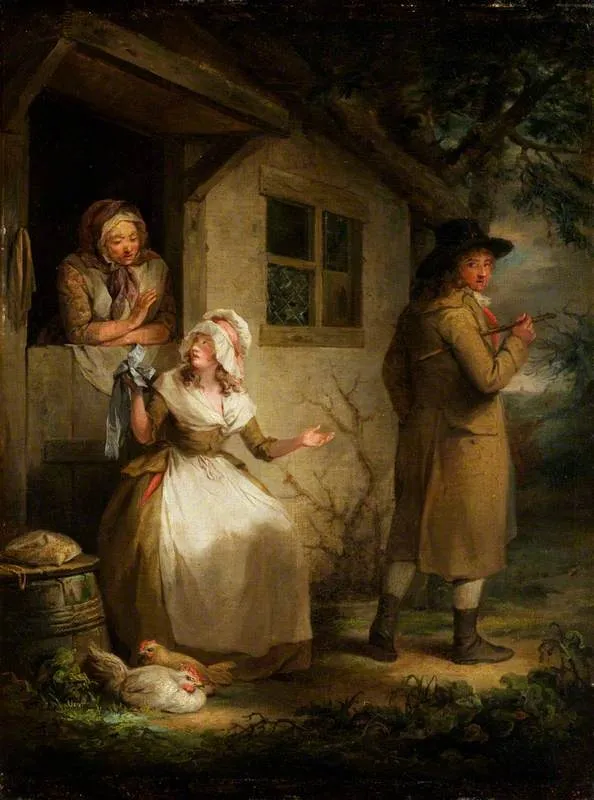
Johnny Going to the Fair is an oil painting by George Morland. It dates from 1793 and is held in the collection of the Victoria and Albert Museum.
About this work
Overview
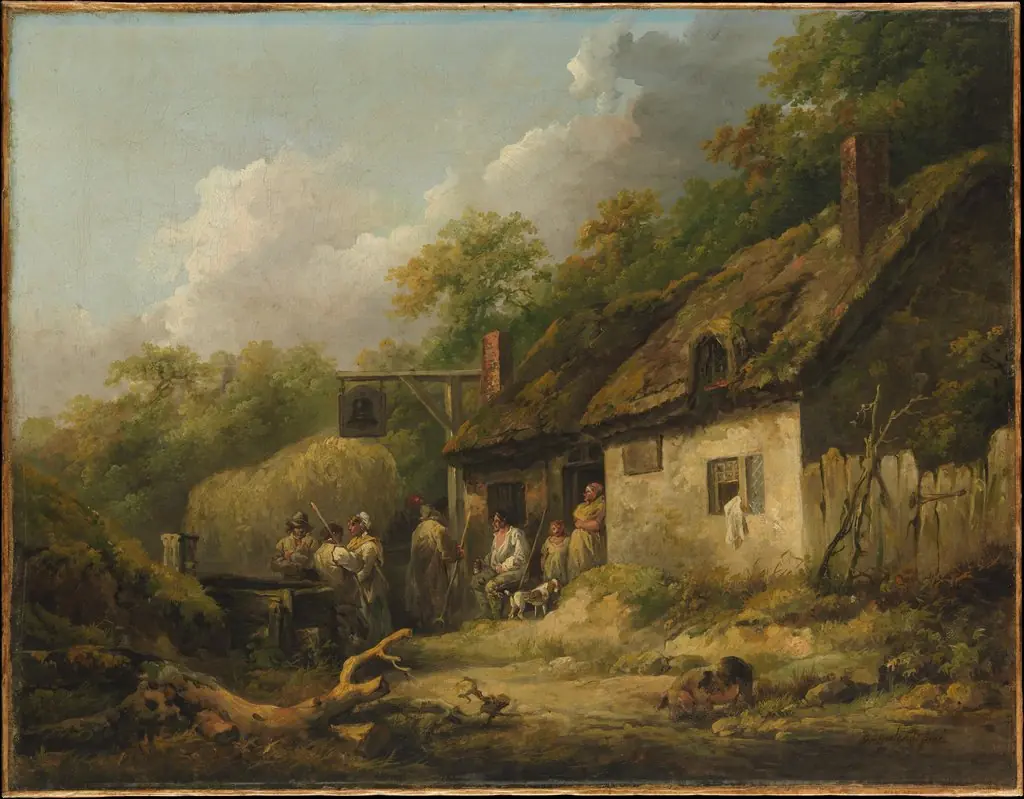
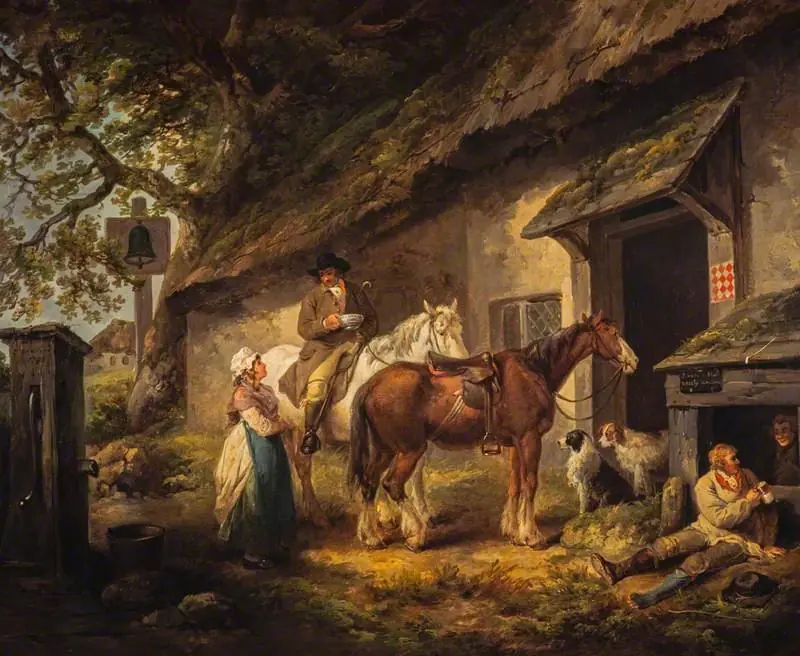
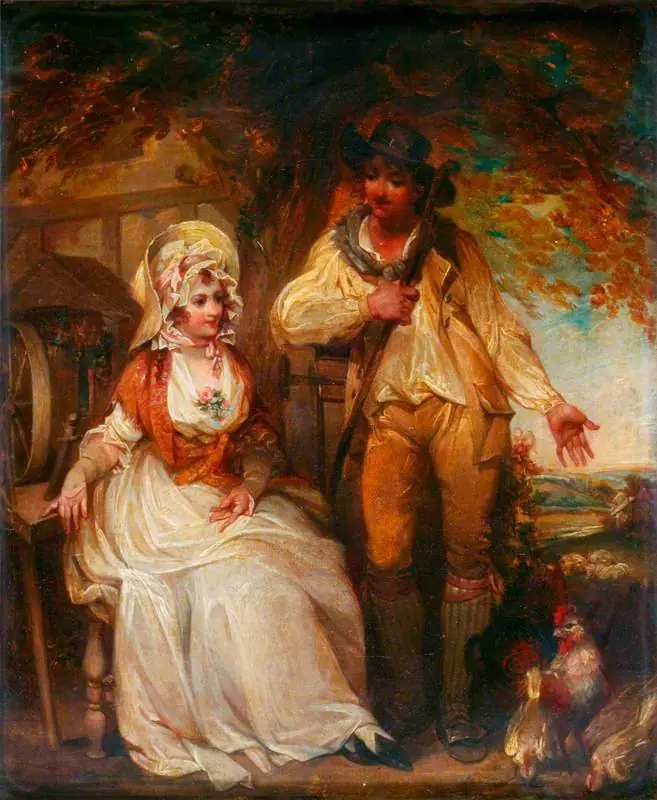
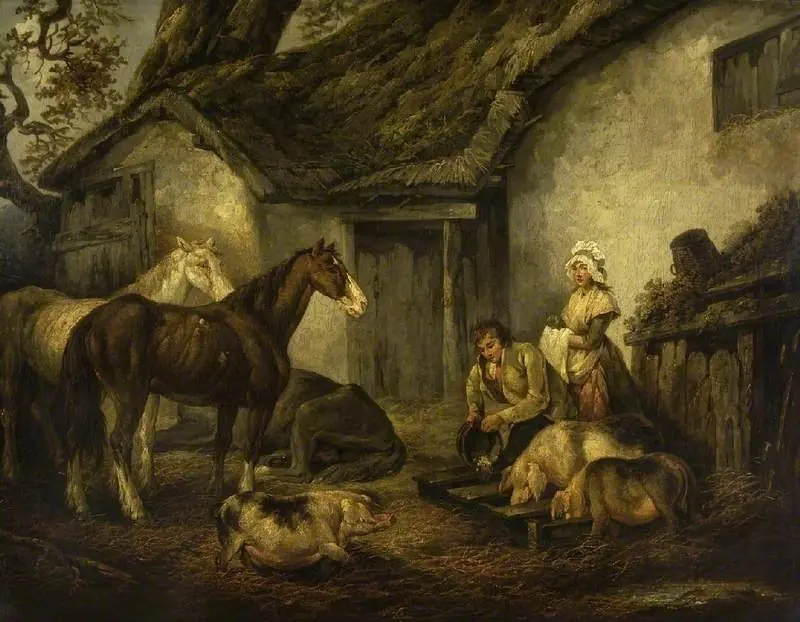
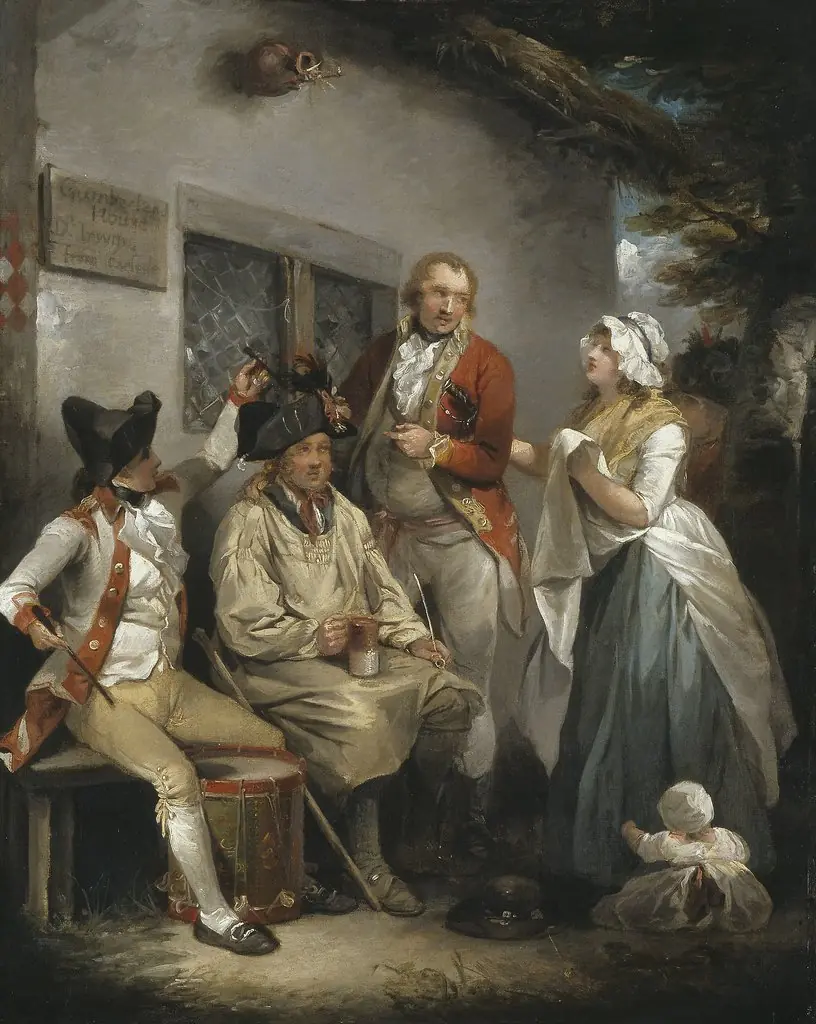
Painted circa 1793, *Johnny Going to the Fair* is an oil-on-canvas work by the English artist George Morland. It captures a moment of quiet domestic transition, set against a modest rural dwelling. Morland, known for his focus on ordinary life, rendered this scene with attention to subtle human presence and environmental detail, avoiding theatricality in favor of understated realism.
Subject & Meaning
The girl clutches a scrap of fabric, hinting at domestic care, while the chickens and bucket ground the scene in daily labor.
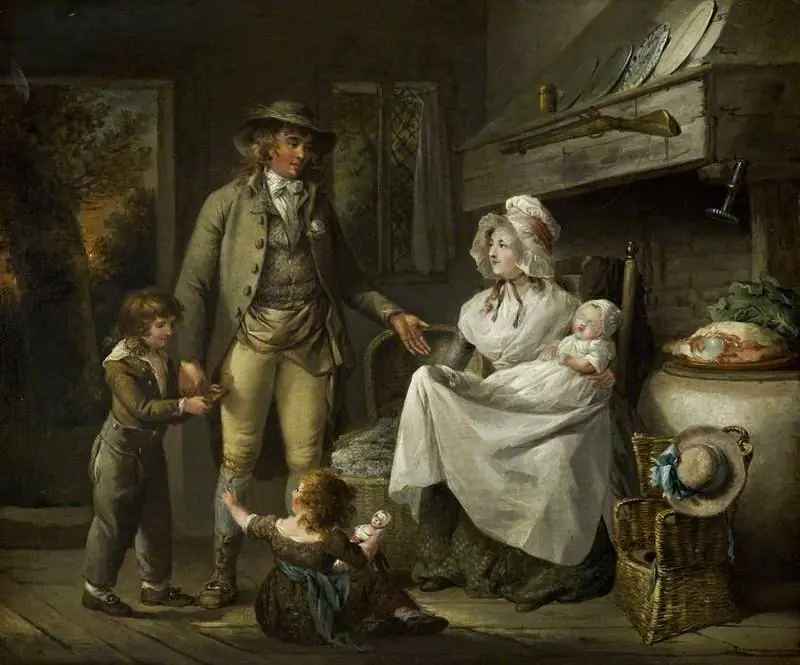
The painting shows a man preparing to leave for a local fair, standing near a doorway where a woman and child observe him. Their stillness suggests unspoken emotion—perhaps anticipation, resignation, or separation. The girl clutches a scrap of fabric, hinting at domestic care, while the chickens and bucket ground the scene in daily labor. No narrative is spelled out; meaning emerges through restraint and atmosphere.
Technique & Style
Morland employed loose, textured brushwork to convey the roughness of rural materials—wool, wood, earth. Light falls evenly across the composition, softening edges and unifying the figures with their surroundings. His palette is muted, dominated by browns and grays, echoing Dutch genre painting’s quiet tonal harmony. The lack of dramatic contrast reinforces the scene’s everyday gravity.
History & Provenance
The painting entered the Victoria and Albert Museum’s collection as part of its broader effort to document British genre art. Though Morland produced numerous works for print reproduction, this piece remains in its original oil form, preserving the artist’s hand. Its survival reflects its status as a representative example of late 18th-century English domestic realism.
Context
In the 1790s, British art increasingly turned to scenes of rural life as industrialization reshaped society. Morland’s work stood apart from grand historical or aristocratic subjects, instead valuing the dignity of common routines. His depictions resonated with a public seeking cultural reflection on a vanishing way of life, even as his own personal turmoil limited his later productivity.
Legacy
Though less celebrated than contemporaries like Constable, Morland’s influence endured in the tradition of British genre painting. *Johnny Going to the Fair* exemplifies his ability to convey emotional nuance without sentimentality. The work remains a quiet testament to the visual culture of rural England, valued for its sincerity rather than its spectacle.
Artist & collection
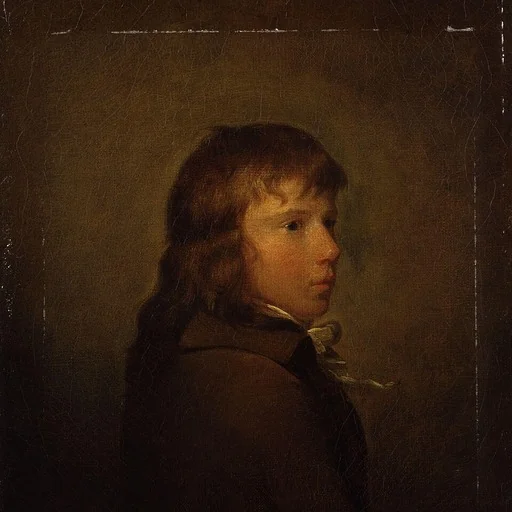
Artist
George Morland (26 June 1763 – 29 October 1804) was an English painter. His early work was influenced by Francis Wheatley, but after the 1790s he came into his own style. His best compositions focus on rustic scenes:…