Artwork
Arredores de São Paulo (atribuído)
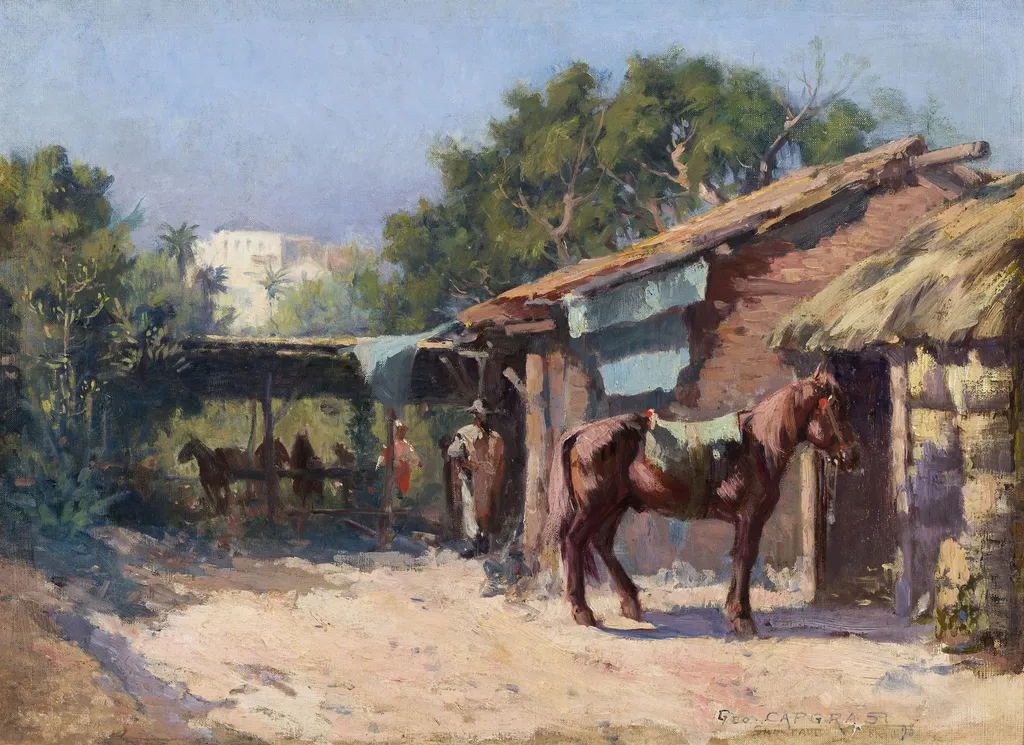
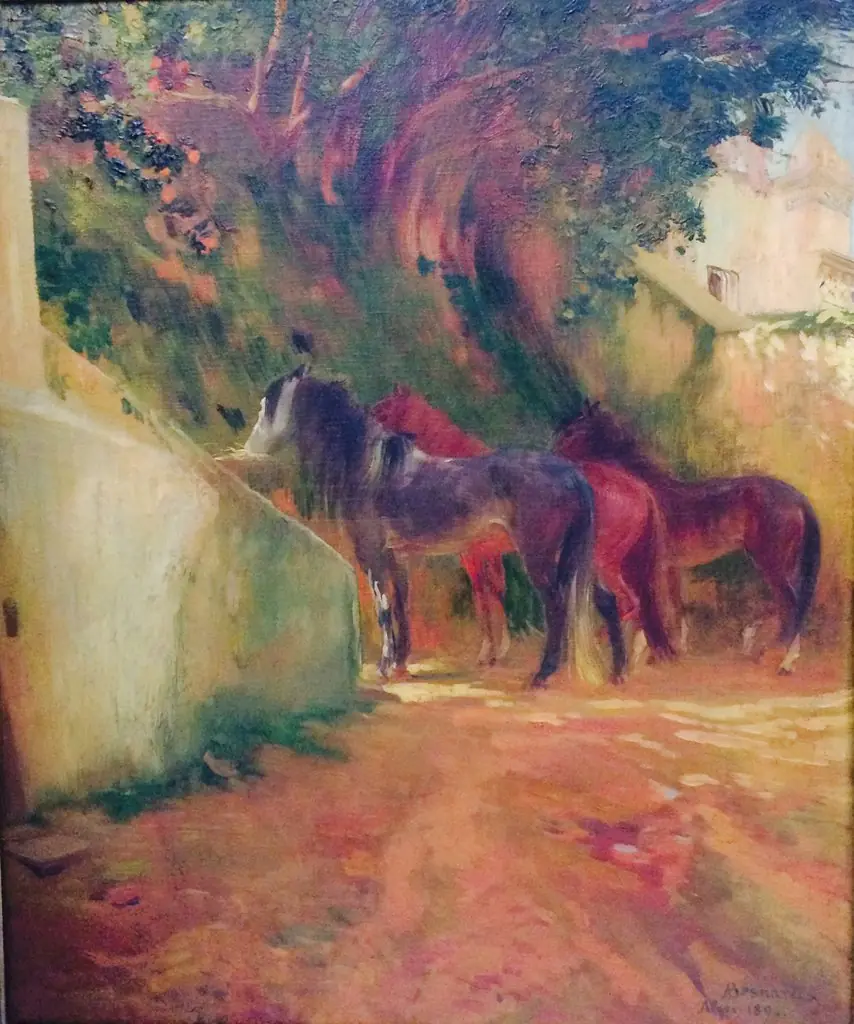
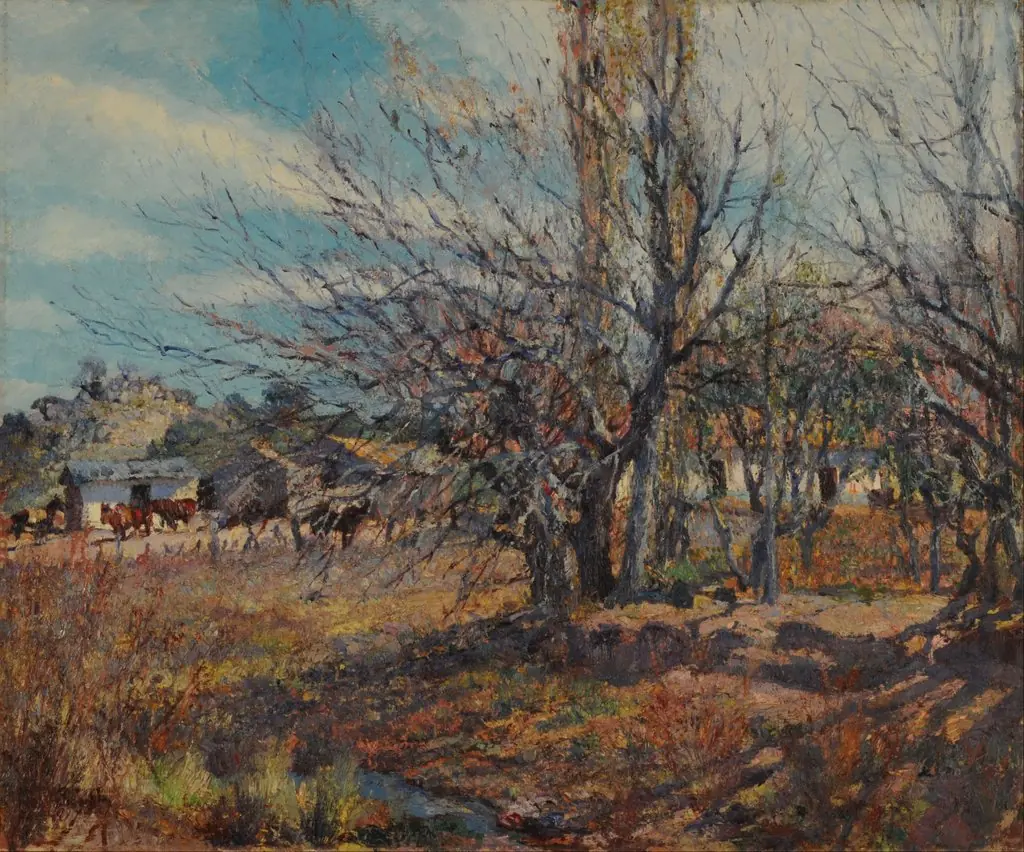
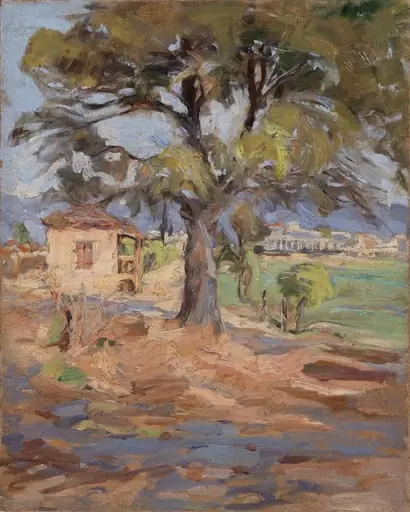
Arredores de São Paulo (atribuído) is an oil painting by the Impressionist artist Georges Capgras. It dates from 1900 and is held in the collection of the Pinacoteca de São Paulo.
About this work
Overview
It resides in the collection of the Pinacoteca do Estado de São Paulo, where it is preserved as an example of early 20th-century Brazilian regional imagery.
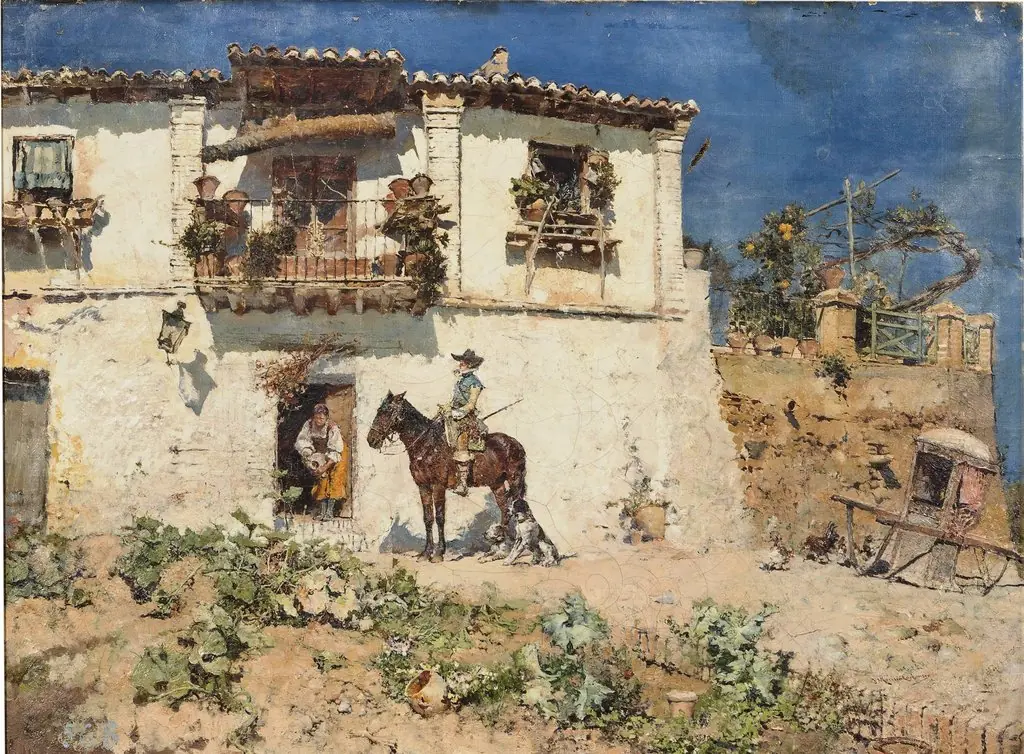
Attributed to Georges Capgras and dated around 1900, this oil painting captures a quiet rural landscape near São Paulo. The work presents a modest scene centered on a saddled horse before a simple structure, rendered with loose brushwork and a restrained earth-toned palette. It resides in the collection of the Pinacoteca do Estado de São Paulo, where it is preserved as an example of early 20th-century Brazilian regional imagery.
Subject & Meaning
The painting focuses on a solitary horse and a humble stone or brick dwelling, suggesting a moment of stillness in the countryside. No human figures are present, emphasizing solitude and the quiet rhythm of rural life. The composition avoids grandeur, instead highlighting everyday elements—livestock, basic architecture, and natural surroundings—as subjects worthy of observation.
Technique & Style
Oil paint is applied with visible, textured strokes that convey atmosphere rather than precise detail. The palette relies on muted browns, greens, and soft blues, unifying the scene in a harmonious tonality. Chiaroscuro is subtly employed to model forms, lending volume to the horse and building while guiding the viewer’s gaze toward the central elements without dramatic contrast.
History & Provenance
The painting is attributed to Georges Capgras, a French-born artist active in Brazil during the late 19th and early 20th centuries. It entered the Pinacoteca do Estado de São Paulo’s collection as part of its effort to document regional artistic production. Its attribution remains tentative, reflecting the limited documentation surrounding Capgras’s lesser-known works from this period.
Context
Created during a time of rapid urbanization in São Paulo, the painting offers a counterpoint to the city’s modernizing identity. It reflects a fading rural landscape, possibly observed during travels outside the metropolis. Such works were part of a broader interest in capturing Brazil’s regional character, even as industrialization reshaped its social and physical environment.
Legacy
Though not widely exhibited or studied, the painting contributes to a quiet archive of early Brazilian landscape art. Its unassuming subject and technique align it with regionalist tendencies that valued authenticity over spectacle. It remains a modest but tangible record of a transitional moment in Brazil’s visual culture.
Own this work as a print
Artist & collection
Artist
Georges Capgras painted Brazilian landscapes in the late 1800s. His *Arredores de São Paulo* (Outskirts of São Paulo) shows gentle hills, scattered houses, and soft light in oil paint. The brushwork keeps details clear,…