Artwork
Cimon und Pero (nach)
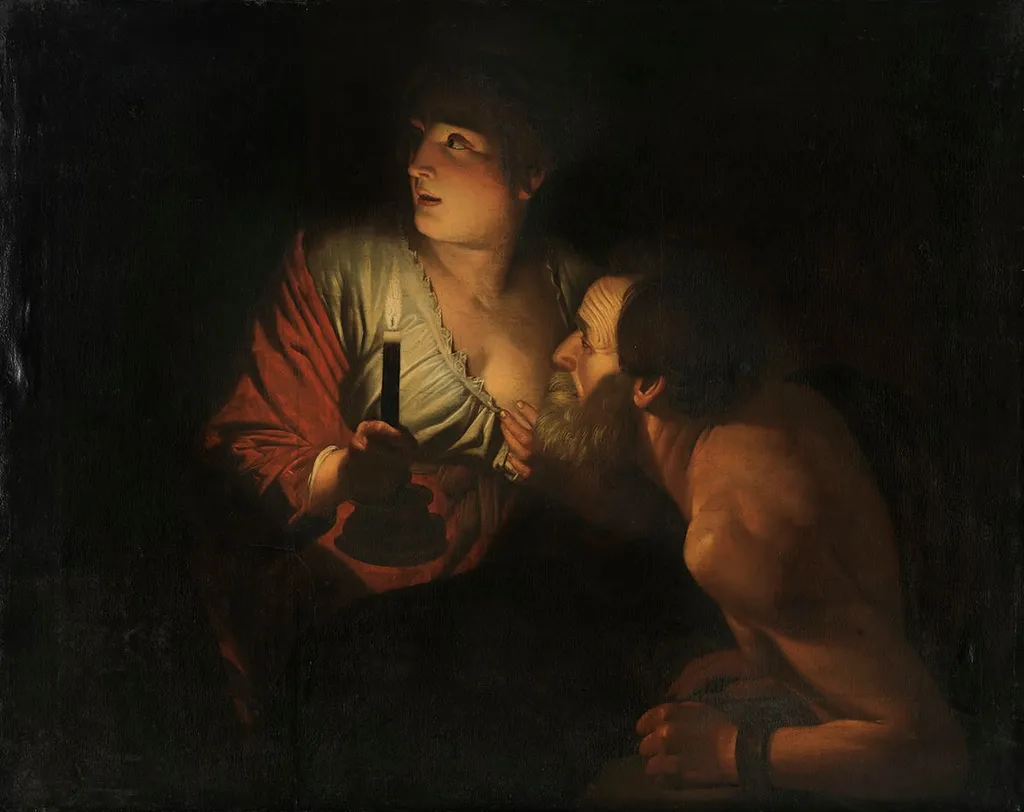
Cimon und Pero (nach) is an unspecified painting by the Dutch Golden Age artist Gerard van Honthorst. It dates from 1624 and is held in the collection of the Bavarian State Painting Collections.
About this work
Overview
Gerard van Honthorst’s 1624 canvas titled *Cimon und Pero* is a history painting executed during the Dutch Golden Age. The work is part of the Alte Pinakothek’s collection and exemplifies the artist’s early fascination with dramatic lighting, a hallmark of his Roman period.
Subject & Meaning
The composition depicts a dim interior where a woman in a light dress with red sleeves holds a candle, its flame illuminating her face from below. A kneeling man, turned away, watches her; his simple attire and hat suggest modesty. The scene captures a moment of quiet intensity, emphasizing the act of illumination both literal and symbolic.
Technique & Style
Honthorst employs chiaroscuro to create stark contrasts between the candle‑lit figures and the surrounding darkness. The single light source produces deep shadows and highlights the textures of fabric and flesh, a technique he absorbed from Caravaggio while working in Italy.
History & Provenance
After his Roman sojourn, Honthorst returned to the Netherlands where he became a prominent portraitist alongside peers such as Hendrick ter Brugghen and Dirck van Baburen. *Cimon und Pero* eventually entered the Alte Pinakothek, where it remains on display.
Context
The painting reflects the broader Dutch Golden Age interest in narrative scenes rendered with theatrical lighting. Honthorst’s nickname, Gherardo delle Notti, attests to his reputation for night‑time effects, a skill evident in this work’s focused candle illumination.
Artist & collection
Artist
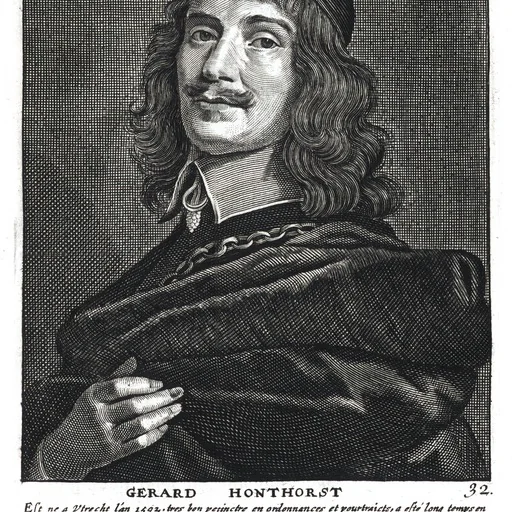
Gerard "Gerrit" van Honthorst (4 November 1592 – 27 April 1656) was a Dutch Golden Age painter who became known for his depiction of artificially lit scenes, eventually receiving the Italian nickname Gherardo delle Notti ("Gerard of the…

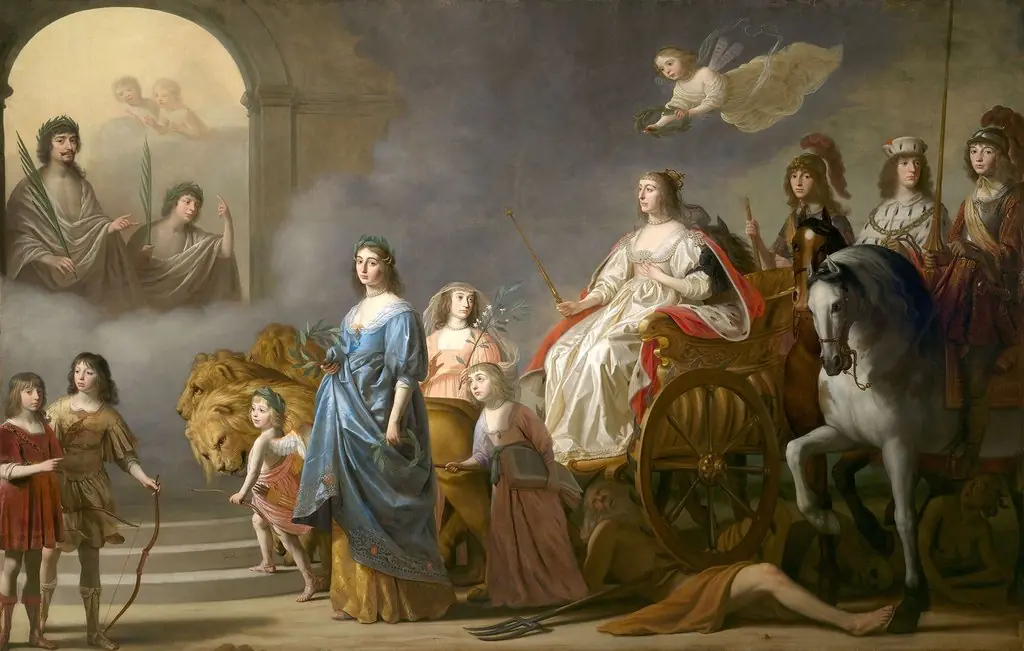 The Triumph of the Winter Queen: Allegory of the Just
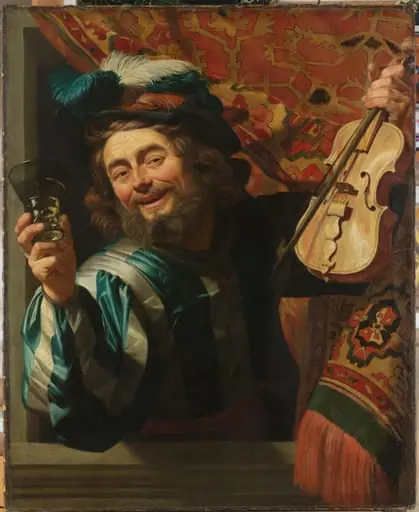 Een vrolijke vioolspeler
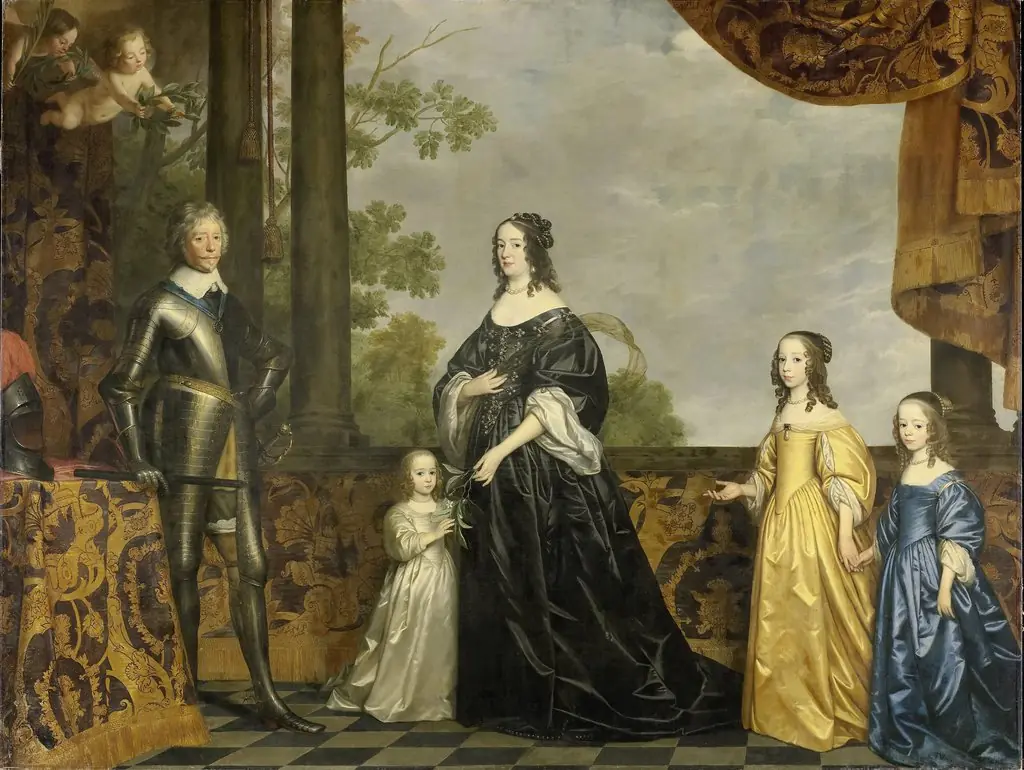 Frederik Hendrik (1584-1647), Prince of Orange, his wife Amalia van Solms (1602-75) and their three youngest daughters, Albertina Agnes (1634-96), Henrietta Catharina (1637-1708) and Maria (1642-88)
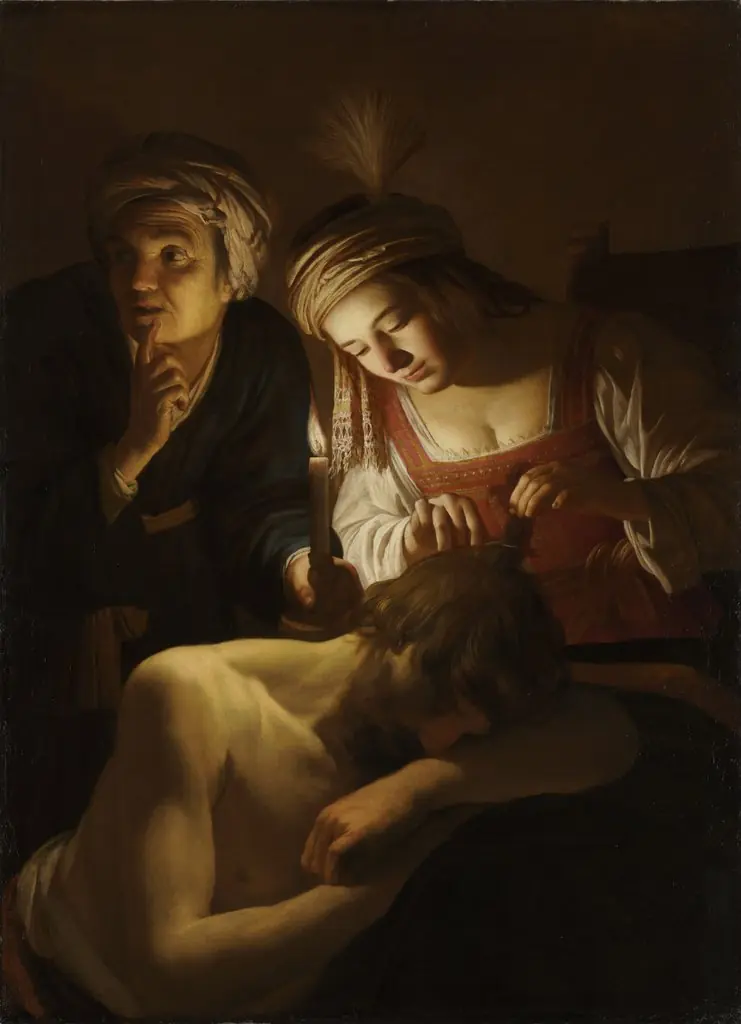 Samson and Delilah
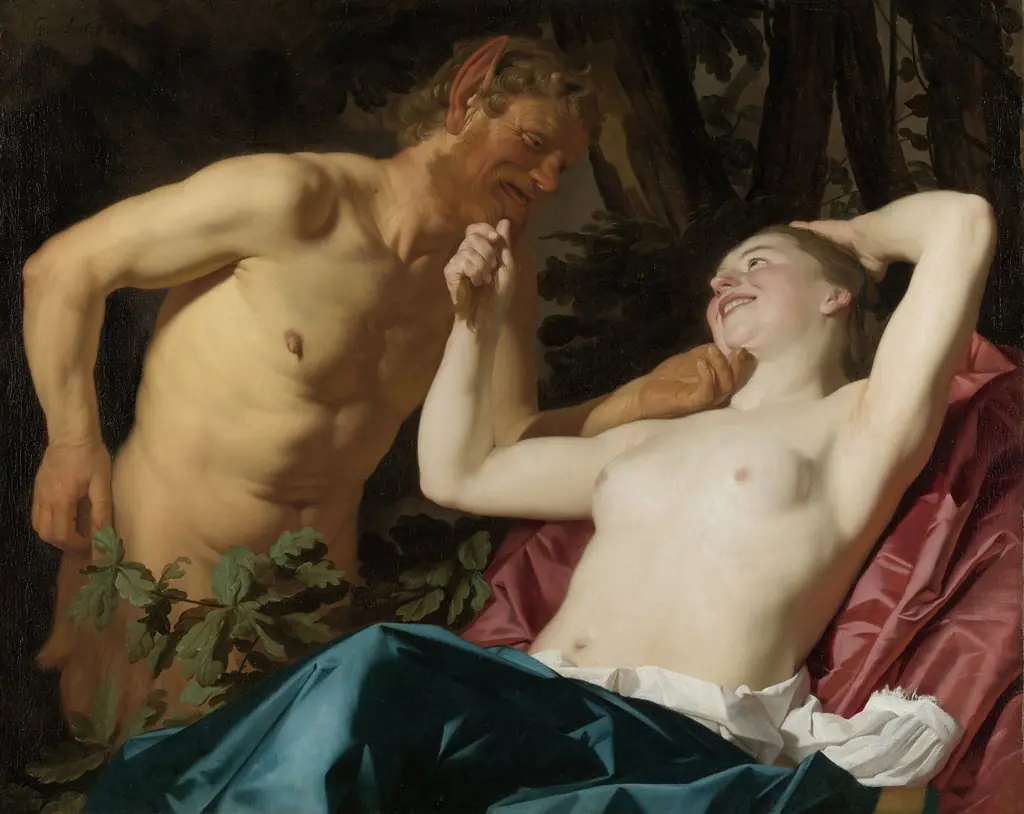 Satyr and Nymph
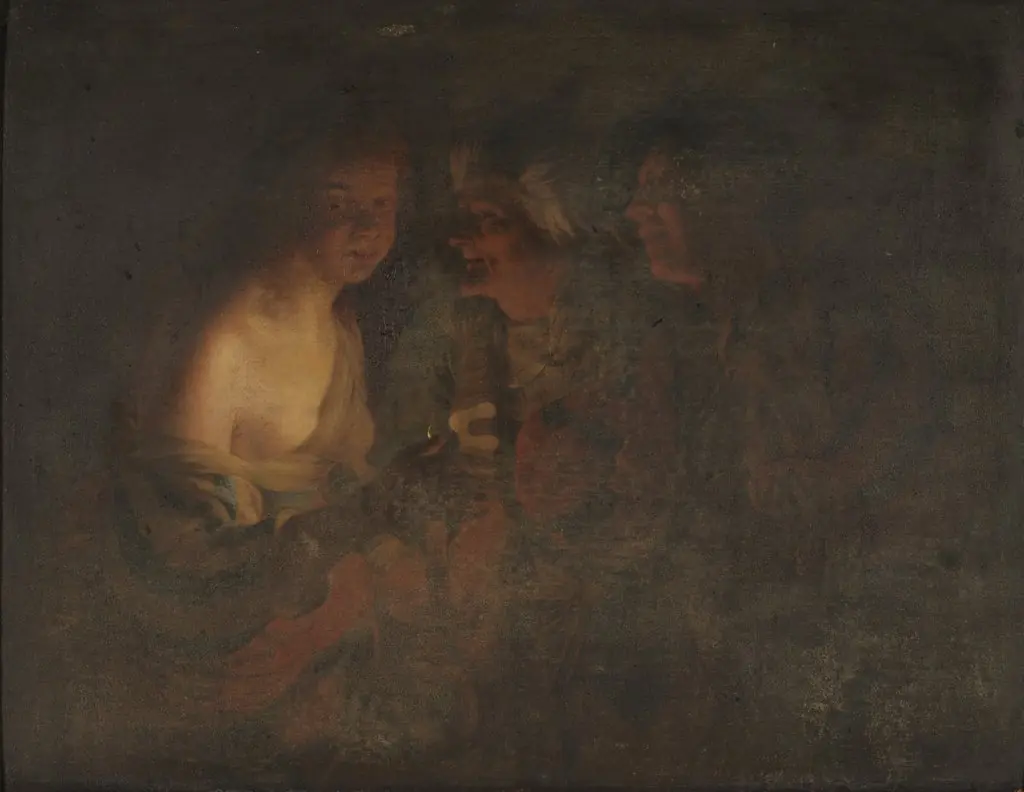 Young Woman with a Candlestick, Old Woman and a Violin Player
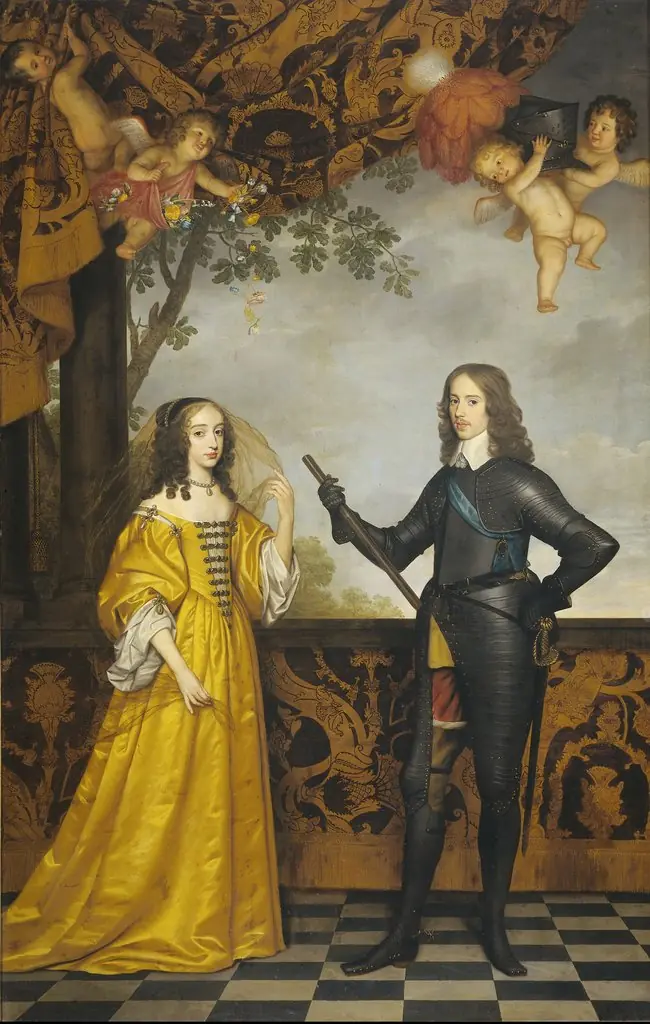 Willem II (1626-50), Prince of Orange, and his wife Maria Stuart (1631-60)
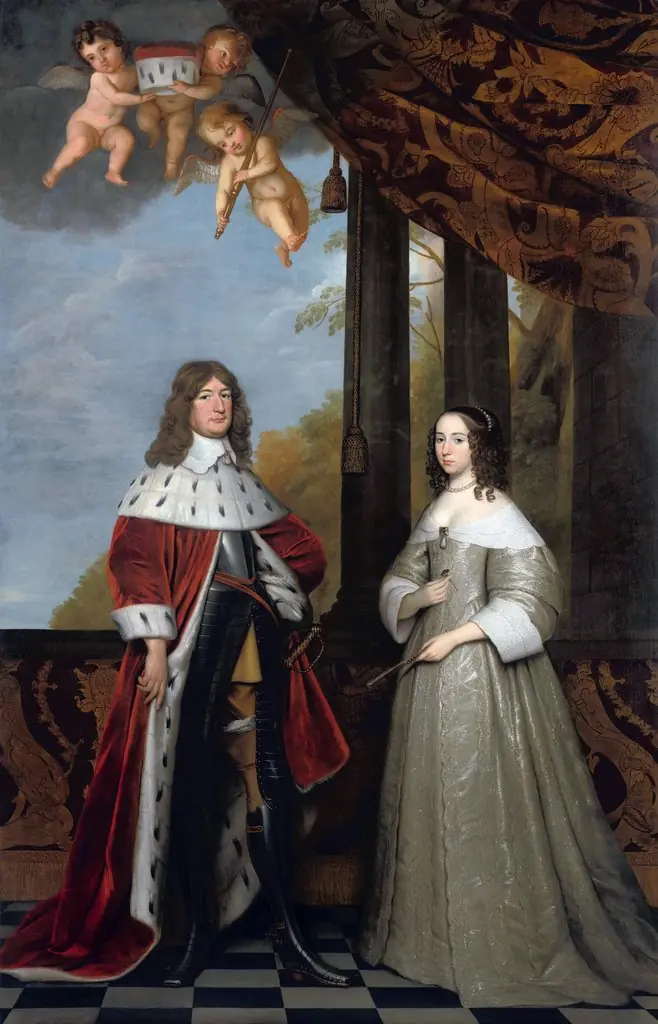 Friedrich Wilhelm (1620-88), Elector of Brandenburg, and his wife Louise Henriette (1627-67), Countess of Orange-Nassau
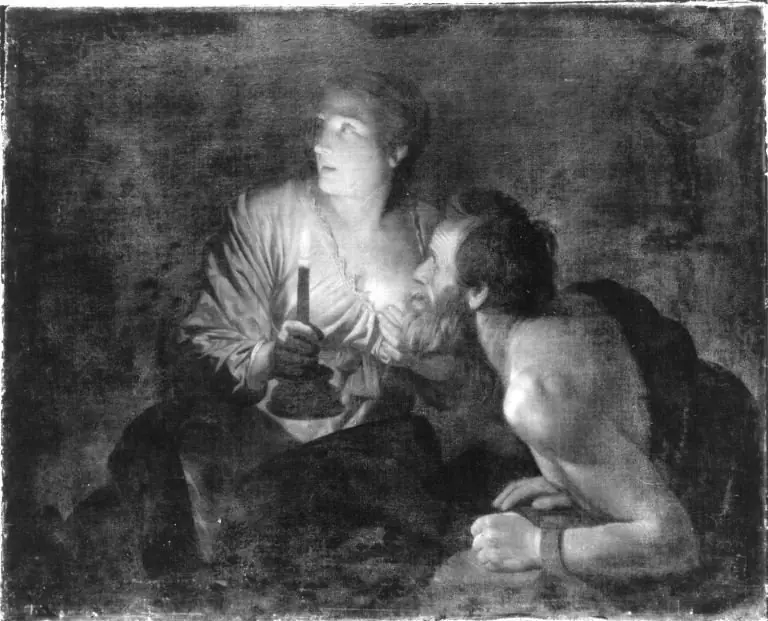 Cimon and Pero
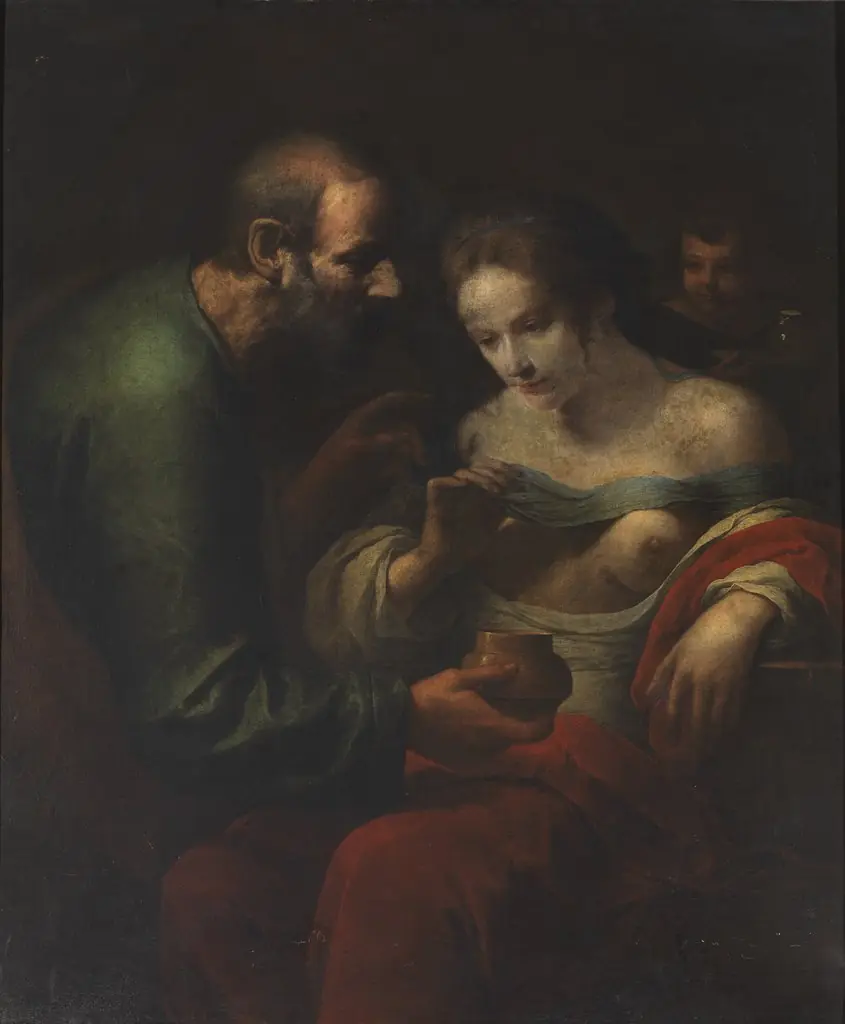 Santa Águeda curada por San Pedro en la prisión
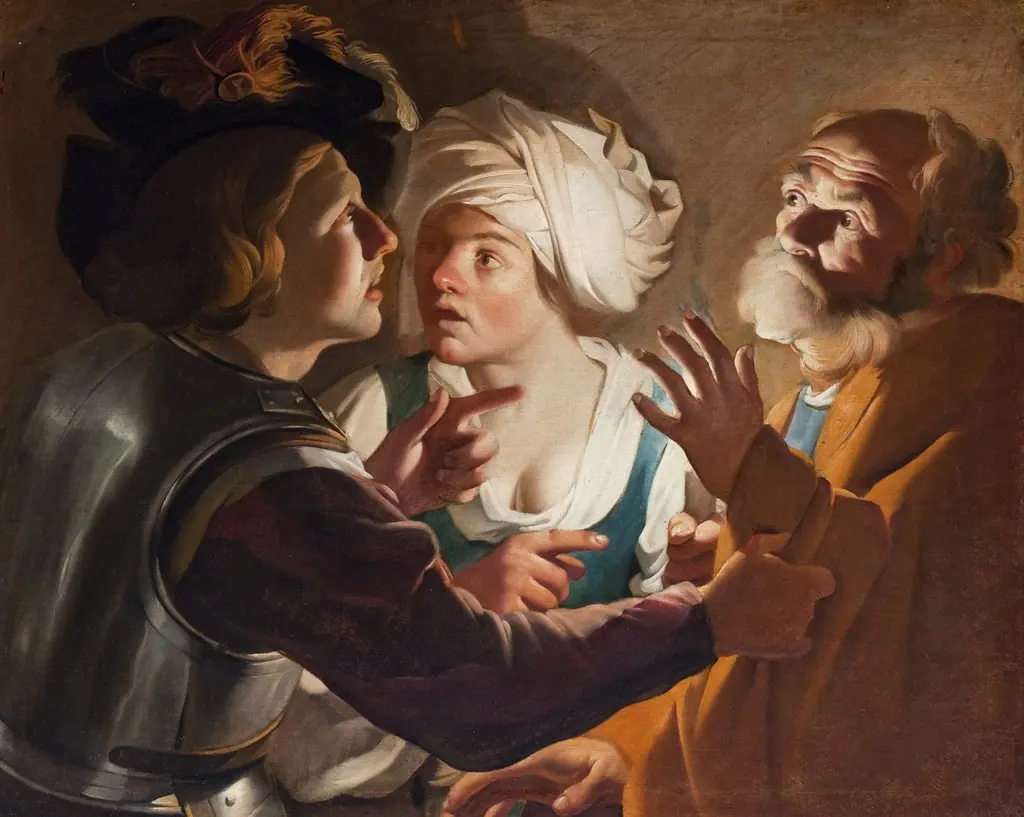 Denial of Saint Peter
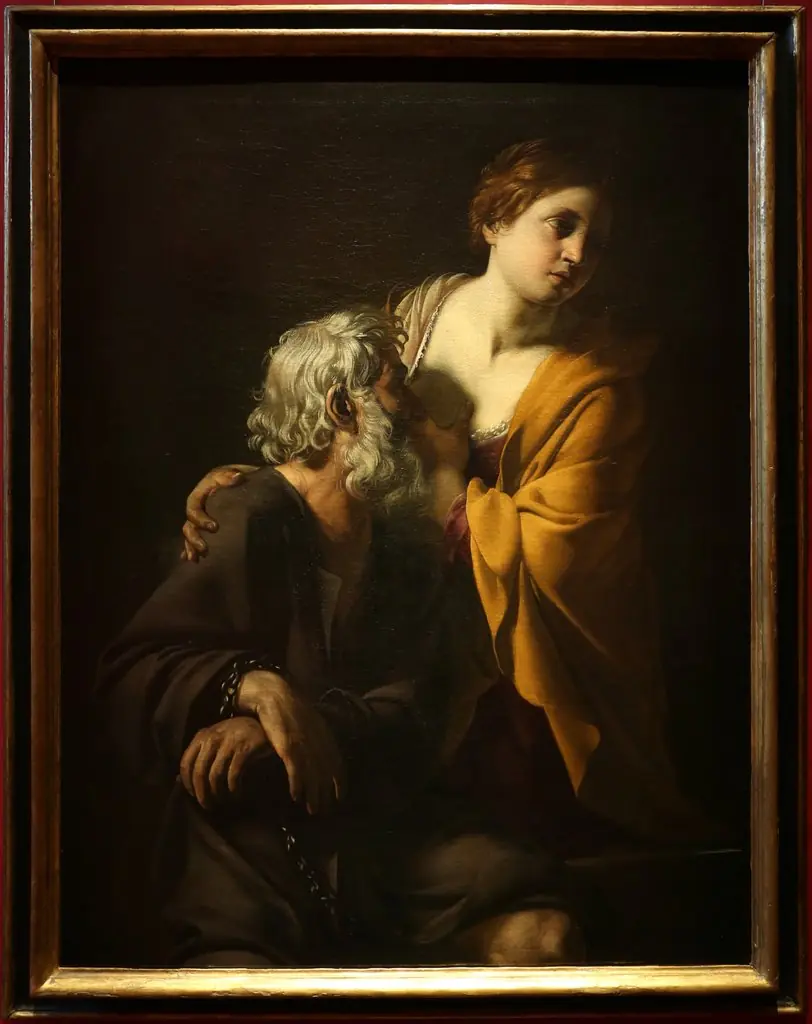 carità romana
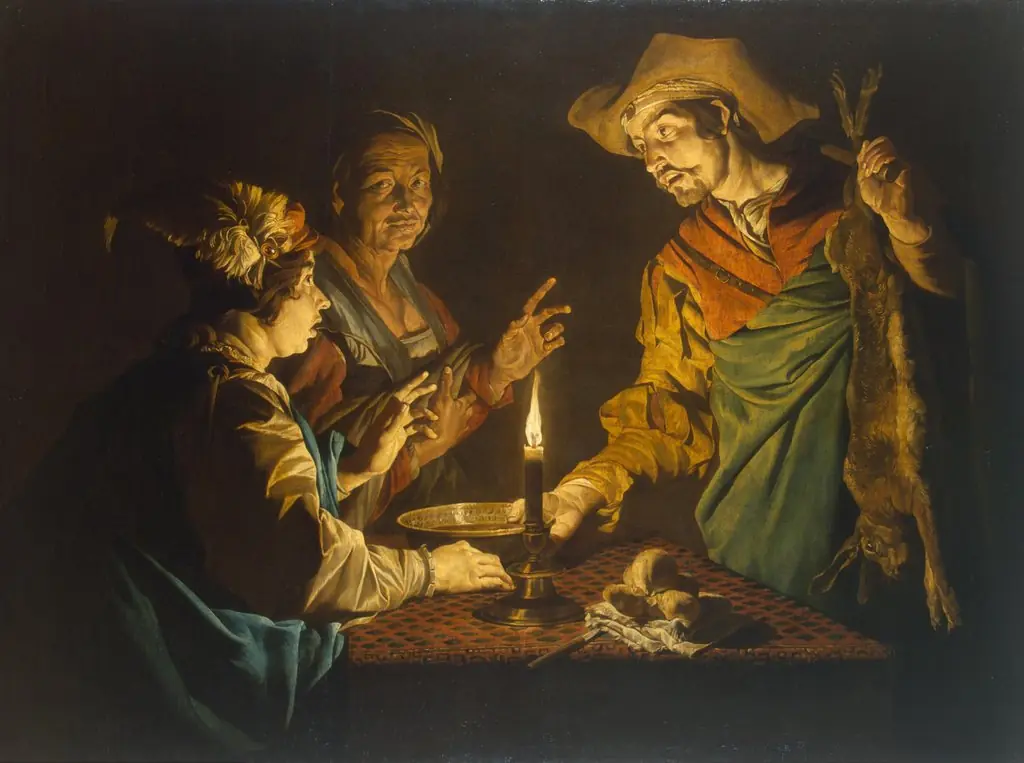
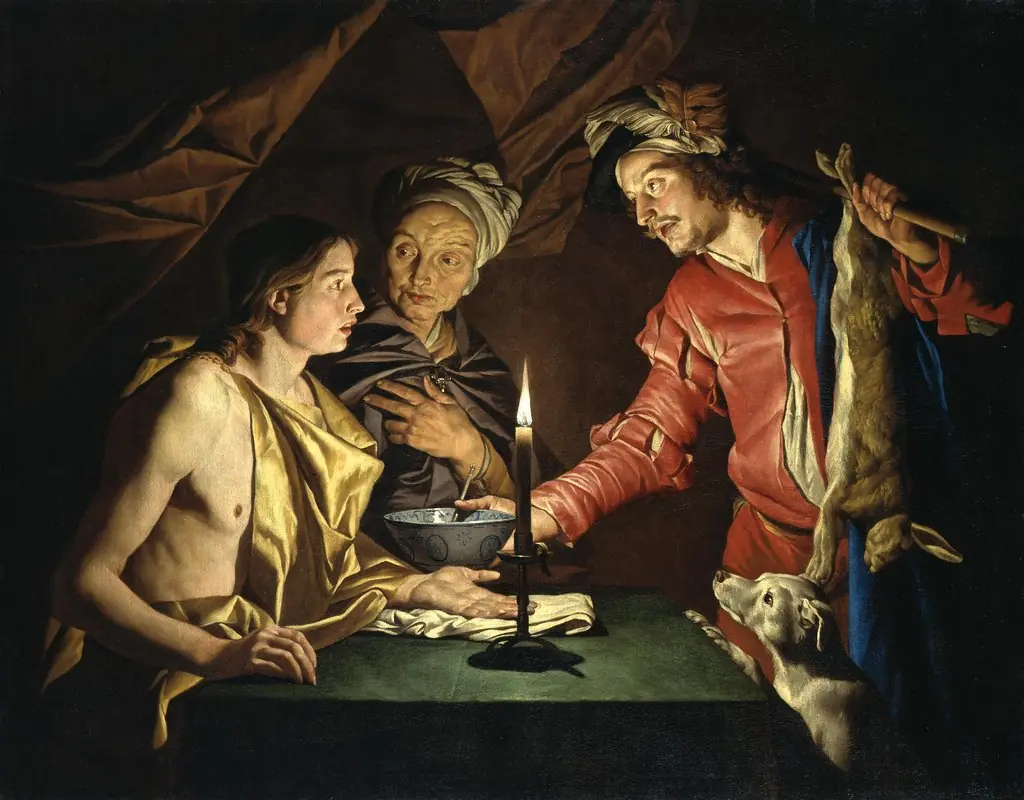 Esau, returning hungry from the hunt, sells his first birthright to Jacob for a pottage of lentils(Genesis 25:31)
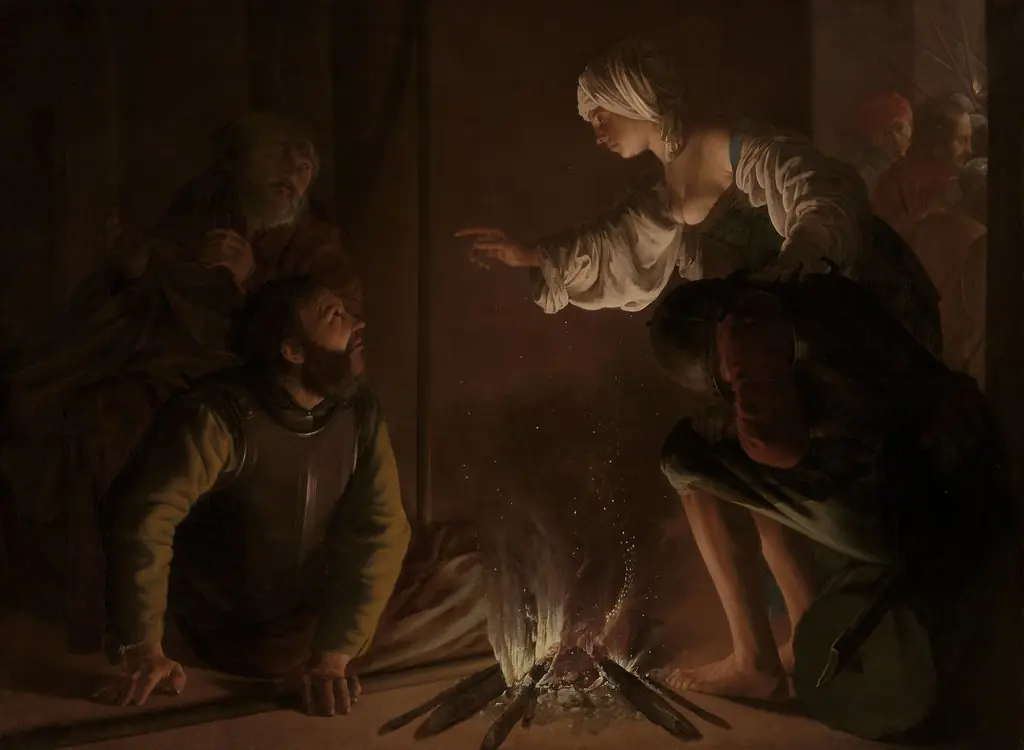 The Denial of Saint Peter
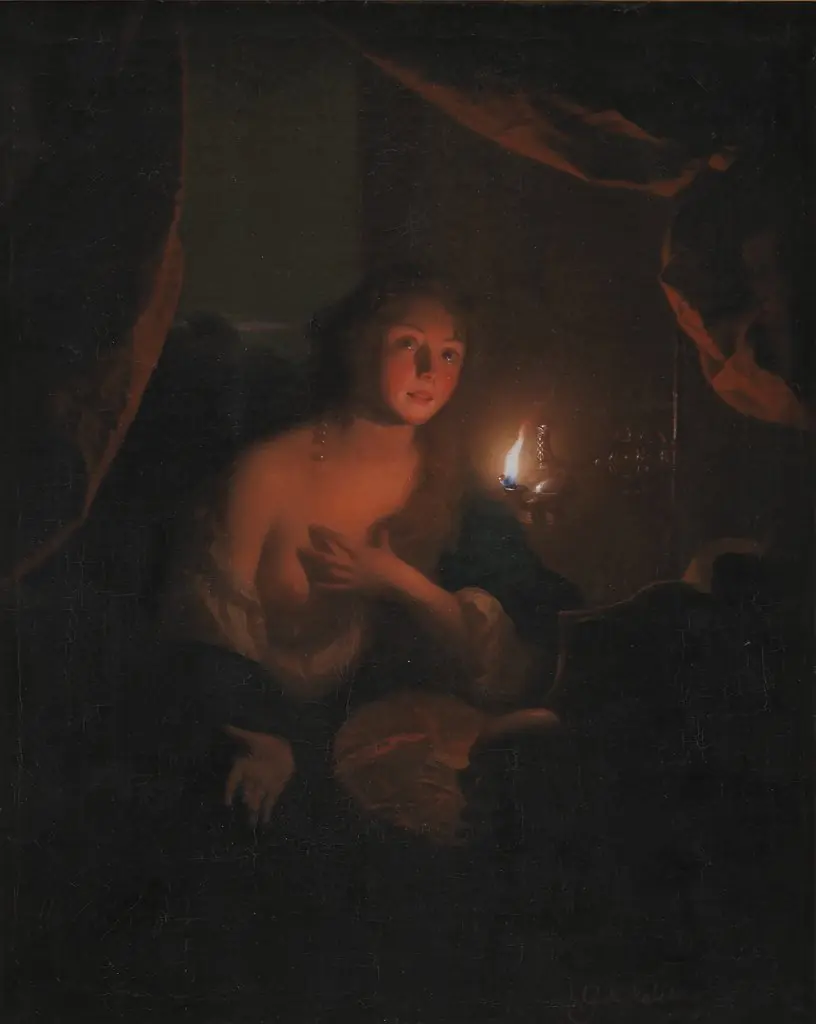 The Penitent Saint Mary Magdalene
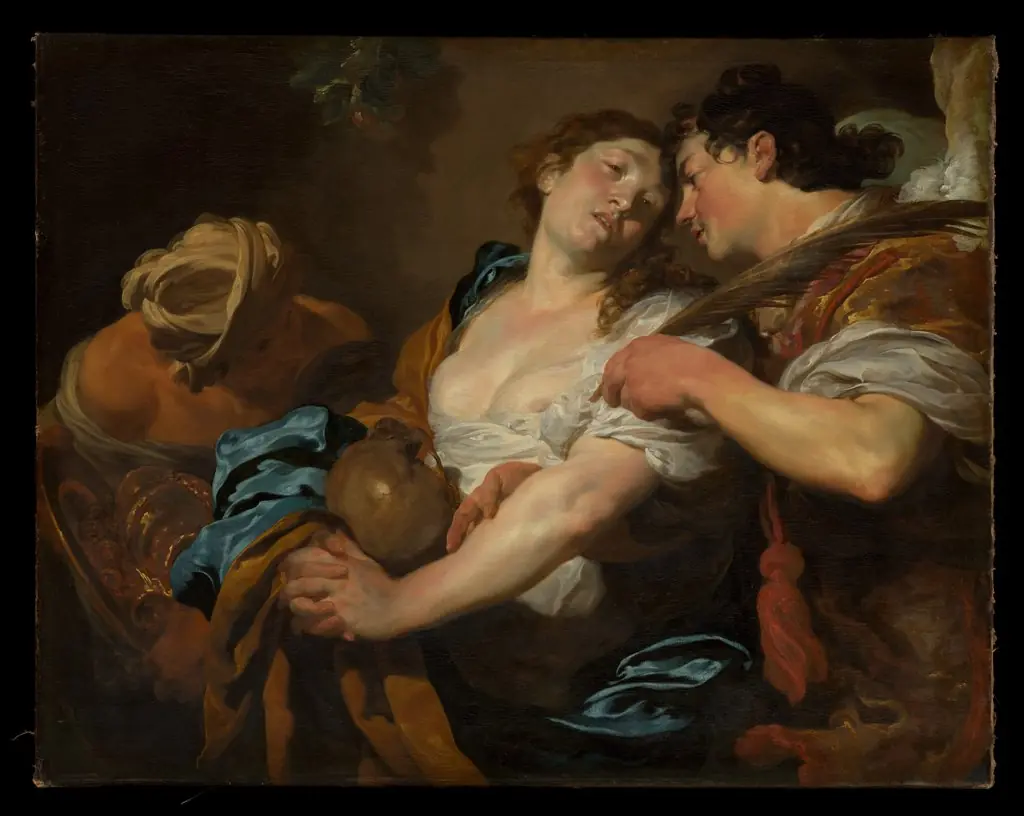 The Temptation of Saint Mary Magdalen
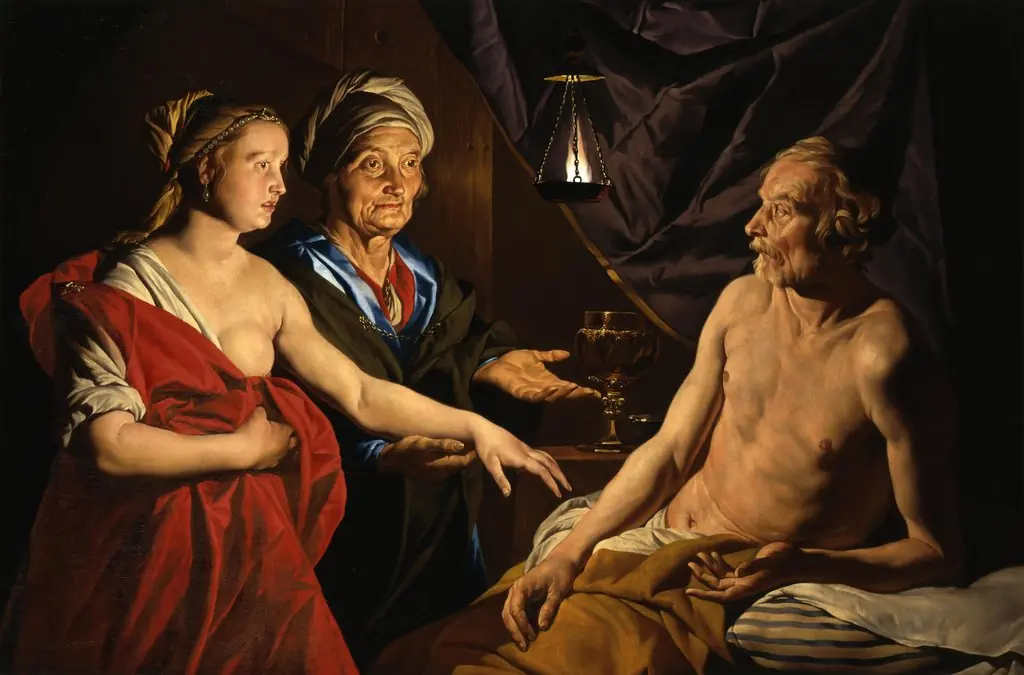 Sarah Leads Abraham to Hagar
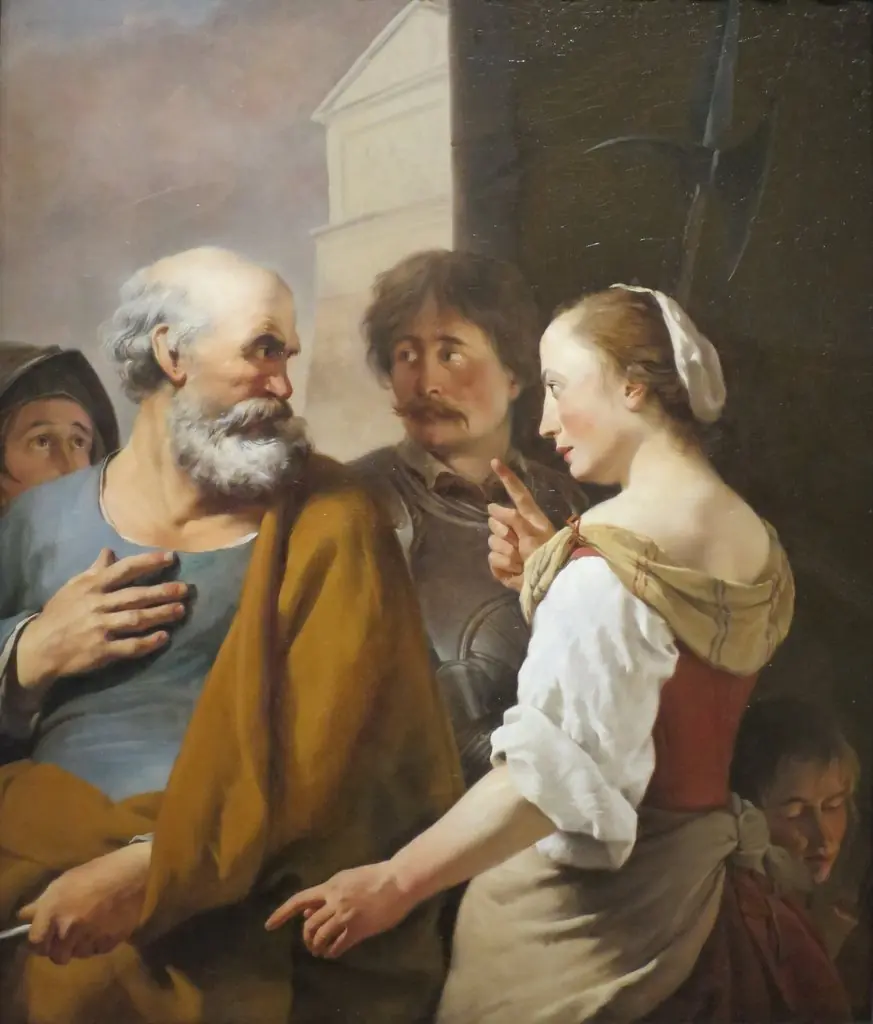 Denial of Peter
 Esau and Jacob
 Loth et ses filles