Artwork
Christ in the Tomb with Two Angels
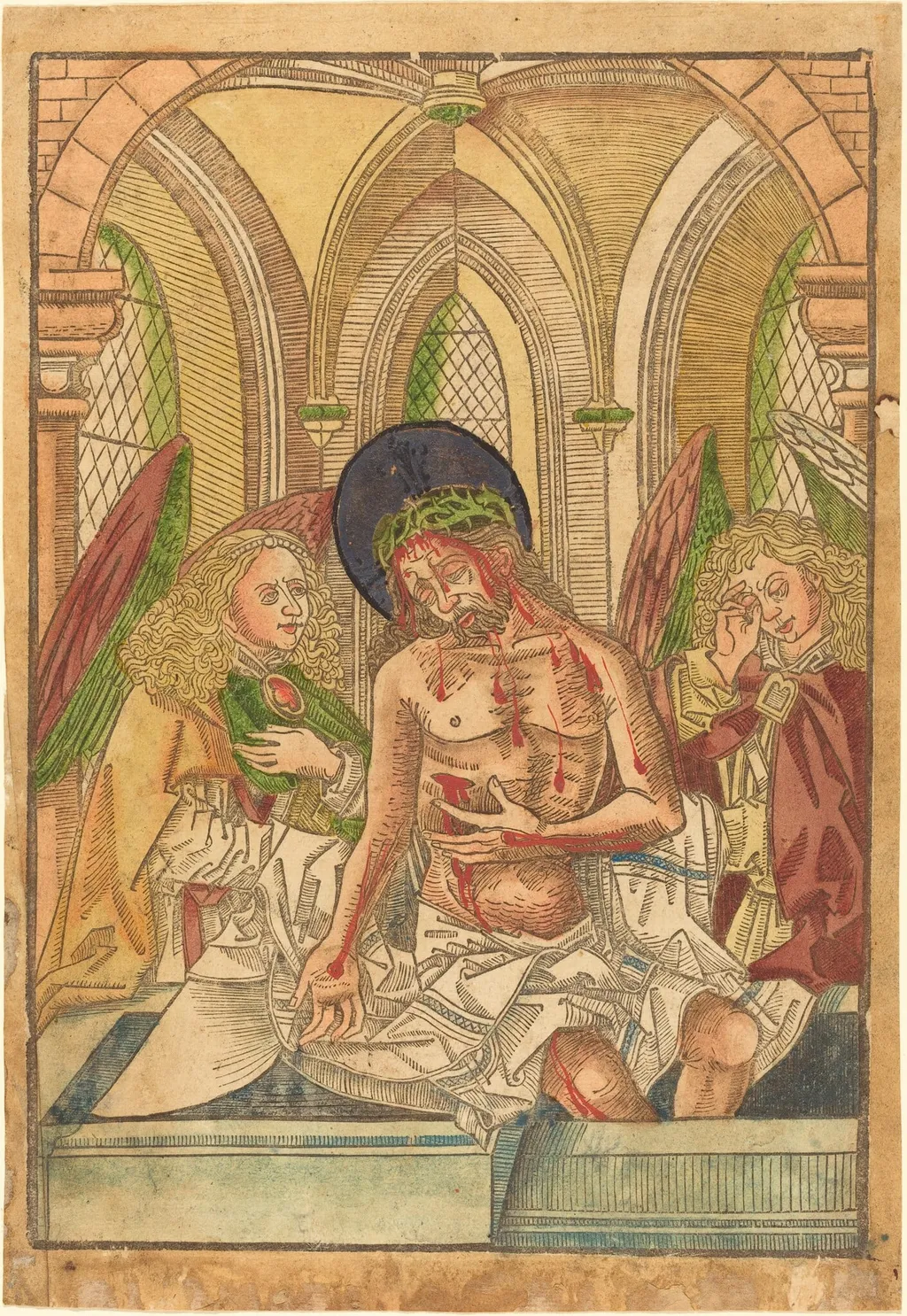
Christ in the Tomb with Two Angels is an ink print by the Renaissance artist German 15th Century. It dates from 1495 and is held in the collection of the National Gallery of Art. The work is a hand‑colored woodcut depicting a tomb interior where a figure, identified as Christ, lies on a stone slab.
About this work
Overview
The work is a hand‑colored woodcut depicting a tomb interior where a figure, identified as Christ, lies on a stone slab. He is shown with a crown of thorns, a halo, and a burial cloth. Flanking him are two kneeling angels, each dressed in distinct robes, set against arched stone walls rendered in flat, vivid hues.
Subject & Meaning
The composition presents the moment after the crucifixion, focusing on the burial scene. The presence of the halo and thorns signals Christ’s divine identity and suffering, while the angels’ reverent posture underscores a theological theme of mourning and hope for resurrection.
Technique & Style
Carved from a single wood block, the image relies on bold line work typical of early printmaking. After printing, the design was manually painted with a limited palette of red, orange‑yellow, blue‑green, green, and gold, creating striking contrasts against the muted stone background. The flat coloration reflects the conventions of early Renaissance graphic art.
History & Provenance
As a woodcut, the piece could be reproduced in multiple copies, facilitating broader distribution than a unique painted panel. The method aligns with the spread of devotional imagery in the late medieval to early Renaissance period, though specific details of its origin or ownership remain undocumented.
Context
Woodcut printing emerged as a key medium for disseminating religious narratives in the 15th and 16th centuries. By rendering sacred scenes in an affordable, reproducible format, artists and publishers met the growing demand for personal devotional objects among lay audiences.
Artist & collection

Artist
This 15th-century German artist carved vivid religious scenes into metal and wood, then hand-painted them in bright, symbolic colors.

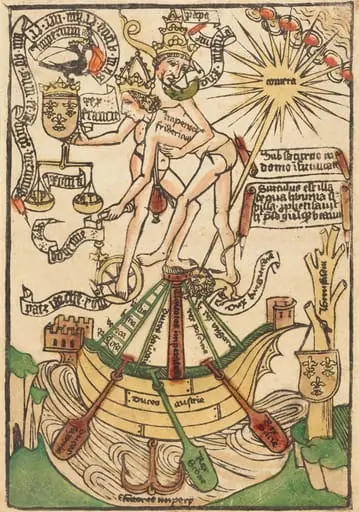 Allegory of the Meeting of Pope Paul II and Emperor Frederick III
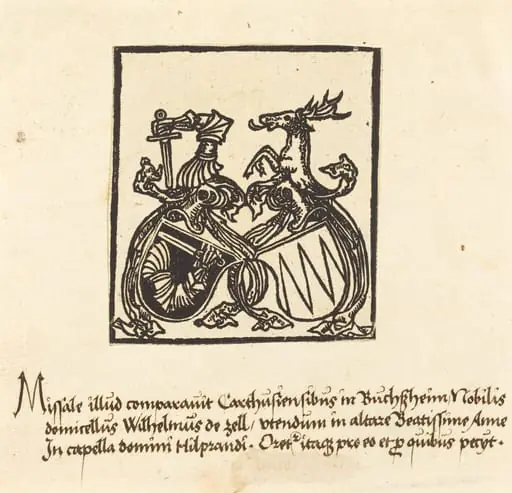 Bookplate of Wilhelm von Zell
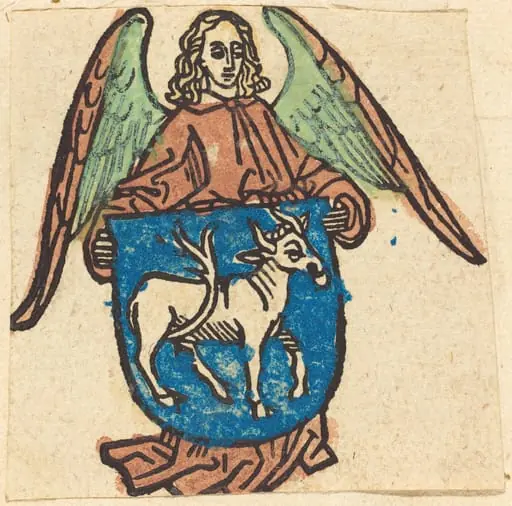 Bookplate of Hilprand Brandenburg of Bibrach
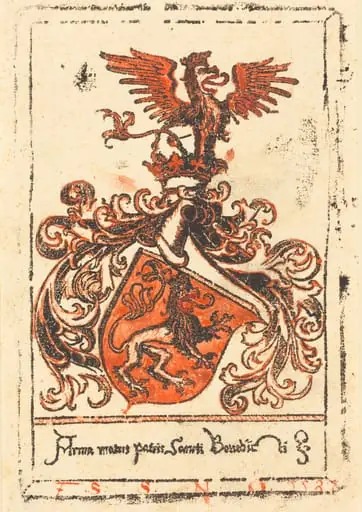 Bookplate of the Abbey of Ottobeuren
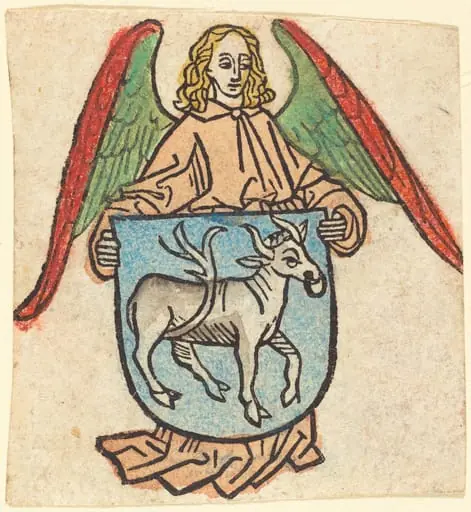 Bookplate of Hilprand Brandenburg of Bibrach
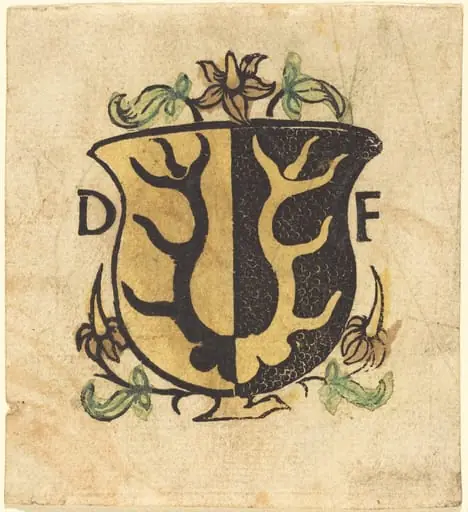 Bookplate of Dominicus Frauenfelder
![Studies for Six Figures (sheet from a model book) [recto], by German 15th Century](https://artifactworldgallery.com/img/german-15th-century--studies-for-six-figures-sheet-from-a-model-book-recto--4837429e0755bc3f-w320.webp) Studies for Six Figures (sheet from a model book) [recto]
Studies for Six Figures (sheet from a model book) [recto]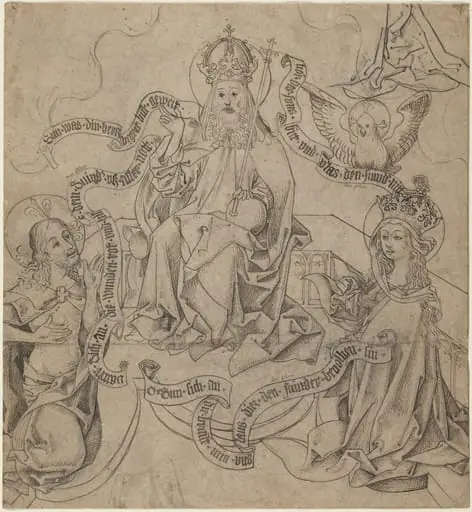 Christ and Mary Interceding with God the Father