Artwork
Christ on the Cross with Angels
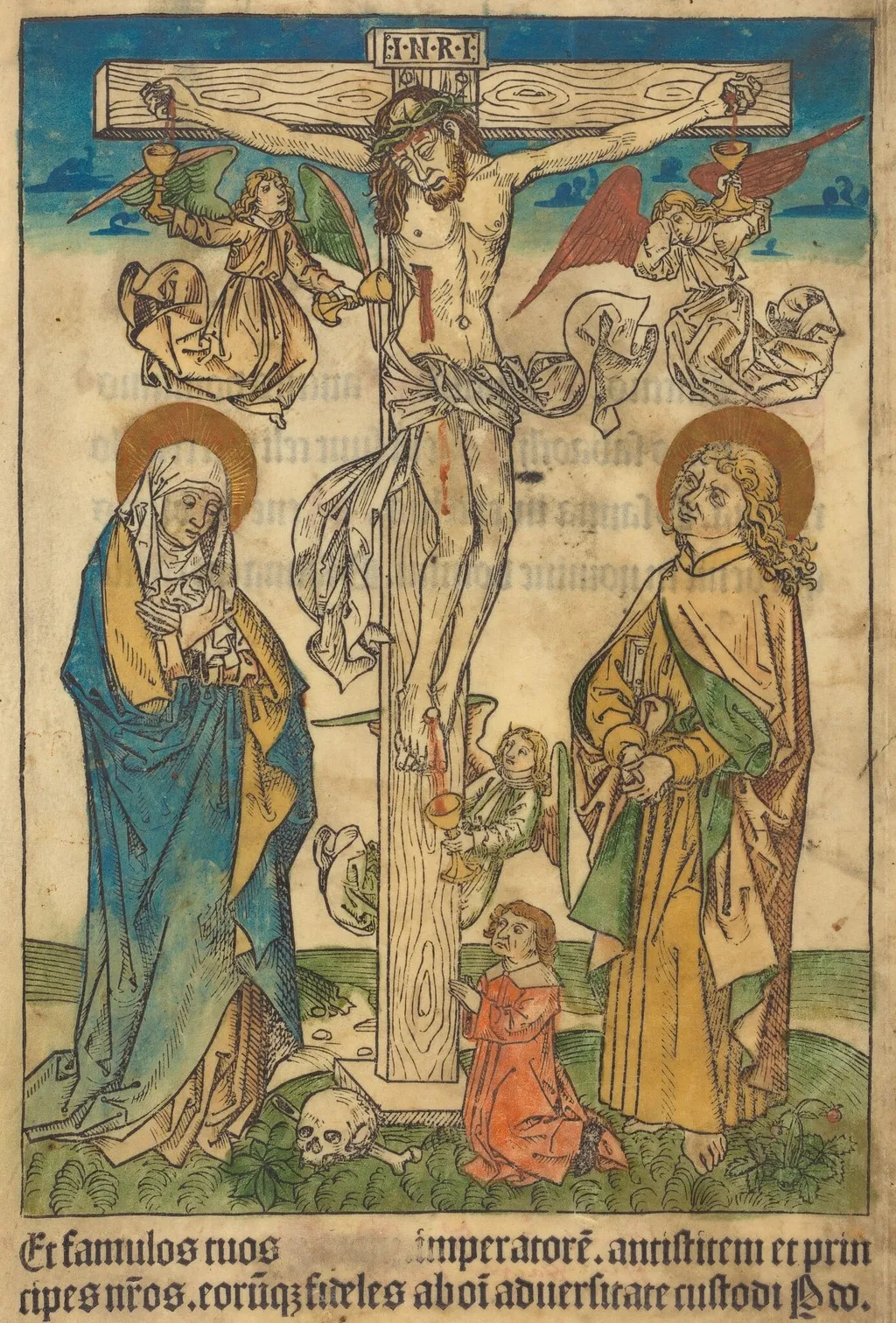
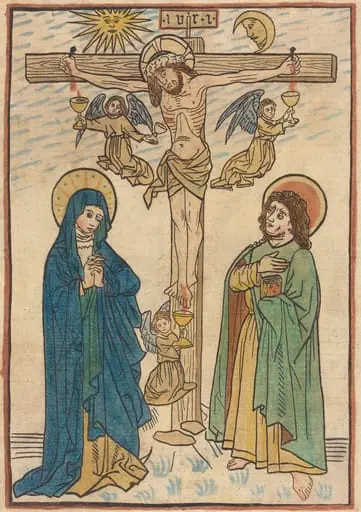
Christ on the Cross with Angels is an ink print by the Renaissance artist German 15th Century. It dates from 1490 and is held in the collection of the National Gallery of Art. The work is a hand‑colored woodcut depicting the crucifixion of Christ.
About this work
Overview
The work is a hand‑colored woodcut depicting the crucifixion of Christ. Executed on vellum, the print shows the nailed figure on a wooden cross, encircled by angels and mourners, with the inscription I.N.R.I. above. Bright, flat pigments—blue, yellow, orange, green, brown, carmine, and gold—were applied after the block was printed, giving the image its vivid palette.
Subject & Meaning
Angels hover above, holding symbolic objects such as a chalice and a cloth, suggesting intercession and the sacramental aspects of the Passion.
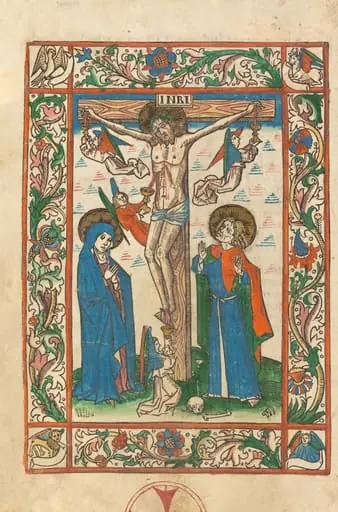
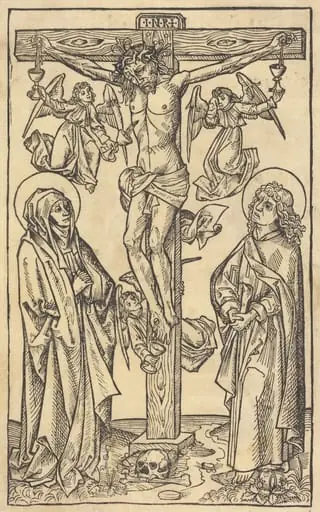
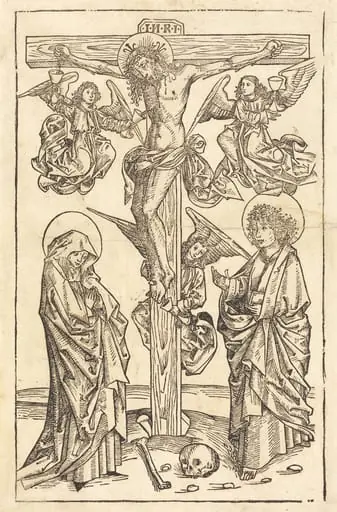
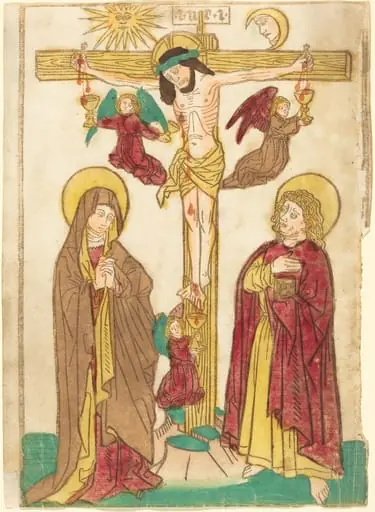
Central to the composition is the crucified Christ, crowned with thorns and bearing the wounds of his hands and feet. Angels hover above, holding symbolic objects such as a chalice and a cloth, suggesting intercession and the sacramental aspects of the Passion. Below, two standing figures clasp their hands in prayer while a kneeling devotee reaches toward the cross, emphasizing devotion and the human response to the divine sacrifice.
Technique & Style
The image originates from a carved wood block, a common pre‑photographic method for reproducing religious scenes. After the black ink impression was transferred to vellum, artisans applied hand‑colored washes in a limited, flat spectrum, a practice that enhances the graphic clarity of the woodcut while allowing individual copies to vary in hue intensity.
History & Provenance
The print belongs to the tradition of devotional woodcuts produced for personal contemplation and liturgical use in the early modern period. While specific details of its creator or original ownership are not recorded, such works were typically circulated among private households and small chapels, often serving as portable images of the Passion.
Context
Woodcut prints like this one played a crucial role in disseminating biblical narratives before the advent of mass‑produced paper images. By combining a stark, linear design with hand‑applied color, the piece reflects the transitional aesthetic between purely monochrome block prints and the more elaborate, fully painted devotional panels that followed in later centuries.
Artist & collection

Artist
This 15th-century German artist carved vivid religious scenes into metal and wood, then hand-painted them in bright, symbolic colors.

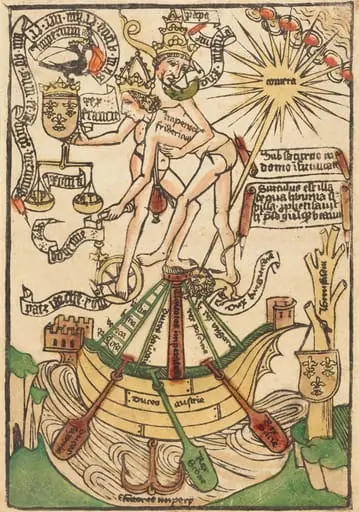 Allegory of the Meeting of Pope Paul II and Emperor Frederick III
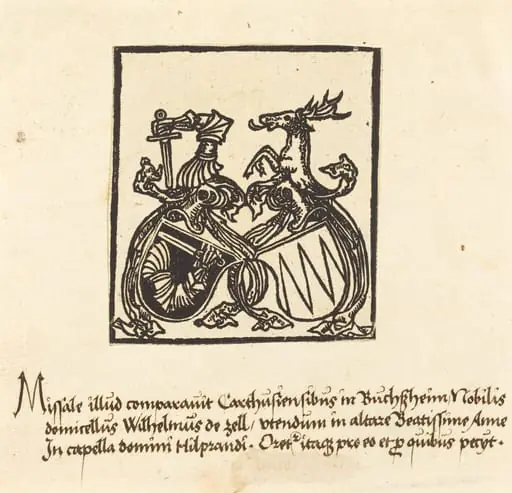 Bookplate of Wilhelm von Zell
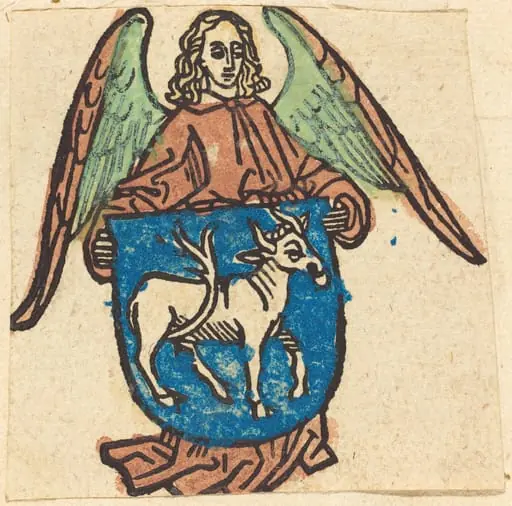 Bookplate of Hilprand Brandenburg of Bibrach
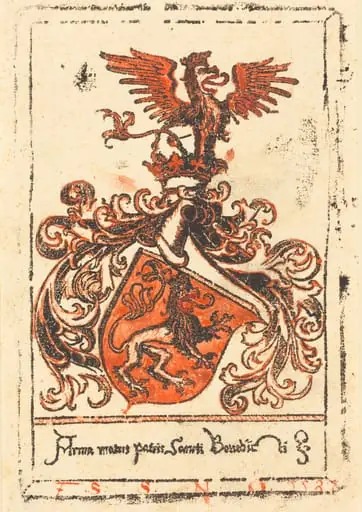 Bookplate of the Abbey of Ottobeuren
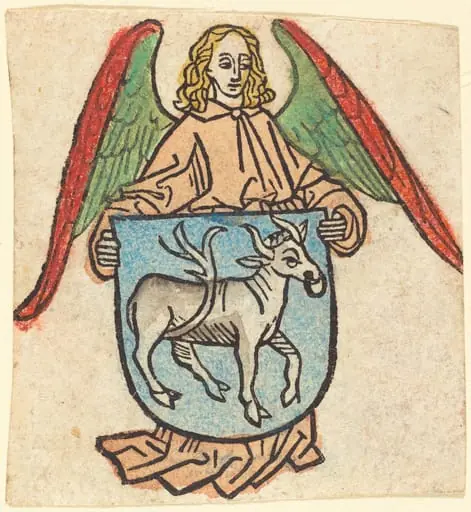 Bookplate of Hilprand Brandenburg of Bibrach
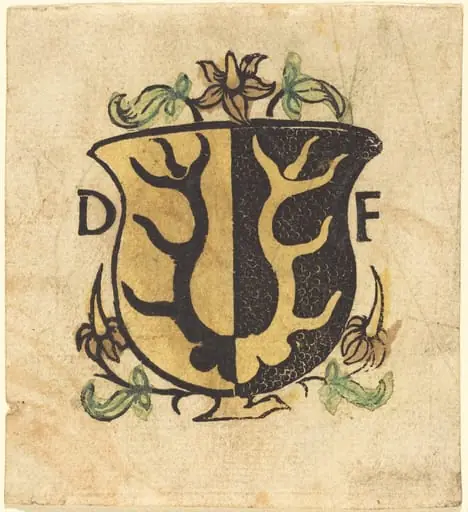 Bookplate of Dominicus Frauenfelder
![Studies for Six Figures (sheet from a model book) [recto], by German 15th Century](https://artifactworldgallery.com/img/german-15th-century--studies-for-six-figures-sheet-from-a-model-book-recto--4837429e0755bc3f-w320.webp) Studies for Six Figures (sheet from a model book) [recto]
Studies for Six Figures (sheet from a model book) [recto]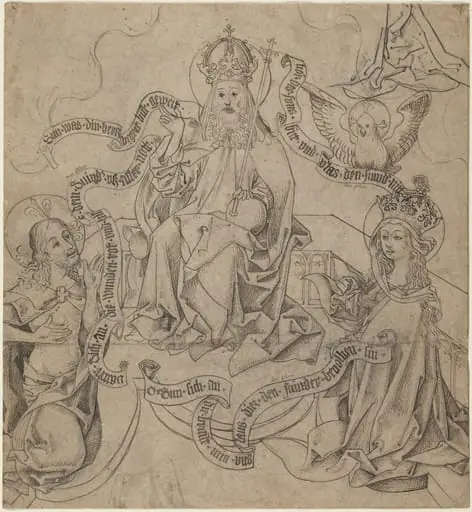 Christ and Mary Interceding with God the Father