Artwork
Christ on the Cross with Angels
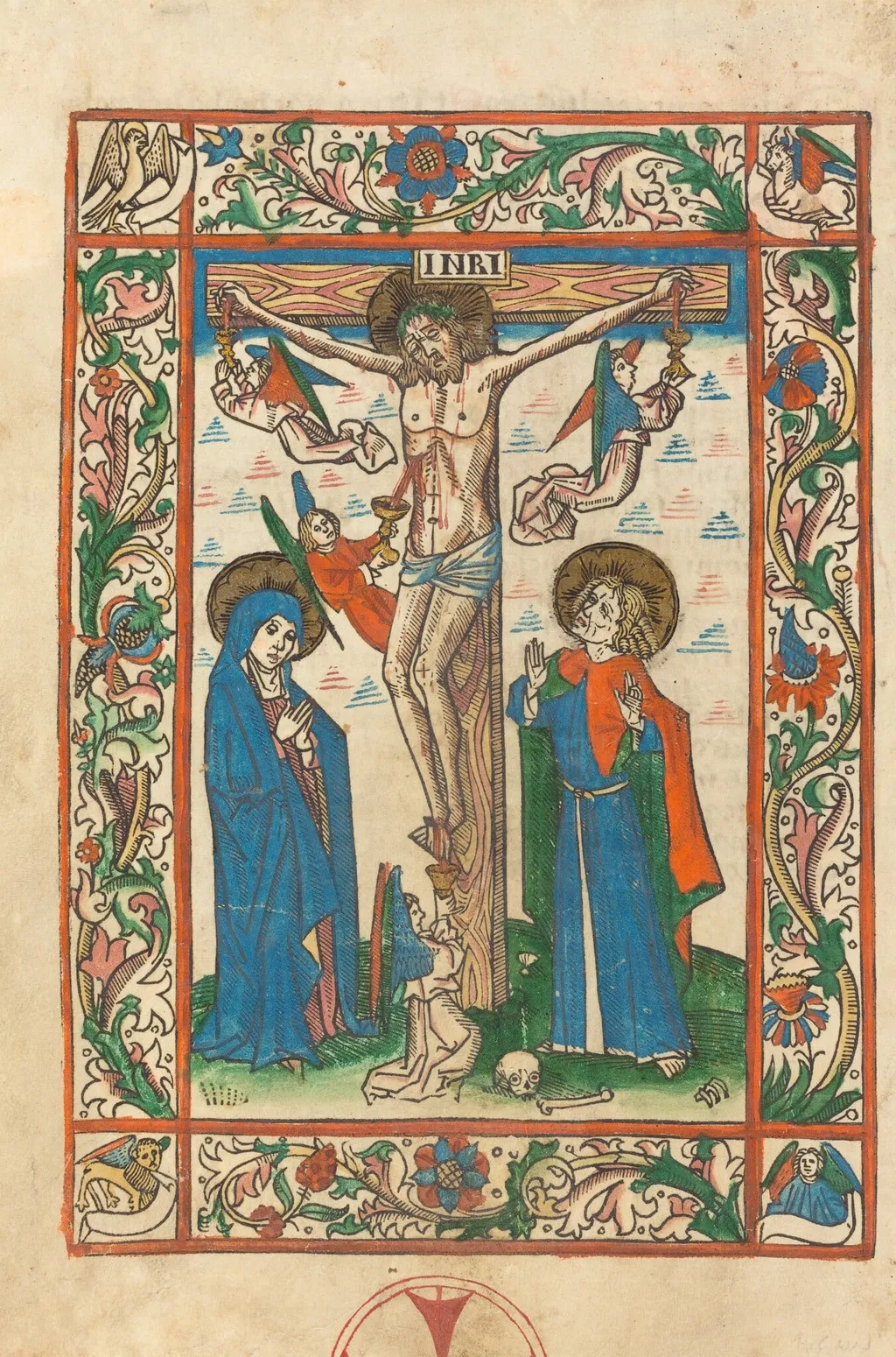
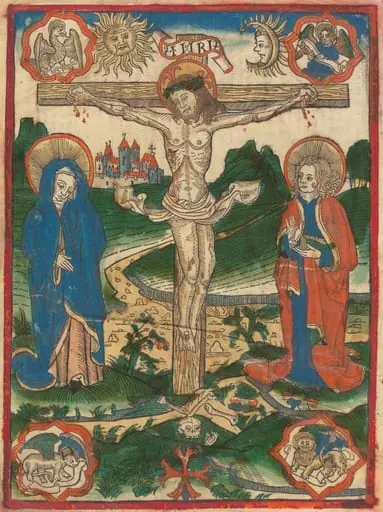
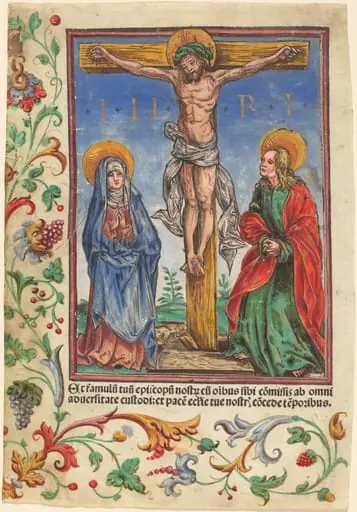
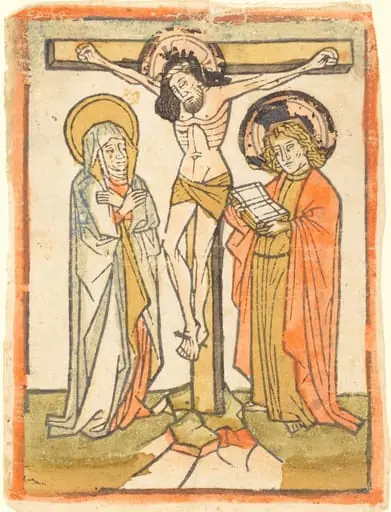
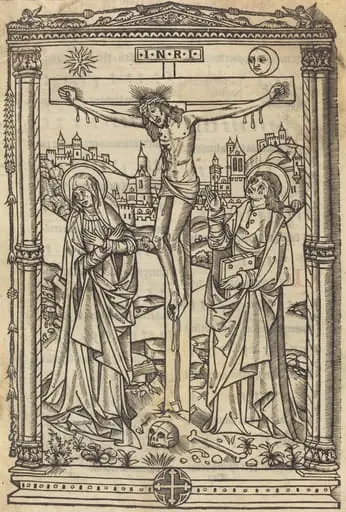
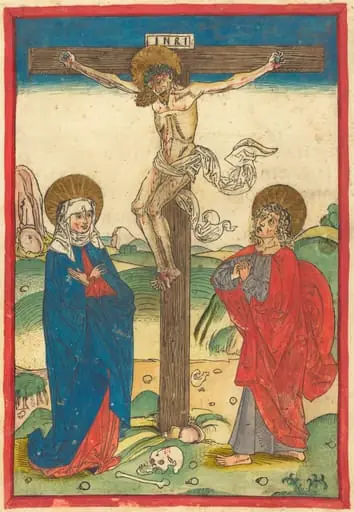
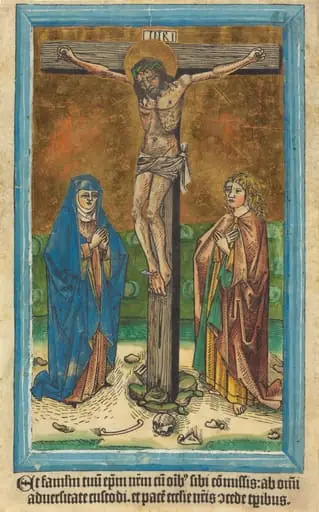
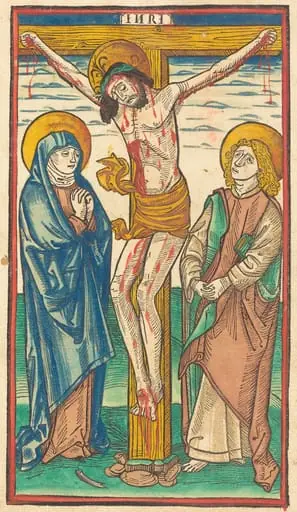
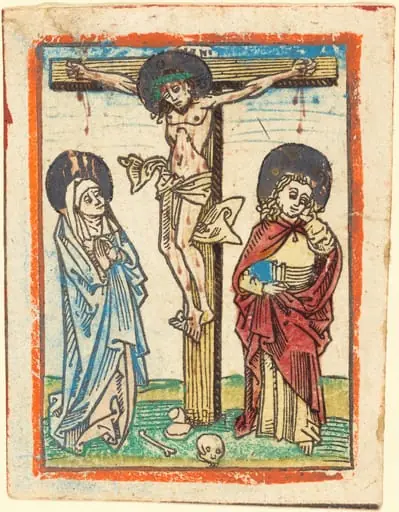
Christ on the Cross with Angels is a gouache print by the Renaissance artist German 15th Century. It dates from 1483 and is held in the collection of the National Gallery of Art. The work presents a crucifixion scene rendered as a hand‑colored woodcut on vellum.
About this work
Overview
The work presents a crucifixion scene rendered as a hand‑colored woodcut on vellum. Central to the composition is a figure of Christ nailed to a cross, flanked by three angels in varying poses. At the foot of the cross stand two robed observers. The surrounding border is filled with vivid floral motifs and swirling decorative bands in red, green and blue, giving the piece a stained‑glass quality.
Subject & Meaning
The central figure depicts the crucified Christ, identified by the inscription INRI—an abbreviation of the Latin title traditionally placed above the cross.
The central figure depicts the crucified Christ, identified by the inscription INRI—an abbreviation of the Latin title traditionally placed above the cross. The three angels appear to intercede, one holding a tool that may suggest a role in the Passion narrative, while the two onlookers below convey human witness to the event. The surrounding angels and decorative border reinforce a devotional atmosphere, inviting contemplation of the sacrifice.
Technique & Style
Executed as a woodcut, the image was carved in relief and printed onto vellum, then enhanced with gouache pigments. The hand‑coloring yields flat, saturated tones that echo the luminous effect of medieval stained glass. The decorative border, with its intricate floral and scroll motifs, reflects the ornamental conventions of early printmaking, while the crisp linear carving defines the figures and their gestures.
History & Provenance
The print belongs to the tradition of early modern religious woodcuts produced for personal devotion and small‑scale circulation. Though specific dates and ownership are not recorded, the use of vellum and gouache suggests a work intended for a collector’s cabinet rather than mass distribution. Its preservation on vellum indicates careful handling and a degree of value attributed to the piece by its successive custodians.
Context
During the period when woodcut prints proliferated, religious imagery served both instructional and meditative purposes. This piece aligns with the visual language of the Counter‑Reformation, emphasizing clear, didactic representation of Christ’s suffering, accompanied by angelic intercessors. The decorative border mirrors contemporary manuscript illumination, bridging the gap between printed and hand‑crafted devotional objects.
Artist & collection

Artist
This 15th-century German artist carved vivid religious scenes into metal and wood, then hand-painted them in bright, symbolic colors.

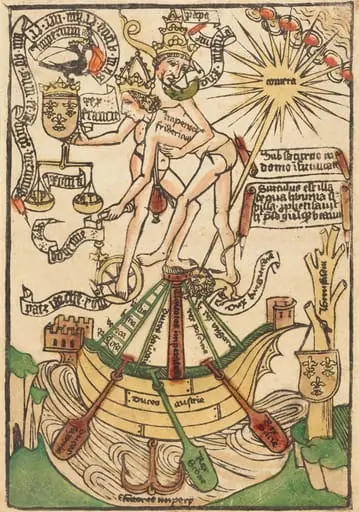 Allegory of the Meeting of Pope Paul II and Emperor Frederick III
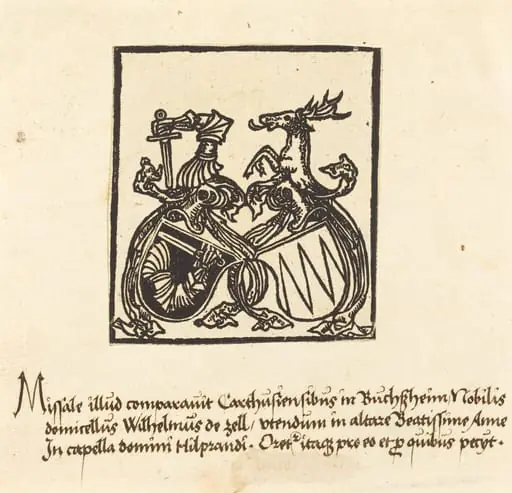 Bookplate of Wilhelm von Zell
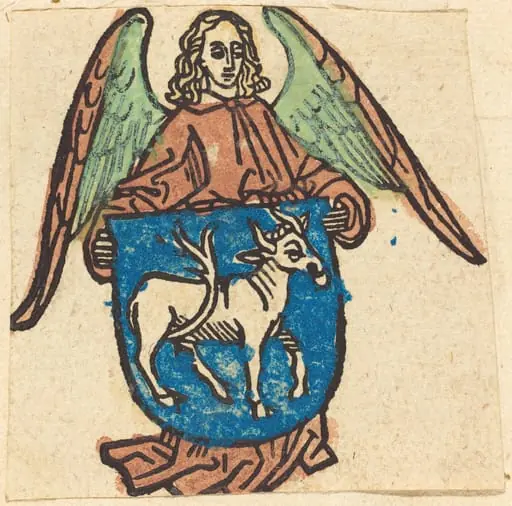 Bookplate of Hilprand Brandenburg of Bibrach
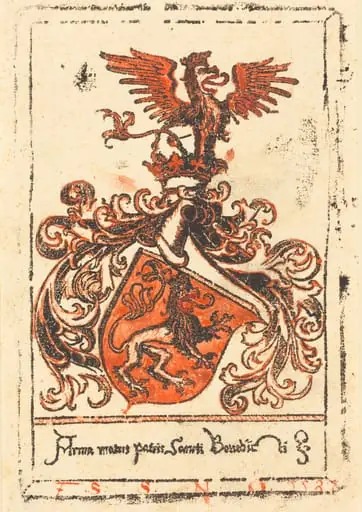 Bookplate of the Abbey of Ottobeuren
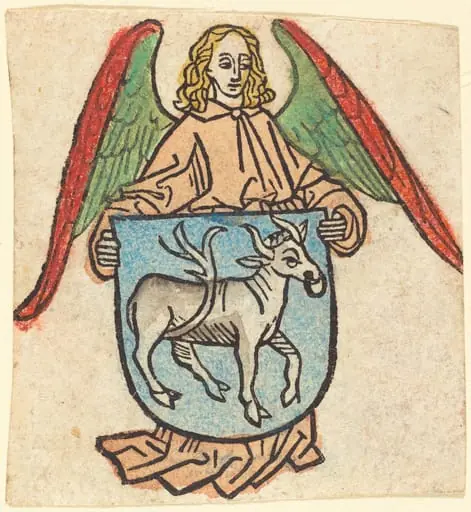 Bookplate of Hilprand Brandenburg of Bibrach
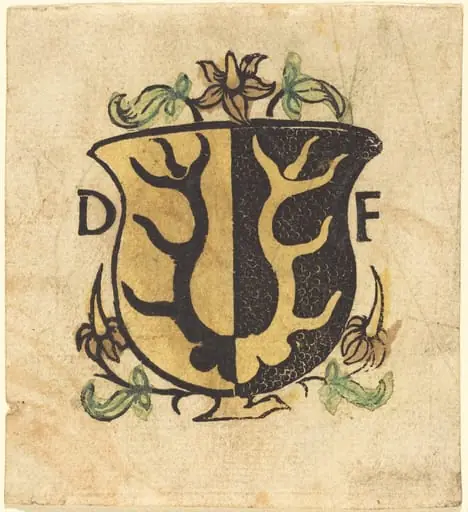 Bookplate of Dominicus Frauenfelder
![Studies for Six Figures (sheet from a model book) [recto], by German 15th Century](https://artifactworldgallery.com/img/german-15th-century--studies-for-six-figures-sheet-from-a-model-book-recto--4837429e0755bc3f-w320.webp) Studies for Six Figures (sheet from a model book) [recto]
Studies for Six Figures (sheet from a model book) [recto]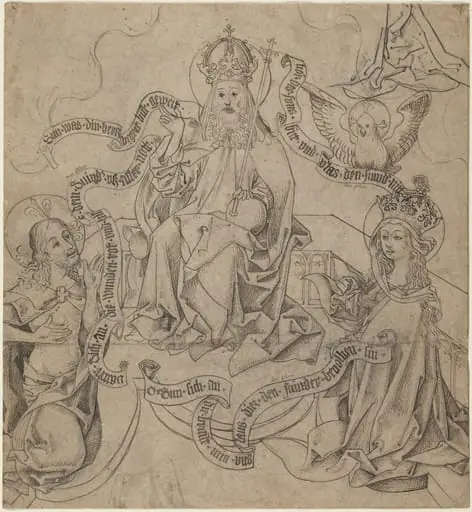 Christ and Mary Interceding with God the Father