Artwork
Last Judgment
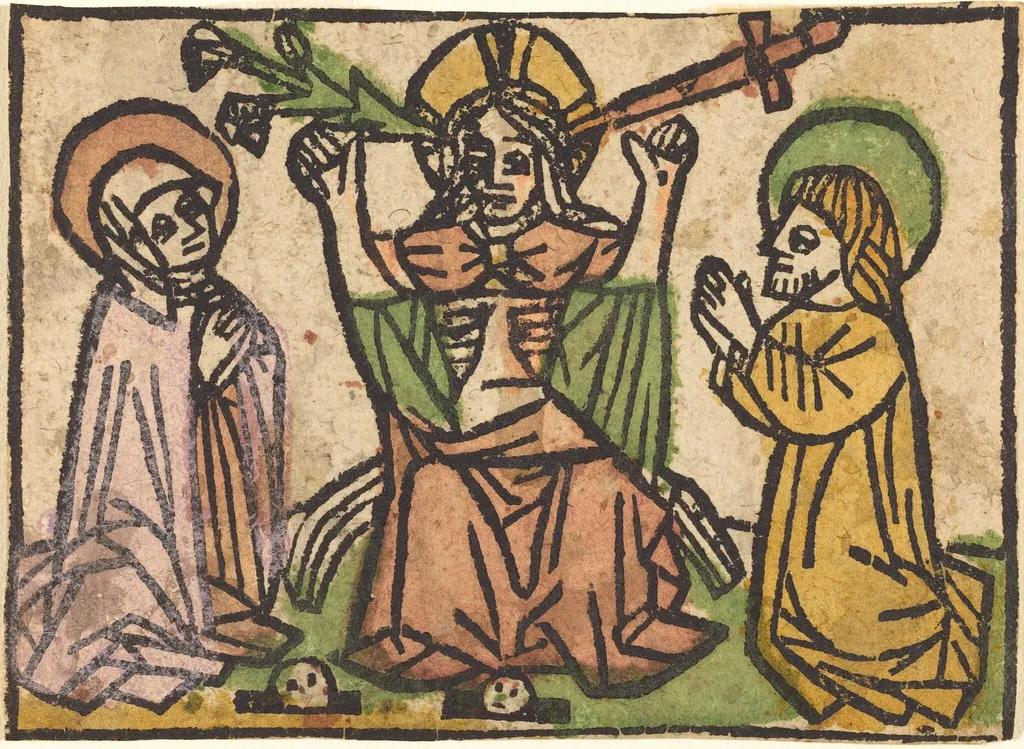
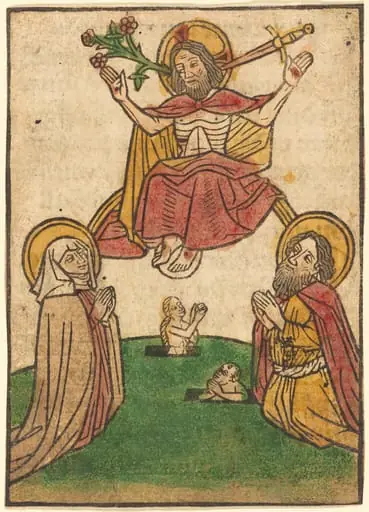
Last Judgment is an ink print by the Renaissance artist German 15th Century. It dates from 1465 and is held in the collection of the National Gallery of Art.
About this work
Overview
Last Judgment is a hand-colored woodcut print featuring three prominent figures in a bold, flat style. The central figure, with a skeletal body and crowned head, holds a cross, flanked by two standing figures in white and yellow robes, the latter with a skull-like face. The vibrant yet faded color palette includes Venetian red, green, yellow, and lavender.
Subject & Meaning
The subject of Last Judgment alludes to religious themes of mortality and the afterlife. The skeletal central figure, crowned and cross-bearing, symbolizes the intersection of death and divine authority, while the flanking figures may represent contrasting fates. The overall composition conveys a message about judgment and the consequences of earthly life.
Technique & Style
Executed as a woodcut, this print showcases a characteristic bold and flat visual style. The addition of hand coloring in specific, bright hues (Venetian red, green, yellow, and lavender) enhances the image's impact, though the colors have faded over time. The technique reflects the common practice of woodcut printing for mass dissemination of images during the 15th century.
History & Provenance
Created in the 1400s, this woodcut was part of a widespread practice of using woodcuts to disseminate religious ideologies across a broad audience. Specific details about its creator, original location, or ownership history are not provided.
Context
Last Judgment is situated within the religious and artistic climate of the 15th century, where woodcuts served as a primary medium for the mass propagation of Christian themes and teachings. The use of vivid, if now faded, colors would have enhanced its communicative power among the populace.
Legacy
While specific lasting impacts or direct influences of this particular woodcut on subsequent art or religious practices are not detailed, it represents a typical example of how 15th-century woodcuts contributed to the broader dissemination of religious themes in medieval Europe.
Artist & collection

Artist
This 15th-century German artist carved vivid religious scenes into metal and wood, then hand-painted them in bright, symbolic colors.

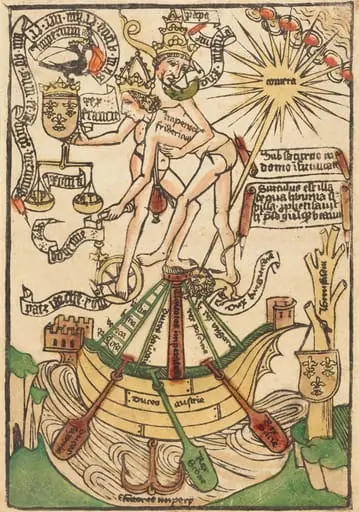 Allegory of the Meeting of Pope Paul II and Emperor Frederick III
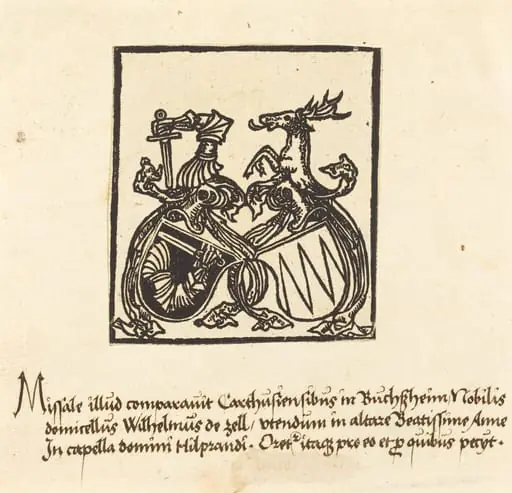 Bookplate of Wilhelm von Zell
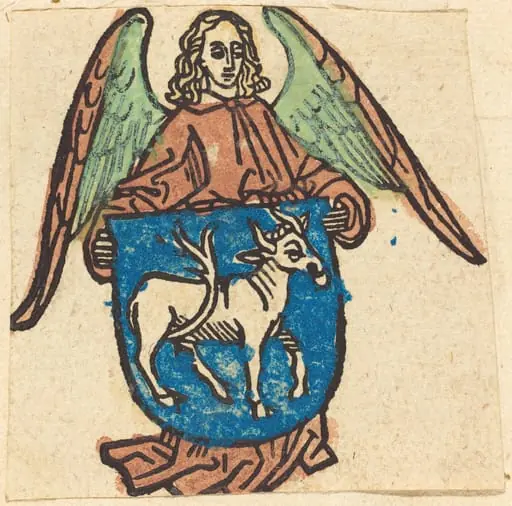 Bookplate of Hilprand Brandenburg of Bibrach
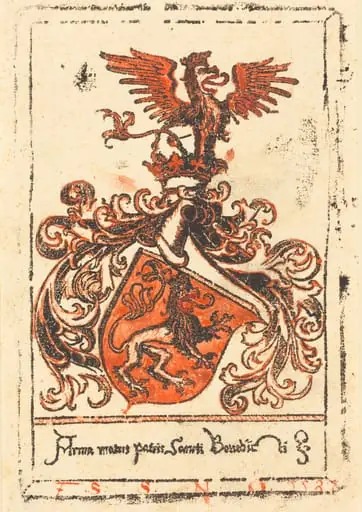 Bookplate of the Abbey of Ottobeuren
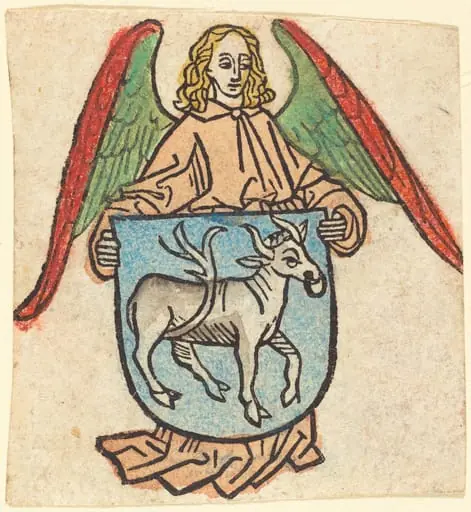 Bookplate of Hilprand Brandenburg of Bibrach
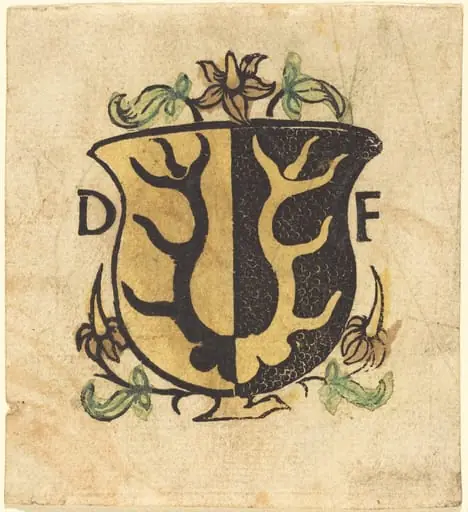 Bookplate of Dominicus Frauenfelder
![Studies for Six Figures (sheet from a model book) [recto], by German 15th Century](https://artifactworldgallery.com/img/german-15th-century--studies-for-six-figures-sheet-from-a-model-book-recto--4837429e0755bc3f-w320.webp) Studies for Six Figures (sheet from a model book) [recto]
Studies for Six Figures (sheet from a model book) [recto]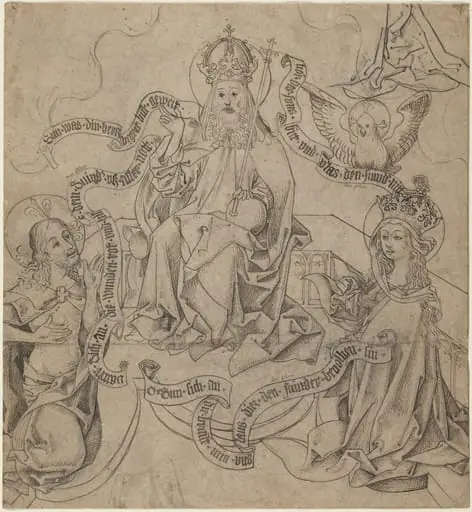 Christ and Mary Interceding with God the Father