Artwork
The Flagellation
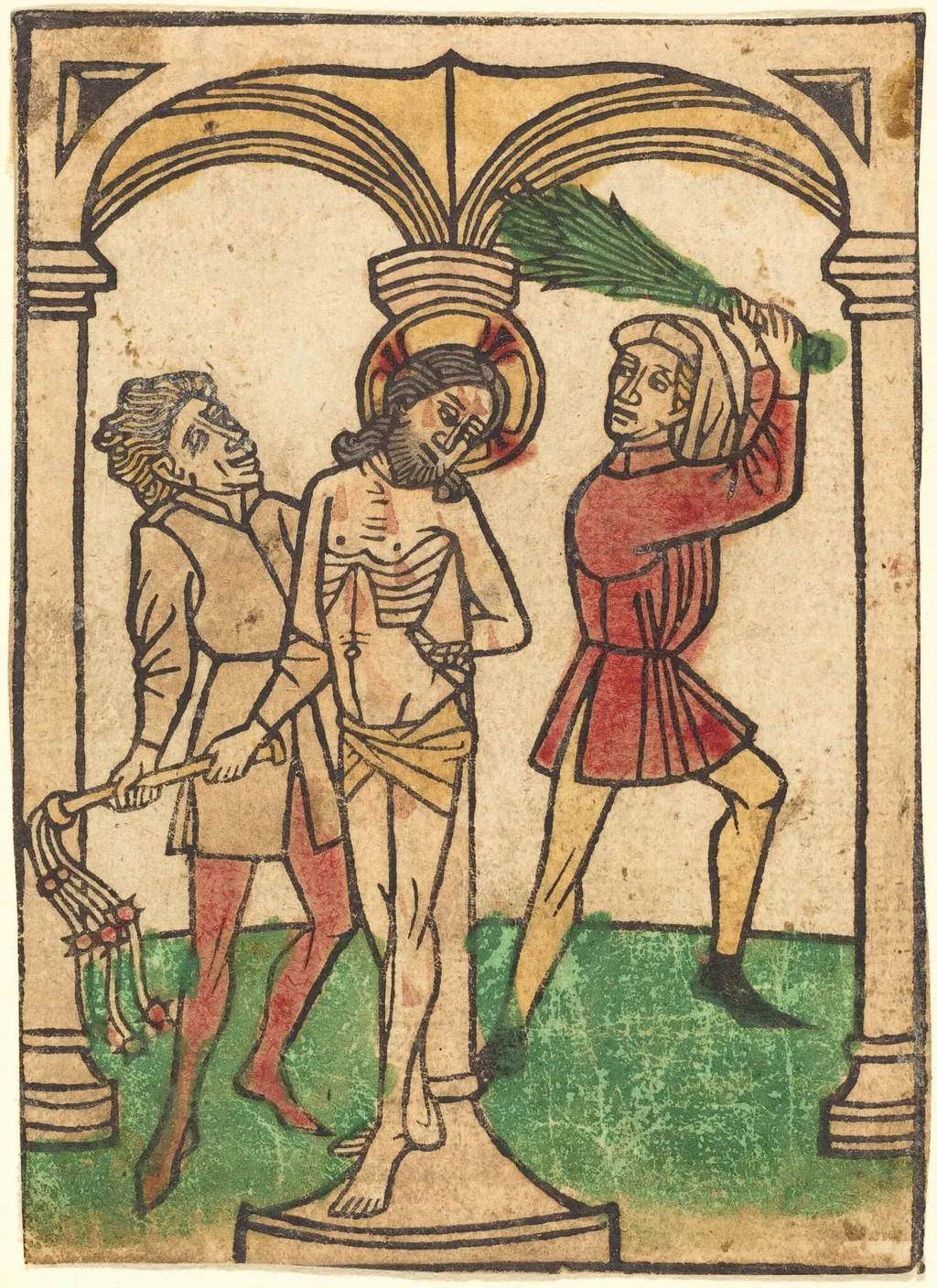
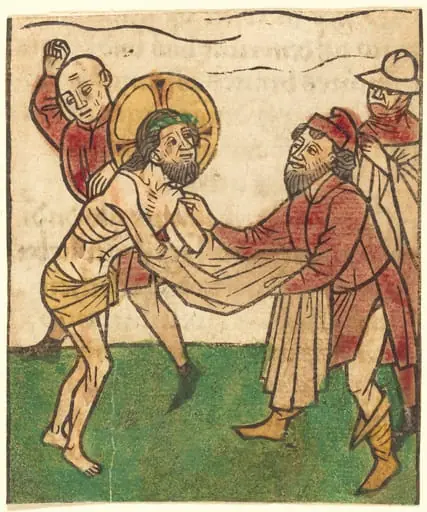
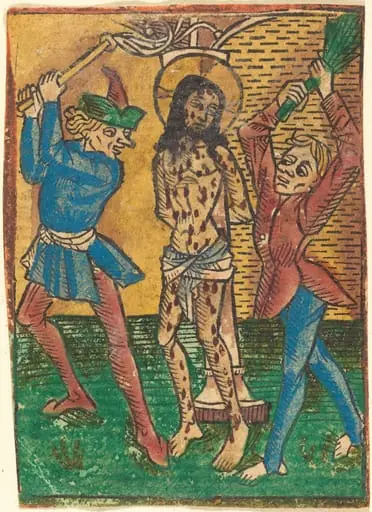
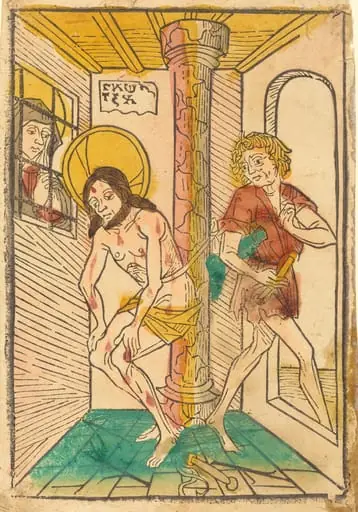
The Flagellation is an ink print by Ludwig of Ulm. It dates from 1450 and is held in the collection of the National Gallery of Art.
About this work
Overview
Ludwig of Ulm’s hand‑coloured woodcut, dated to around 1450, appears as a single page from a blockbook. The image is executed in the woodcut technique and presents a compact scene dominated by vivid red and green fields.
Subject & Meaning
The composition centres on three male figures within a confined green space. The central figure is rendered as a skeletal form crowned with a diadem, suggesting a punished or martyr‑like presence. To his left, a man wields a single stick, while his counterpart on the right bears a bundle of sticks on his shoulder, reinforcing a theme of scourging.
Technique & Style
The work exemplifies early printmaking, employing a carved wood block to produce the line work, later enhanced with flat washes of colour applied by hand. The palette is limited, relying on bold red and green areas that contrast with the stark black outlines of the figures.
History & Provenance
Created in the mid‑15th century, the piece belongs to the blockbook tradition that combined printed text and images. Ludwig of Ulm, an active printer‑artist in southern Germany, produced this sheet for devotional or instructional purposes, though its exact original context remains uncertain.
Context
During the period, woodcut illustrations were increasingly used to convey biblical or moral narratives to a largely illiterate audience. The depiction of a flagellation aligns with contemporary emphasis on Christ’s Passion and the didactic function of visual media in religious practice.
Artist & collection