Artwork
Madonna and Child in a Glory Standing on a Crescent Moon
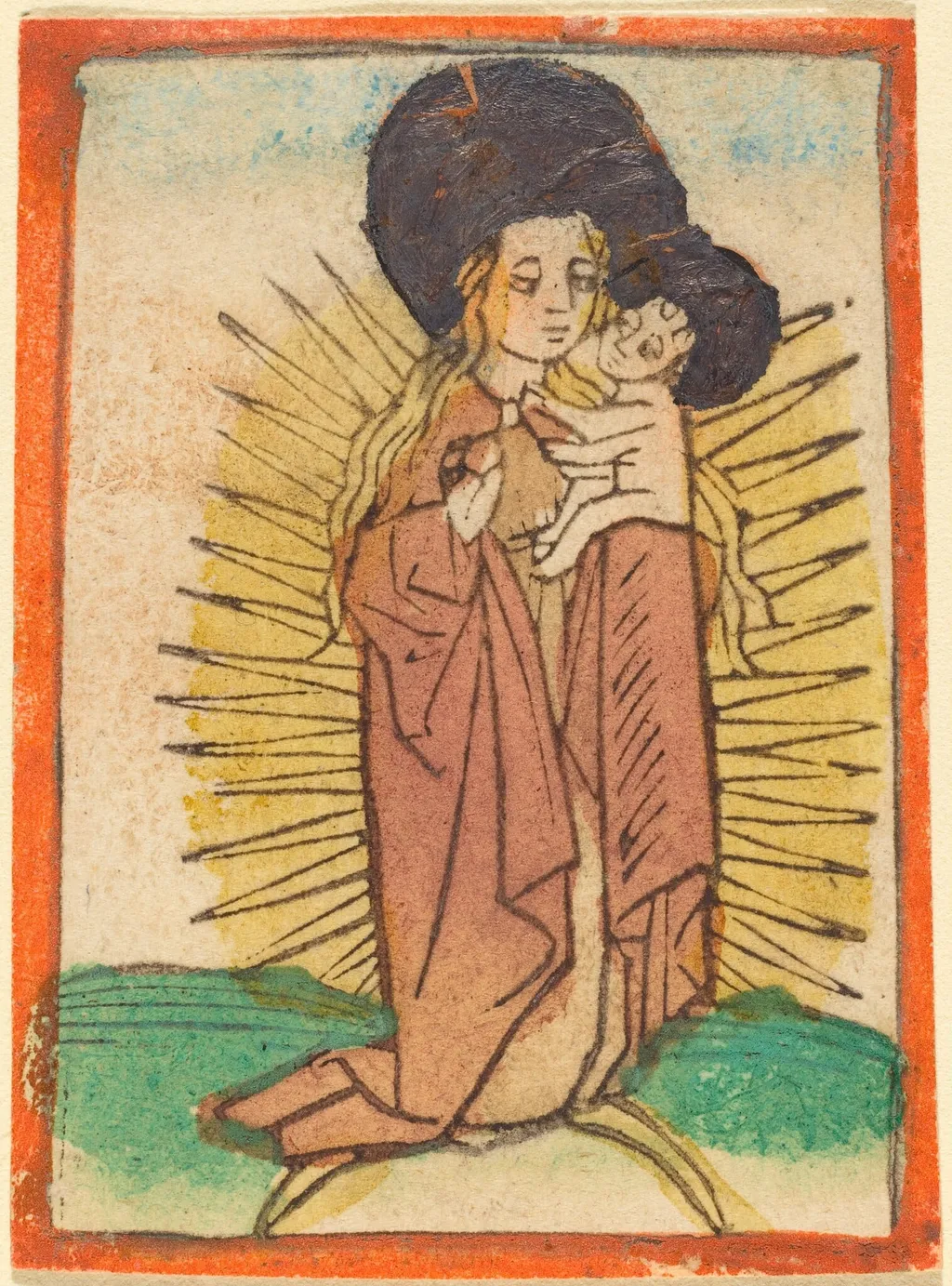
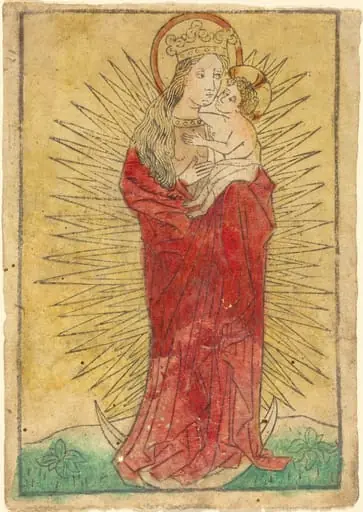
Madonna and Child in a Glory Standing on a Crescent Moon is an ink print by the Renaissance artist German 15th Century. It dates from 1470 and is held in the collection of the National Gallery of Art. The work depicts a female figure cradling an infant, both poised upon a slender crescent moon.
About this work
The painting was made using a woodcut method, where the artist carved an image into wood and then added color by hand.
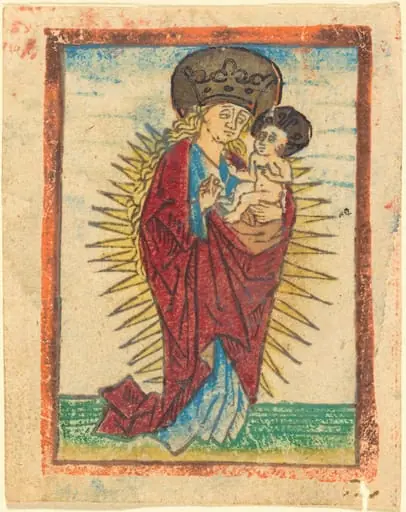
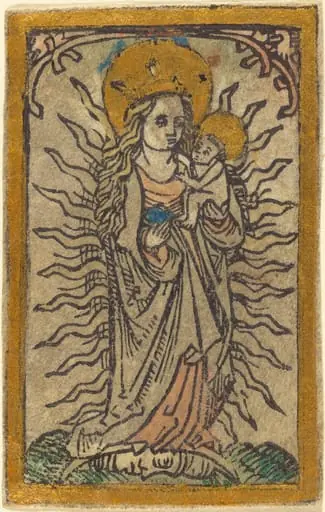
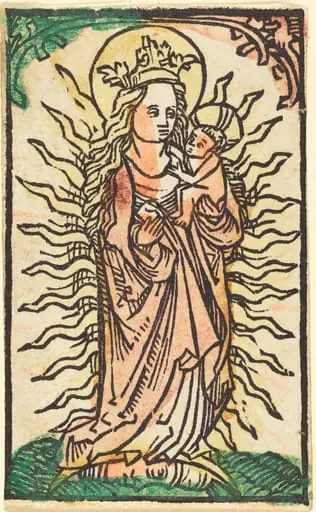
This image shows a woman holding a small child, both standing on a crescent moon. The woman wears a long robe and a large, dark hat. Behind her is a golden halo with rays, and the background is a simple green and yellow field.
The painting was made using a woodcut method, where the artist carved an image into wood and then added color by hand. This technique was common in the 15th century.
Look up woodcut to see how artists created prints this way.
Overview
The work depicts a female figure cradling an infant, both poised upon a slender crescent moon. The woman is robed and capped with a broad, dark hat, while a radiant golden halo with emanating rays crowns her head. The backdrop consists of a modest field rendered in muted greens and yellows, creating a simple yet symbolic setting.
Subject & Meaning
The central figures represent the Virgin Mary and the Christ Child, a conventional devotional motif. Their placement on the moon alludes to Marian titles linking her to celestial symbolism, while the halo underscores the child's divinity. The composition conveys a serene, otherworldly presence, inviting contemplation of the sacred bond between mother and son.
Technique & Style
Executed as a woodcut, the image was carved in relief on a wooden block, inked, and pressed onto paper. After printing, the artist applied hand‑applied pigments in rose, green, yellow, blue, brown, gold, and orange, enriching the monochrome design with vivid coloration. This combination of printmaking and hand‑coloring was a common practice among 15th‑century European artisans.
History & Provenance
The piece belongs to the tradition of early printed religious images that circulated widely in the late medieval period. While specific details of its origin and ownership are not recorded, its material and stylistic traits align it with the broader corpus of 15th‑century devotional prints produced for private devotion and liturgical use.
Artist & collection

Artist
This 15th-century German artist carved vivid religious scenes into metal and wood, then hand-painted them in bright, symbolic colors.

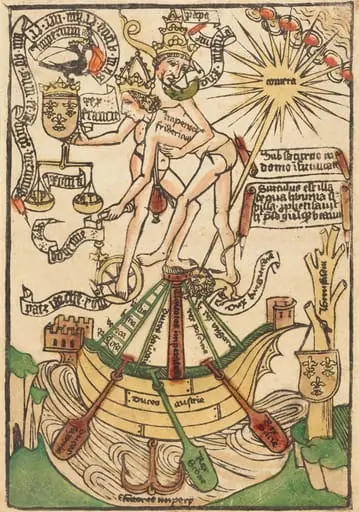 Allegory of the Meeting of Pope Paul II and Emperor Frederick III
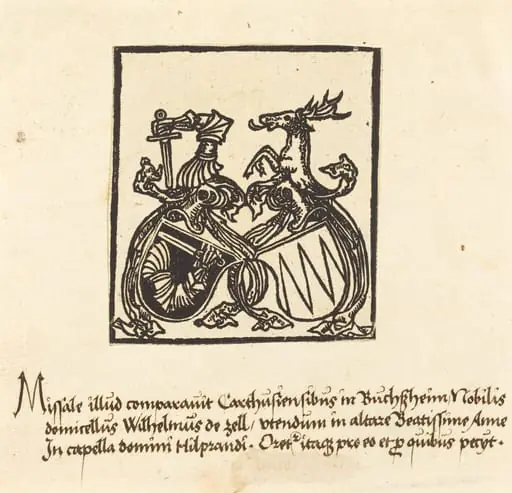 Bookplate of Wilhelm von Zell
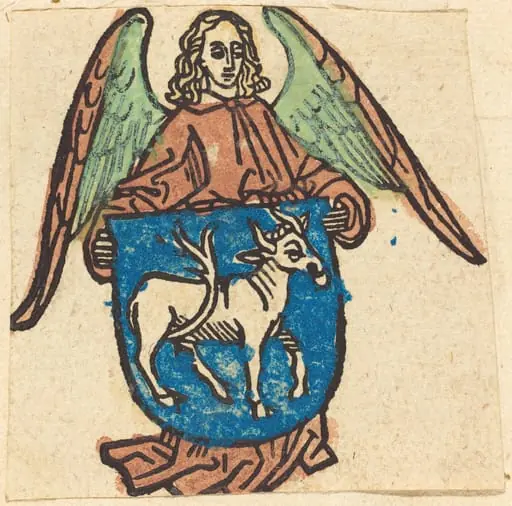 Bookplate of Hilprand Brandenburg of Bibrach
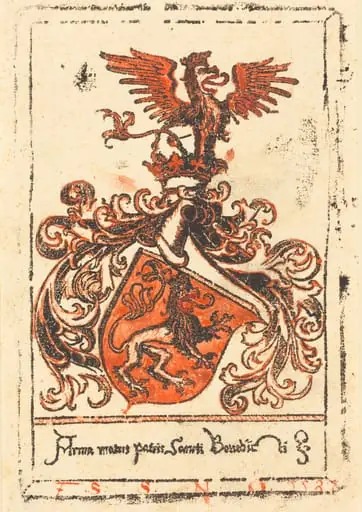 Bookplate of the Abbey of Ottobeuren
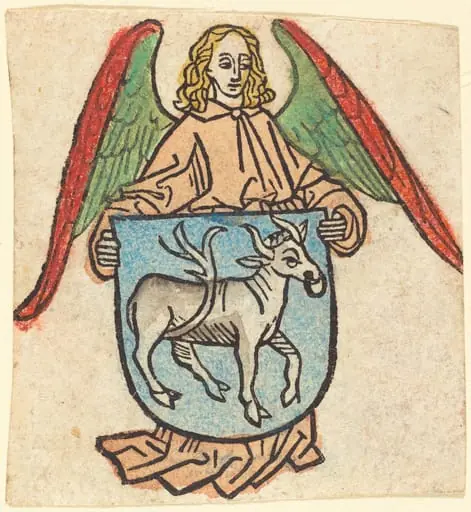 Bookplate of Hilprand Brandenburg of Bibrach
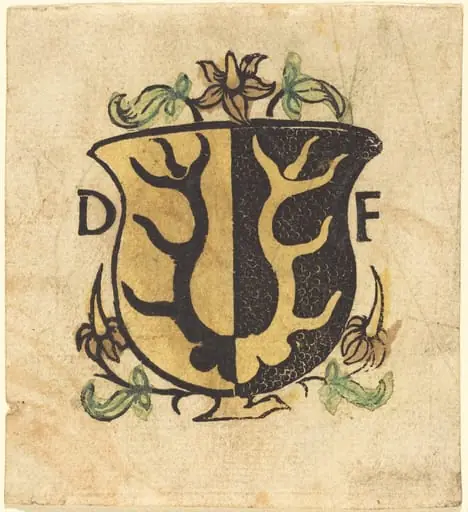 Bookplate of Dominicus Frauenfelder
![Studies for Six Figures (sheet from a model book) [recto], by German 15th Century](https://artifactworldgallery.com/img/german-15th-century--studies-for-six-figures-sheet-from-a-model-book-recto--4837429e0755bc3f-w320.webp) Studies for Six Figures (sheet from a model book) [recto]
Studies for Six Figures (sheet from a model book) [recto]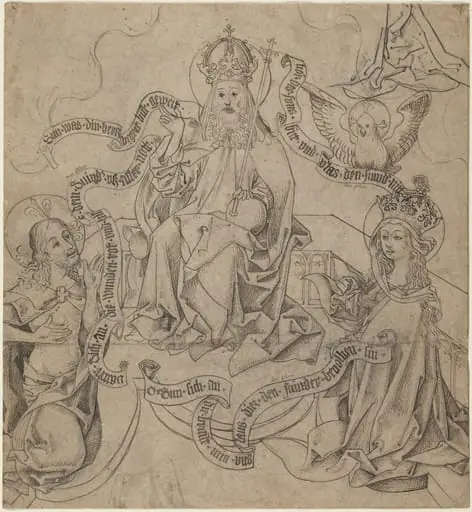 Christ and Mary Interceding with God the Father