Artwork
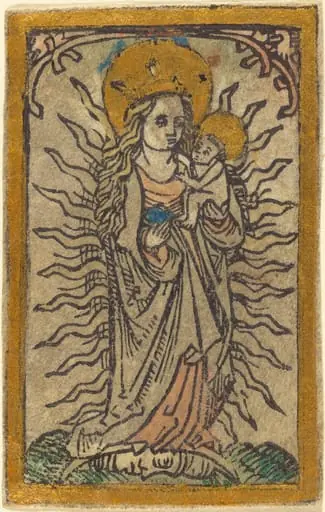
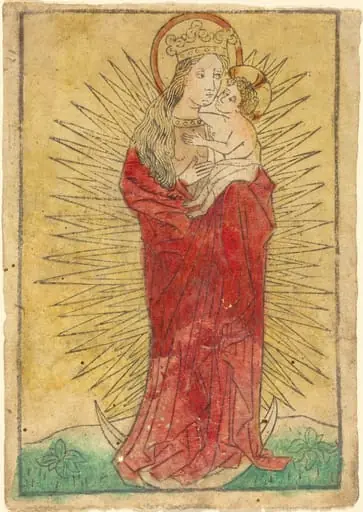
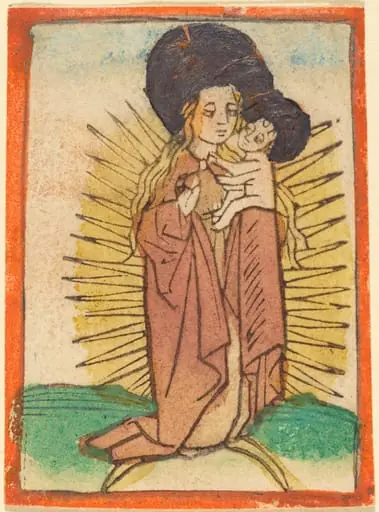
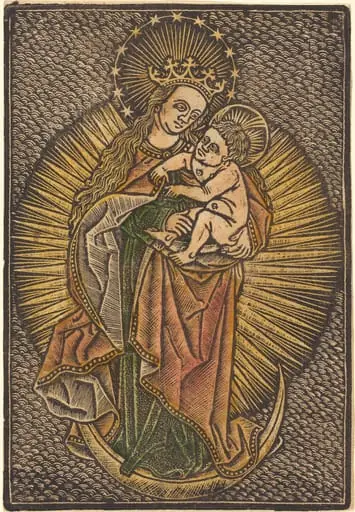
Madonna and Child in a Glory Standing on a Crescent Moon
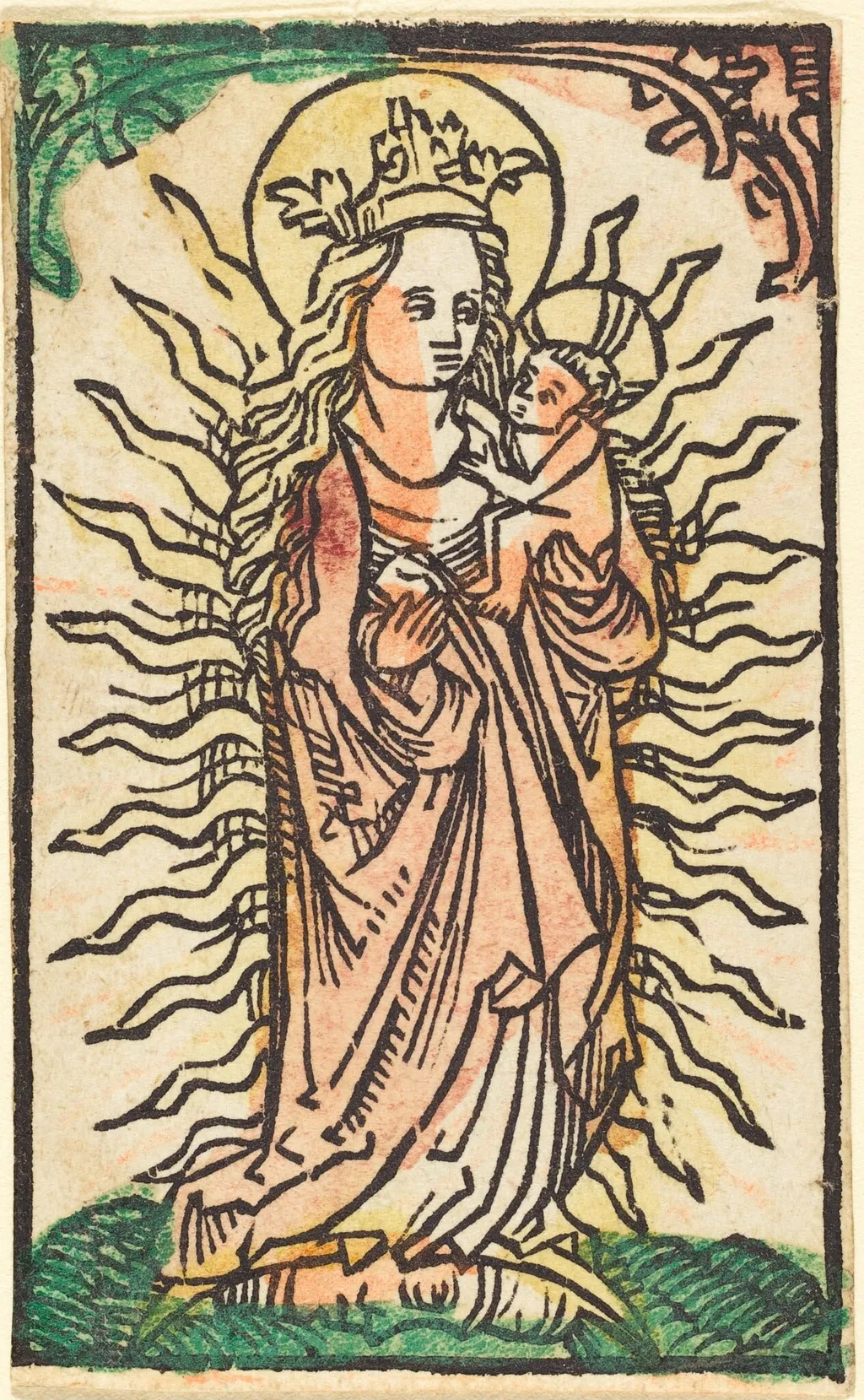
Madonna and Child in a Glory Standing on a Crescent Moon is an ink print by the Renaissance artist German 15th Century. It dates from 1475 and is held in the collection of the National Gallery of Art. The work is a hand‑colored woodcut depicting a woman cradling an infant, both positioned atop a crescent moon.
About this work
Overview
The work is a hand‑colored woodcut depicting a woman cradling an infant, both positioned atop a crescent moon. The figure’s head is encircled by a crown of stars, and a stylized tree with spiky foliage rises behind them against a muted, cloud‑filled sky. The composition combines stark outlines with modest washes of rose, green, and yellow.
Subject & Meaning
The central figures represent the Virgin Mary and the Christ Child, a conventional religious motif. The moon and star crown allude to Marian iconography that emphasizes her purity and heavenly role, while the surrounding tree may symbolize the Tree of Life or the cross, reinforcing theological associations of salvation and divine motherhood.
Technique & Style
Executed as a woodcut, the image originates from a carved wooden block that transfers ink onto paper, producing bold, graphic lines and flat areas of color. After printing, the artist applied hand‑applied pigments in pinks, greens, and yellows, giving the piece a modest polychrome finish while retaining the characteristic two‑dimensionality of early printmaking.
History & Provenance
The print belongs to the tradition of devotional images produced in the late medieval to early Renaissance period, when woodcut was a primary means of disseminating religious iconography. Its hand‑coloring suggests a later stage of production, intended for private devotion or small‑scale distribution, though specific ownership records are not documented.
Context
During the era of its creation, printed images served both liturgical and instructional purposes, reaching audiences beyond the reach of painted altarpieces. The combination of a simple, emblematic composition with limited color reflects the practical constraints of early print technology while still conveying theological symbolism recognizable to contemporary viewers.
Artist & collection

Artist
This 15th-century German artist carved vivid religious scenes into metal and wood, then hand-painted them in bright, symbolic colors.

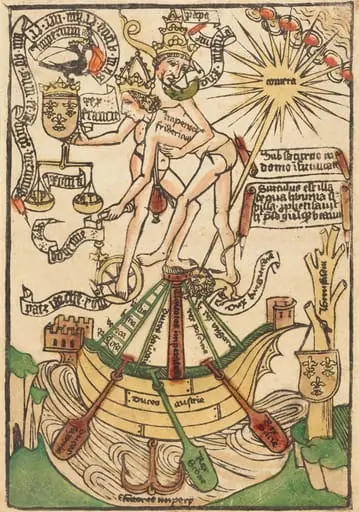 Allegory of the Meeting of Pope Paul II and Emperor Frederick III
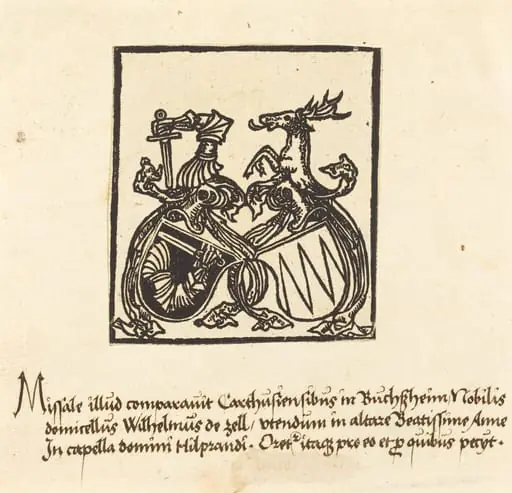 Bookplate of Wilhelm von Zell
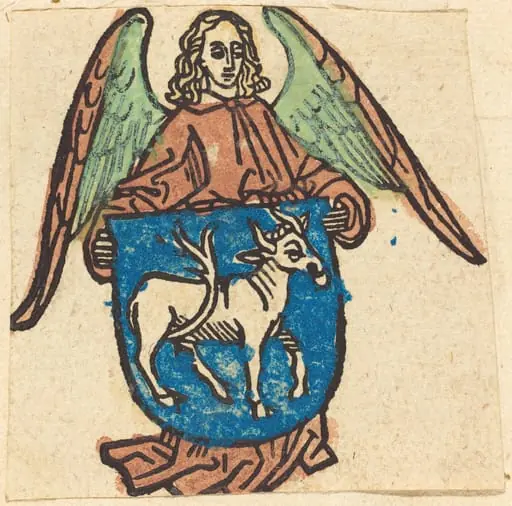 Bookplate of Hilprand Brandenburg of Bibrach
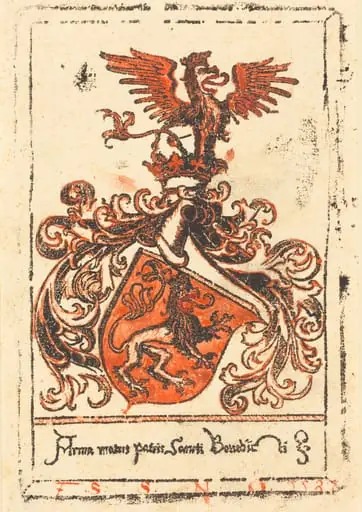 Bookplate of the Abbey of Ottobeuren
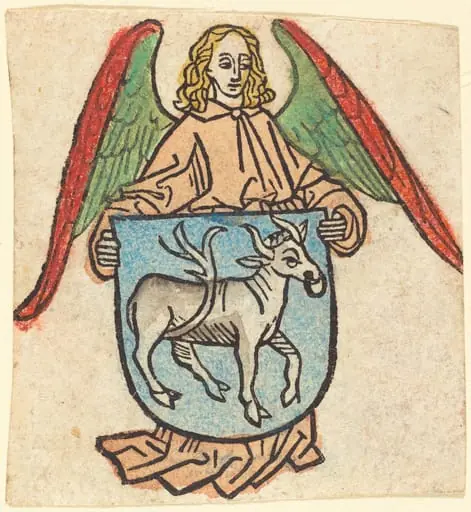 Bookplate of Hilprand Brandenburg of Bibrach
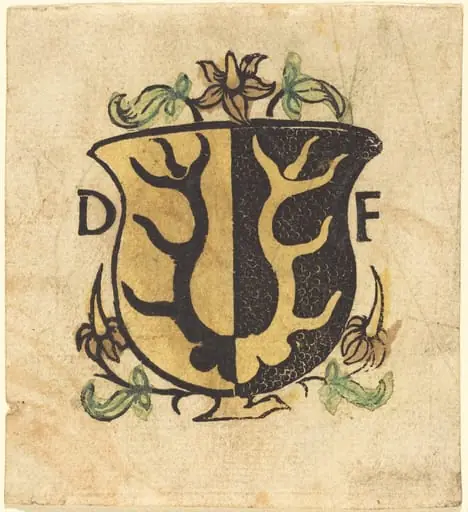 Bookplate of Dominicus Frauenfelder
![Studies for Six Figures (sheet from a model book) [recto], by German 15th Century](https://artifactworldgallery.com/img/german-15th-century--studies-for-six-figures-sheet-from-a-model-book-recto--4837429e0755bc3f-w320.webp) Studies for Six Figures (sheet from a model book) [recto]
Studies for Six Figures (sheet from a model book) [recto]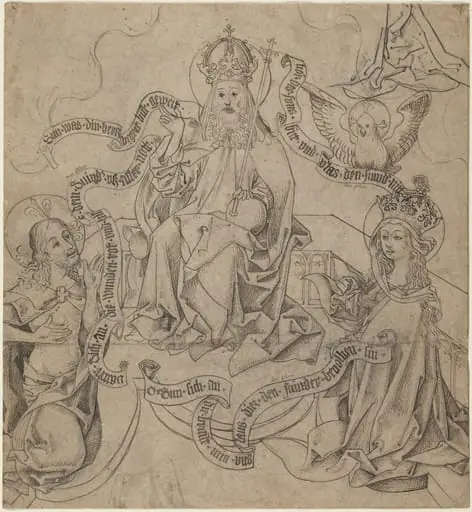 Christ and Mary Interceding with God the Father