Artwork
Miracle at Seefeld
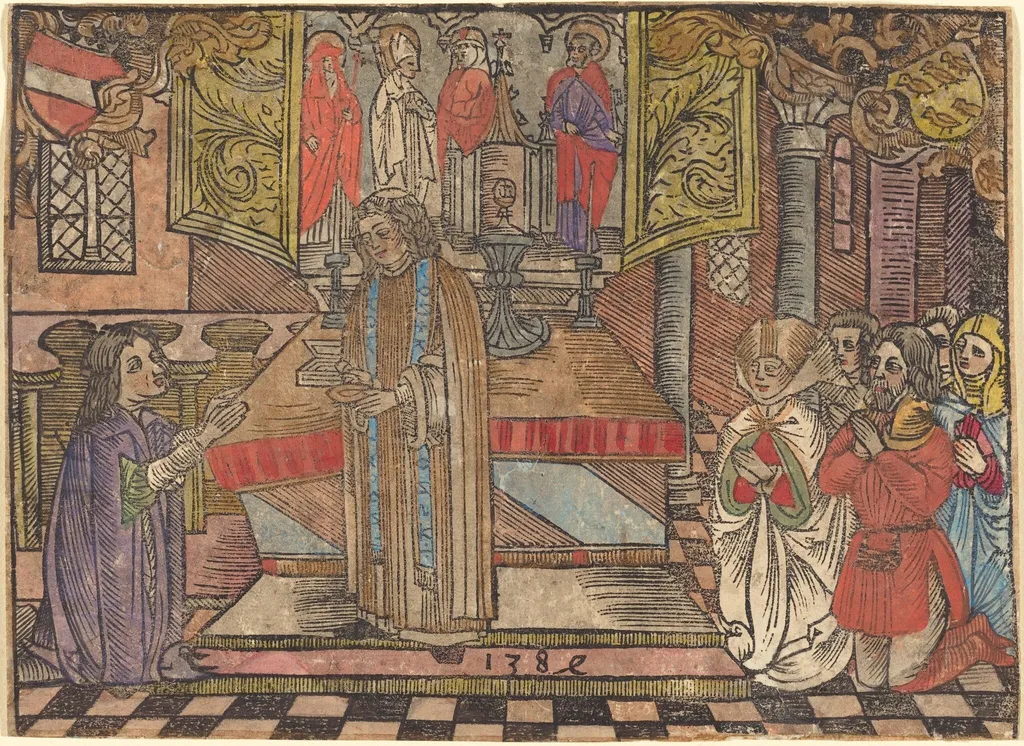
Miracle at Seefeld is an ink print by the Renaissance artist German 15th Century. It dates from 1484 and is held in the collection of the National Gallery of Art.
About this work
Overview
Miracle at Seefeld is a woodcut print, enhanced with hand coloring in a vibrant palette of red, blue, yellow, purple, brown, gray, and lavender. The composition presents a densely populated scene, characterized by a central robed figure elevated on a platform, holding a cross.
Subject & Meaning
At the center, a robed figure stands on a raised platform, holding a cross, while people in red and blue robes gesture toward him from below. Above, three haloed figures observe from a golden background, suggesting a divine or miraculous event, likely a religious narrative.
Technique & Style
The woodcut employs simple shapes and bold outlines to convey the narrative. Hand coloring adds warmth, distinguishing figures against the patterned, decorative borders framing the scene. The style is reminiscent of traditional woodcut techniques, with expressive lines and flat, colored areas.
Context
The use of woodcut, a popular printing method in the era, and the subject matter imply the work was likely created for widespread dissemination of religious themes, catering to a broad audience.
Legacy
While specific influence or direct descendants of this work are not highlighted in the provided information, its preservation suggests recognition of its artistic and historical value in representing religious woodcut prints of its time.
Artist & collection

Artist
This 15th-century German artist carved vivid religious scenes into metal and wood, then hand-painted them in bright, symbolic colors.

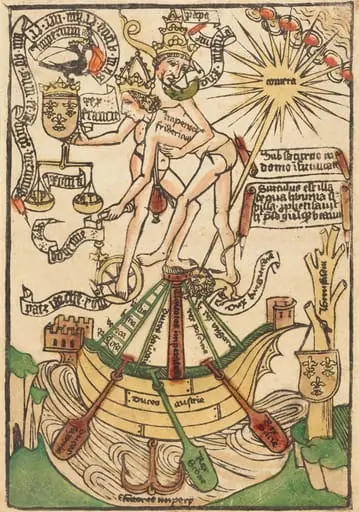 Allegory of the Meeting of Pope Paul II and Emperor Frederick III
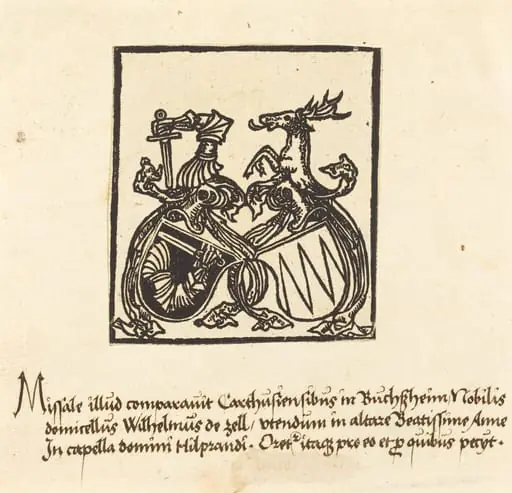 Bookplate of Wilhelm von Zell
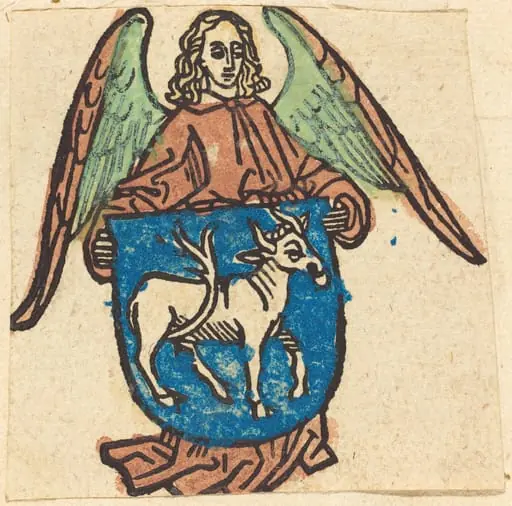 Bookplate of Hilprand Brandenburg of Bibrach
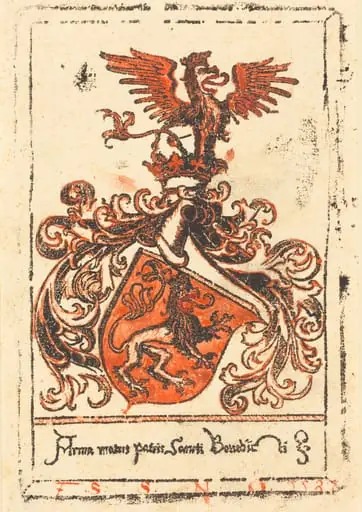 Bookplate of the Abbey of Ottobeuren
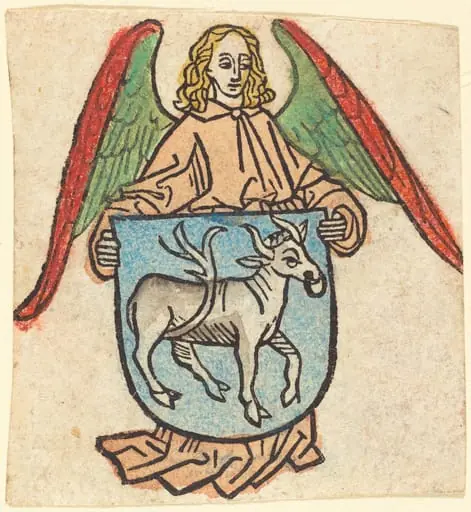 Bookplate of Hilprand Brandenburg of Bibrach
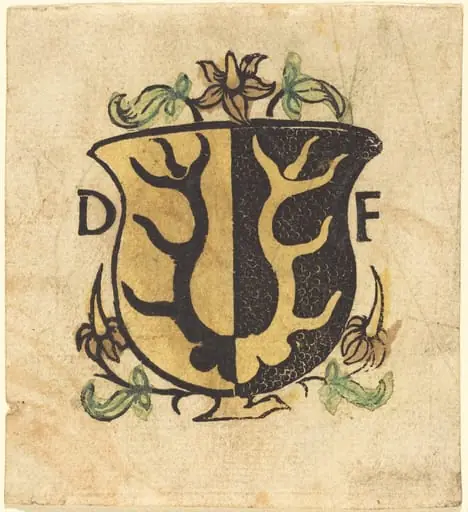 Bookplate of Dominicus Frauenfelder
![Studies for Six Figures (sheet from a model book) [recto], by German 15th Century](https://artifactworldgallery.com/img/german-15th-century--studies-for-six-figures-sheet-from-a-model-book-recto--4837429e0755bc3f-w320.webp) Studies for Six Figures (sheet from a model book) [recto]
Studies for Six Figures (sheet from a model book) [recto]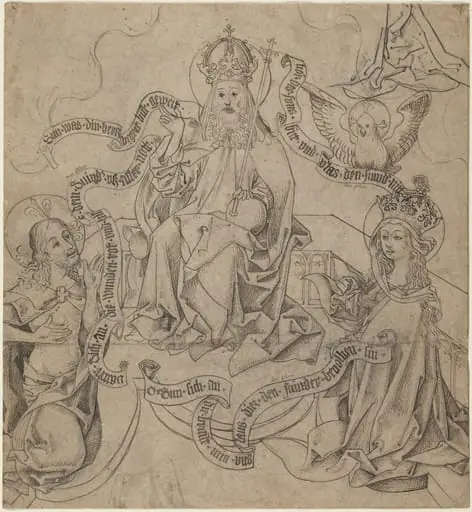 Christ and Mary Interceding with God the Father
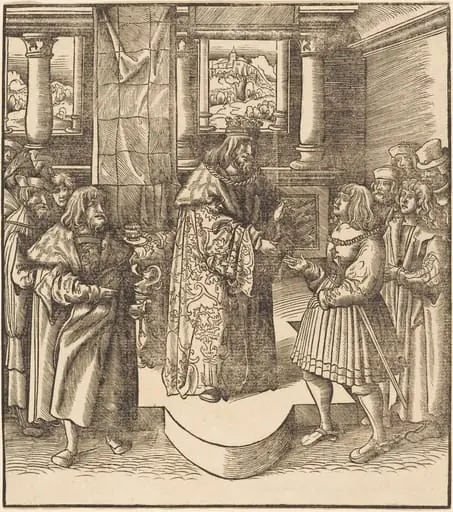 The Old White King Sending His Messengers to Portugal
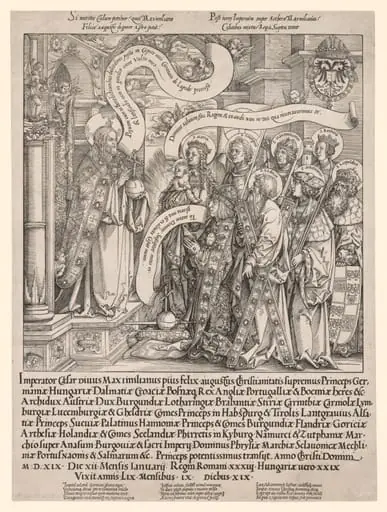 The Emperor Maximilian Presented by His Patron Saints to the Almighty
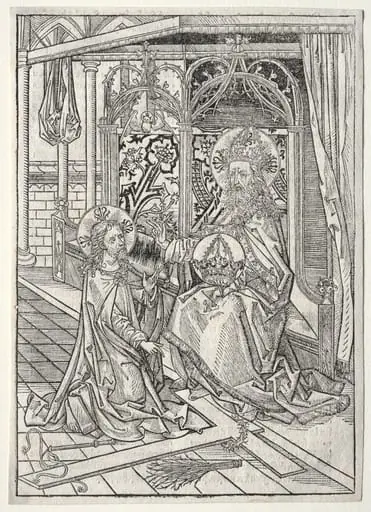 Der Schatzbehalter: The Trinity
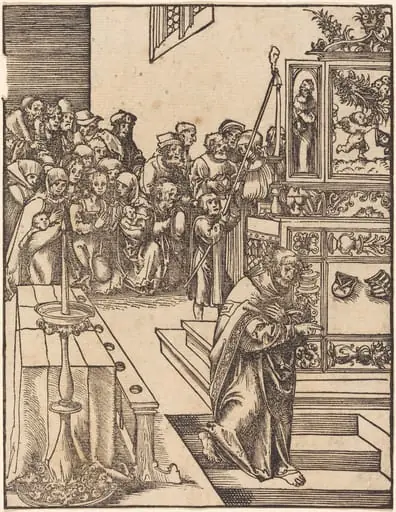 Saint John the Evangelist
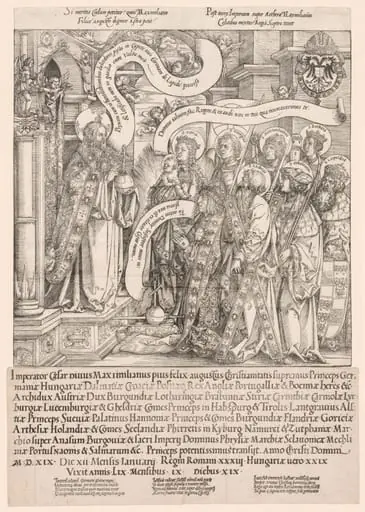 Maximilian Presented by His Patron Saints to the Almighty
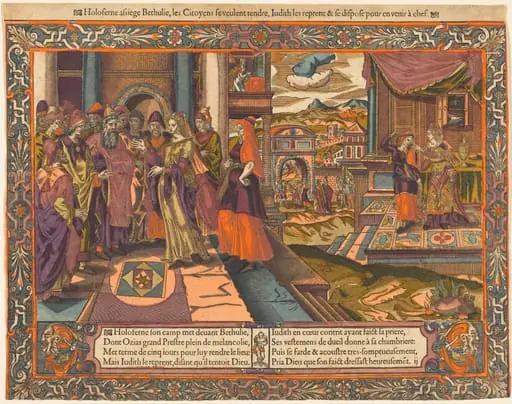 Judith Goes to the Camp of Holofernes
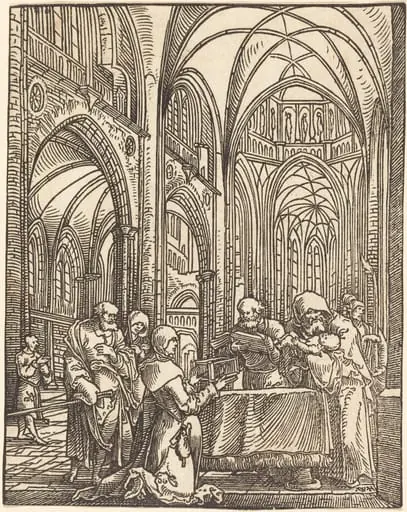 The Presentation in the Temple
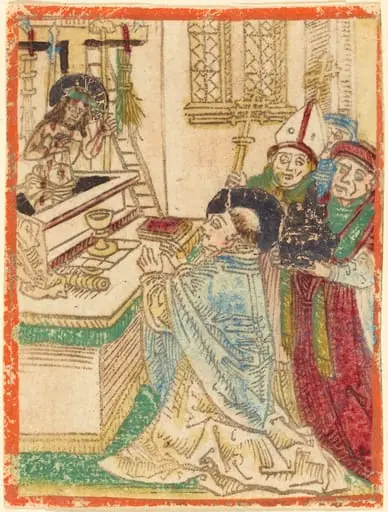 The Mass of Saint Gregory
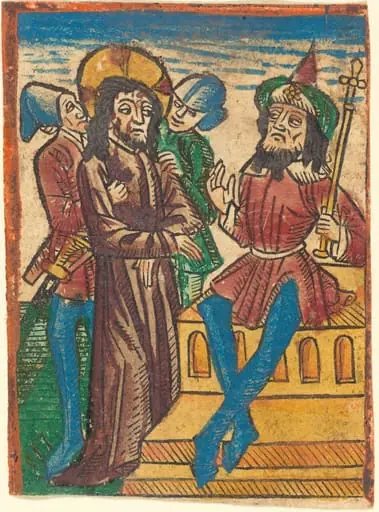 Christ before Pilate
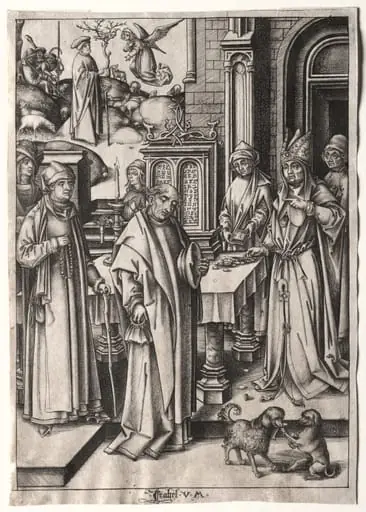 Life of the Virgin: High Priest Rejecting the Offering of Joachim
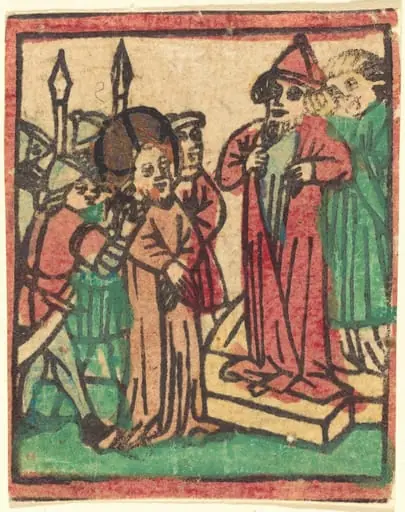 Caiaphas Tearing his Clothes
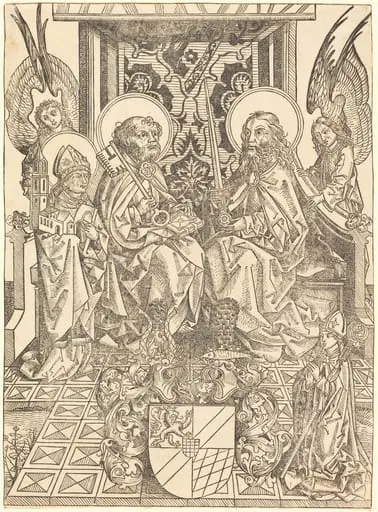 Saints Peter and Paul under a Canopy