Artwork
Saint Catherine
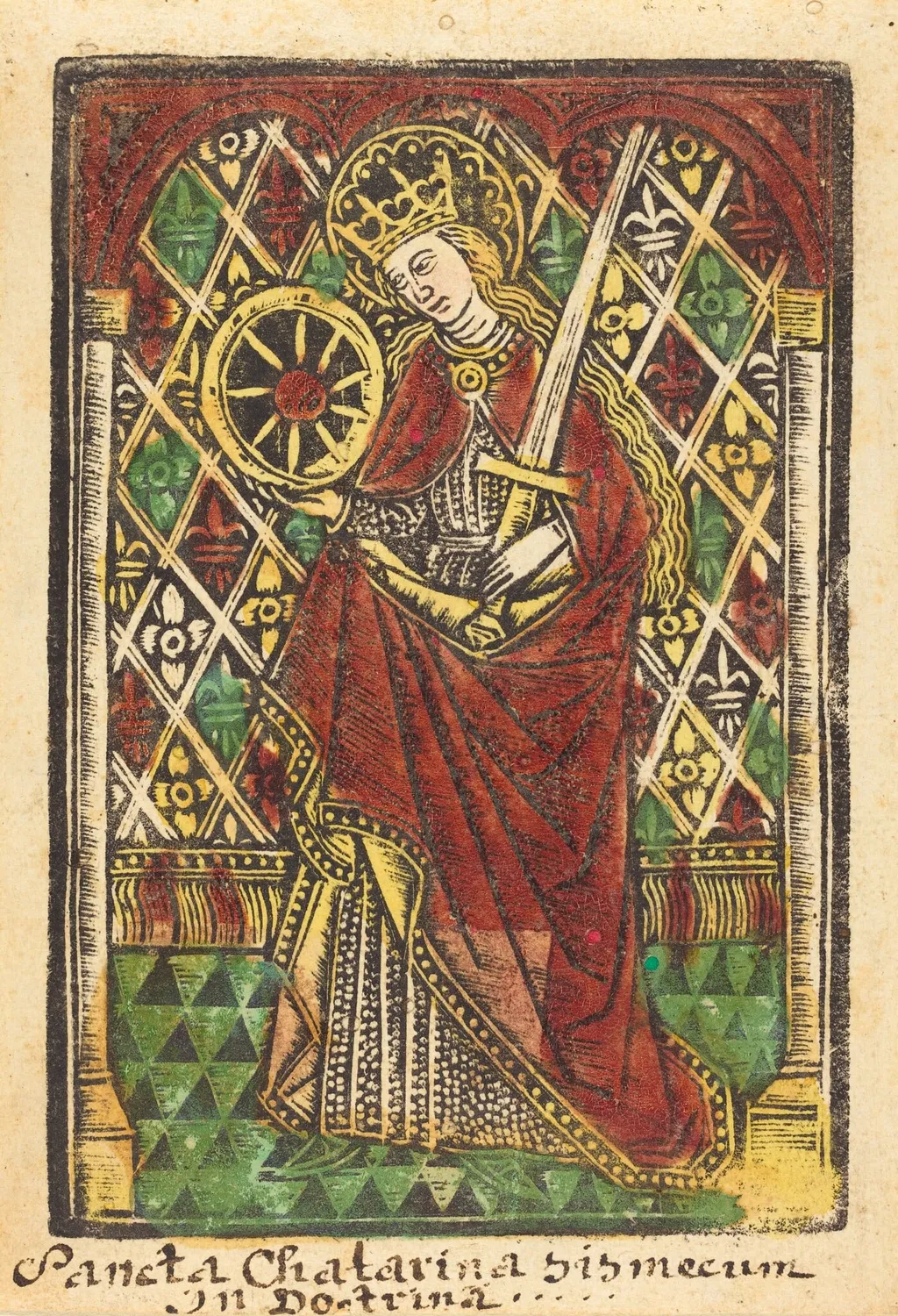
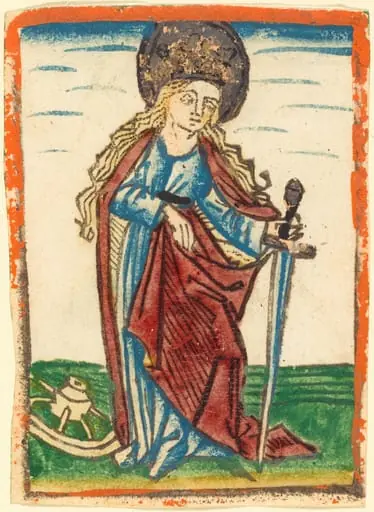
Saint Catherine is a paint print by the Renaissance artist German 15th Century. It dates from 1480 and is held in the collection of the National Gallery of Art.
About this work
She wears a crown and stands in front of a decorative background with green, red, and yellow patterns.
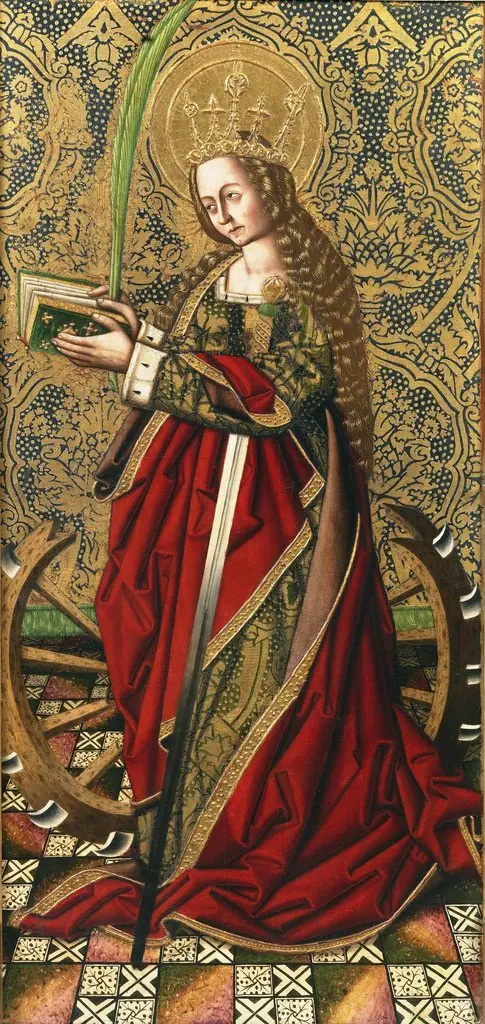
This painting shows a woman in a red robe, holding a wheel and a sword. She wears a crown and stands in front of a decorative background with green, red, and yellow patterns.
The woman's robe is long and flowing, and her crown is ornate. The wheel she holds is large and has spokes, while the sword is long and slender. The background is intricate, with geometric shapes and floral motifs.
This painting is an example of Renaissance art, a style that emerged in Europe in the 15th century. For more on this style, look up the Renaissance movement.
Overview
The work is a metalcut print depicting Saint Catherine, executed on laid paper and enhanced with hand-applied pigments of red lake, yellow, and green. The image presents the saint in a flowing red garment, crowned, and holding her traditional attributes—a spiked wheel and a slender sword—against a patterned backdrop of geometric and floral motifs.
Subject & Meaning
Saint Catherine is shown with the wheel, a reference to the instrument of her martyrdom, and the sword, symbolizing her steadfast faith. The ornate crown underscores her noble status, while the vivid colors and decorative setting emphasize her sanctified presence within a devotional context.
Technique & Style
The piece employs a metalcut technique, wherein a design is incised into a metal plate and printed onto paper. After printing, the image was hand‑colored using red lake, yellow, and green pigments, a common practice in early Renaissance prints to enrich visual impact. The stylized figures and intricate background reflect the period’s blend of realism and ornamental detail.
History & Provenance
Created during the Renaissance, a period marked by renewed interest in classical forms and humanist themes, the print exemplifies the spread of religious imagery through reproducible media. Specific details of its original commission or ownership are not recorded, but its survival suggests it was valued for both its devotional content and artistic execution.
Context
In the 15th‑century European art world, prints like this served both as objects of personal piety and as means of disseminating saintly iconography beyond elite patronage. The inclusion of vivid colors and elaborate patterns aligns with contemporary tastes for richly decorated devotional images.
Artist & collection

Artist
This 15th-century German artist carved vivid religious scenes into metal and wood, then hand-painted them in bright, symbolic colors.

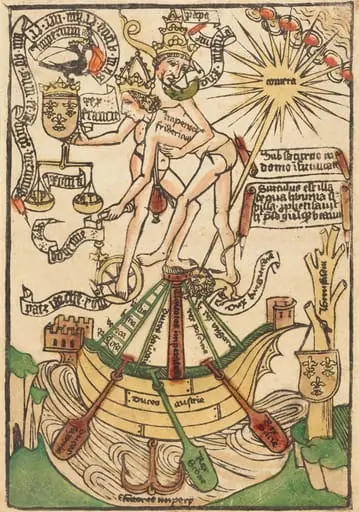 Allegory of the Meeting of Pope Paul II and Emperor Frederick III
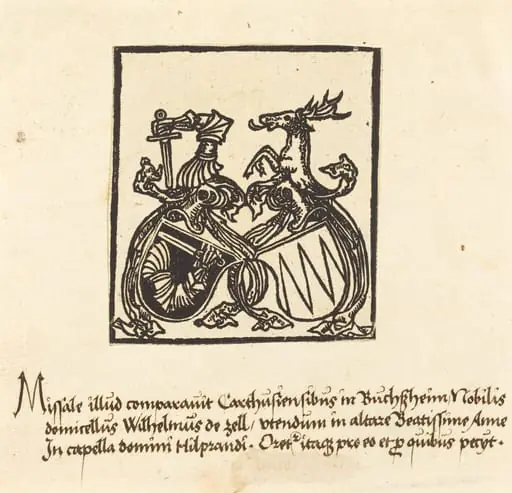 Bookplate of Wilhelm von Zell
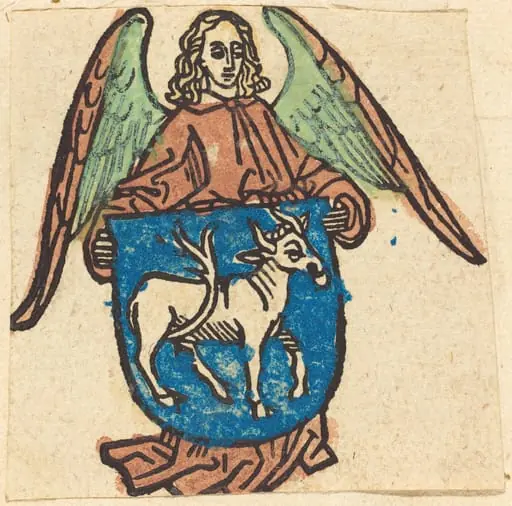 Bookplate of Hilprand Brandenburg of Bibrach
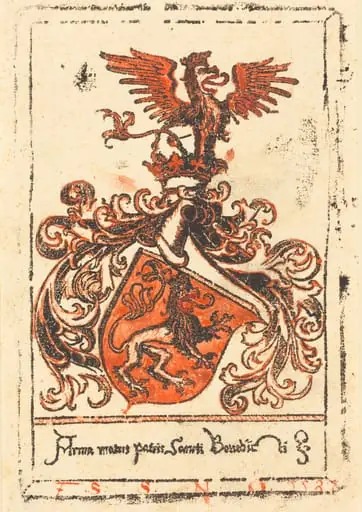 Bookplate of the Abbey of Ottobeuren
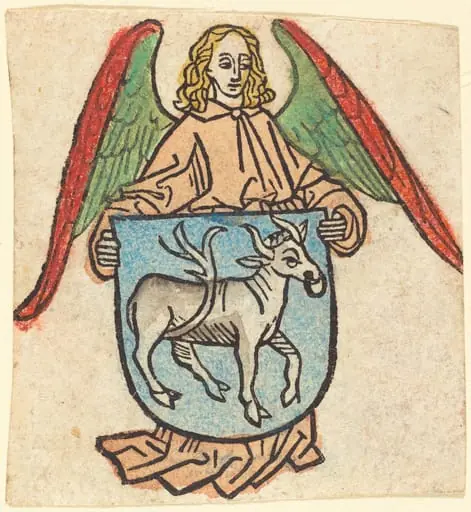 Bookplate of Hilprand Brandenburg of Bibrach
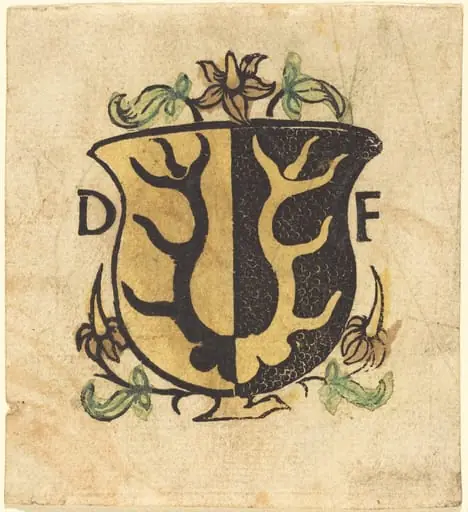 Bookplate of Dominicus Frauenfelder
![Studies for Six Figures (sheet from a model book) [recto], by German 15th Century](https://artifactworldgallery.com/img/german-15th-century--studies-for-six-figures-sheet-from-a-model-book-recto--4837429e0755bc3f-w320.webp) Studies for Six Figures (sheet from a model book) [recto]
Studies for Six Figures (sheet from a model book) [recto]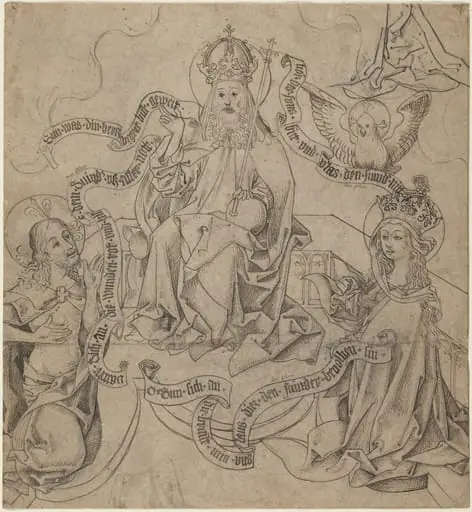 Christ and Mary Interceding with God the Father