Artwork
Scourging of Christ
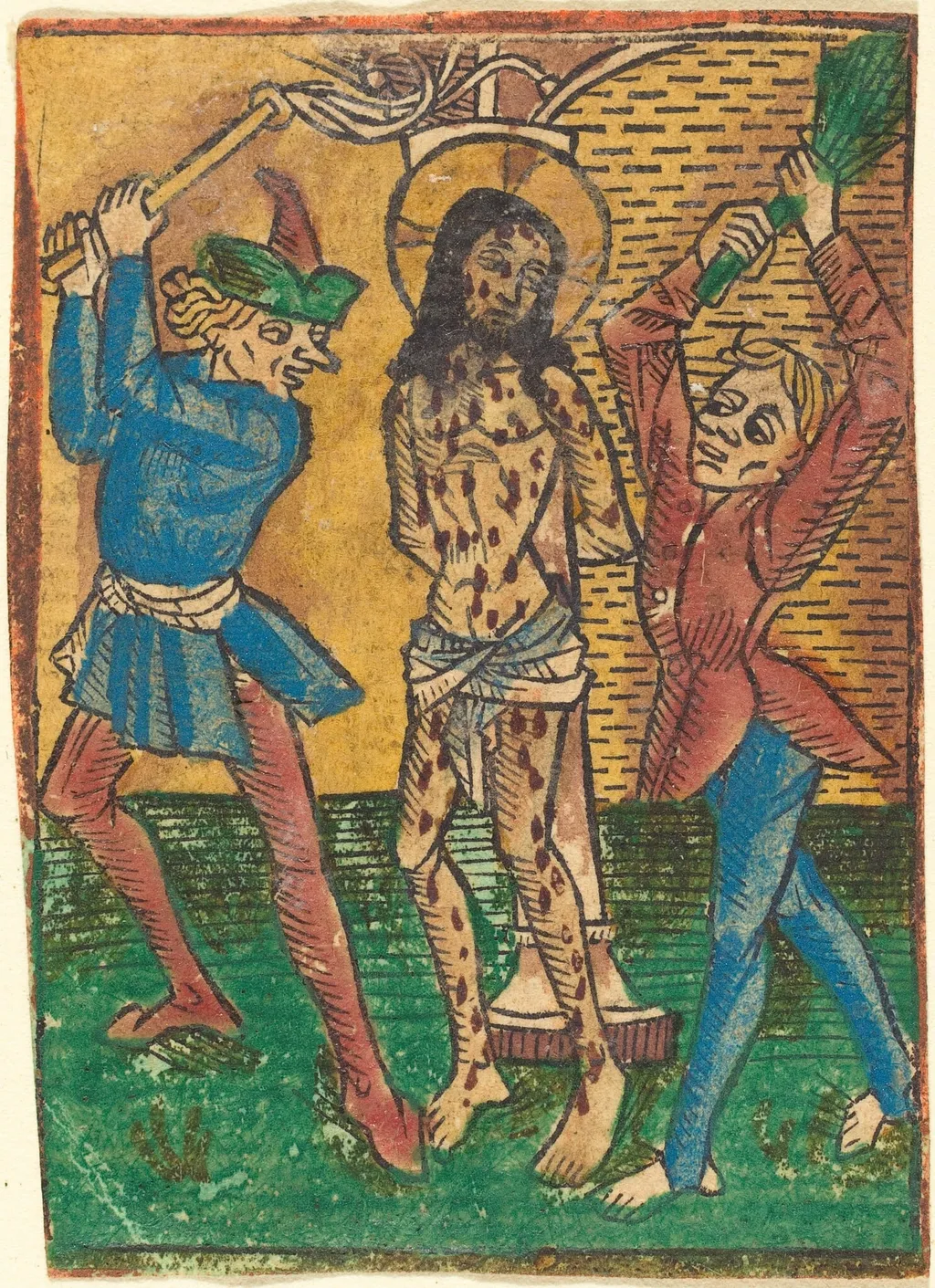
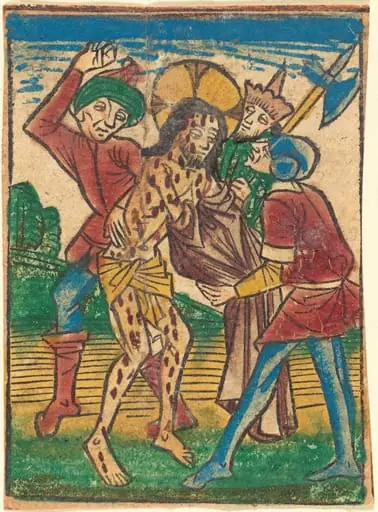
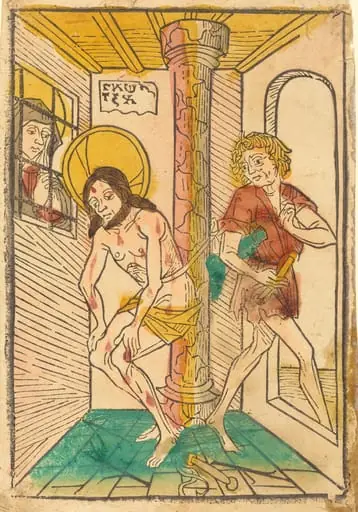
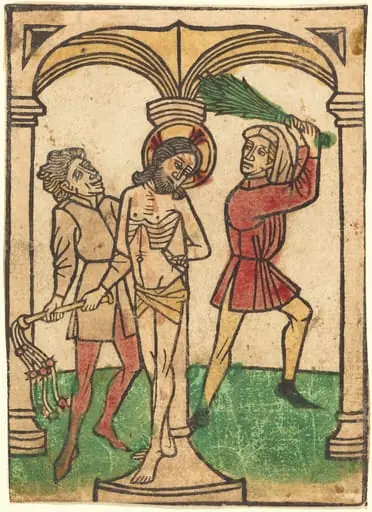
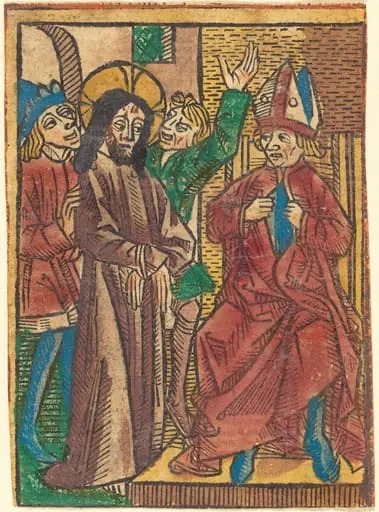
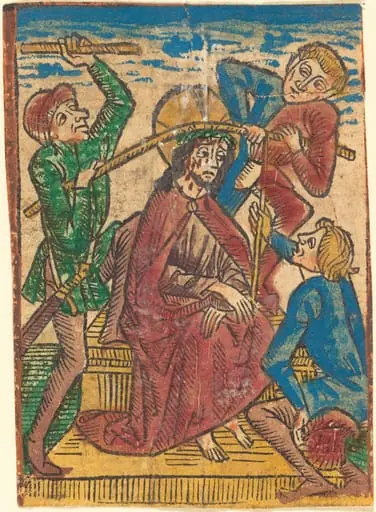
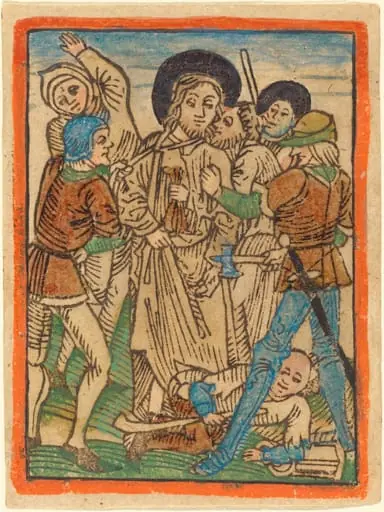
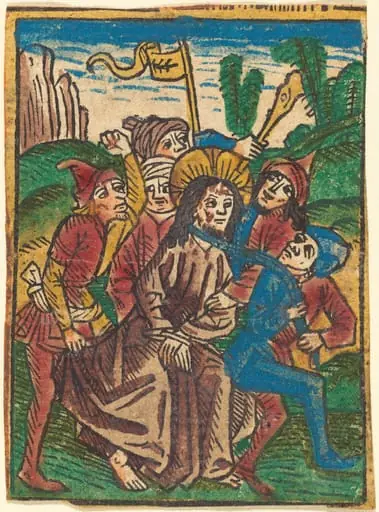
Scourging of Christ is an ink print by the Renaissance artist German 15th Century. It dates from 1490 and is held in the collection of the National Gallery of Art. This hand‑colored woodcut presents a dramatic scene of Christ’s scourging.
About this work
Overview
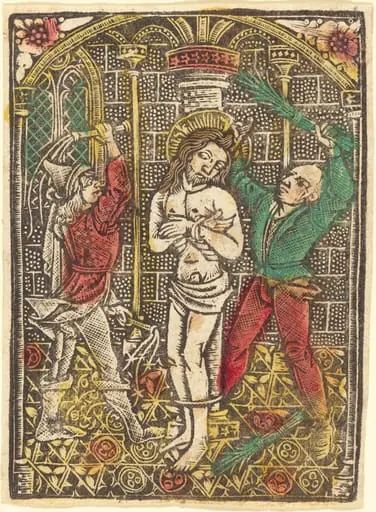
This hand‑colored woodcut presents a dramatic scene of Christ’s scourging. Central to the composition is a bound figure, bloodied and standing on a raised platform, while two assailants on either side wield whips. The background combines a yellow field, a brick wall on the right, and a strip of green grass below, framing the violent act.
Subject & Meaning
The image illustrates the biblical episode of Christ’s flagellation, emphasizing his physical suffering and the cruelty of his captors. By foregrounding the wounded body and the instruments of torture, the print conveys themes of sacrifice, redemption, and the stark contrast between divine innocence and human brutality.
Technique & Style
Executed as a woodcut, the work relies on carved lines and blocks of color applied after printing, a common method for reproducing religious narratives in the early modern period. The hand‑coloring adds depth to the blood, clothing, and background, while the stark contrasts of line and tone highlight the emotional intensity of the scene.
History & Provenance
The piece belongs to the broader tradition of Renaissance religious prints, which circulated widely among devotional audiences. While specific details of its creation and ownership are not recorded, its format and subject align with the era’s demand for accessible, illustrated biblical stories.
Context
During the Renaissance, woodcuts served both instructional and contemplative purposes, allowing churches and private believers to engage with scriptural events visually. This depiction of the scourging reflects contemporary theological focus on Christ’s Passion as a model of suffering and salvation.
Legacy
Prints like this contributed to the visual vocabulary of the Passion, influencing later artists who revisited the same motif in painting, engraving, and sculpture. The work remains a testament to the power of reproducible art to disseminate religious narratives across Europe.
Artist & collection

Artist
This 15th-century German artist carved vivid religious scenes into metal and wood, then hand-painted them in bright, symbolic colors.

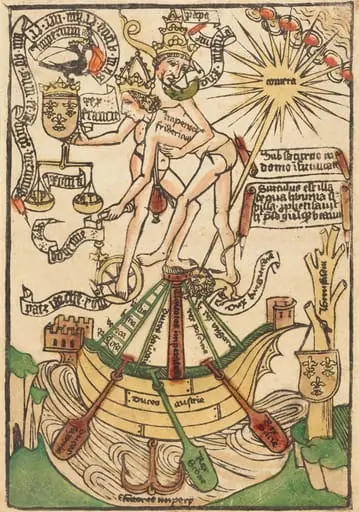 Allegory of the Meeting of Pope Paul II and Emperor Frederick III
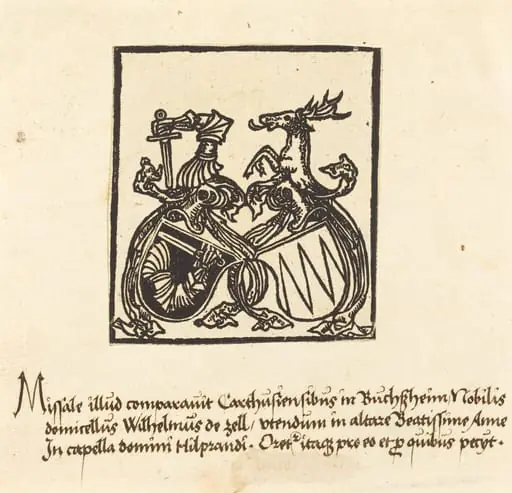 Bookplate of Wilhelm von Zell
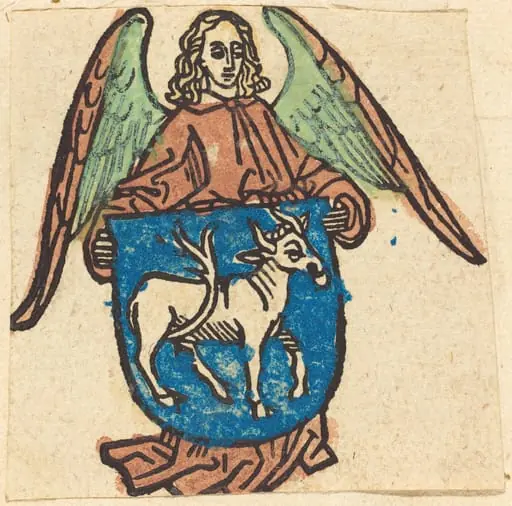 Bookplate of Hilprand Brandenburg of Bibrach
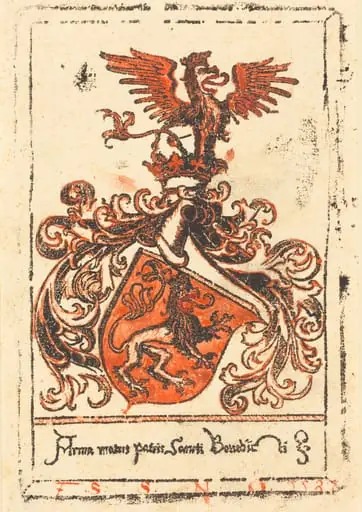 Bookplate of the Abbey of Ottobeuren
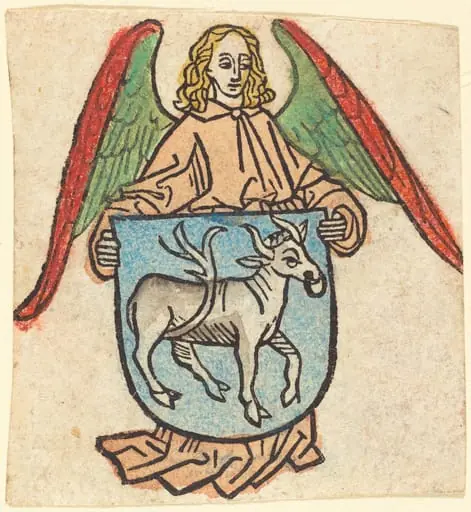 Bookplate of Hilprand Brandenburg of Bibrach
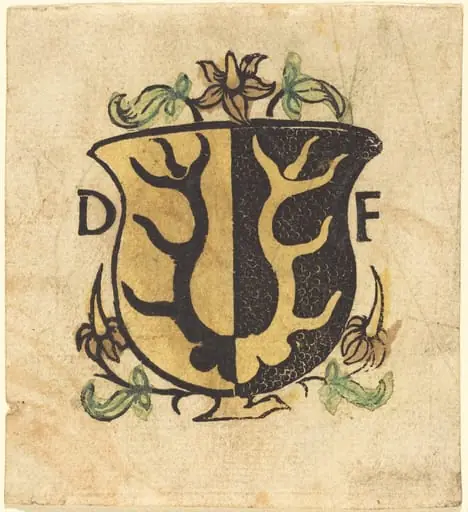 Bookplate of Dominicus Frauenfelder
![Studies for Six Figures (sheet from a model book) [recto], by German 15th Century](https://artifactworldgallery.com/img/german-15th-century--studies-for-six-figures-sheet-from-a-model-book-recto--4837429e0755bc3f-w320.webp) Studies for Six Figures (sheet from a model book) [recto]
Studies for Six Figures (sheet from a model book) [recto]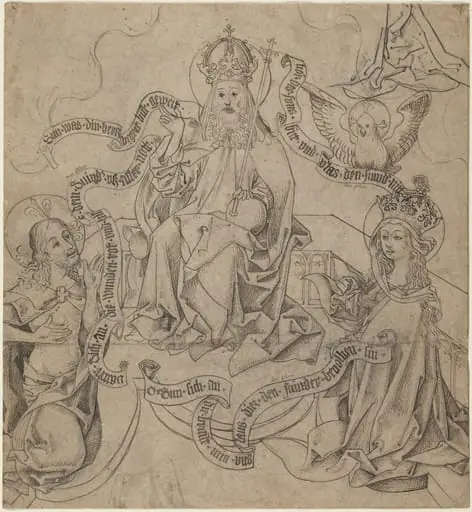 Christ and Mary Interceding with God the Father