Artwork
Saint George
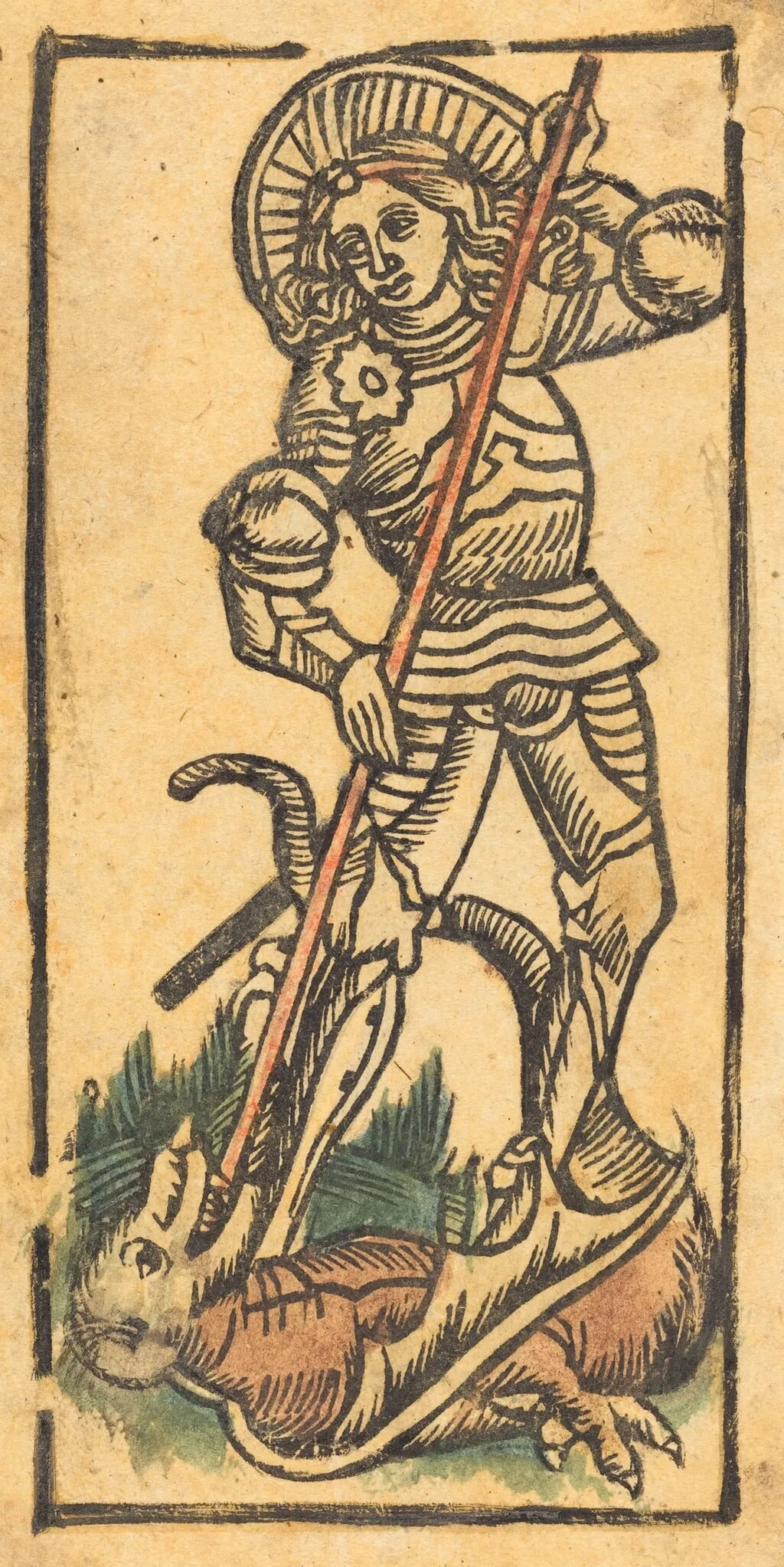
Saint George is an ink print by the Renaissance artist German 15th Century. It dates from 1500 and is held in the collection of the National Gallery of Art.
About this work
Overview
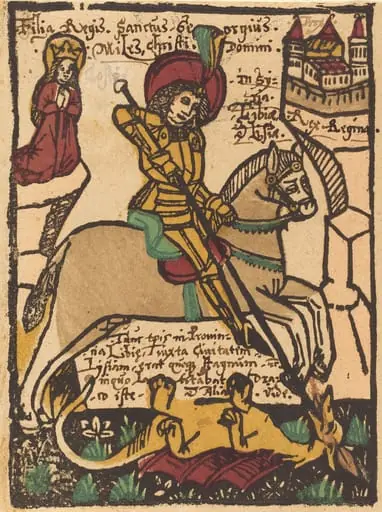
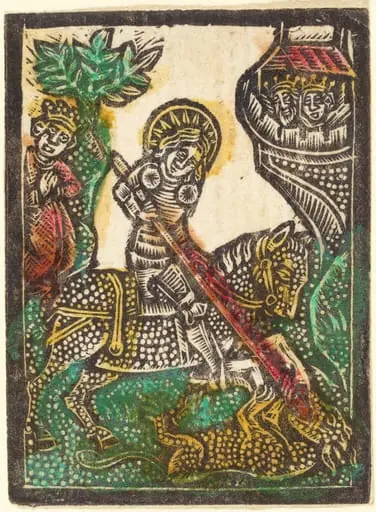
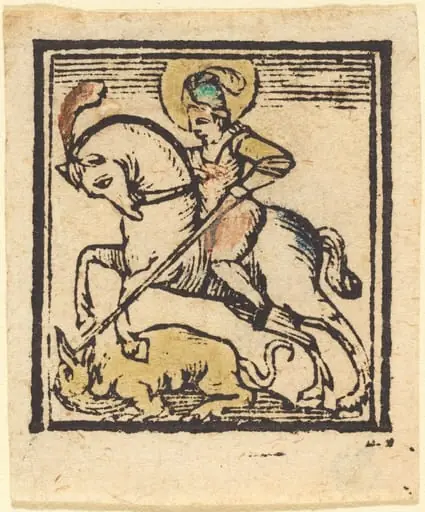
The work is a hand‑colored woodcut portraying Saint George confronting a dragon. The saint stands upright, armored and armed with a spear in his right hand and a shield in his left, while the dragon lies on the ground with its jaws open. The composition is rendered in a limited palette of brown‑red, green and vermilion, creating a restrained yet dramatic scene.
Subject & Meaning
The image draws on the Christian legend of Saint George, the martyr who slays a dragon to rescue a captive and symbolize the triumph of faith over evil. By positioning the saint dominant over the subdued beast, the print emphasizes themes of courage, divine protection, and the victory of righteousness, common moral messages in devotional art of the period.
Technique & Style
Executed as a woodcut, the design was cut into a block of wood, inked, and pressed onto paper before being hand‑colored with pigments in brown‑red, green and vermilion. The limited color scheme and the bold line work typical of early printmaking give the image a tactile quality, while the hand‑coloring adds depth and a sense of three‑dimensionality to the figures.
Context
Printed during the Renaissance, a time when woodcut reproductions spread religious narratives to a broader audience, the piece reflects the era’s interest in combining narrative clarity with emerging artistic techniques. Hand‑coloring was a common method to enhance the visual impact of prints, making them more appealing for devotional use or private contemplation.
Artist & collection

Artist
This 15th-century German artist carved vivid religious scenes into metal and wood, then hand-painted them in bright, symbolic colors.

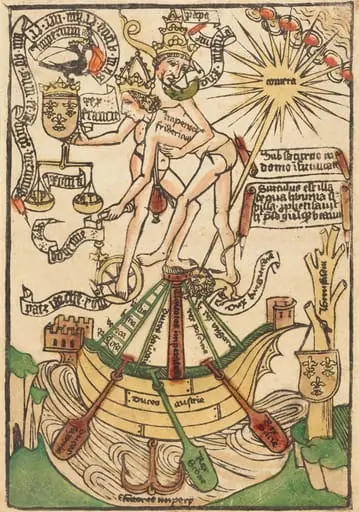 Allegory of the Meeting of Pope Paul II and Emperor Frederick III
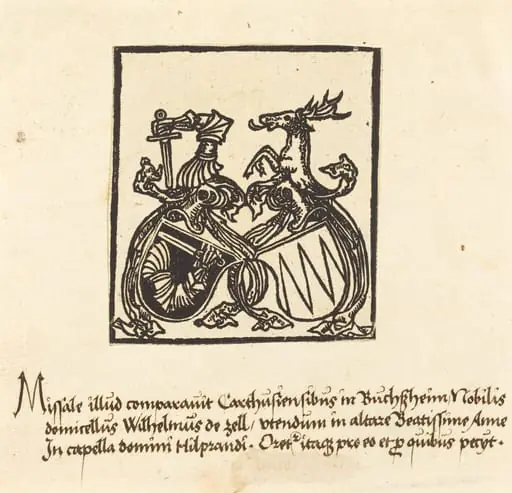 Bookplate of Wilhelm von Zell
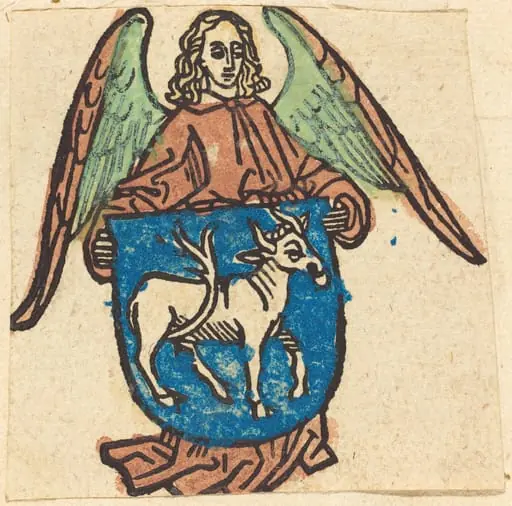 Bookplate of Hilprand Brandenburg of Bibrach
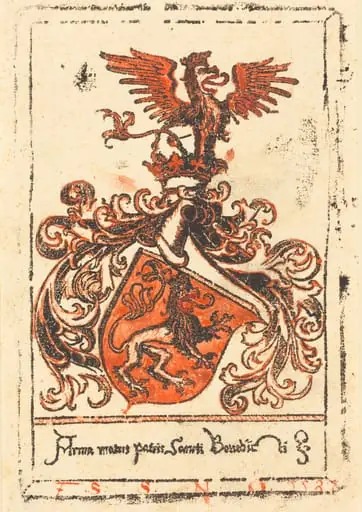 Bookplate of the Abbey of Ottobeuren
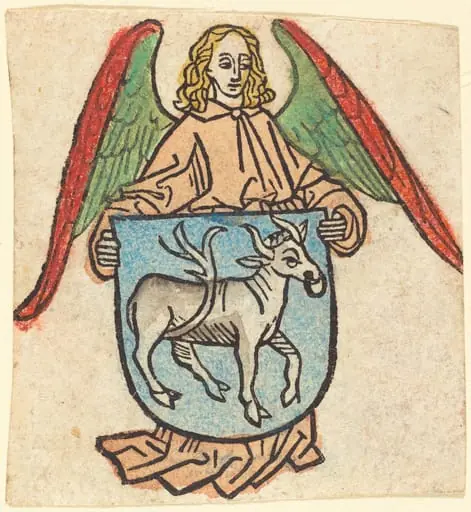 Bookplate of Hilprand Brandenburg of Bibrach
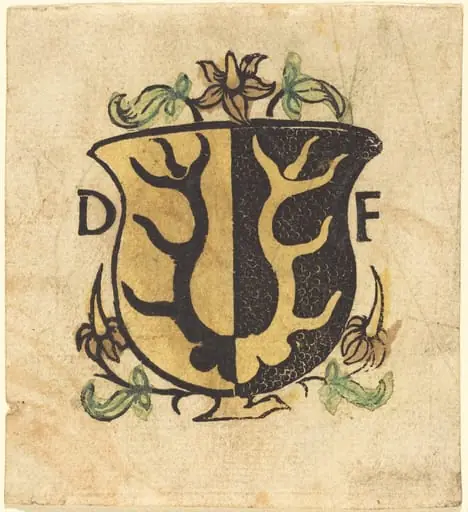 Bookplate of Dominicus Frauenfelder
![Studies for Six Figures (sheet from a model book) [recto], by German 15th Century](https://artifactworldgallery.com/img/german-15th-century--studies-for-six-figures-sheet-from-a-model-book-recto--4837429e0755bc3f-w320.webp) Studies for Six Figures (sheet from a model book) [recto]
Studies for Six Figures (sheet from a model book) [recto]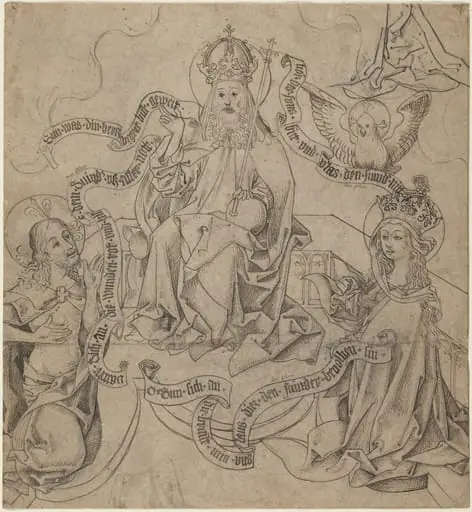 Christ and Mary Interceding with God the Father