Artwork
The Betrayal of Christ
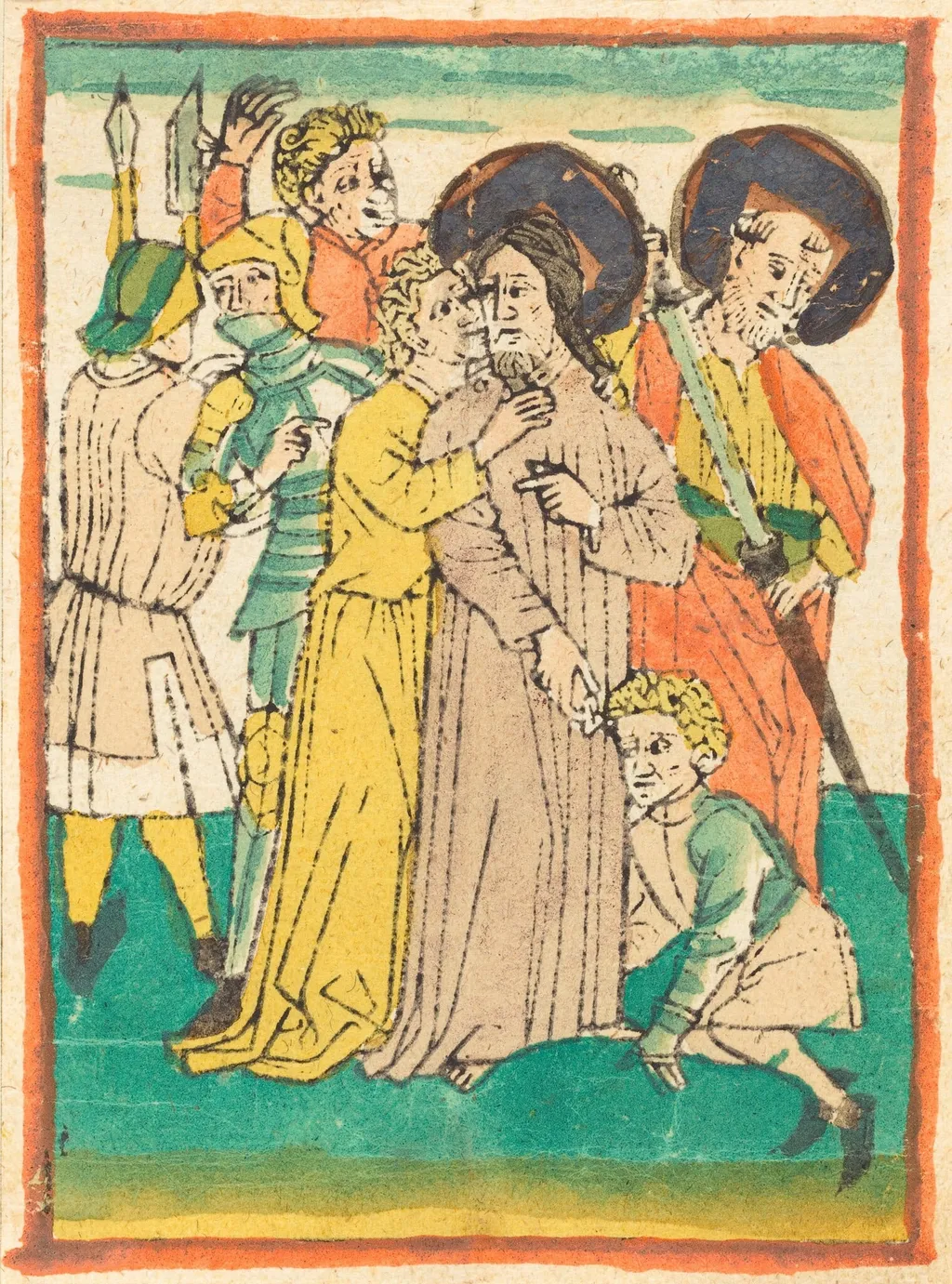
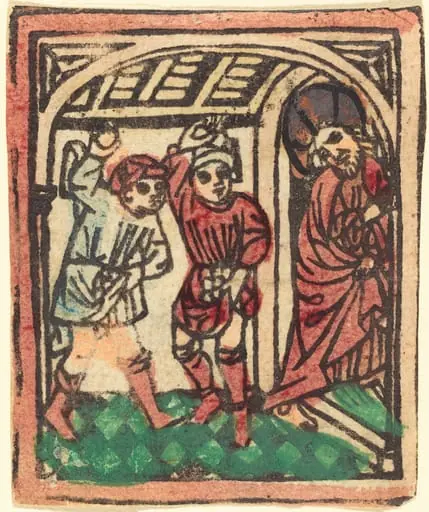
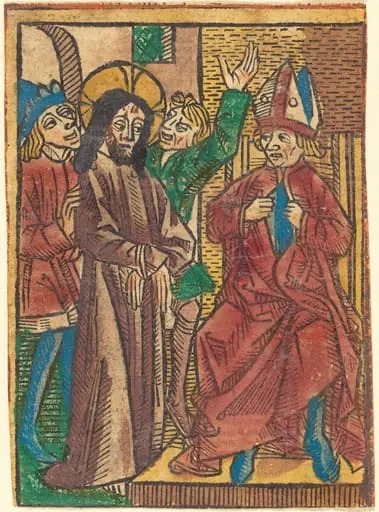
The Betrayal of Christ is an ink print by the Renaissance artist German 15th Century. It dates from 1462 and is held in the collection of the National Gallery of Art. The work is a hand‑colored woodcut depicting the moment Judas identifies Jesus with a kiss.
About this work
Overview
The work is a hand‑colored woodcut depicting the moment Judas identifies Jesus with a kiss. Central to the composition is Christ, robed and sorrowful, while Judas leans in to betray him. Surrounding figures—some armed, others reacting with shock or anger—frame the scene, emphasizing the drama of the instant.
Subject & Meaning
The image captures the biblical episode of betrayal, focusing on the contrast between Jesus’s calm resignation and Judas’s guilty gesture. The surrounding onlookers, armed and expressive, highlight the tension between loyalty and treachery, inviting contemplation of moral conflict and the consequences of deceit.
Technique & Style
Executed as a woodcut, the design was incised into a wooden block, inked, and pressed onto paper. After printing, the image was hand‑colored using a limited palette of blue‑green, orange, yellow, and tan, a common practice in Renaissance printmaking that added depth and visual interest to the monochrome medium.
History & Provenance
Woodcut prints of this type were widely produced during the Renaissance, allowing for broader distribution of religious narratives. While specific ownership details are not recorded, the piece reflects the period’s interest in disseminating biblical stories through affordable, reproducible art.
Context
The scene aligns with contemporary devotional imagery that emphasized emotional engagement with scriptural events. By portraying the betrayal with vivid colors and expressive figures, the print would have served both as a visual meditation and as an instructional tool for viewers.
Legacy
Prints like this contributed to the spread of narrative art beyond elite circles, influencing later religious illustration and the development of mass‑produced imagery in European art history.
Artist & collection

Artist
This 15th-century German artist carved vivid religious scenes into metal and wood, then hand-painted them in bright, symbolic colors.

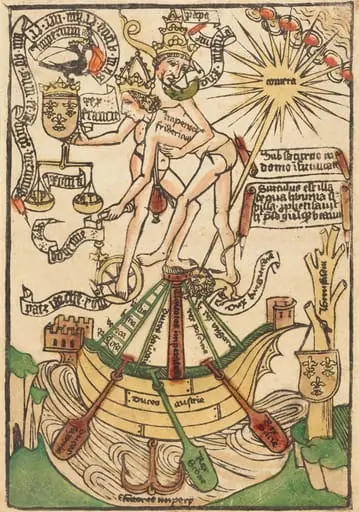 Allegory of the Meeting of Pope Paul II and Emperor Frederick III
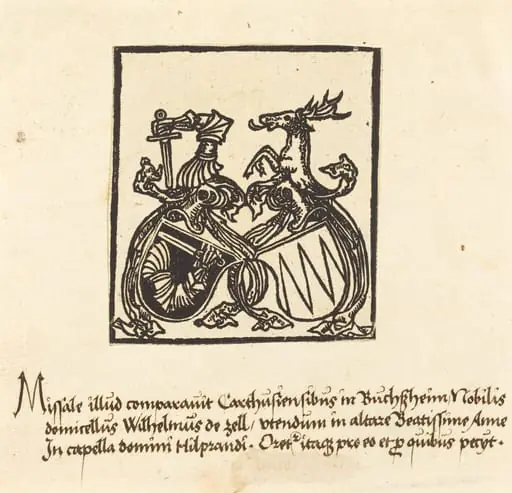 Bookplate of Wilhelm von Zell
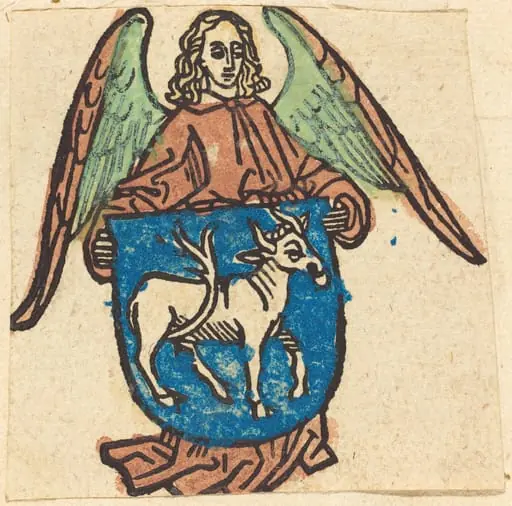 Bookplate of Hilprand Brandenburg of Bibrach
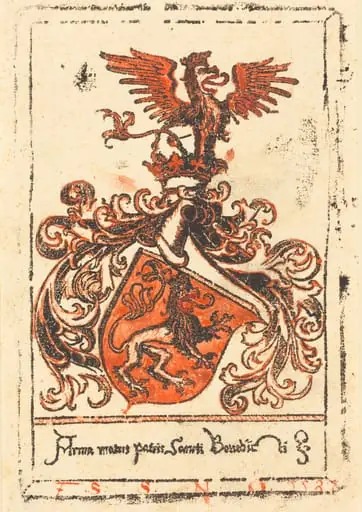 Bookplate of the Abbey of Ottobeuren
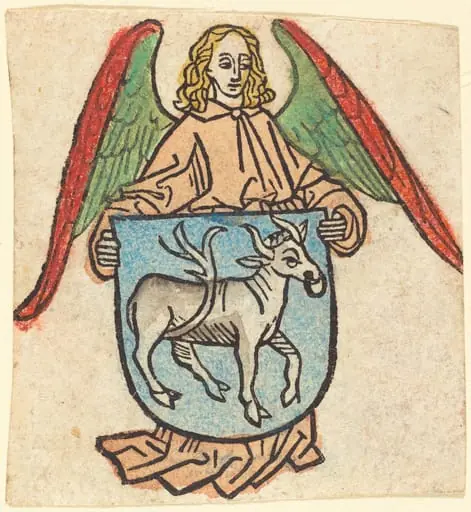 Bookplate of Hilprand Brandenburg of Bibrach
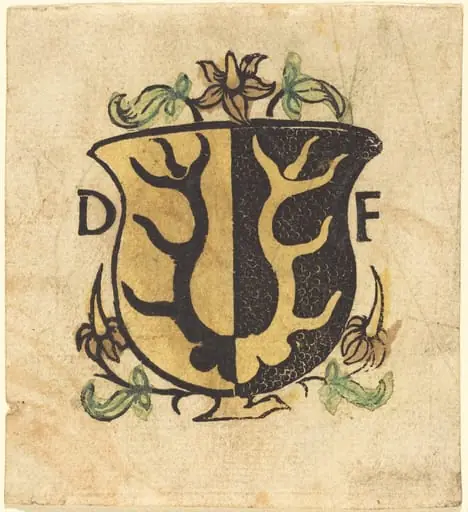 Bookplate of Dominicus Frauenfelder
![Studies for Six Figures (sheet from a model book) [recto], by German 15th Century](https://artifactworldgallery.com/img/german-15th-century--studies-for-six-figures-sheet-from-a-model-book-recto--4837429e0755bc3f-w320.webp) Studies for Six Figures (sheet from a model book) [recto]
Studies for Six Figures (sheet from a model book) [recto]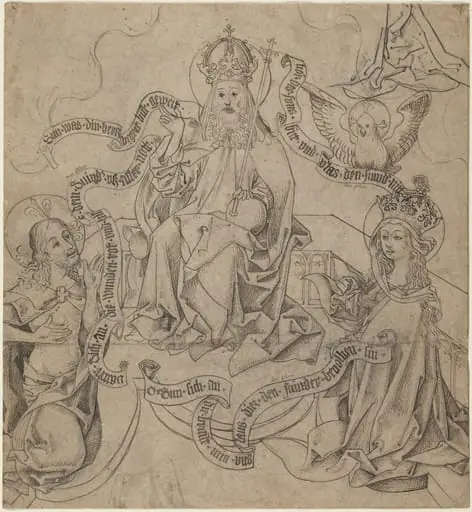 Christ and Mary Interceding with God the Father