Artwork
The Visitation
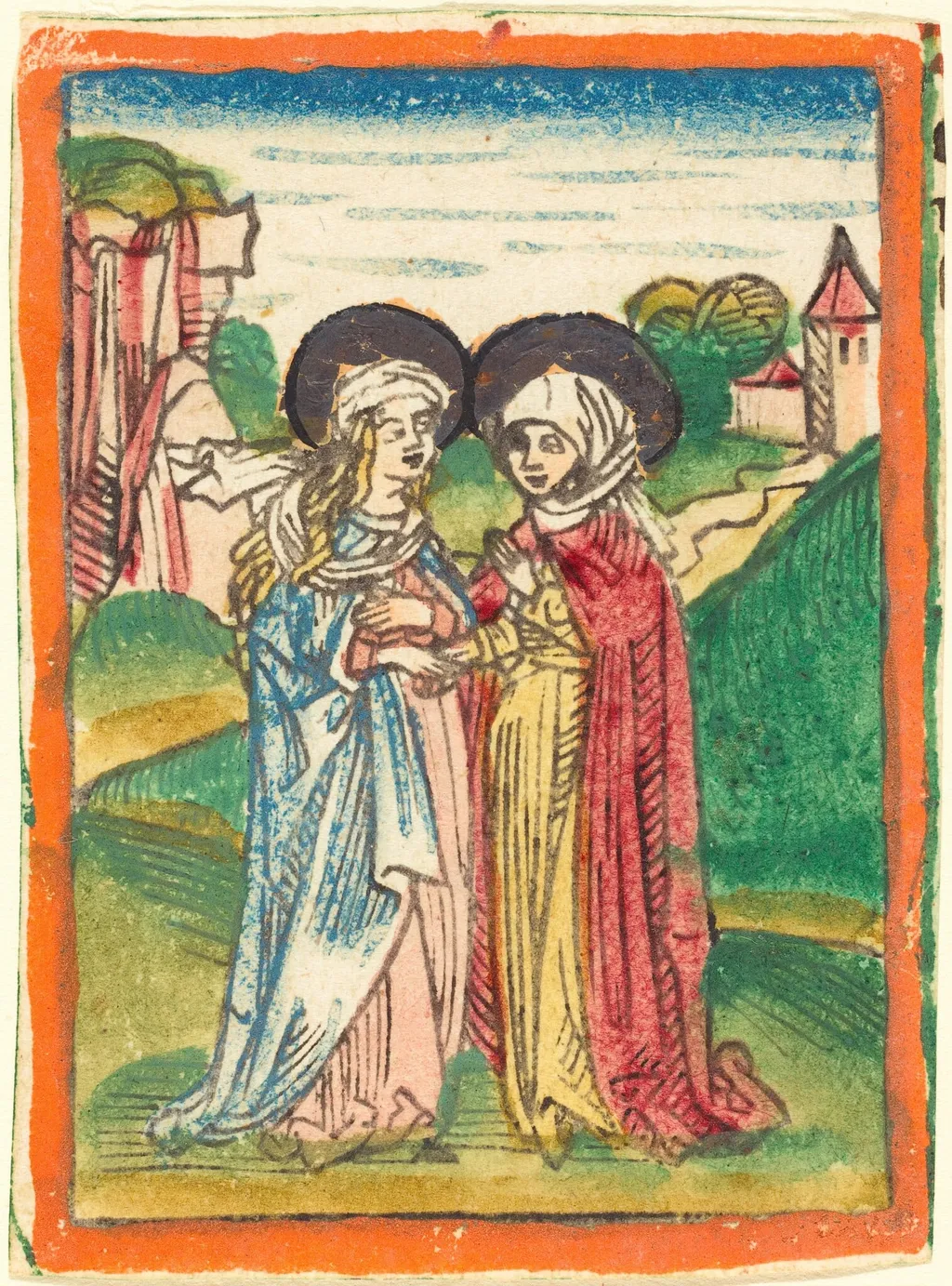
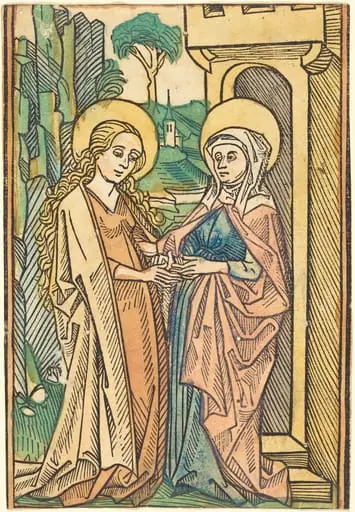
The Visitation is an ink print by the Renaissance artist German 15th Century. It dates from 1485 and is held in the collection of the National Gallery of Art. The work is a woodcut print depicting a domestic interior in which two expectant women embrace.
About this work
Overview
The work is a woodcut print depicting a domestic interior in which two expectant women embrace. The figure on the left, identified as Mary, is dressed in a red garment, while the woman on the right, Elizabeth, wears green. Both figures are surrounded by golden halos, indicating their sanctified status within the biblical narrative.
Subject & Meaning
The scene illustrates the biblical episode known as the Visitation, when Mary, pregnant with Jesus, visits her cousin Elizabeth, who carries John the Baptist. The intimate gesture of hugging emphasizes the mutual recognition of their roles in salvation history, while the halos reinforce their spiritual significance.
Technique & Style
Executed as a woodcut, the image is hand‑colored with a palette that includes red, yellow, green, light blue, pink, blue, gold, and orange. Unlike the majority of fifteenth‑century prints, which remained monochrome, this piece required the artist to apply pigments layer by layer, creating a vivid, polychrome effect that enhances the narrative presence.
History & Provenance
The print dates from the fifteenth century, a period when hand‑colored woodcuts were uncommon due to the labor involved. Its rarity reflects both the technical skill of its maker and the limited demand for such elaborate prints at the time. The piece is presently held by the National Gallery of Art in Washington, where it can be examined in person.
Artist & collection

Artist
This 15th-century German artist carved vivid religious scenes into metal and wood, then hand-painted them in bright, symbolic colors.

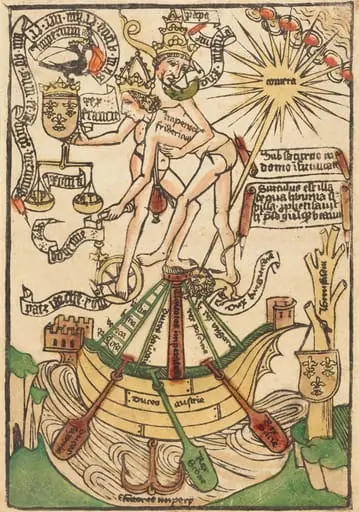 Allegory of the Meeting of Pope Paul II and Emperor Frederick III
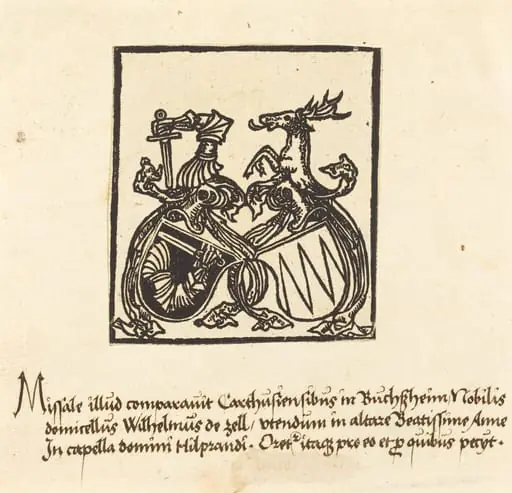 Bookplate of Wilhelm von Zell
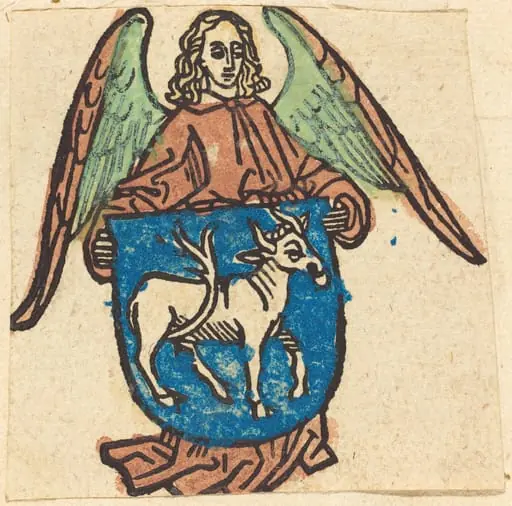 Bookplate of Hilprand Brandenburg of Bibrach
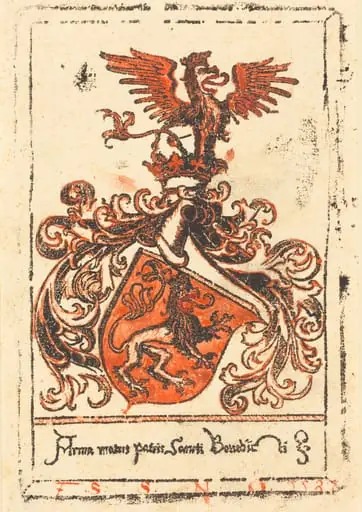 Bookplate of the Abbey of Ottobeuren
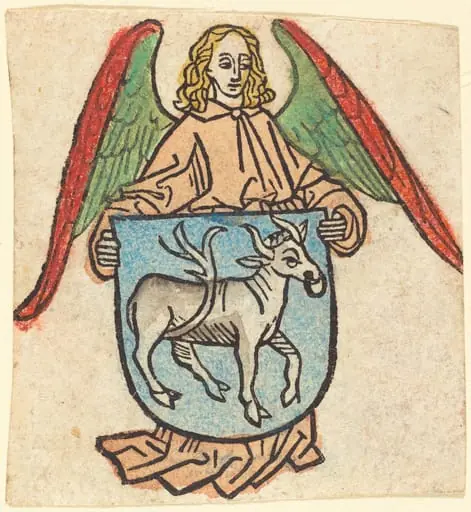 Bookplate of Hilprand Brandenburg of Bibrach
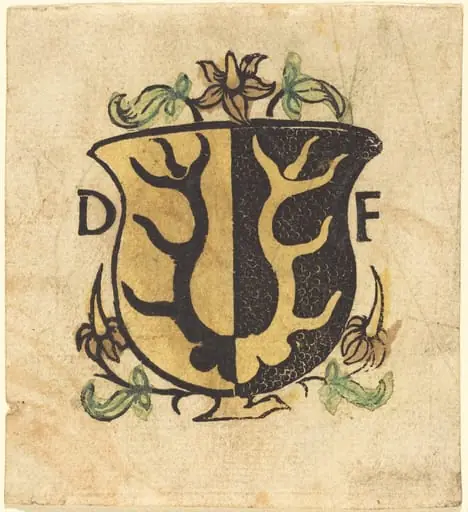 Bookplate of Dominicus Frauenfelder
![Studies for Six Figures (sheet from a model book) [recto], by German 15th Century](https://artifactworldgallery.com/img/german-15th-century--studies-for-six-figures-sheet-from-a-model-book-recto--4837429e0755bc3f-w320.webp) Studies for Six Figures (sheet from a model book) [recto]
Studies for Six Figures (sheet from a model book) [recto]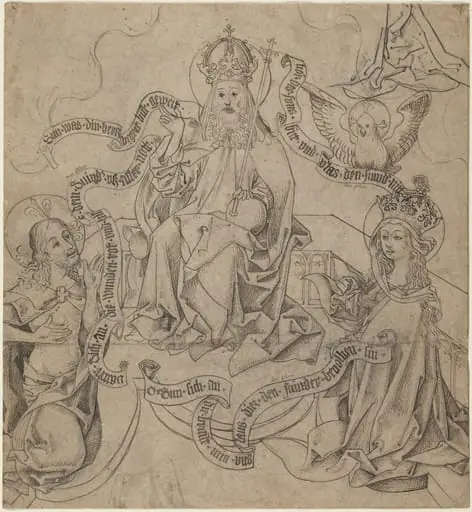 Christ and Mary Interceding with God the Father