Artwork
The Betrayal of Christ
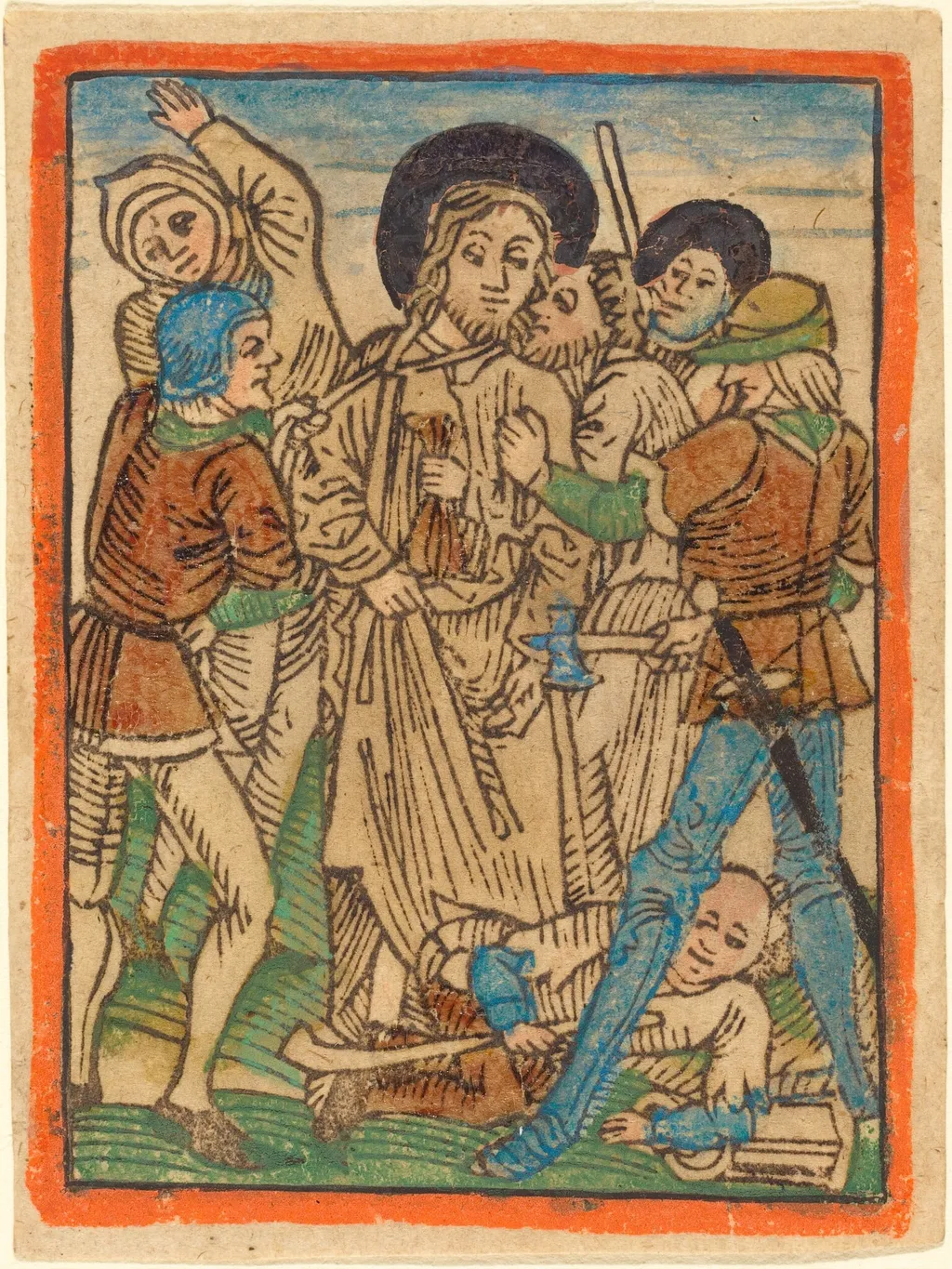
The Betrayal of Christ is an ink print by the Renaissance artist German 15th Century. It dates from 1475 and is held in the collection of the National Gallery of Art.
About this work
Overview
The Betrayal of Christ is a woodcut print rendered in dark brown ink, enhanced with hand-coloring in a vibrant palette of red lake, green, blue, orange, and gold. The composition centers on a pivotal moment, conveyed through bold lines and expressive gestures rather than detailed facial expressions.
Subject & Meaning
Depicting a tense, dramatic scene, the print illustrates the betrayal of Christ. At the center, a serene figure with a halo (Christ) stands amidst turmoil, holding a staff. Surrounding figures exhibit a range of emotions through their postures and facial expressions, capturing the conflict of the moment.
Technique & Style
Characterized by flat, bright colors set against a simple background, the woodcut employs bold, expressive lines to convey emotion. This style is typical of pre-photographic printmaking, where emphasis was placed on silhouette and gesture over intricate detail.
Context
Created in an era preceding photography, this woodcut exemplifies traditional printmaking techniques. The use of woodcutting allowed for mass reproduction of images, making artworks like The Betrayal of Christ more accessible to a broader audience.
Artist & collection

Artist
This 15th-century German artist carved vivid religious scenes into metal and wood, then hand-painted them in bright, symbolic colors.

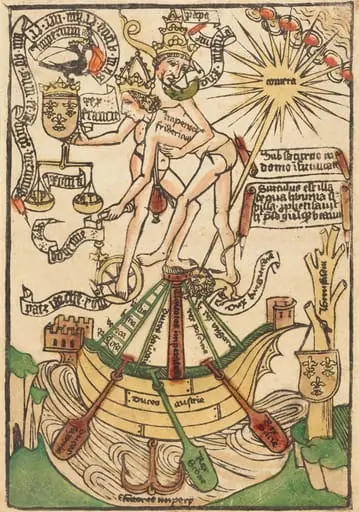 Allegory of the Meeting of Pope Paul II and Emperor Frederick III
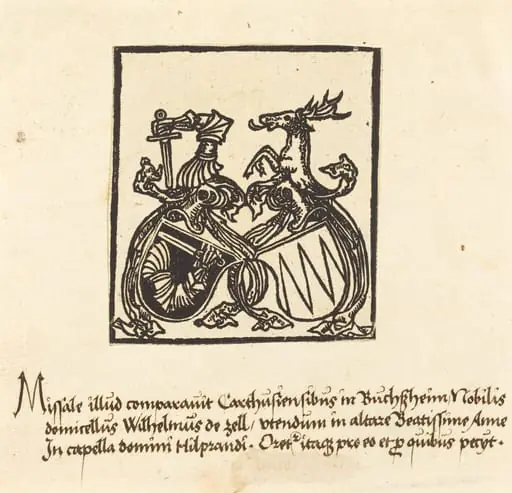 Bookplate of Wilhelm von Zell
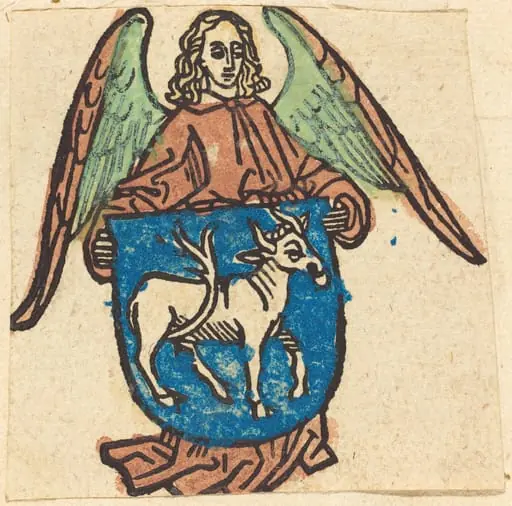 Bookplate of Hilprand Brandenburg of Bibrach
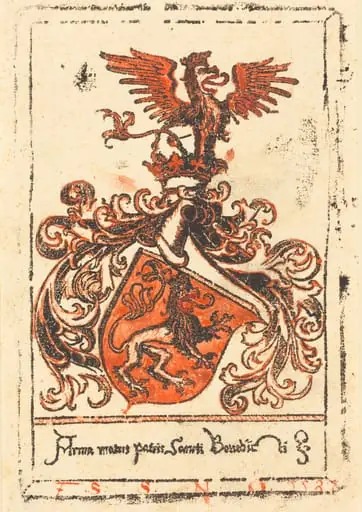 Bookplate of the Abbey of Ottobeuren
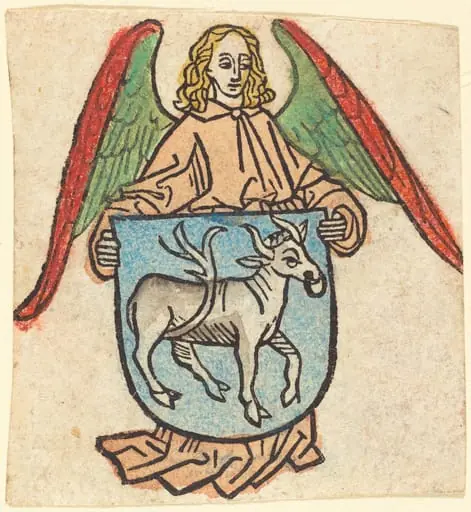 Bookplate of Hilprand Brandenburg of Bibrach
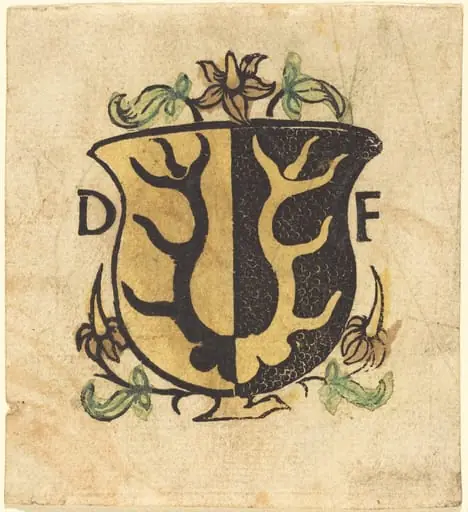 Bookplate of Dominicus Frauenfelder
![Studies for Six Figures (sheet from a model book) [recto], by German 15th Century](https://artifactworldgallery.com/img/german-15th-century--studies-for-six-figures-sheet-from-a-model-book-recto--4837429e0755bc3f-w320.webp) Studies for Six Figures (sheet from a model book) [recto]
Studies for Six Figures (sheet from a model book) [recto]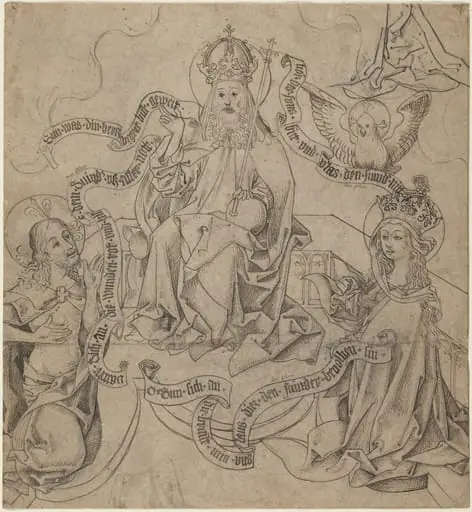 Christ and Mary Interceding with God the Father
![Pilate Washing His Hands [recto], by German 15th Century](https://artifactworldgallery.com/img/german-15th-century--pilate-washing-his-hands-recto--fe2d046a9e810e96-w320.webp)