Artwork
The Twelve Year Old Jesus in the Temple
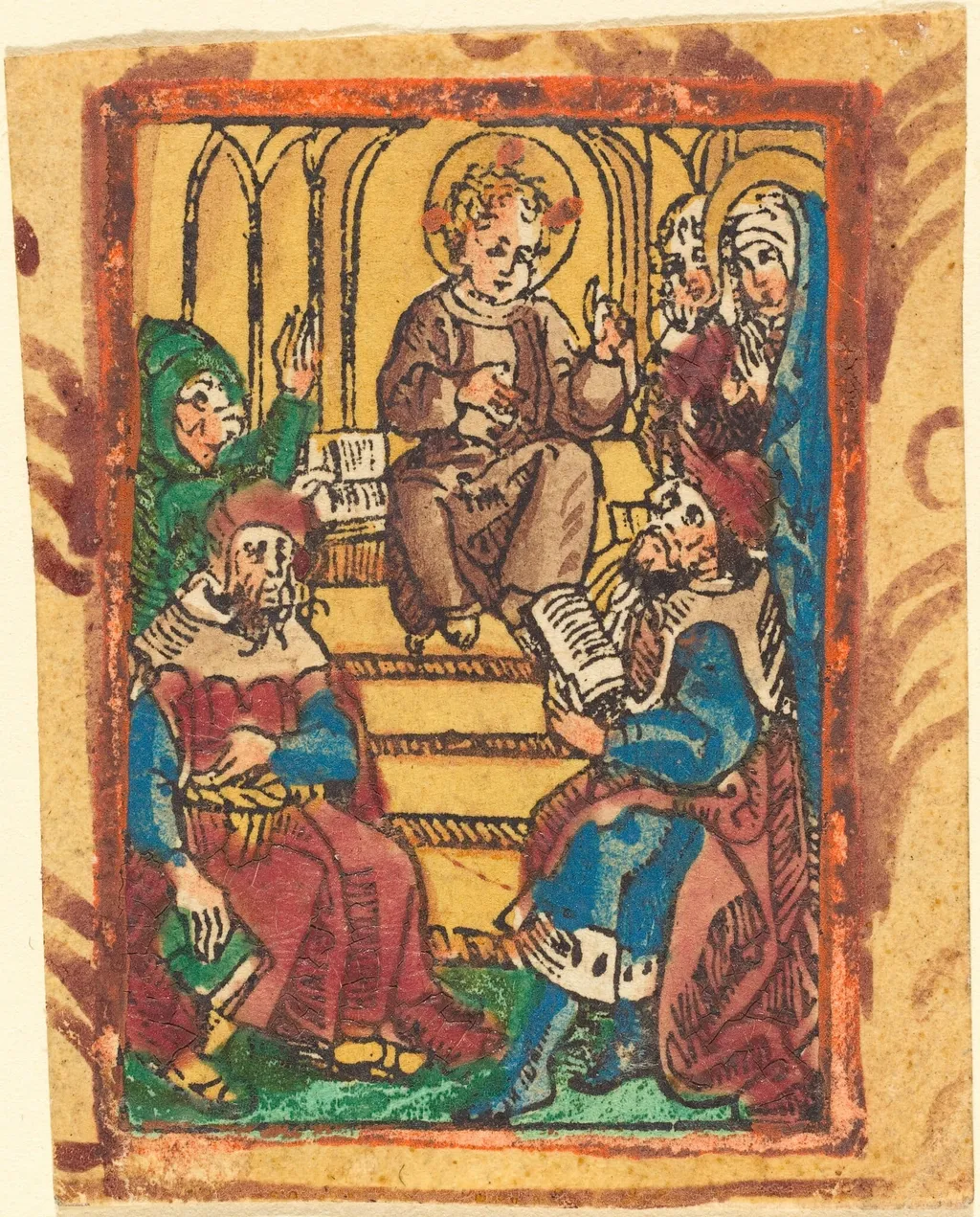
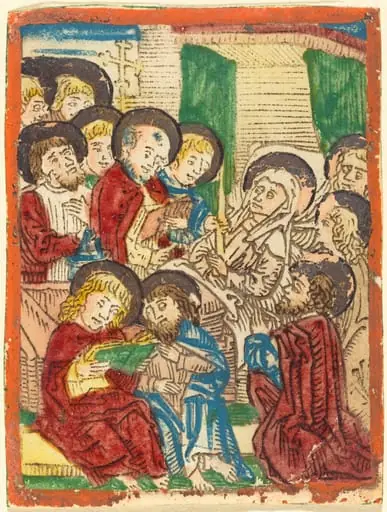
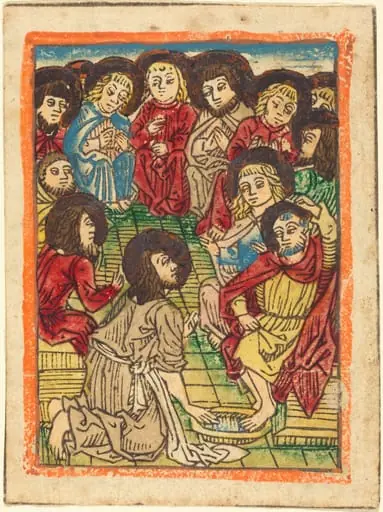
The Twelve Year Old Jesus in the Temple is an ink print by the Renaissance artist German 15th Century. It dates from 1495 and is held in the collection of the National Gallery of Art. This woodcut depicts the twelve-year-old Jesus engaged in discussion with scholars in the Temple, as described in the Gospel of Luke.
About this work
Overview
Rendered in hand-colored ink, the print uses bold outlines and flat areas of pigment—blue, red, yellow, ochre, and brown-violet—to define figures and space.
This woodcut depicts the twelve-year-old Jesus engaged in discussion with scholars in the Temple, as described in the Gospel of Luke. Rendered in hand-colored ink, the print uses bold outlines and flat areas of pigment—blue, red, yellow, ochre, and brown-violet—to define figures and space. The composition centers the child, haloed and seated, surrounded by a circle of attentive adults, creating a quiet but dynamic focal point within a warm, golden background.
Subject & Meaning
The scene illustrates Jesus’ early wisdom, a moment when he astonishes religious teachers with his understanding of scripture. His halo marks his divine nature, while the scholars’ varied gestures suggest awe and debate. The intimate grouping and lack of architectural detail emphasize the spiritual exchange over physical setting, aligning with devotional imagery meant to inspire contemplation rather than narrative realism.
Technique & Style
Executed as a hand-colored woodcut, the work combines the precision of carved lines with the vibrancy of applied pigments. Colors are applied in flat, unmodulated planes, enhancing the graphic quality. The circular arrangement of figures and stylized drapery reflect Northern Renaissance conventions, where symbolic clarity and decorative color often took precedence over naturalistic depth or perspective.
History & Provenance
The print likely dates to the late 15th or early 16th century, produced in a German or Netherlandish workshop where woodcuts were commonly used for religious instruction. Hand-coloring suggests it was made for private devotion, possibly as part of a devotional series. Its survival in relatively intact condition indicates careful handling, typical of objects kept in domestic or clerical settings.
Context
During the late Middle Ages and early Renaissance, scenes of Christ’s childhood were popular in devotional art, especially among lay communities. Woodcuts like this one circulated widely, offering affordable access to sacred imagery. The emphasis on dialogue and intellectual revelation reflects broader theological interests in education and scripture, particularly in regions influenced by humanist thought.
Legacy
This print exemplifies how religious narratives were adapted for mass reproduction and personal piety. Its stylistic simplicity and symbolic clarity influenced later devotional prints, even as oil painting rose in prominence. Though not attributed to a named artist, its craftsmanship reflects the skilled collaboration between carvers, printers, and colorists that sustained religious imagery in pre-industrial Europe.
Artist & collection

Artist
This 15th-century German artist carved vivid religious scenes into metal and wood, then hand-painted them in bright, symbolic colors.

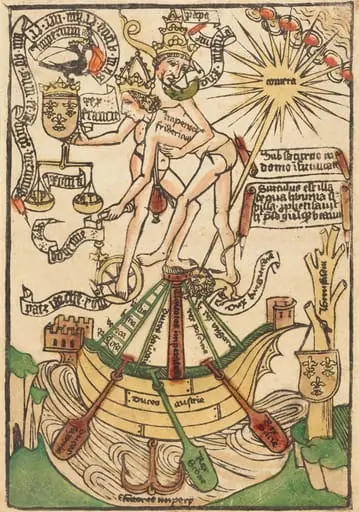 Allegory of the Meeting of Pope Paul II and Emperor Frederick III
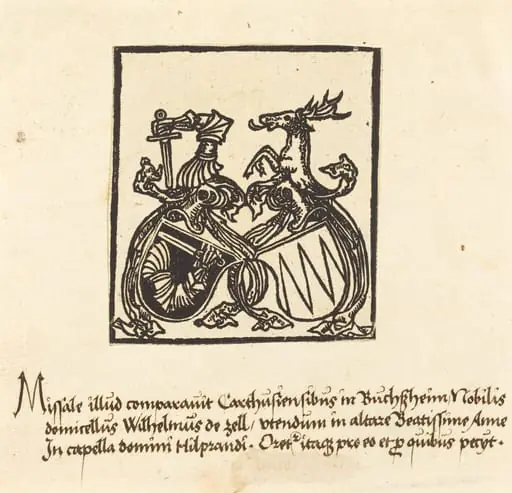 Bookplate of Wilhelm von Zell
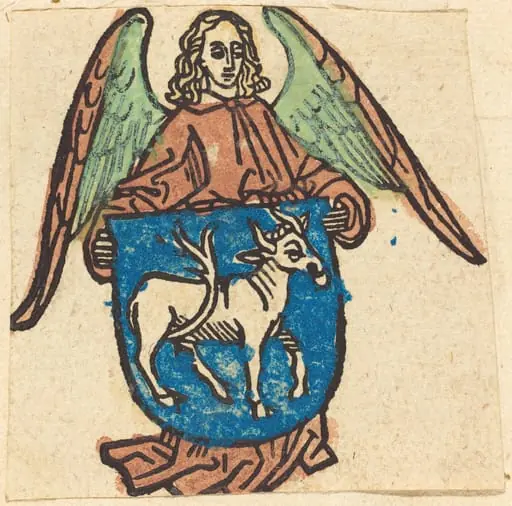 Bookplate of Hilprand Brandenburg of Bibrach
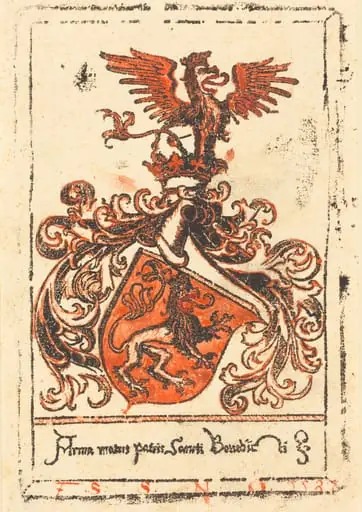 Bookplate of the Abbey of Ottobeuren
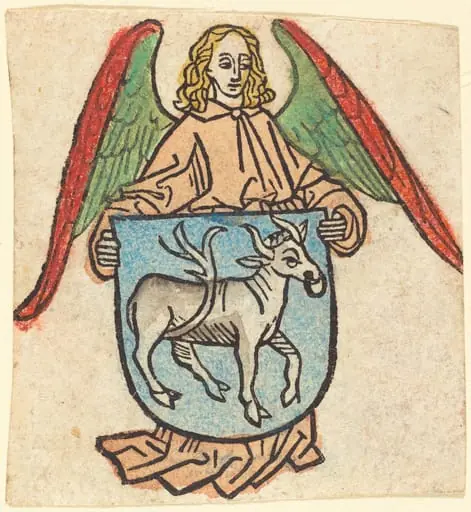 Bookplate of Hilprand Brandenburg of Bibrach
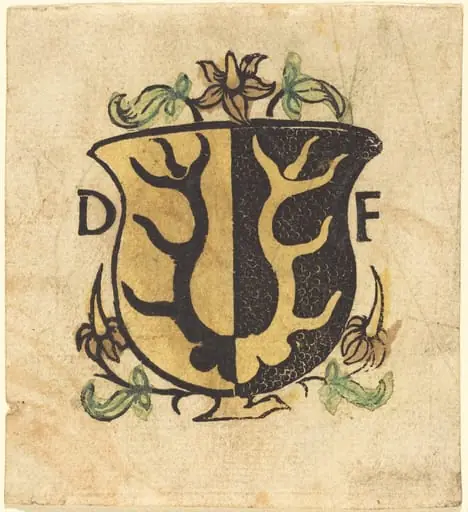 Bookplate of Dominicus Frauenfelder
![Studies for Six Figures (sheet from a model book) [recto], by German 15th Century](https://artifactworldgallery.com/img/german-15th-century--studies-for-six-figures-sheet-from-a-model-book-recto--4837429e0755bc3f-w320.webp) Studies for Six Figures (sheet from a model book) [recto]
Studies for Six Figures (sheet from a model book) [recto]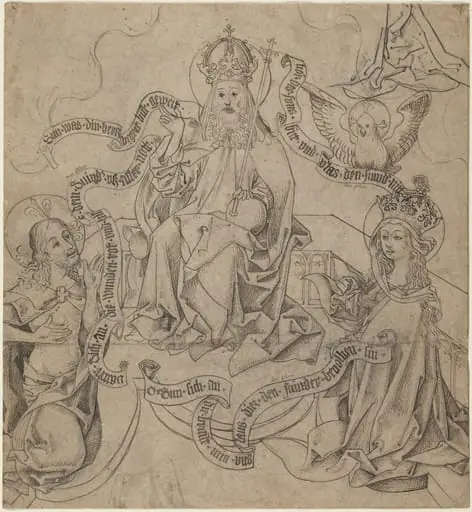 Christ and Mary Interceding with God the Father