Artwork
Court Amusements with Two Monkeys
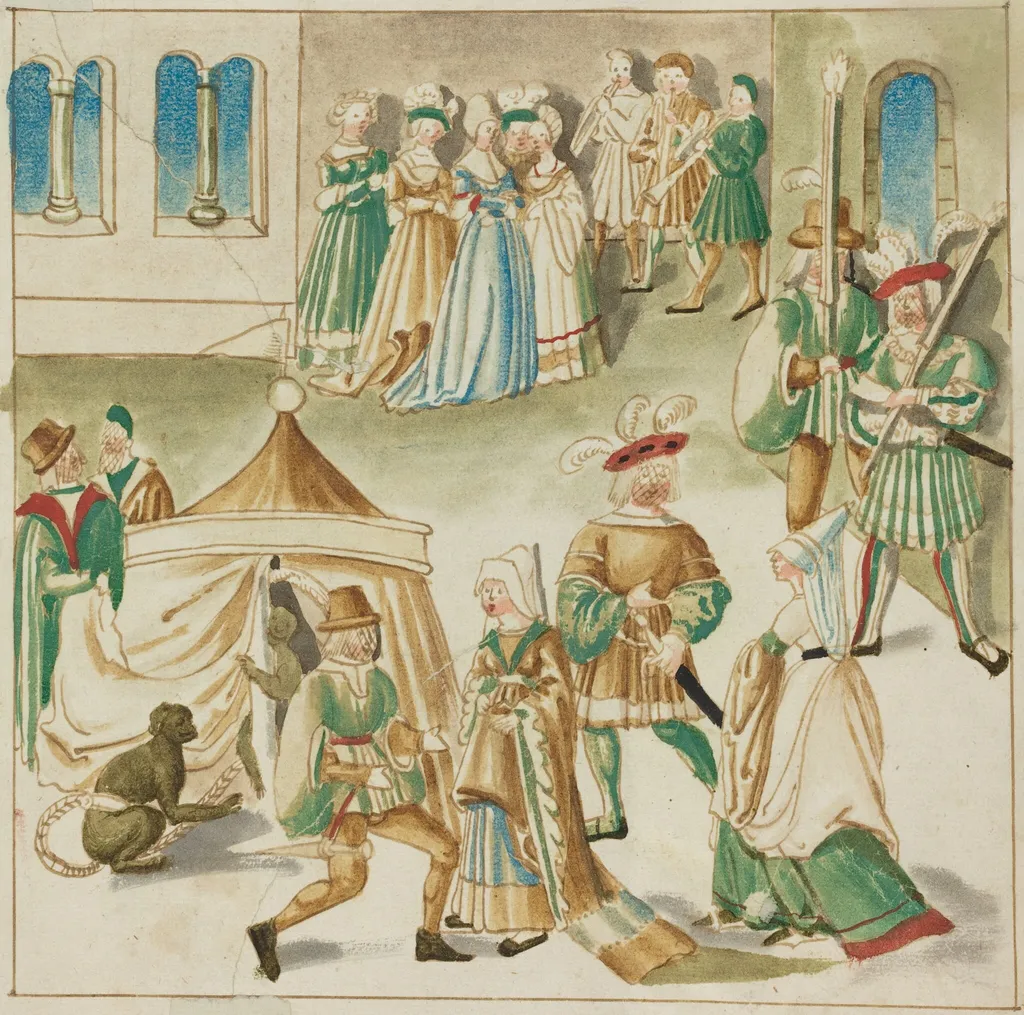
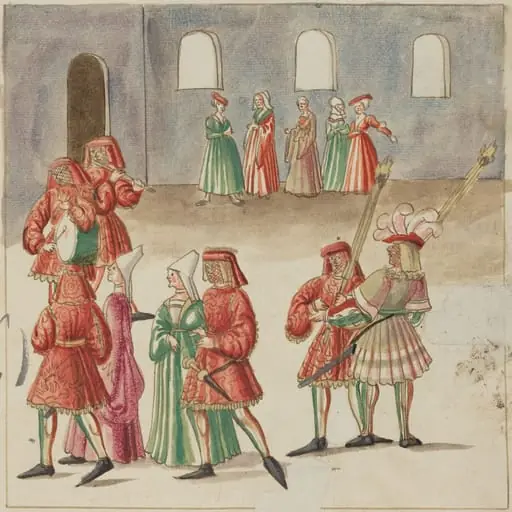
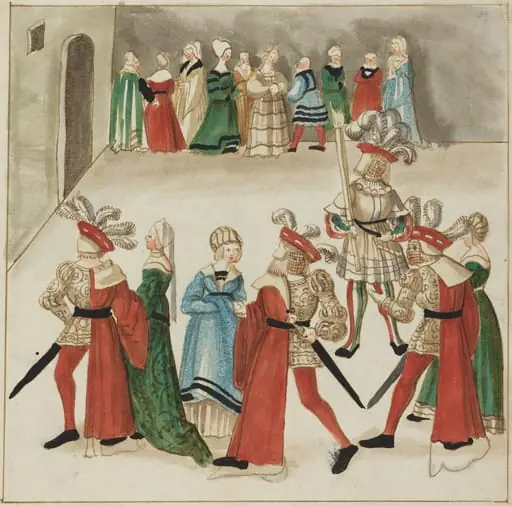
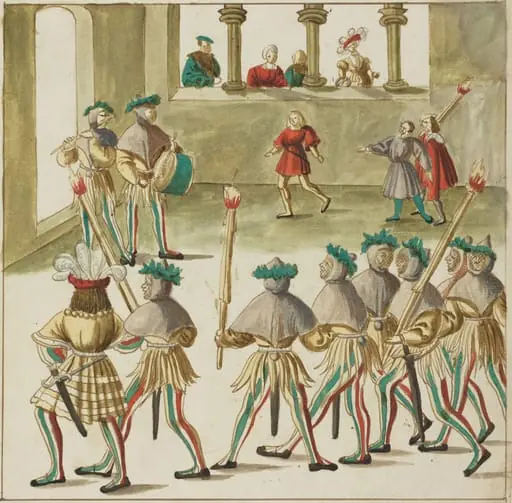
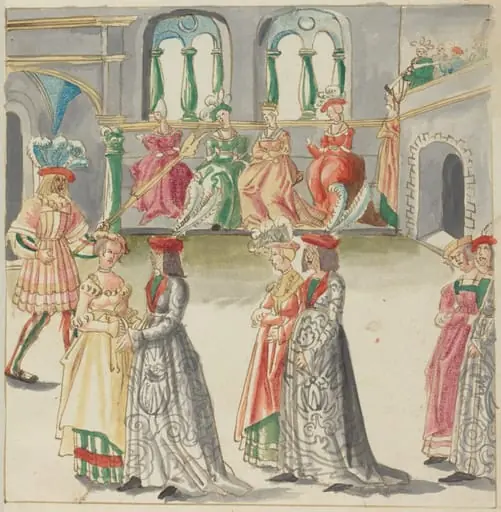
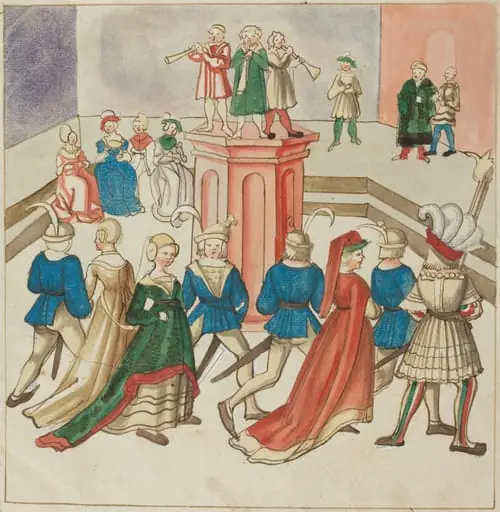
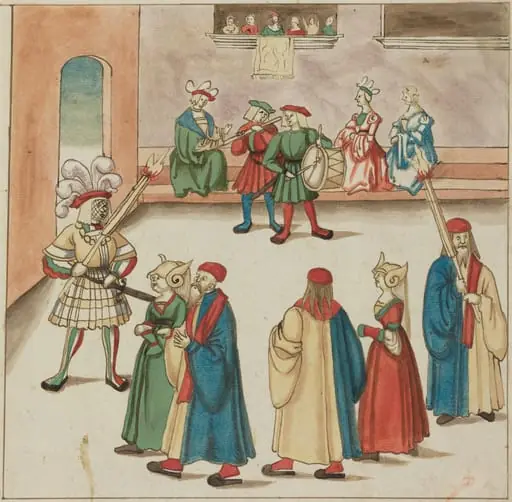
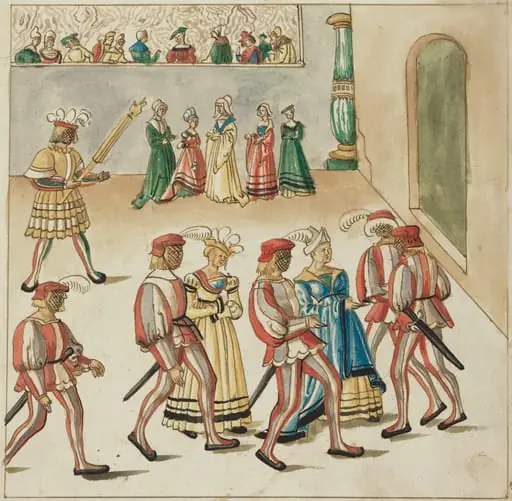
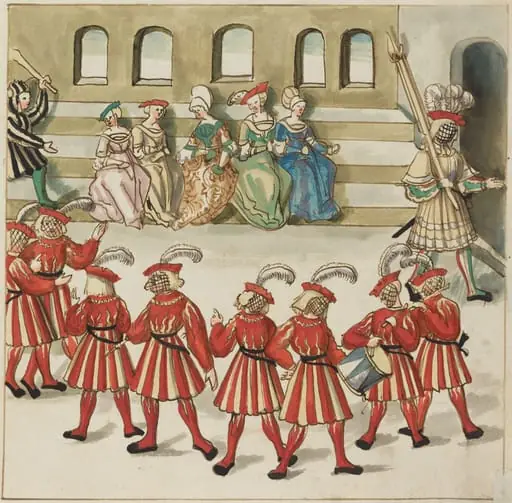
Court Amusements with Two Monkeys is an ink drawing by the Renaissance artist German 16th Century. It dates from 1514 and is held in the collection of the National Gallery of Art. This pen and brown ink drawing with watercolor on laid paper captures a lively outdoor gathering from the 16th century.
About this work
Overview
Figures in vividly colored garments—green, gold, blue, and white—engage in casual activities, while music and movement suggest a festive atmosphere.
This pen and brown ink drawing with watercolor on laid paper captures a lively outdoor gathering from the 16th century. Figures in vividly colored garments—green, gold, blue, and white—engage in casual activities, while music and movement suggest a festive atmosphere. Two monkeys resting near the group introduce an element of whimsy, softening the formality of the scene. The composition balances human activity with architectural elements, including a tent with a curved roof and blue-shuttered windows.
Subject & Meaning
The scene depicts an informal courtly entertainment, likely a leisurely outdoor event attended by nobility or their retinue. The presence of monkeys, often symbols of mischief or exotic curiosity in Renaissance iconography, adds a layer of playful spontaneity. Their placement among people implies a relaxed social setting, perhaps a private amusement rather than a public spectacle, reflecting the era’s fascination with the natural world as a complement to human refinement.
Technique & Style
The artist employs fine pen lines to define figures and architecture, layered with translucent watercolor to suggest fabric textures and atmospheric depth. The use of laid paper lends a subtle texture that enhances the organic feel of the scene. Colors are applied with restraint but clarity, emphasizing key elements like clothing and shutters without overwhelming the ink underdrawing. The loose, energetic brushwork in the background contrasts with the precise detailing of foreground figures.
History & Provenance
The drawing originates from a 16th-century European context, likely created in a courtly workshop or by an artist attached to a noble household. Its survival suggests it was valued as a preparatory study or independent work, though its exact origin and early ownership remain undocumented. The medium and style align with Northern Renaissance practices, where detailed observational drawings were commonly made for personal or archival purposes.
Context
During the Renaissance, drawings like this served as records of courtly life, capturing moments between formal ceremonies. Monkeys, often imported as exotic pets, appeared in art as symbols of curiosity and the natural world’s place within human domains. Outdoor gatherings with music and leisure were common among elites, reflecting humanist ideals that valued balance between intellect, pleasure, and observation of nature.
Legacy
This work contributes to a broader corpus of Renaissance drawings that document everyday courtly life beyond grand historical narratives. Its informal tone and attention to incidental details—like the monkeys’ posture or shuttered windows—offer insight into the private rhythms of elite society. Though not widely known, it exemplifies how artists of the period found significance in fleeting, unguarded moments.
Artist & collection

Artist
A German artist from the late 1500s drew lively scenes of knights clashing in parades and mock battles.

![Abraham Entertaining the Angels [verso], by German 16th Century](https://artifactworldgallery.com/img/german-16th-century--abraham-entertaining-the-angels-verso--69d1b25f4eba0a53-w320.webp)