Artwork
Masquerade
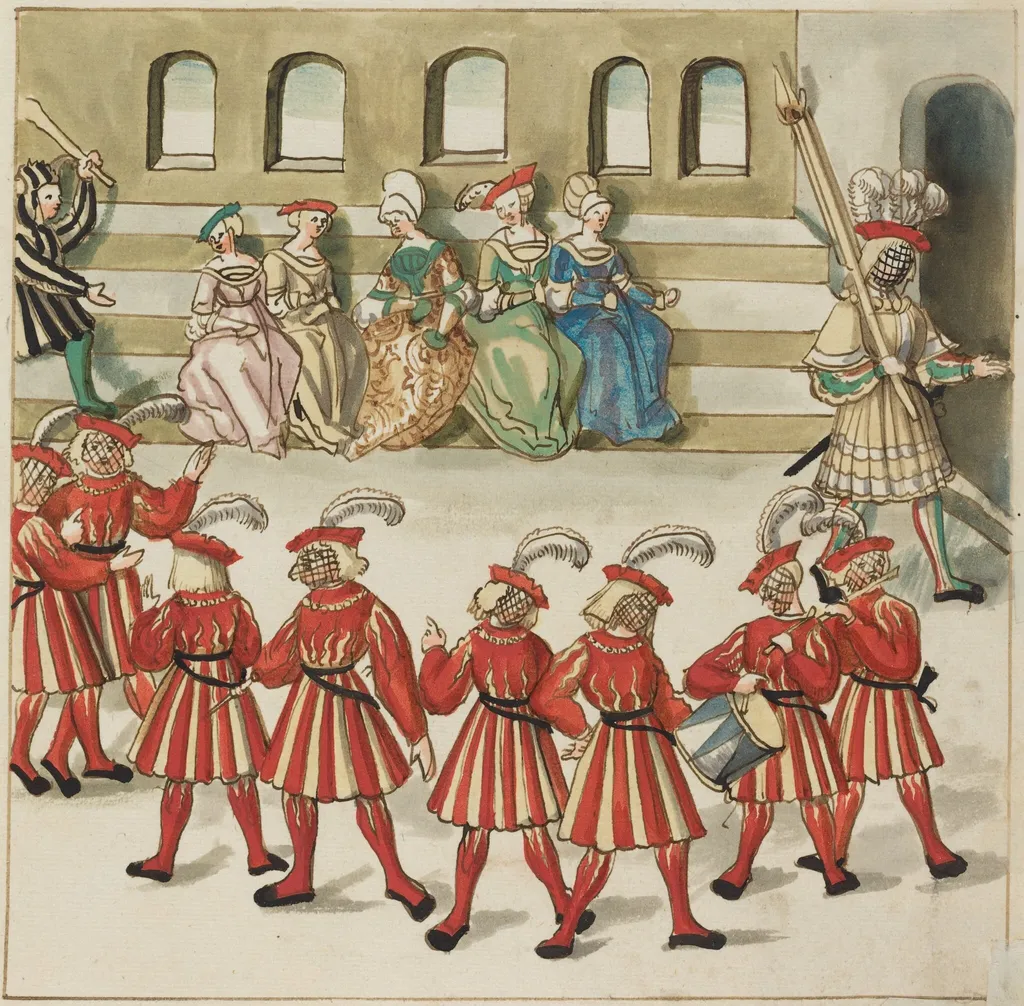
Masquerade is an ink drawing by the Renaissance artist German 16th Century. It dates from 1514 and is held in the collection of the National Gallery of Art.
About this work
Overview
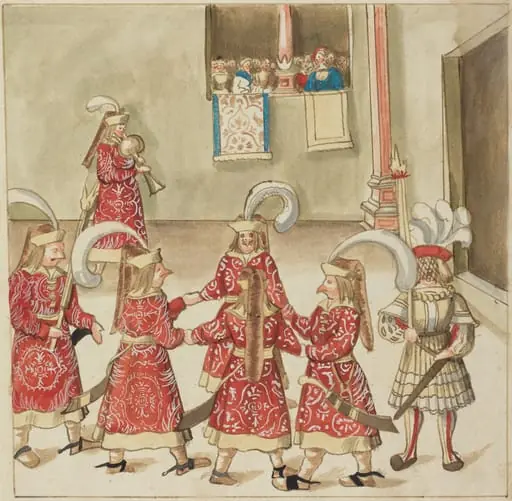
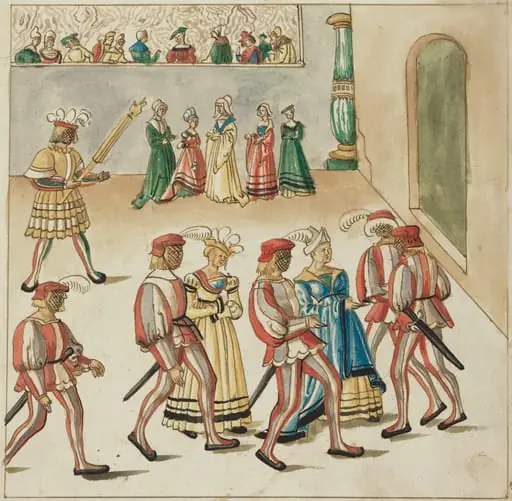
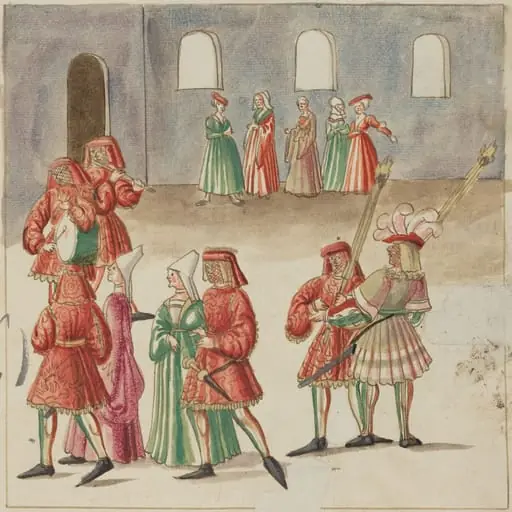
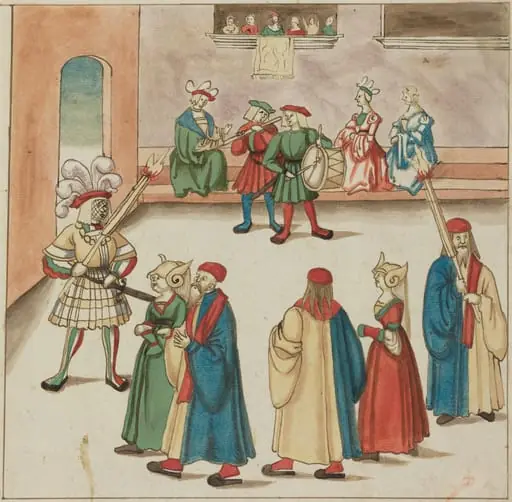
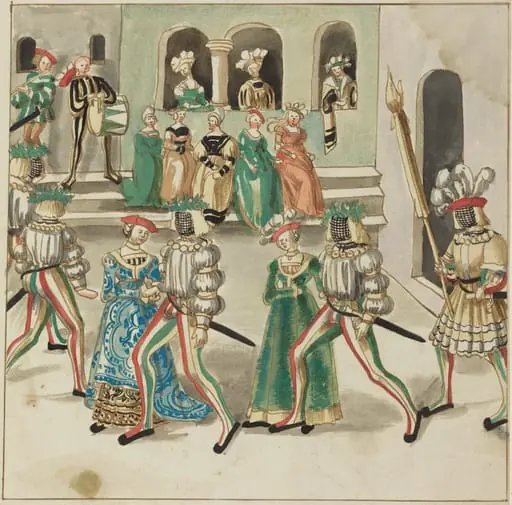
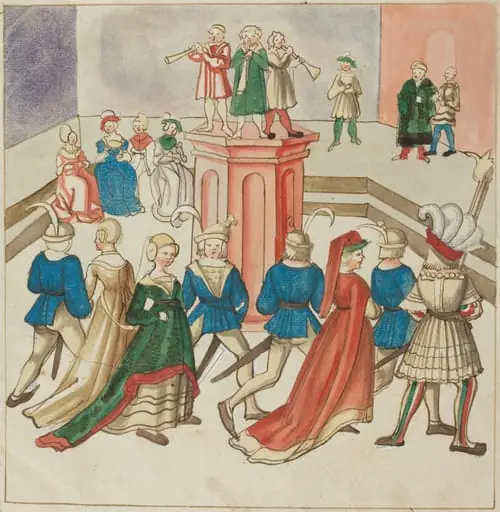
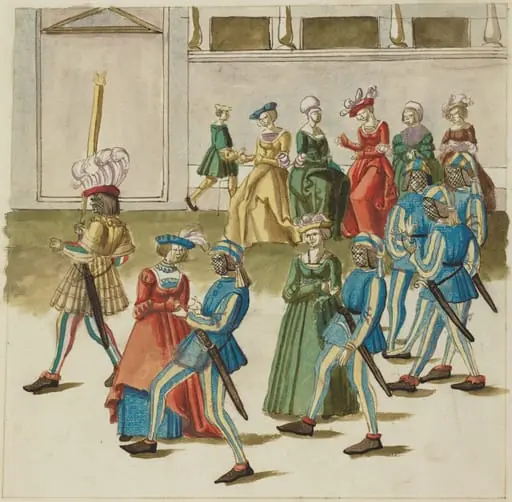
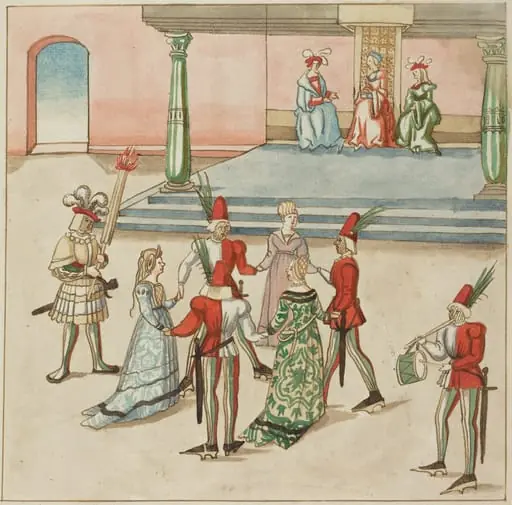
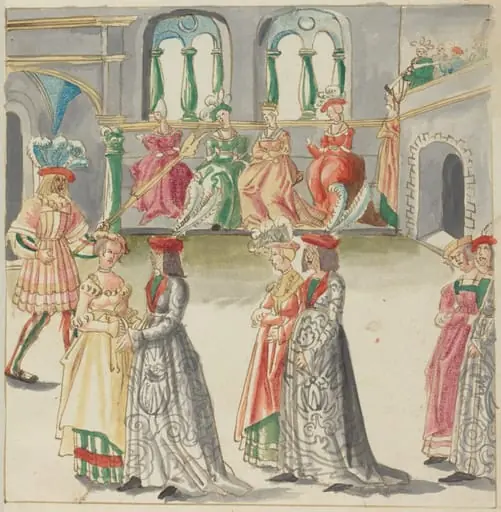
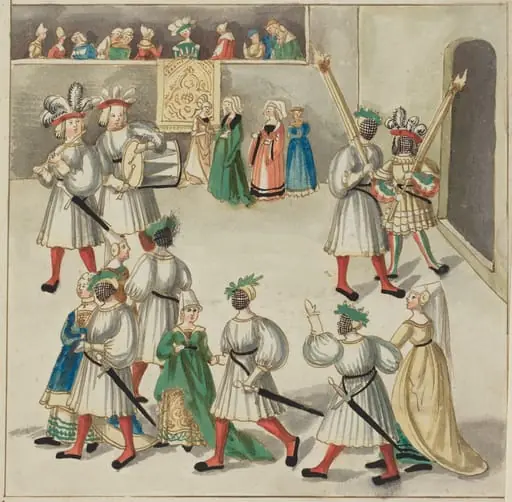
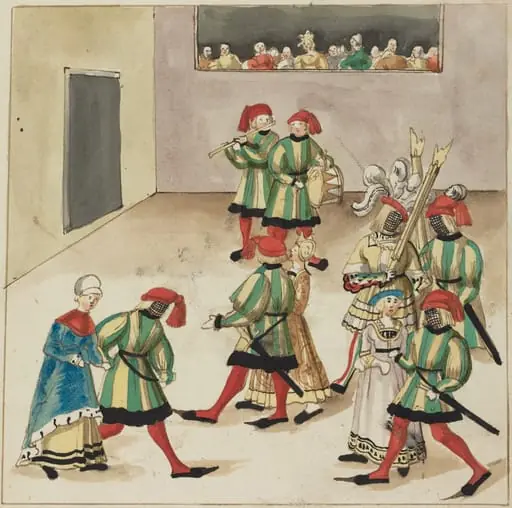
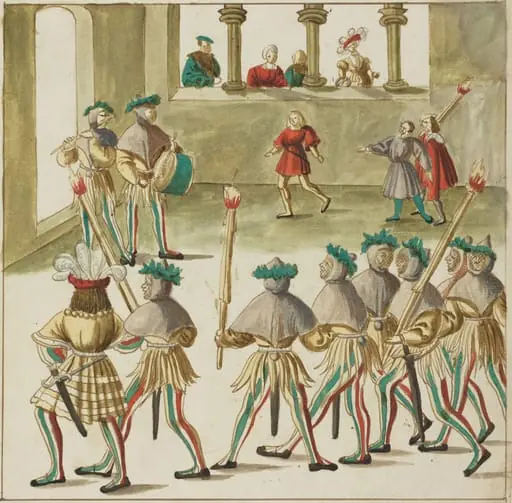
The composition centers on masked men engaged in music and dance, while seated women observe from the background.
This drawing, executed in pen and brown ink with watercolor on laid paper, captures a festive masquerade scene. Figures in vivid costumes move dynamically against a minimal architectural backdrop. The composition centers on masked men engaged in music and dance, while seated women observe from the background. The interplay of color and gesture conveys movement and communal celebration, grounded in a restrained setting.
Subject & Meaning
The scene depicts a carnival or masked ball, likely rooted in European festive traditions. The masked dancers suggest anonymity and role reversal, common in seasonal revelry. The watching women, dressed formally yet still, may represent social observation or restraint. The lone figure with a long pole could be a performer or master of ceremonies, anchoring the activity in ritualized play.
Technique & Style
The artist employs fluid pen lines to define form and motion, complemented by translucent watercolor washes that suggest fabric and light. The laid paper’s texture subtly enhances the ink’s grain, while selective color—reds, whites, and muted tones—draws focus to the dancers. Background elements are simplified, directing attention to the figures’ expressive postures and costumes.
History & Provenance
The work’s origin is undocumented in public records, though its materials and style align with 18th-century European draftsmanship. It lacks signatures or inscriptions, making attribution uncertain. Its survival as a standalone drawing suggests it may have been a study, sketch, or independent work rather than part of a larger commission.
Context
Masquerade scenes were popular in early modern Europe, reflecting both public celebration and social commentary. Such gatherings allowed temporary suspension of class norms, often depicted in art as a lens for human behavior. This drawing fits within a broader tradition of genre scenes that captured fleeting moments of urban festivity.
Legacy
Though not widely exhibited or studied, the drawing contributes to the visual record of festive culture in pre-industrial Europe. Its intimate scale and spontaneous execution offer insight into how artists observed and recorded communal rituals outside formal portraiture or grand historical themes.
Artist & collection

Artist
A German artist from the late 1500s drew lively scenes of knights clashing in parades and mock battles.

![Abraham Entertaining the Angels [verso], by German 16th Century](https://artifactworldgallery.com/img/german-16th-century--abraham-entertaining-the-angels-verso--69d1b25f4eba0a53-w320.webp)