Artwork
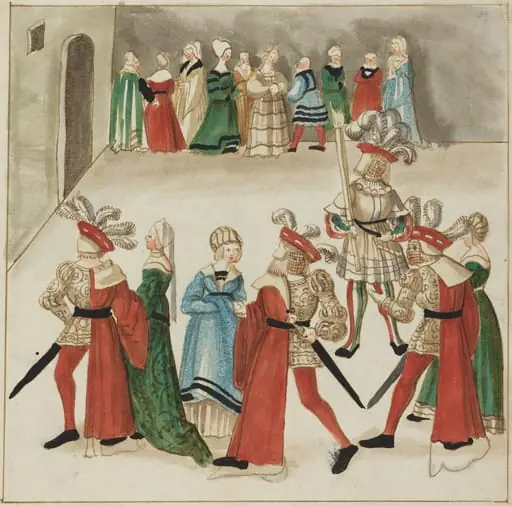
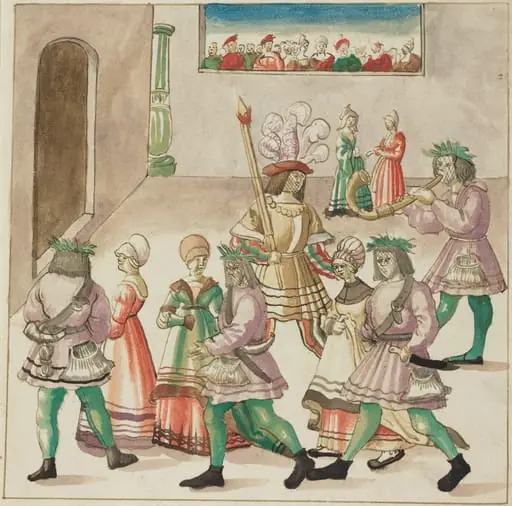
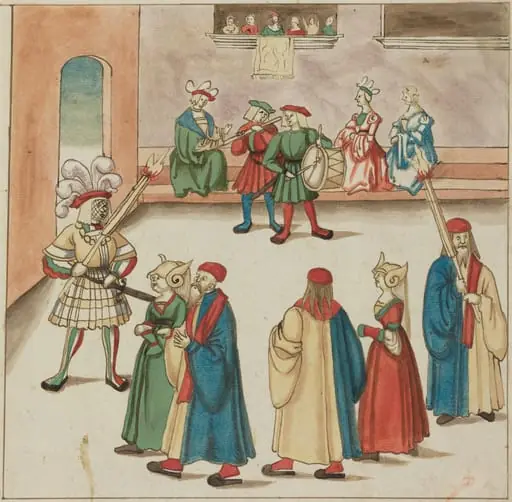
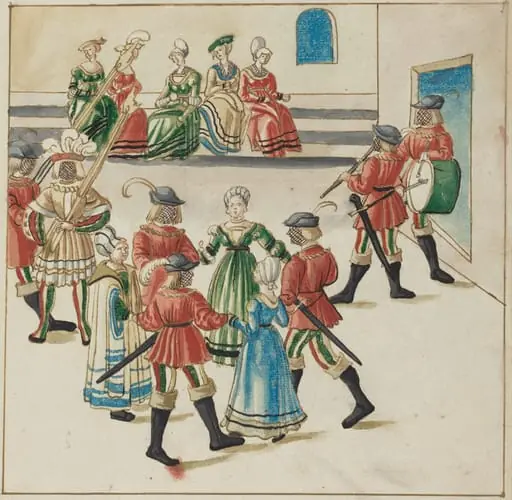
Two Dancing Couples Led by Torch-bearing Knights
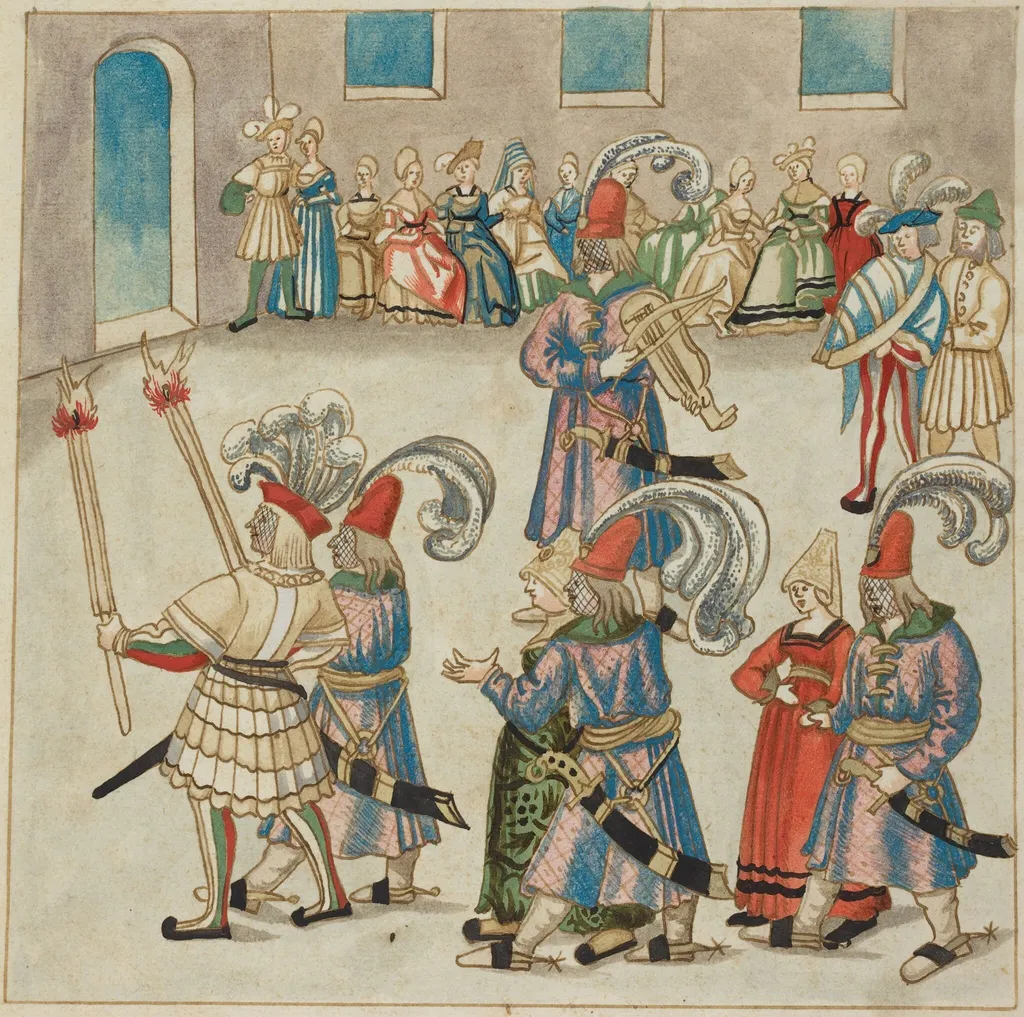
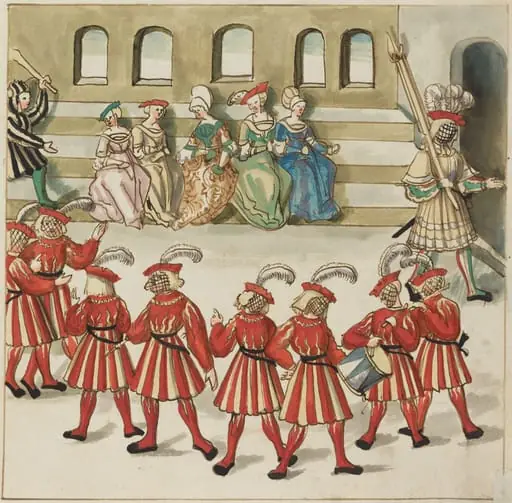
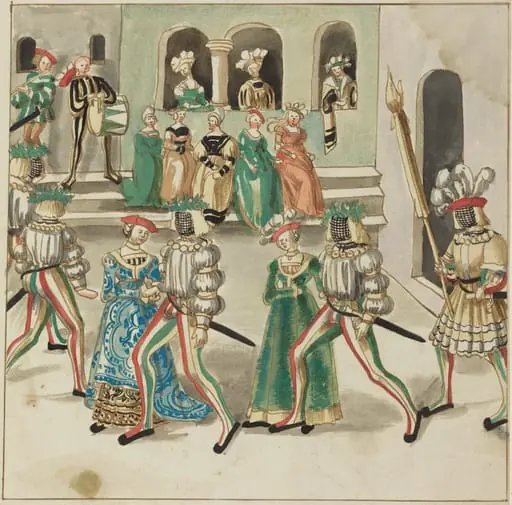
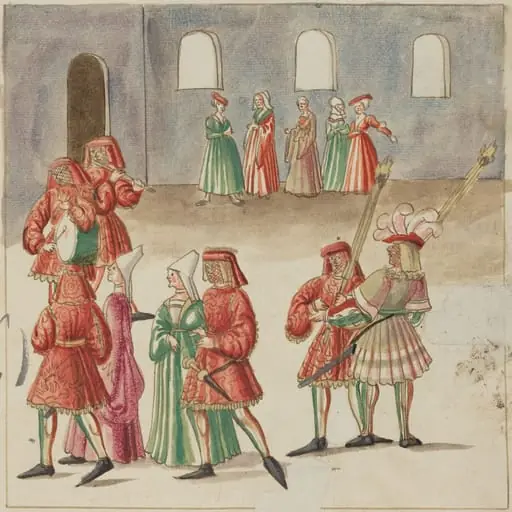
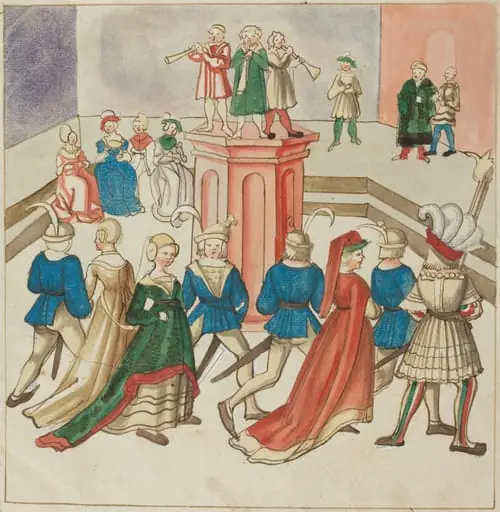
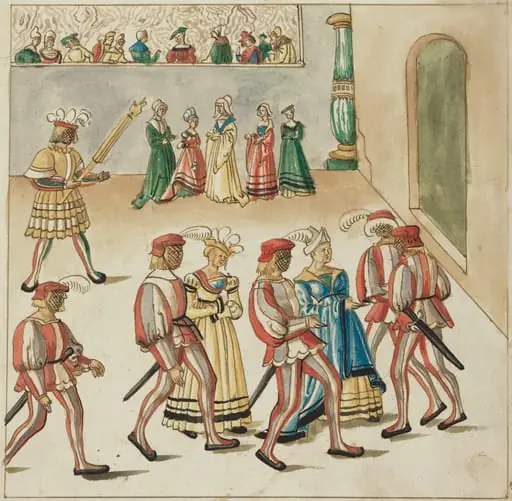
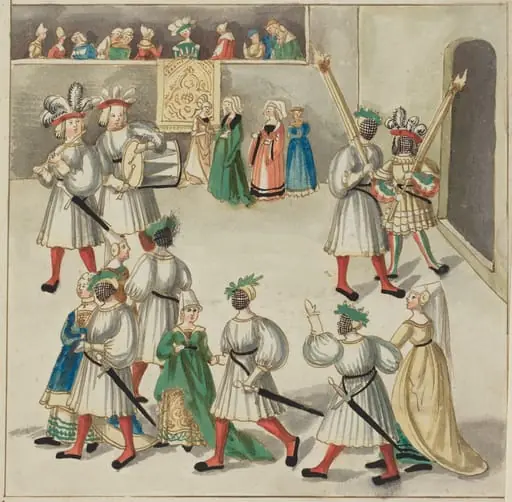
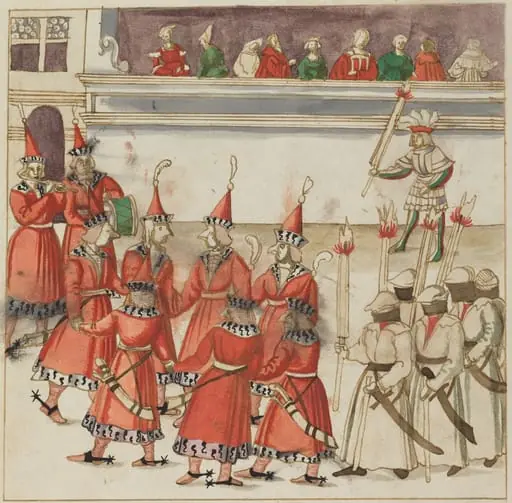
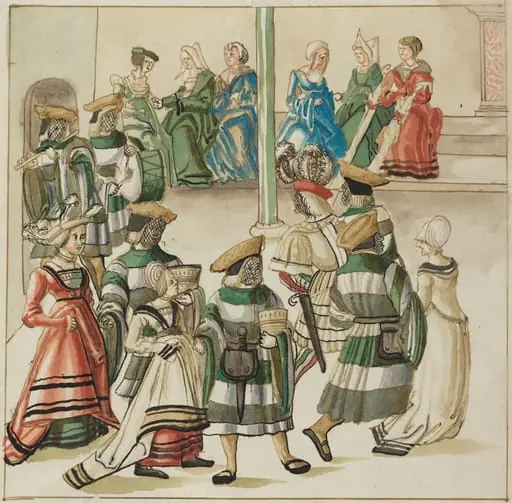
Two Dancing Couples Led by Torch-bearing Knights is an ink drawing by the Renaissance artist German 16th Century. It dates from 1514 and is held in the collection of the National Gallery of Art. This drawing, executed in pen and brown ink with watercolor on laid paper, captures a moment of courtly dance under torchlight.
About this work
Overview
The work’s intimacy and precision reflect its function as a preparatory study or observational sketch rather than a finished piece.
This drawing, executed in pen and brown ink with watercolor on laid paper, captures a moment of courtly dance under torchlight. The composition centers on two couples in motion, guided by two figures holding flaming torches. Delicate brushwork and fine ink lines convey texture and atmosphere, suggesting a refined indoor setting. The work’s intimacy and precision reflect its function as a preparatory study or observational sketch rather than a finished piece.
Subject & Meaning
The scene depicts a formal dance, likely from a Renaissance or early Baroque court celebration. The lead dancer in green and his partner in pink suggest hierarchy within the ritual, while the torch-bearing knights serve as both illuminators and guardians of the event. The presence of torches implies nighttime festivities, reinforcing themes of elegance, order, and transient pleasure common in aristocratic entertainments of the period.
Technique & Style
The artist employed fine pen lines to define figures and fabric, enhanced by translucent watercolor washes to suggest light and texture. Lace trim on sleeves, folds in garments, and the subtle glow of torch flames are rendered with meticulous attention. The use of laid paper, with its visible chain lines, grounds the work in its material context, while the restrained palette emphasizes tonal variation over color saturation.
History & Provenance
The drawing resides in the collection of the National Gallery of Art in Washington, D.C., acquired as part of a broader bequest of European graphic works. Its origins trace to the late 16th or early 17th century, though the artist’s identity remains unconfirmed. No documented commission or exhibition history is known, suggesting it may have been a personal study or private record of a ceremonial event.
Context
During the late Renaissance and early Baroque era, dance was a highly codified social practice among European elites, often staged in palace halls for political and ceremonial purposes. Drawings like this served as visual notes for larger compositions or as records of courtly life. Similar sketches by contemporaries reveal a shared interest in capturing movement, costume, and artificial lighting in controlled indoor settings.
Legacy
Though unsigned and unattributed, the drawing exemplifies the tradition of observational drawing in early modern Europe, where artists documented ephemeral moments with precision. Its survival offers insight into the visual culture of courtly performance and the role of graphic media in preserving transient social rituals. It remains a quiet testament to the art of looking closely.
Artist & collection

Artist
A German artist from the late 1500s drew lively scenes of knights clashing in parades and mock battles.

![Abraham Entertaining the Angels [verso], by German 16th Century](https://artifactworldgallery.com/img/german-16th-century--abraham-entertaining-the-angels-verso--69d1b25f4eba0a53-w320.webp)