Artwork
Masquerade
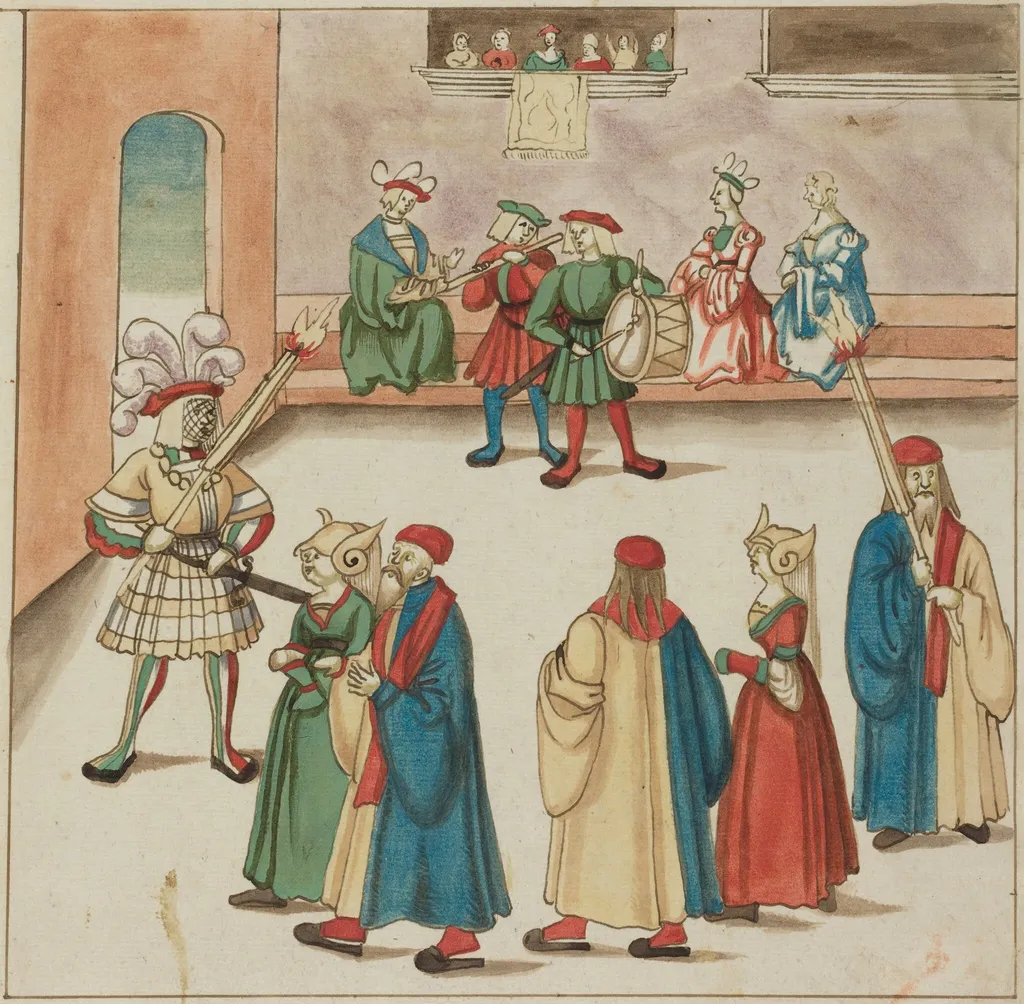
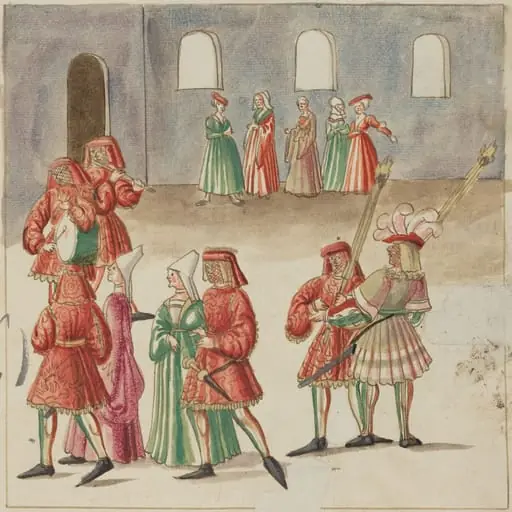
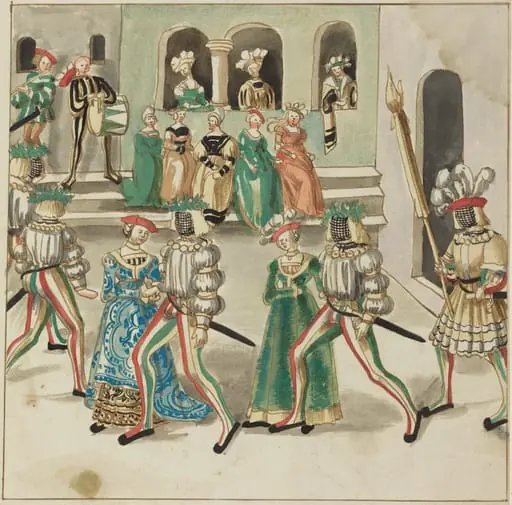
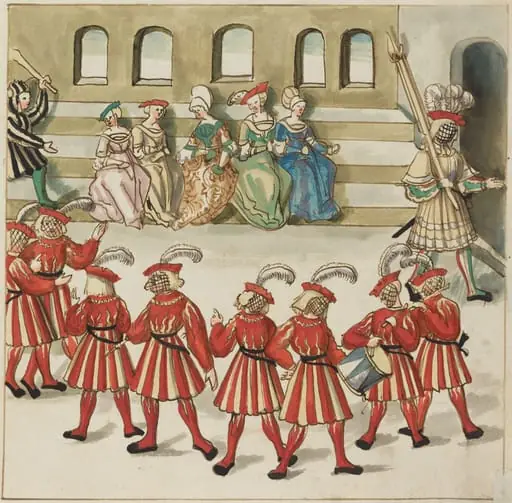
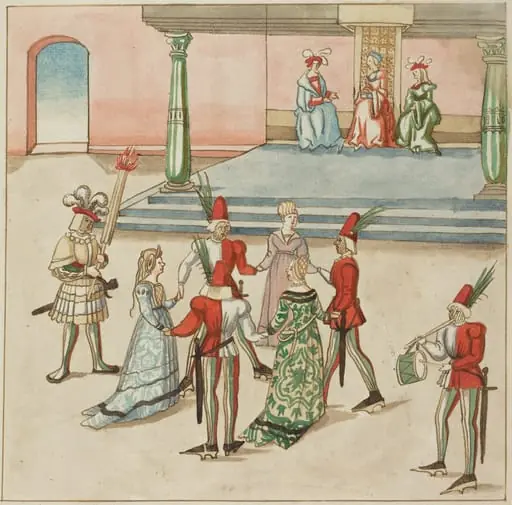
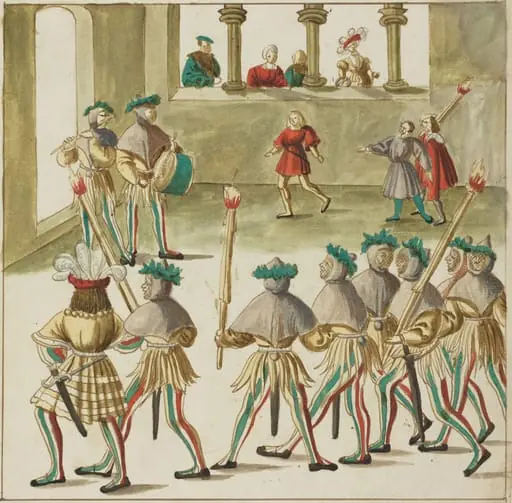
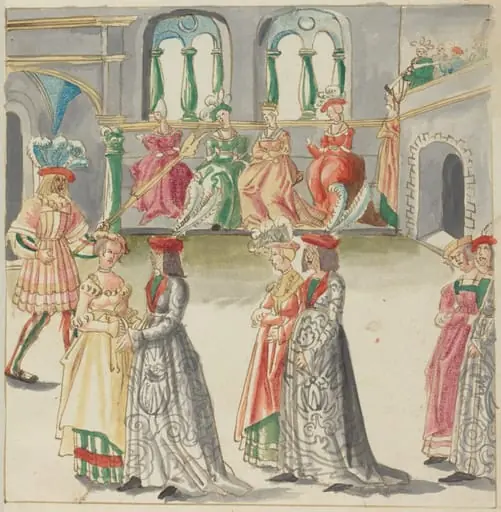
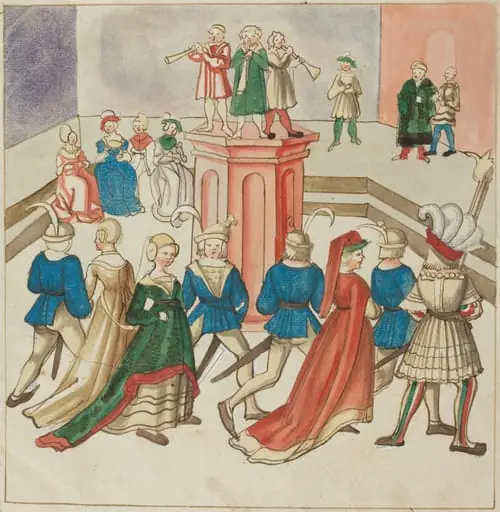
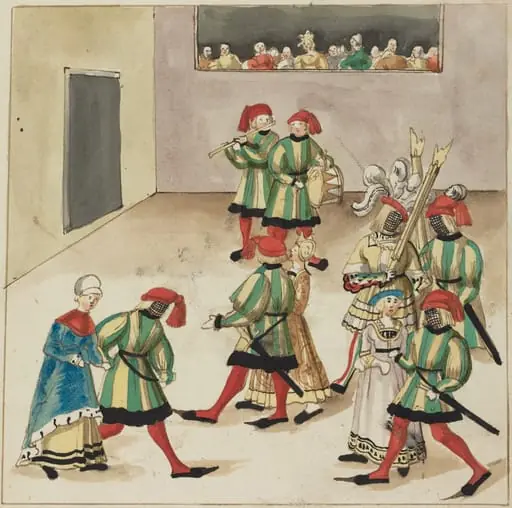
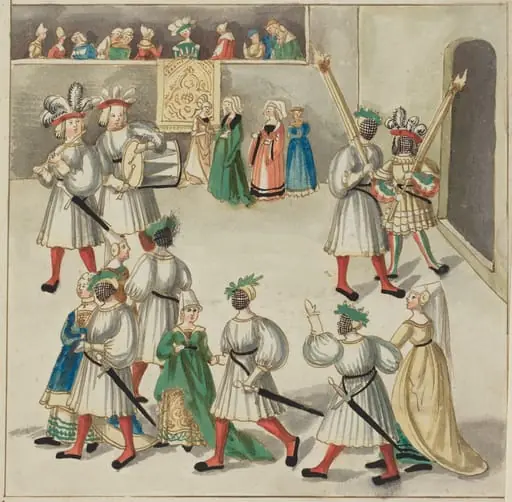
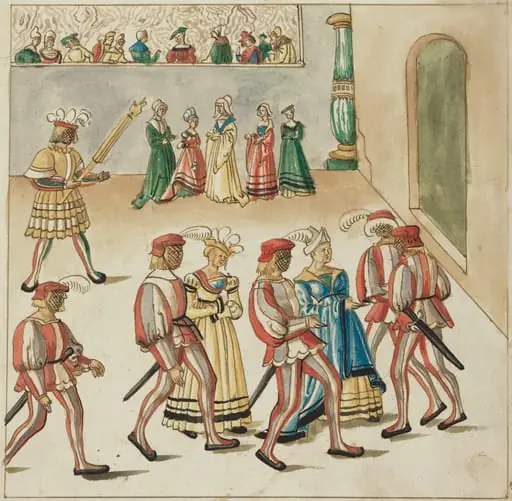
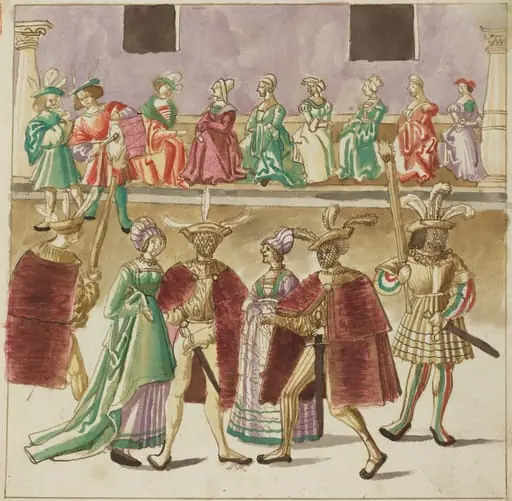
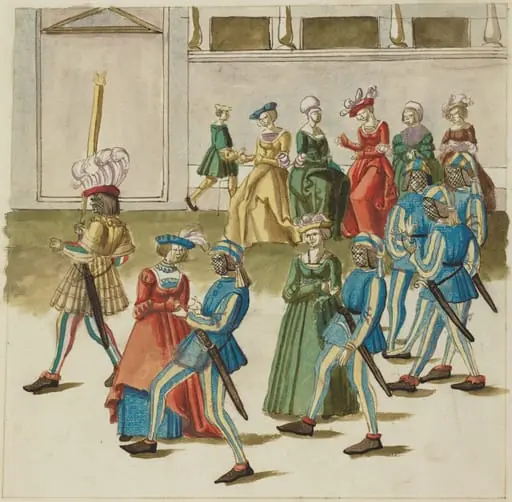
Masquerade is an ink drawing by the Renaissance artist German 16th Century. It dates from 1514 and is held in the collection of the National Gallery of Art. This pen and watercolor drawing captures a festive crowd in elaborate, theatrical attire.
About this work
Overview
This pen and watercolor drawing captures a festive crowd in elaborate, theatrical attire. Executed on laid paper, it presents a dynamic scene of masked figures, musicians, and torchbearers against a minimal architectural backdrop. The composition emphasizes movement and character over spatial depth, with flat, vivid hues and crisp outlines defining each figure in a stylized manner.
Subject & Meaning
The scene depicts a masquerade, likely tied to carnival or seasonal celebration. Figures wear exaggerated masks and headgear, suggesting role-playing and social inversion common in such events. The presence of instruments and torches implies music and ritual, while onlookers on a balcony reinforce the performative nature of the gathering, hinting at public spectacle as a cultural ritual.
Technique & Style
The artist employs precise pen lines and flat watercolor washes to create bold, graphic forms. Facial features are simplified into expressive archetypes rather than individualized portraits. Shapes are clearly outlined, enhancing legibility and theatricality. The lack of shading and perspective aligns with a decorative, non-naturalistic approach typical of certain Renaissance graphic traditions.
History & Provenance
The work originates from the Renaissance period, though its exact date and origin remain undocumented. Its style suggests a connection to Italian or Northern European carnival drawings, possibly made as preparatory studies or independent records of public festivities. No known collector or institutional provenance is recorded prior to its current location.
Context
During the Renaissance, masquerades were popular among urban elites and commoners alike, serving as sanctioned moments of social license. Artists often documented these events, blending observation with stylization. This drawing reflects a broader trend of using graphic media to capture ephemeral public rituals, distinct from grand historical or religious commissions.
Legacy
As a surviving example of Renaissance graphic art focused on secular celebration, the piece contributes to understanding how everyday spectacle was visually recorded before photography. Its emphasis on character and costume over realism influenced later traditions of caricature and theatrical illustration, preserving the visual language of festive disguise.
Artist & collection

Artist
A German artist from the late 1500s drew lively scenes of knights clashing in parades and mock battles.

![Abraham Entertaining the Angels [verso], by German 16th Century](https://artifactworldgallery.com/img/german-16th-century--abraham-entertaining-the-angels-verso--69d1b25f4eba0a53-w320.webp)