Artwork
Masquerade
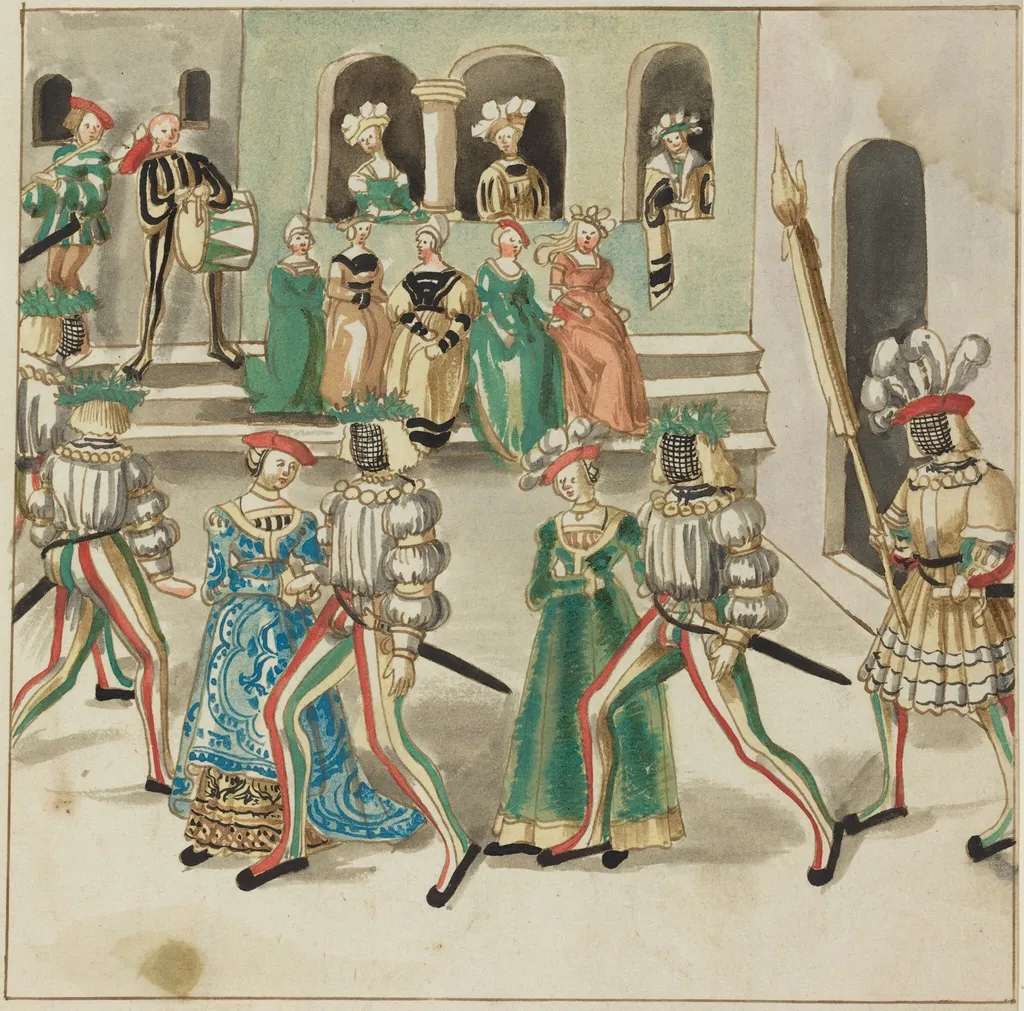
Masquerade is an ink drawing by the Renaissance artist German 16th Century. It dates from 1514 and is held in the collection of the National Gallery of Art.
About this work
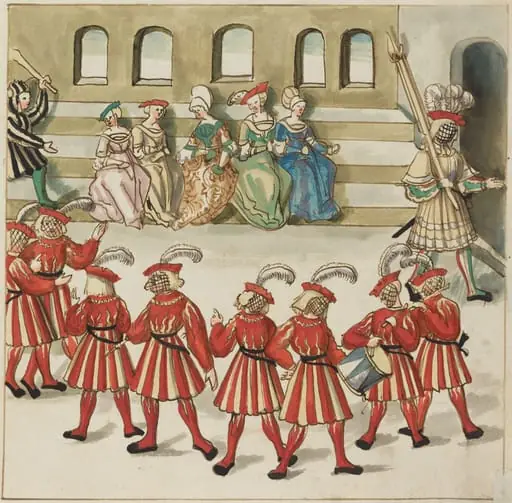
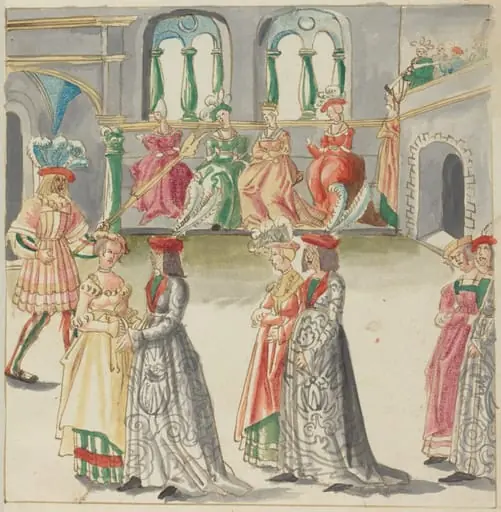
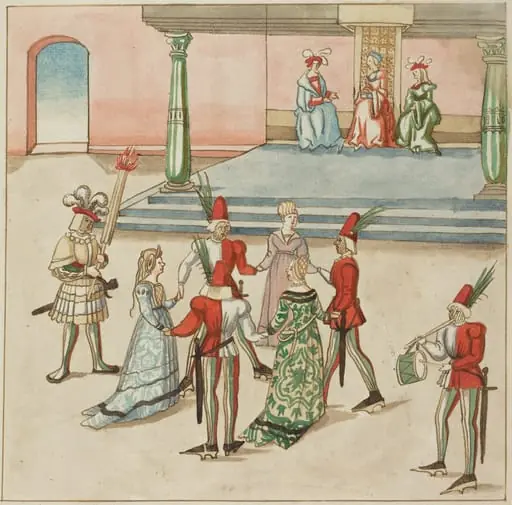
The background looks like a building with arches, and some folks are standing on steps.
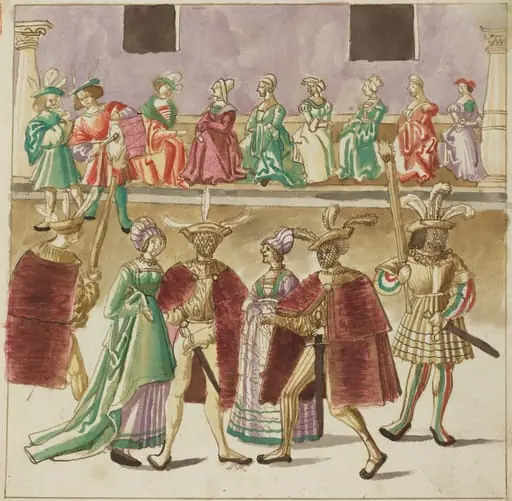
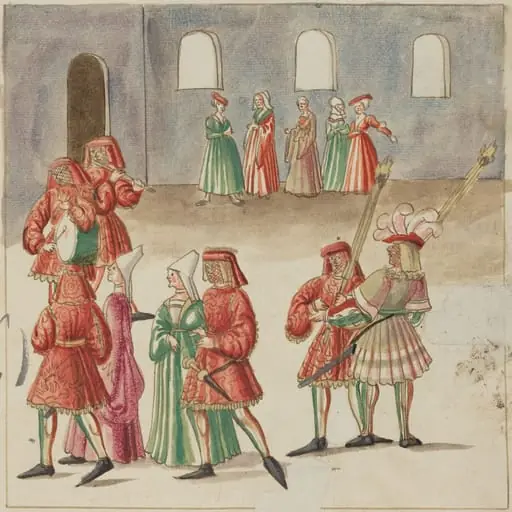
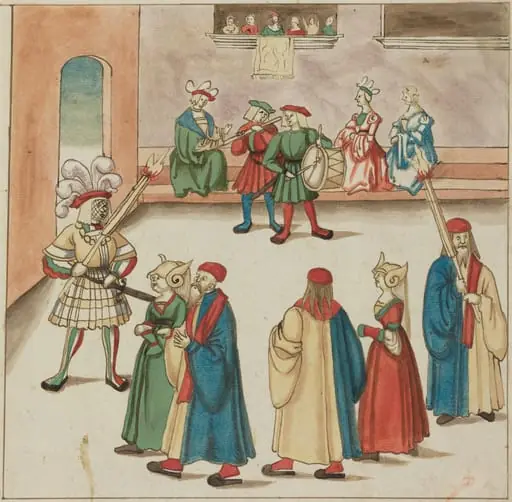
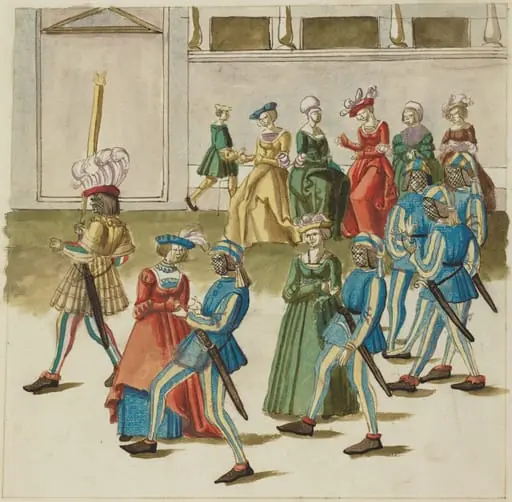
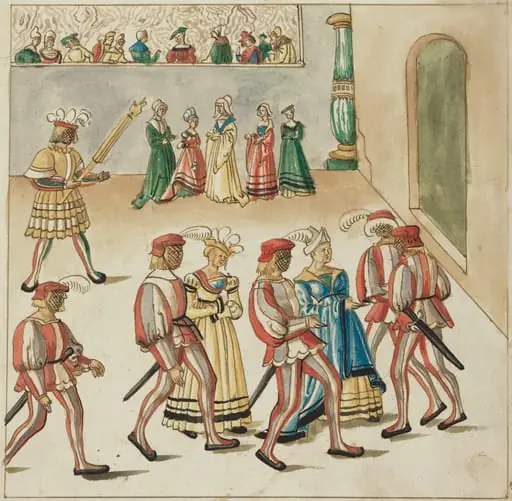
This drawing shows a wild party with people in masks and bright clothes. Some wear armor, others fancy dresses with big skirts. A few hold strange props like a torch or a shield. The background looks like a building with arches, and some folks are standing on steps.
Notice how the colors pop—greens, blues, and reds. The lines are simple but full of energy. The artist used watercolor to keep it light and fast.
If you like this, check out German 16th Century artists next.
Overview
Masquerade is a drawing executed in pen and brown ink with watercolor on laid paper, depicting a lively, masked gathering.
Subject & Meaning
The scene showcases a chaotic party with figures in masks, diverse attire (armor, elaborate dresses), and unusual props (torch, shield), set against an arched building backdrop with stepped areas.
Technique & Style
Characterized by simple, energetic pen lines and vibrant watercolor accents (notably greens, blues, reds), the work emphasizes lightness and spontaneity.
Context
Shares stylistic affinities with 16th-century German artistic traditions, suggesting a potential influence or parallel.
Artist & collection

Artist
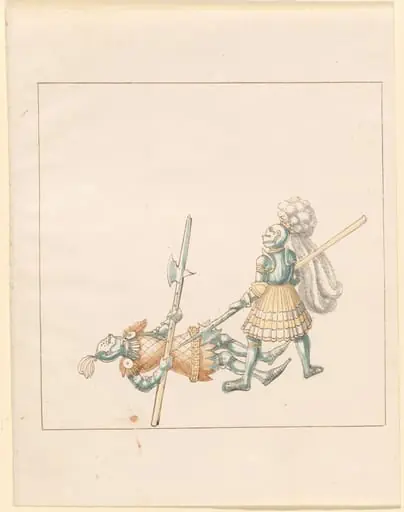
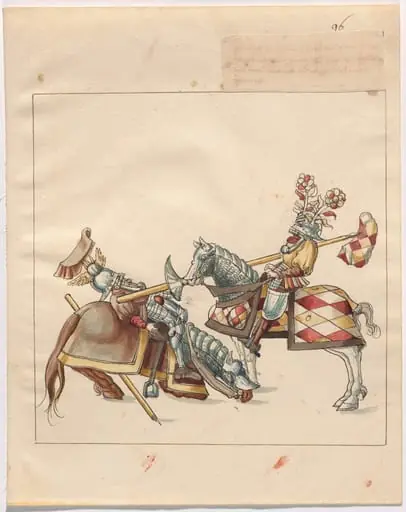
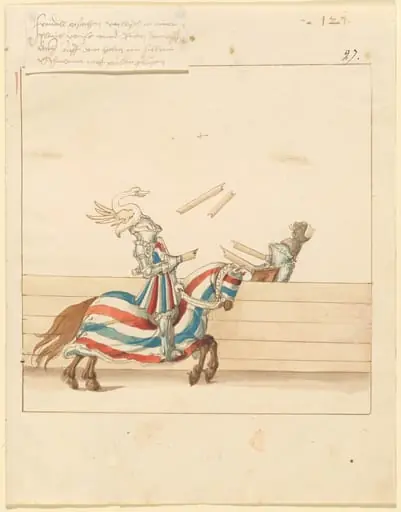
A German artist from the late 1500s drew lively scenes of knights clashing in parades and mock battles.

![Abraham Entertaining the Angels [verso], by German 16th Century](https://artifactworldgallery.com/img/german-16th-century--abraham-entertaining-the-angels-verso--69d1b25f4eba0a53-w320.webp)