Artwork
Three Dancing Couples Led by Two Knights in Room with Column
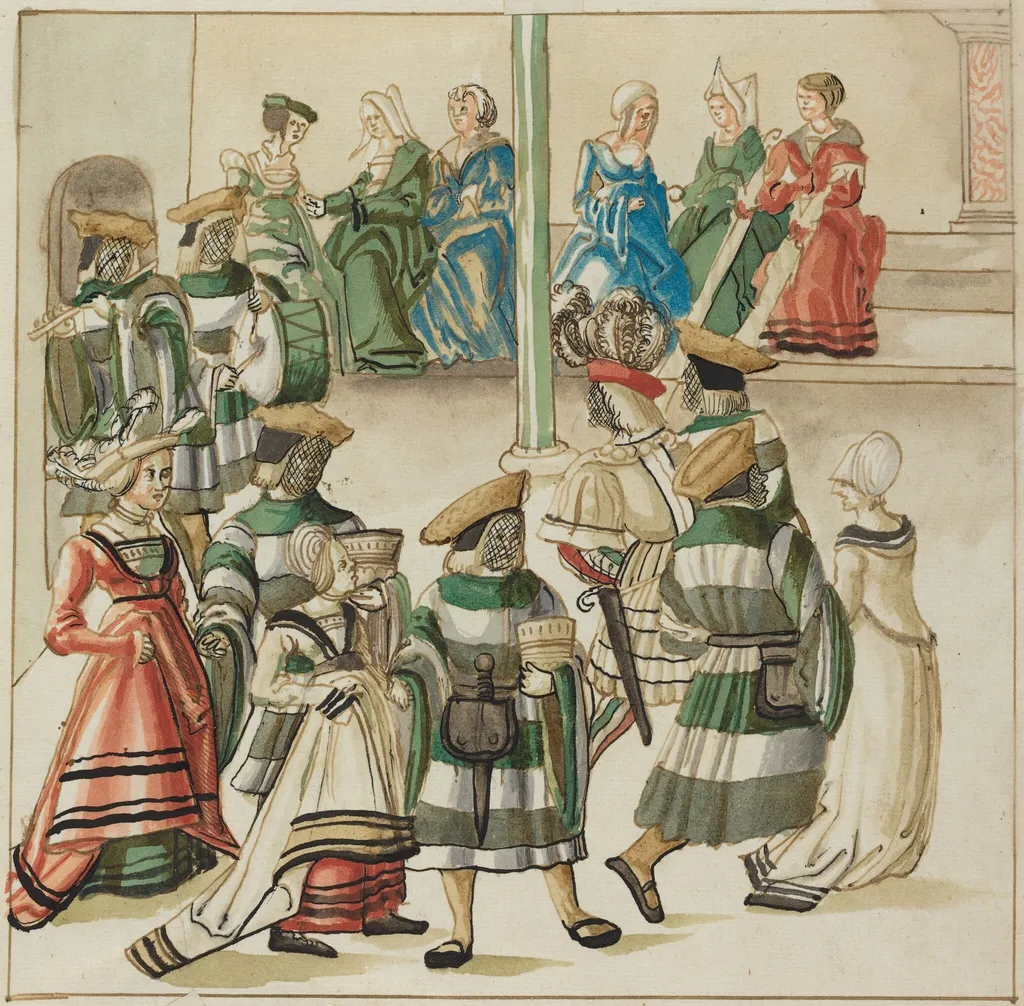
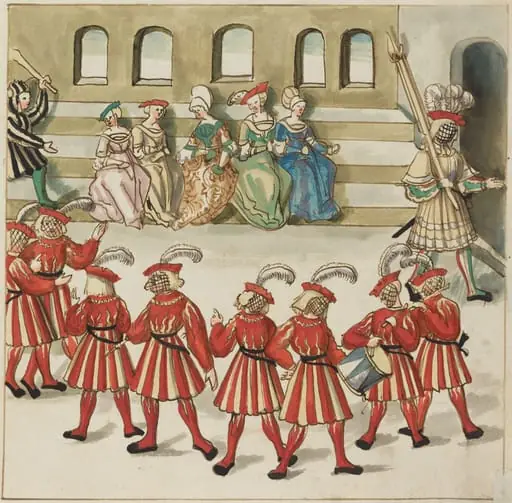
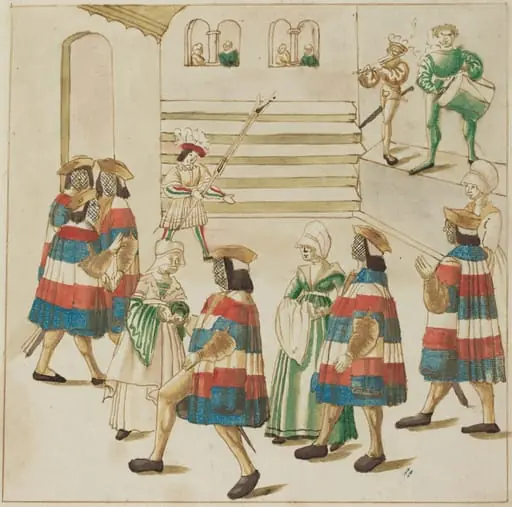
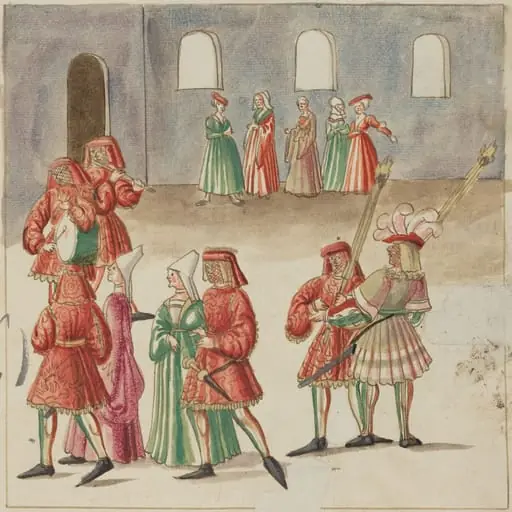
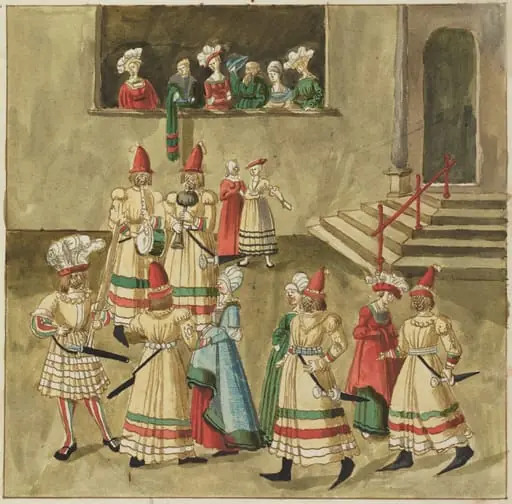
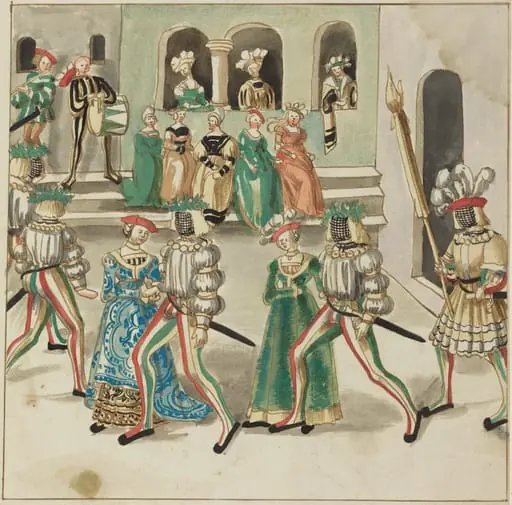
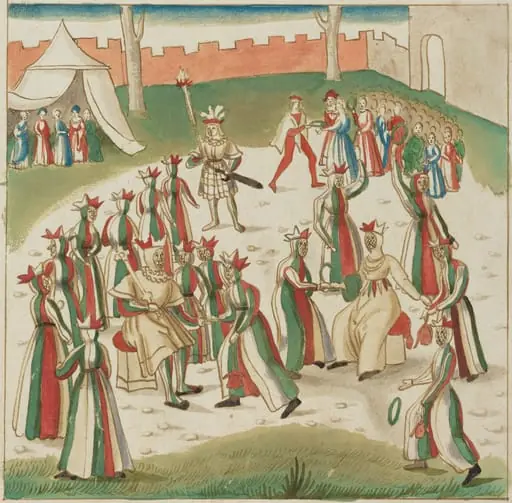
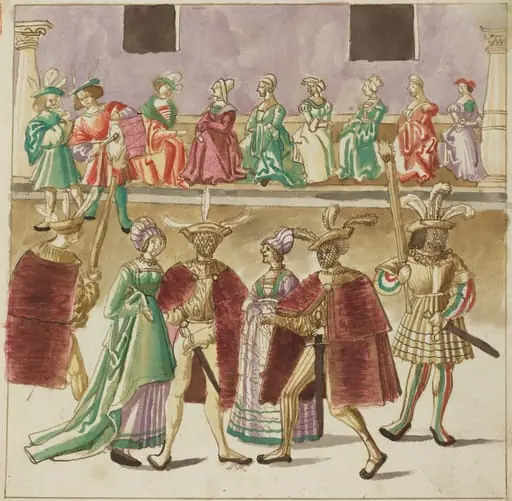
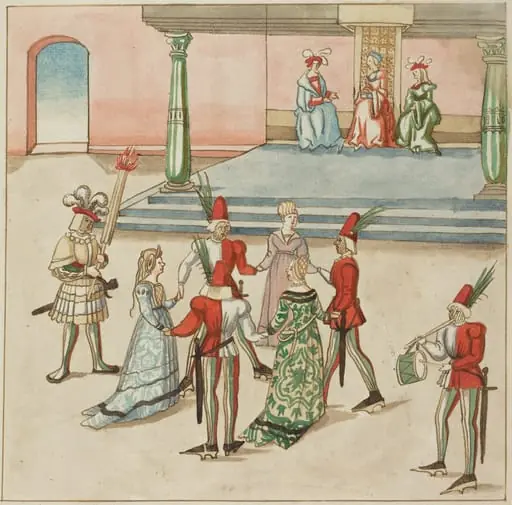
Three Dancing Couples Led by Two Knights in Room with Column is an ink drawing by the Renaissance artist German 16th Century. It dates from 1514 and is held in the collection of the National Gallery of Art. This ink and watercolor drawing depicts six figures in a modest interior, moving in a dance under the shadow of a tall column.
About this work
Overview
This ink and watercolor drawing depicts six figures in a modest interior, moving in a dance under the shadow of a tall column.
This ink and watercolor drawing depicts six figures in a modest interior, moving in a dance under the shadow of a tall column. The scene is rendered with rapid, fluid strokes and muted tones, suggesting motion rather than precise detail. The artist captures a moment of communal celebration, emphasizing rhythm and gesture over anatomical accuracy. The use of glazing adds subtle depth to the clothing and surfaces.
Subject & Meaning
The figures—three couples accompanied by two knights—engage in a social dance, likely within a domestic or ceremonial space. Their postures, though stiff, convey a sense of shared rhythm and interaction. The presence of knights may imply a noble context, while the head coverings and tunics point to regional or period-specific attire. The scene reflects everyday festivity, not myth or allegory.
Technique & Style
The artist employed pen and brown ink with watercolor washes, applying layers through glazing to soften hues of green, red, and blue. Lines are loose and economical, suggesting movement through gesture rather than detail. The laid paper’s texture enhances the sketchy quality, reinforcing the immediacy of the moment. Forms are implied, not defined, prioritizing energy over realism.
History & Provenance
The work is unattributed but stylistically aligns with late medieval or early Renaissance draftsmanship from Northern Europe. Its preservation suggests it was valued as a study or record, not a finished piece. No documented ownership history is known prior to its inclusion in institutional collections, though its materials and technique are consistent with workshop practices of the period.
Context
Dance scenes in drawings of this era often served as preparatory studies for larger compositions or as records of social customs. The interior setting, with its simple stone wall and single column, reflects common architectural motifs in secular or domestic imagery. Such sketches circulated among artists as references for composition, costume, and movement, particularly in regions with strong folk traditions.
Legacy
This drawing contributes to the understanding of how artists observed and translated social rituals into visual form. Its informal quality reveals a shift toward documenting lived experience rather than idealized narratives. Though not widely known, it exemplifies the role of sketching in preserving transient moments of communal life during a time when such scenes rarely appeared in major artworks.
Artist & collection

Artist
A German artist from the late 1500s drew lively scenes of knights clashing in parades and mock battles.

![Abraham Entertaining the Angels [verso], by German 16th Century](https://artifactworldgallery.com/img/german-16th-century--abraham-entertaining-the-angels-verso--69d1b25f4eba0a53-w320.webp)