Artwork
Masquerade
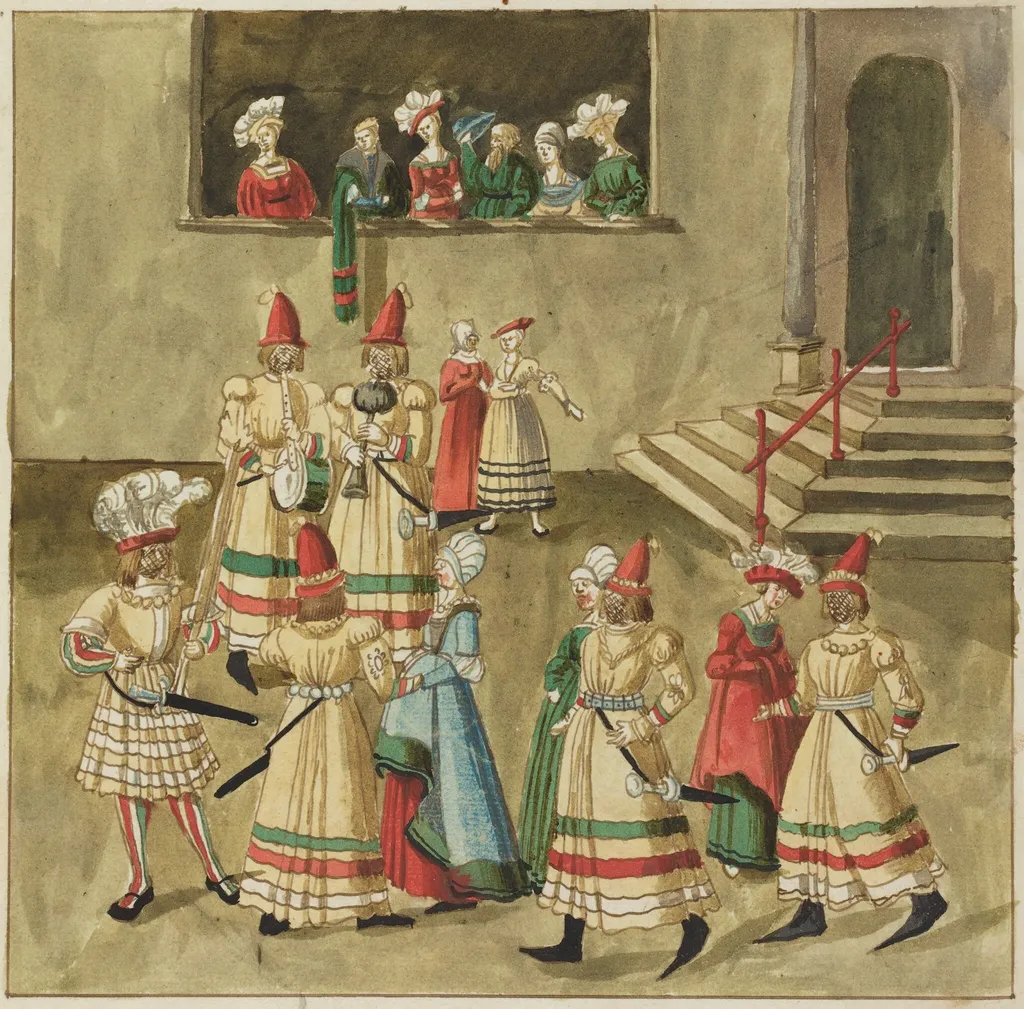
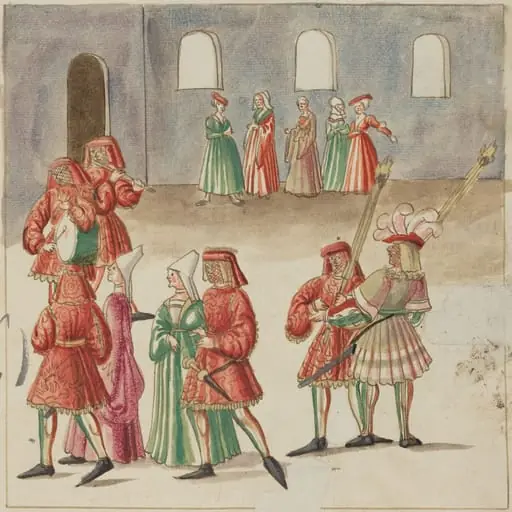
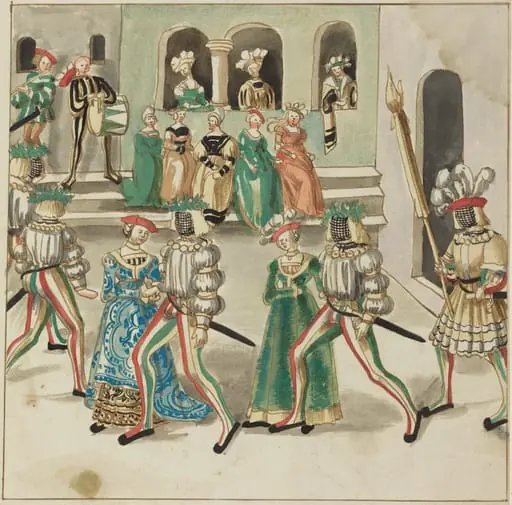
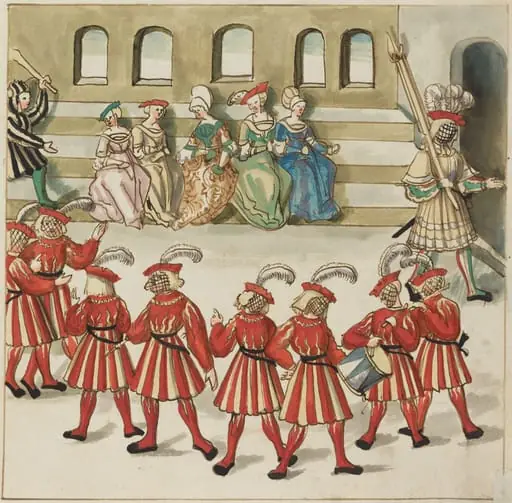
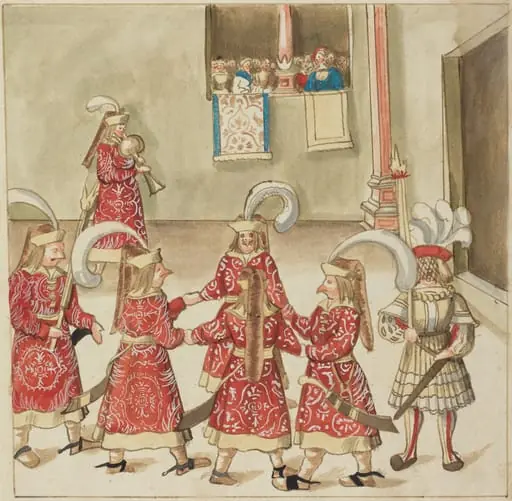
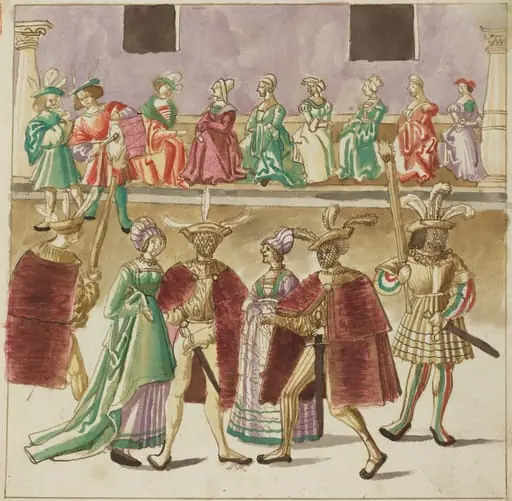
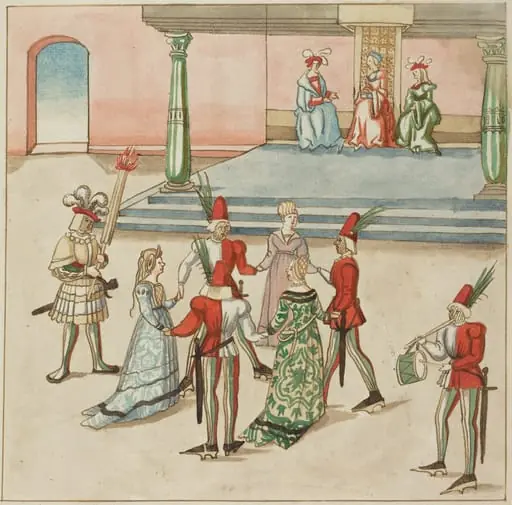
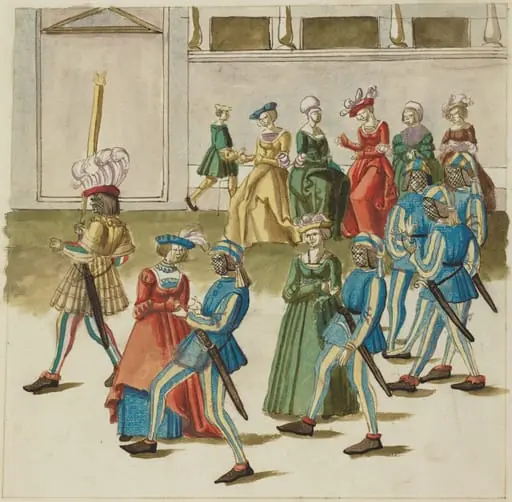
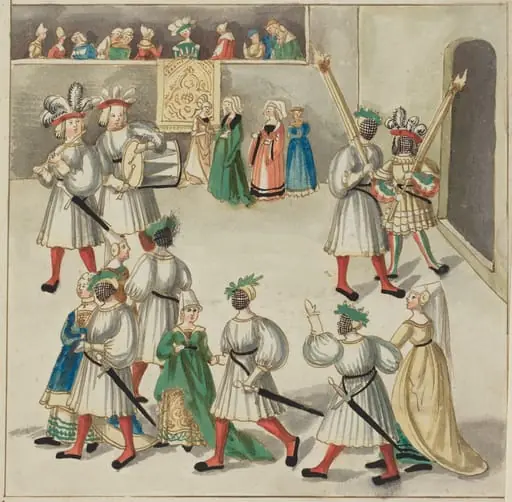
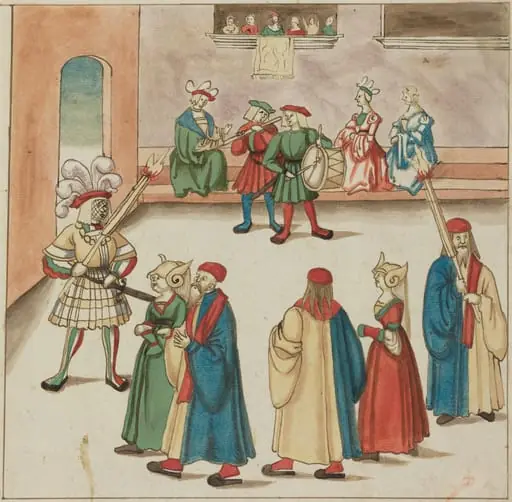
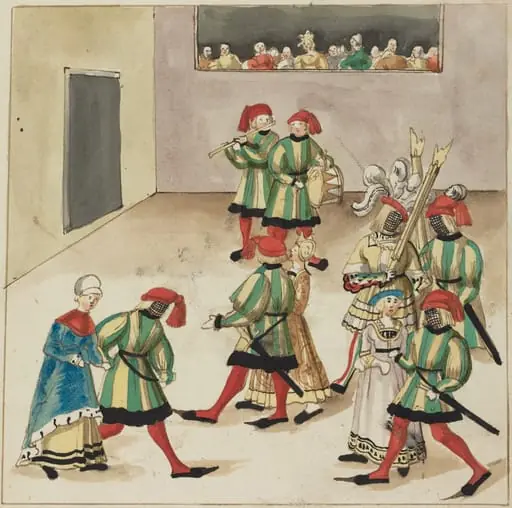
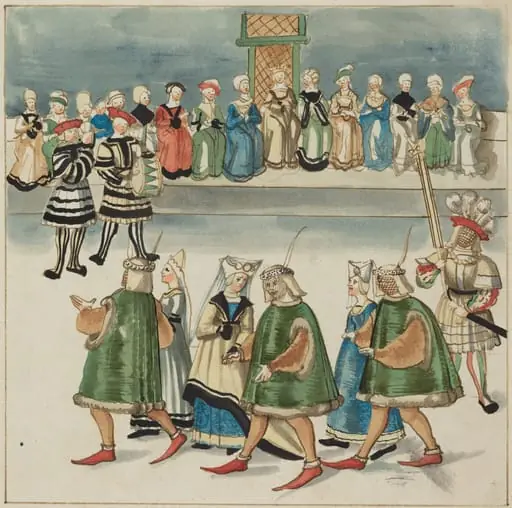
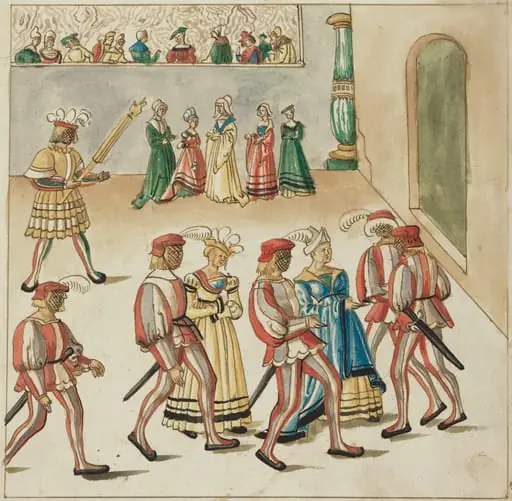
Masquerade is an ink drawing by the Renaissance artist German 16th Century. It dates from 1514 and is held in the collection of the National Gallery of Art. This pen and brown ink drawing with watercolor on laid paper depicts a bustling street scene filled with figures in elaborate costumes.
About this work
Overview
The setting includes a building with an upper window where onlookers observe the festivities below, suggesting a communal event with layered participation.
This pen and brown ink drawing with watercolor on laid paper depicts a bustling street scene filled with figures in elaborate costumes. The composition captures a public celebration, with a dense assembly of people dressed in vividly colored garments, some holding staffs or poles. The setting includes a building with an upper window where onlookers observe the festivities below, suggesting a communal event with layered participation.
Subject & Meaning
The scene appears to represent a festive masquerade or carnival, likely tied to seasonal or civic rituals of the period. Costumes—tall red hats, striped garments, and brightly dyed dresses—signal social inversion or temporary liberation from everyday norms. The presence of spectators above reinforces the performative nature of the event, hinting at themes of visibility, role-playing, and collective joy within a structured urban environment.
Technique & Style
The artist employed pen lines to define forms with crisp, energetic strokes, while watercolor was applied in flat, bold washes of red, green, and gold. Glazing techniques suggest careful layering to deepen hues without obscuring the underlying ink structure. The limited palette enhances the graphic quality of the scene, prioritizing clarity and movement over naturalistic detail, characteristic of rapid observational drawing.
History & Provenance
The drawing’s origin is not definitively recorded, but its style and subject align with 17th- or early 18th-century European carnival traditions, particularly in regions like Italy or the Low Countries. It likely served as a preparatory sketch or independent record of a public event, preserved for its lively documentation rather than as a finished commission.
Context
During the early modern period, masquerades and street festivals were common in urban centers, often tied to religious calendars or civic holidays. These events allowed temporary suspension of social hierarchies, with participants adopting disguises and engaging in public performance. Such drawings functioned as visual chronicles, capturing the transient energy of these occasions before photography or mass media.
Legacy
This work contributes to a broader tradition of observational drawings that recorded everyday spectacle in pre-industrial Europe. Its emphasis on movement, costume, and crowd dynamics influenced later genre scenes and ethnographic studies of public life. Though unsigned and undated, it remains a valuable artifact of how visual artists engaged with the rhythms of communal celebration.
Artist & collection

Artist
A German artist from the late 1500s drew lively scenes of knights clashing in parades and mock battles.

![Abraham Entertaining the Angels [verso], by German 16th Century](https://artifactworldgallery.com/img/german-16th-century--abraham-entertaining-the-angels-verso--69d1b25f4eba0a53-w320.webp)