Artwork
The Rape of Ganymede
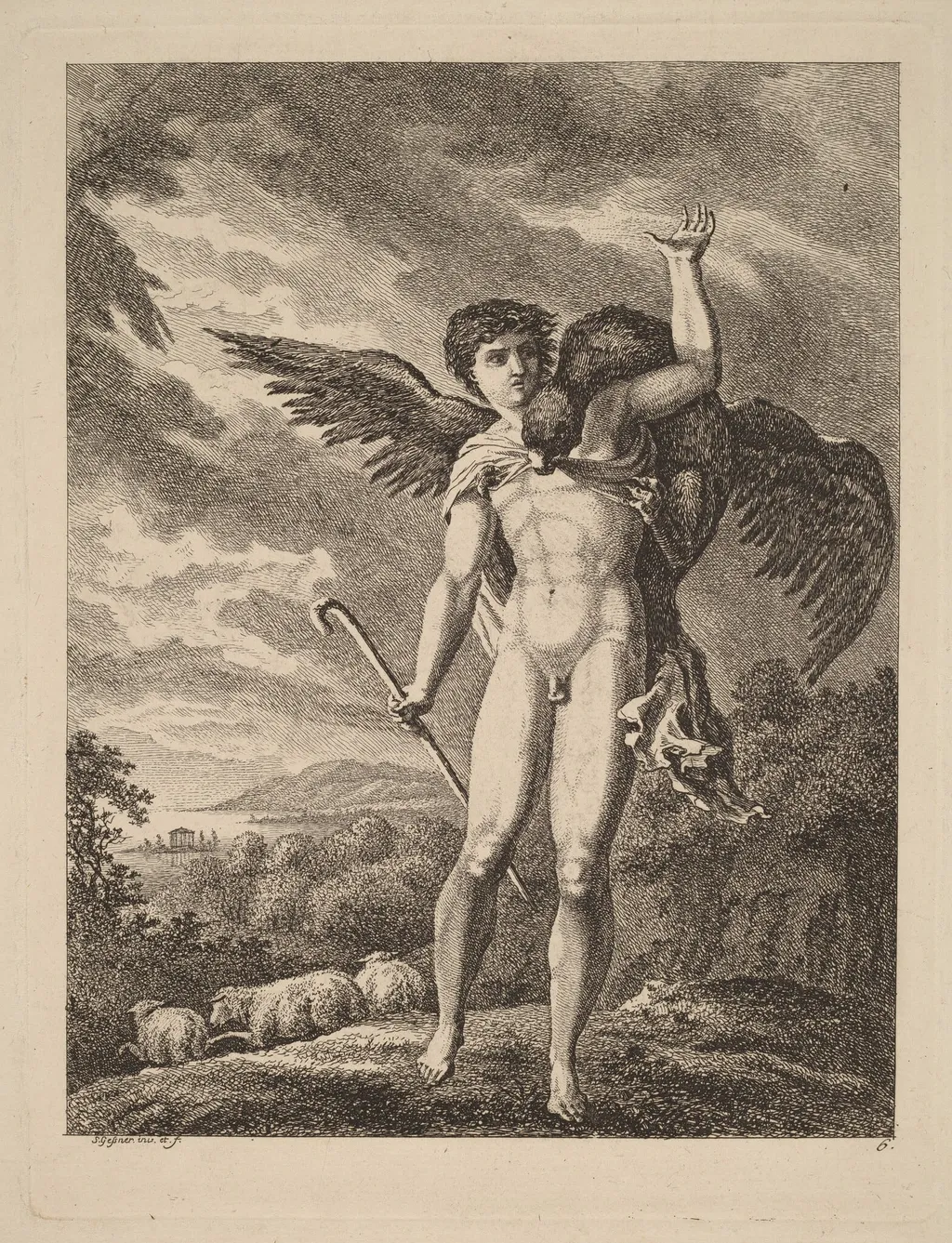
The Rape of Ganymede is an ink print by the Romanticist artist Salomon Gessner. It dates from 1770 and is held in the collection of the National Gallery of Art.
About this work
Overview
Salomon Gessner’s 1770 etching presents the mythological episode in which the youthful Ganymede is seized by an eagle and lifted skyward. Executed on laid paper, the print captures the dramatic ascent with a clear, linear composition that foregrounds the figure’s vulnerability against the bird’s powerful wings.
Subject & Meaning
The image visualizes the ancient Greek tale of Ganymede, a beautiful mortal who becomes the cup‑bearer of the gods after Zeus, in the form of an eagle, abducts him. The work reflects the era’s fascination with classical narratives, emphasizing themes of divine intervention and the transition from earthly to celestial realms.
Technique & Style
Created through traditional etching, Gessner incised the design onto a copper plate, allowing for fine, controlled lines that render both the delicate flesh of Ganymede and the textured plumage of the eagle. The use of laid paper contributes a subtle tonal quality, enhancing the depth of shadow and light within the scene.
History & Provenance
The print was produced in 1770, during the later phase of Gessner’s artistic career, when he was known for both literary and visual works. While specific ownership records are scarce, the piece has been documented in several European print collections, confirming its circulation among connoisseurs of classical subjects.
Context
Gessner’s choice of the Ganymede myth aligns with the Enlightenment’s revival of antiquity, where artists frequently revisited mythological motifs to explore human emotion and divine power. The etching medium allowed for wider dissemination of such themes, reaching an audience beyond the confines of oil painting.
Artist & collection


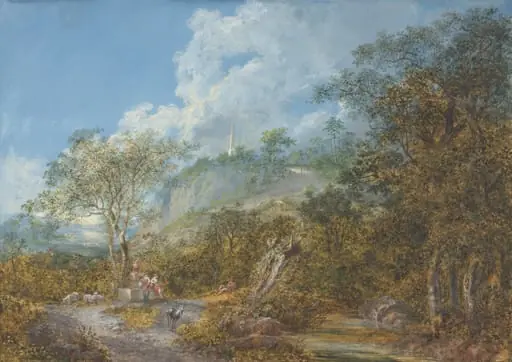 Arcadian Landscape with an Obelisk
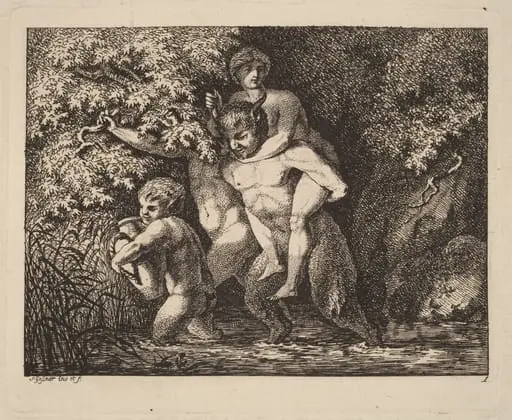 Satyr Carrying a Nymph on His Back
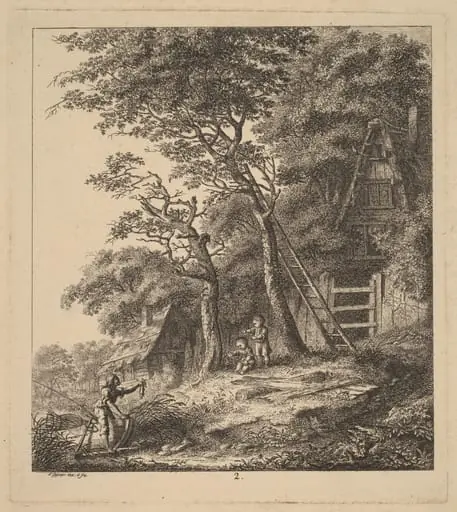 A Fisherman and Two Children in a Landscape with Thatched Cottages
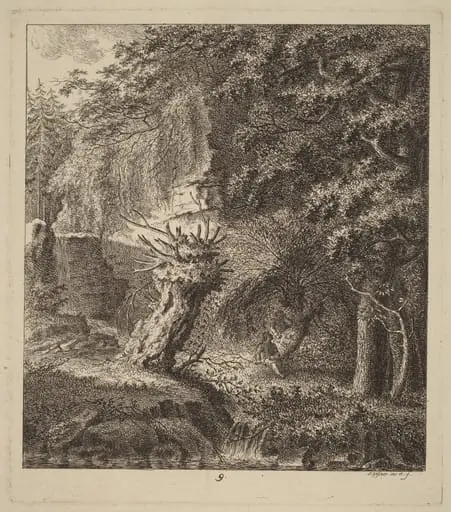 Wooded Landscape with a Pollarded Tree
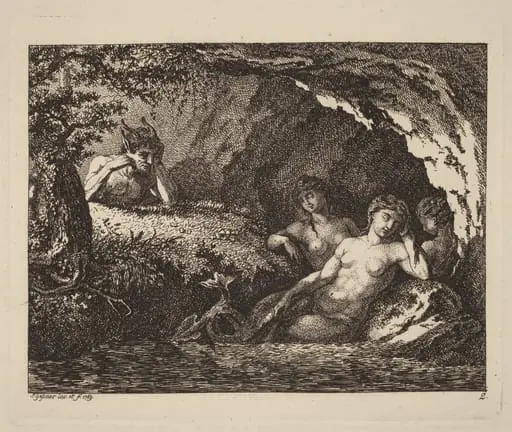 Three Sleeping Sprites with a Satyr
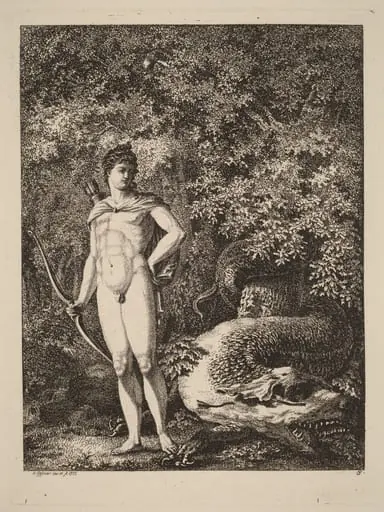 Apollo with a Bow and Dragon
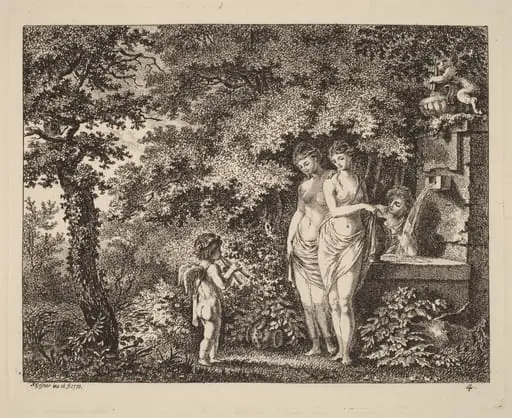 Eros with Three Girls at a Fountain
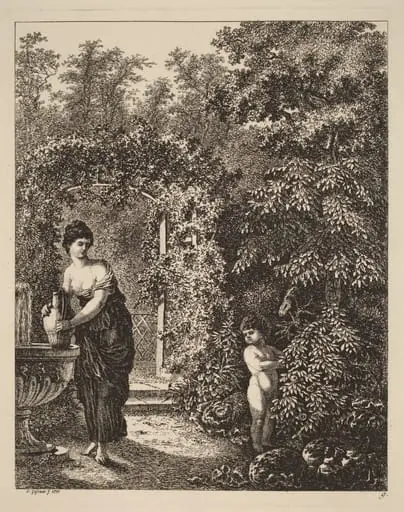 Putto Visiting a Girl at a Fountain