Artwork
Tablou „Omagiu”, semnat Ion Bitzan și Vladimir Setran.Tabloul prezintă portretul lui Nicolae Ceaușescu încadrat de tricolor în partea dreaptă sus. Restul tabloului este completat de realizările epocii socialiste. Comandat de Comitetul Municipal de Partid 1981.
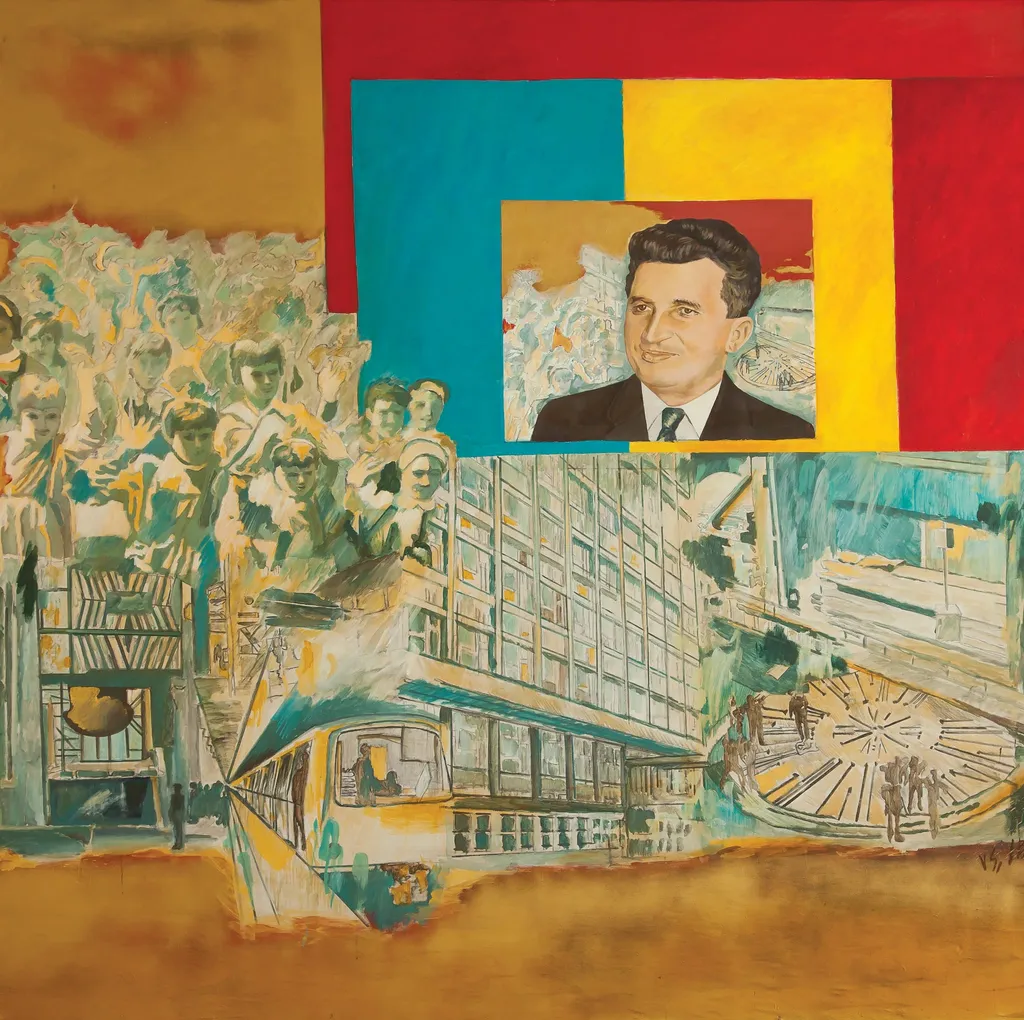
Tablou „Omagiu”, semnat Ion Bitzan și Vladimir Setran.Tabloul prezintă portretul lui Nicolae Ceaușescu încadrat de tricolor în partea dreaptă sus. Restul tabloului este completat de realizările epocii socialiste. Comandat de Comitetul Municipal de Partid 1981. is a print by Vladimir Setran Ion Bitzan. It is held in the collection of the National Museum of Romanian History.
About this work
Overview
A painted portrait of Nicolae Ceaușescu, commissioned in 1981 by the Municipal Party Committee, features the leader framed by the national tricolor in the upper right. The surrounding space is filled with imagery representing industrial, agricultural, and cultural achievements of the socialist era, presenting a unified visual narrative of state-sanctioned progress.
Subject & Meaning
The portrait positions Ceaușescu as the central figure of national identity, flanked by the flag to symbolize loyalty and ideological unity. Surrounding scenes of factories, farms, and collective labor serve to link his leadership directly to the regime’s claimed successes, reinforcing a narrative of stability and advancement under his rule.
Technique & Style
The work employs a realistic, formal style typical of state-commissioned art of the period. Figures are rendered with precise detail, compositions are symmetrical, and lighting is even to avoid dramatic tension. The integration of symbolic elements—machinery, crops, and architecture—is carefully arranged to convey order and collective achievement.
History & Provenance
Commissioned in 1981 by the Bucharest Municipal Party Committee, the painting was likely displayed in official buildings or public institutions. Signed by Ion Bitzan and Vladimir Setran, both artists active in the state art system, it reflects the institutional control over visual representation during the late Ceaușescu years.
Context
Created during a period of intensifying personality cult and economic hardship, the painting functioned as propaganda, masking systemic decline with imagery of prosperity. Similar works proliferated across Romania, using art to legitimize authority and suppress dissent through visual conformity.
Legacy
After the 1989 revolution, such works were removed from public view, often stored or discarded. Today, they survive primarily as historical artifacts, offering insight into how authoritarian regimes employed art to construct and sustain ideological narratives through controlled imagery.
Artist & collection
Artist
This duo painted murals for the regime by day and slipped subversive details into them by night.

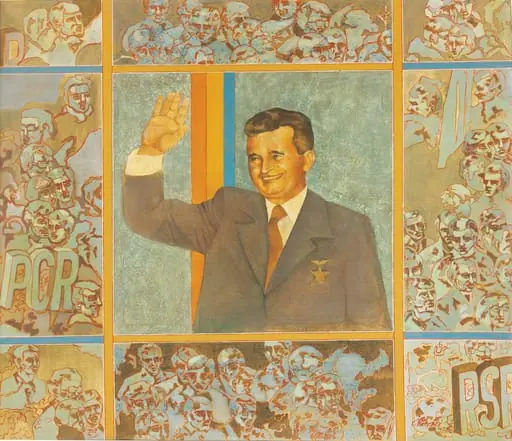 Tablou, ulei pe pânză, „Portret Nicolae Ceaușescu”, semnat în partea dreaptă jos C.Macavei și datat 1978. Tablou împărțit în mai multe registre, în plan central Nicolae Ceaușescu salutând oamenii muncii din celelalte registre. Comandat și oferit de Comitetul Județean de Partid Ilfov, 23 ianuarie 1978.
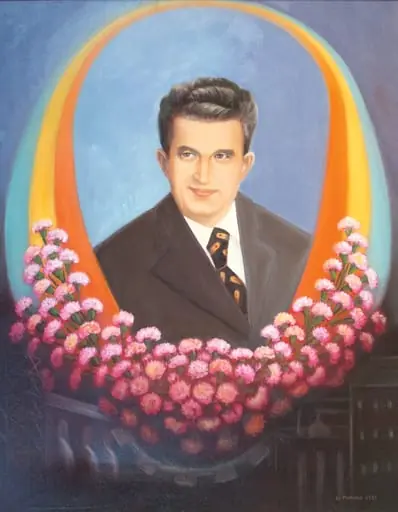 Tablou „Omagiu” semnat N. Porumb și datat în partea dreaptă jos. Tabloul îl reprezintă pe Nicolae Ceaușescu cu tricolorul în spate sub formă de curcubeu; în partea de jos a tabloului o ”mare” de garoafe și realizările socialismului. Comandat de Comitetul Județean de Partid Sibiu și dăruit lui Nicolae Ceaușescu cu ocazia zilie de naștere (ianuarie 1989).
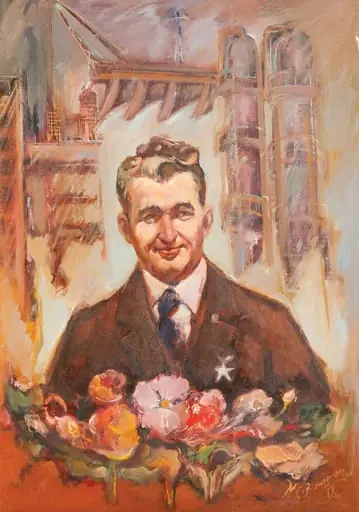 Tablou, ulei pe pânză, „Portret Nicolae Ceaușescu”, semnat C. Radovan și datat în partea dreaptă jos 1978. Nicolae Ceaușescu este reprezentat înt-o atitudine jovială, în piept are însemnul ”Erou al Republicii Socialiste România”. Pe fundal realizări ale regimului comunist. Oferit de Comitetul Județean de Partid Timiș, 22 ianuarie 1978.
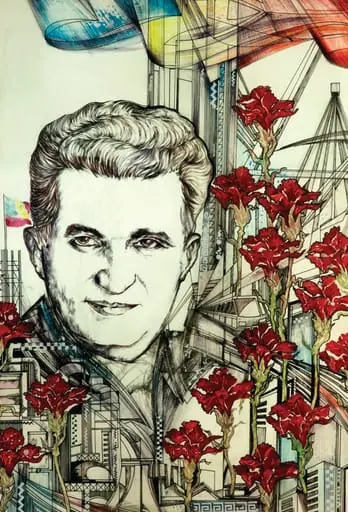 Grafică „Epoca Nicolae Ceaușescu”, tablou atribuit lui Lucian Cociuba. Tabloul îl prezintă pe Nicolae Ceaușescu alături de marile reralizări ale Epocii Socialiste; realizări ornate cu garoafe roșii și tricolor. Comandat de Comitetul Județean de Partid Arad (1988).
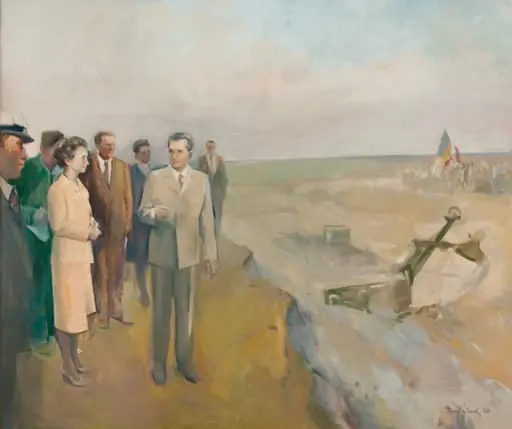 Tablou, ”Omagiu”, semnat Eugen Palade și datat dreapta jos.Tabloul îi reprezintă pe Nicolae și Elena Ceaușescu alături de membrii de partid în vizită de lucru la șantierul Canalul Dunăre București. Comandat de Comitetul Municipal de Partid București, 1988.
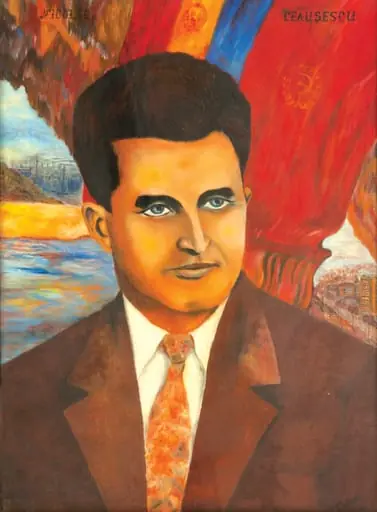 Tablou, ulei pe pânză, ”Portret Nicolae Ceaușescu”, nesemnat, atribuit lui Teodor Istrati. Portret Nicolae Ceaușescu pe fundal steagul cu stema R.S.R. și steagul cu sigla P.C.R., elemente de peisaj urban, inscripție cu majuscule în partea de sus ”NICOLAE CEAUȘESCU”. Oferit de autor lui Nicolae Ceaușescu, București, 25 iunie 1971.
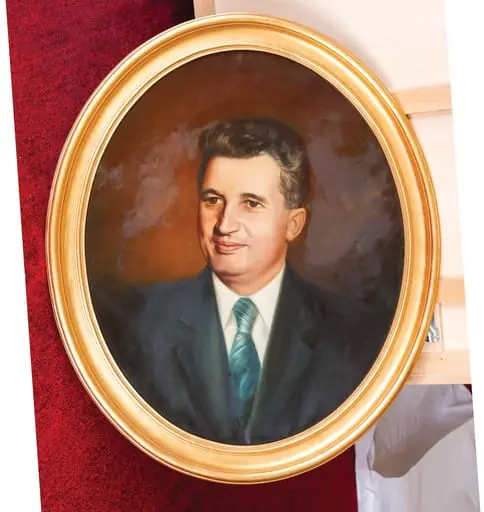 Tablou, ulei pe pânză, portret Nicolae Ceaușescu, atribuit Corneliu Brudașcu. Oferit de Uniunea Artiștilor Plastici (1979).
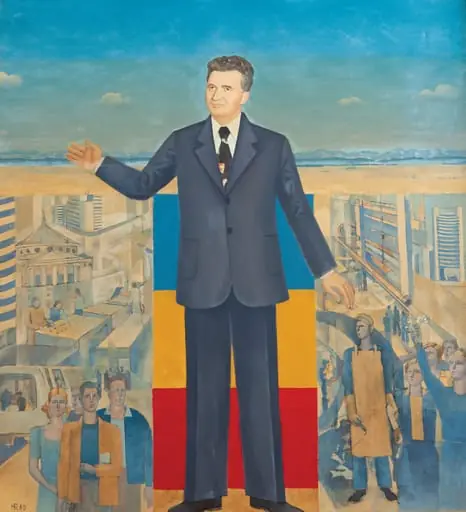 Tablou portret Nicolae Ceaușescu, semnat Mihai Rusu și datat în partea stângă jos. Tabloul îl reprezintă pe Nicolae Ceaușescu în postură salutară, în spatele său este tricolorul; în stânga și în dreapta tabloului sunt ilustrați oamenii miuncii din București. Comandat de Comitetul Municipal de Partid București în anul 1980 și oferit lui Nicolae Ceaușescu cu ocazia aniversării zilei de naștere (ianuarie 1981).
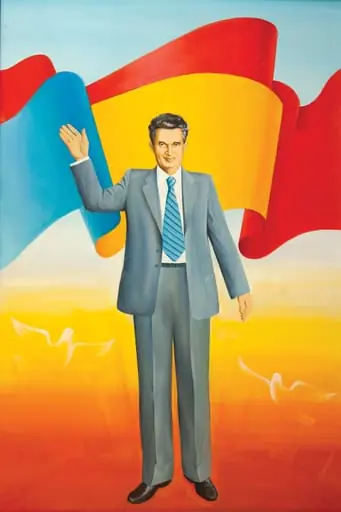 Tablou „ Ceaușescu Pace”, semnat M. Ceacîru și datat dreapta jos. Tabloul îl prezintă pe Nicolae Ceaușescu salutând, în spatele său flutură tricolorul și stegul PCR, în stânga și în dreapta sa doi porumbei albi în zbor.Comandat de Comitetul Județean de Partid Neamț (1989)
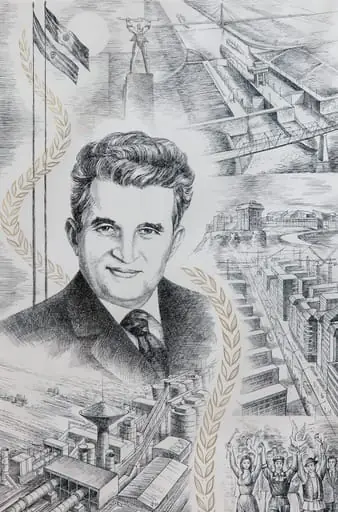 Tablou, tuș pe hârtie, „Ctitorul”, atribuit lui Levente Csutak. Tabloul îl prezintă pe Nicolae Ceaușescu și realizările sale - Canalul Dunăre Marea Neagră, Combinatul Petrochimic Midia Năvodari, Prometeu (statuia de la Barajul Vidraru), modernizarea orașelor - construcția de blocuri de locuințe pentru oamenii muncii. În partea dreaptă jos este reprezentat un grup de oameni entuziaști. Comandat și oferit de Comitetul Județean de Partid Brașov (1983).
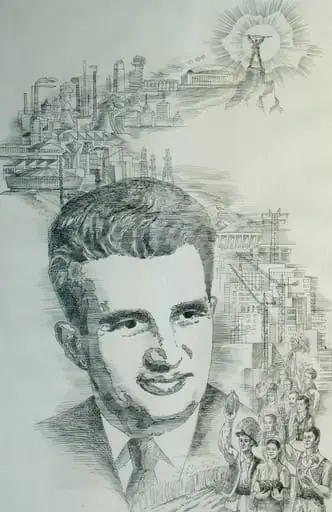 Tablou, desen cu tuș, portret Nicolae Ceaușescu pe fundal industrial, nesemnat, nedatat; atribuit lui Levente Csutak. Fundalul industrial este prezentat sub forma unui drum al realizărilor socialismului - la baza drumului stau oamenii muncii, continuă cu realizările: fabrici, uzine, combinate, hidrocentrala de la Porțile de Fier, clădirea Circului de Stat, Sala Palatului, statuia lui Prometeu de la Barajul Vidraru este luminată de un soare în formă de harta RSR. Deși nu este o realizare a socialismului este reprezentată și Coloana Infinitului a lui Brâncuși. Oferit de Comitetul Județean de Partid Brașov (1983).
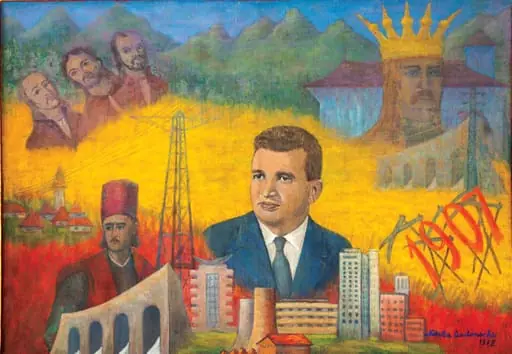 Tablou, ulei pe pânză, „Nicolae Ceaușescu și scene din istoria poporului”, semnat Natalia Gadonschi și datat 1972 în partea dreaptă jos. Nicolae Ceaușescu este reprezentat înconjurat de personalități și evenimenta cu trecut revoluționar: Horia, Cloșca și Crișan, Tudor Vladimirescu, Răscoala de la 1907, Ștefan cel Mare (în fața uneia din ctitoriile sale). Nicolae Ceaușescu este reprezentat ca un ctitor al socialismului. Tablou oferit de Natalia și Nicolae Gadonschi – Țepeș, cu ocazia aniversării zilei de naștere al lui Nicolae Ceaușescu, ianuarie 1978.
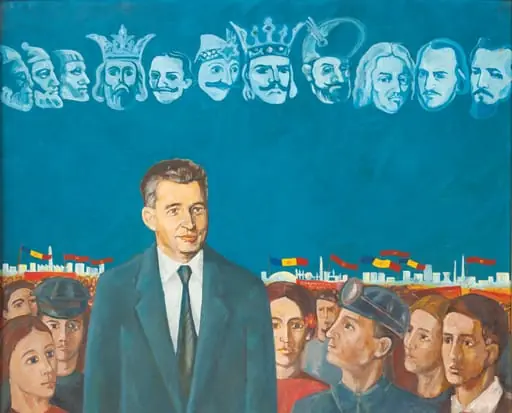 Tablou, ulei pe pânză, „Omagiu”, nesemnat. Nicolae Ceaușescu este prezentat în mijlocul oamenilor muncii vegheat de ”fantomele” eroilor neamului : Burebista, Decebal, Traian, Mircea cel Bătrân, Iancu de Hunedoara, Vlad Țepeș, Ștefan cel Mare, Mihai Viteazul, Dimitrie Cantemir, Nicolae Bălcescu, Alexandru Ioan Cuza (de la stânga la dreapta). Comandat și oferit de Comitetul Județean de Partid Tulcea, 22 ianuarie 1978.
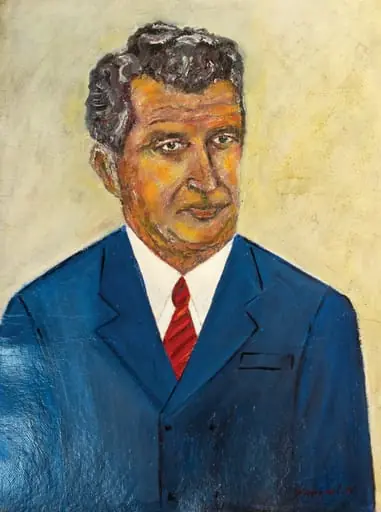 Tablou, ulei pe carton,”Nicolae Ceaușescu”, semnat în pertea dreaptă jos Savopol N., nedatat. Oferit cadou de autor, Nicola Savopol, lui Nicolae Ceaușescu cu ocazia zilei de naștere, București.
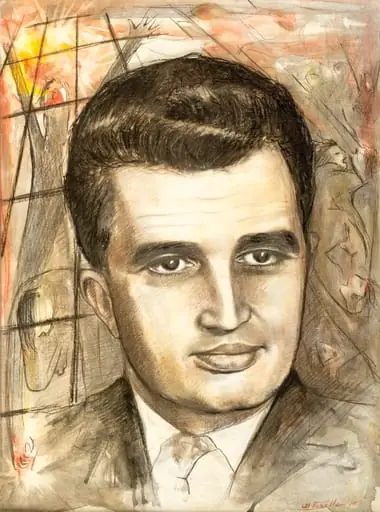 Portret Nicolae Ceaușescu, tablou realixat prin tehnică mixtă, semnat Al. Torella și datat 1975 în partea dreaptă jos.A fost oferit lui Nicolae Ceaușescu de delegația italiană condusă de Benito Craxi cu ocazia vizitei în România din noiembrie 1978
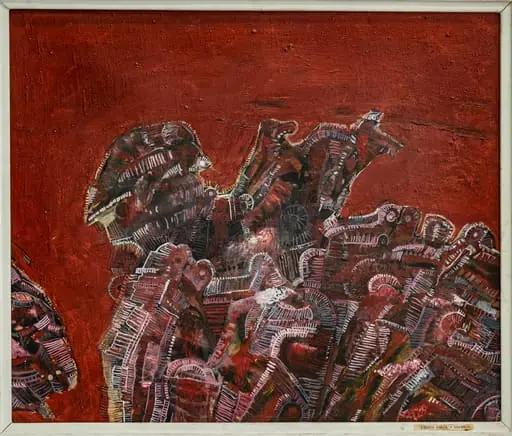 Lupta
Lupta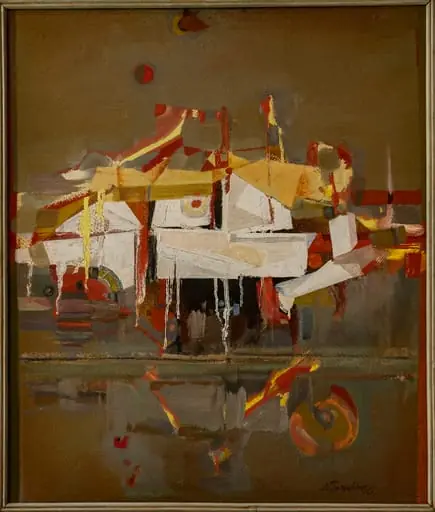 Oraș sudic
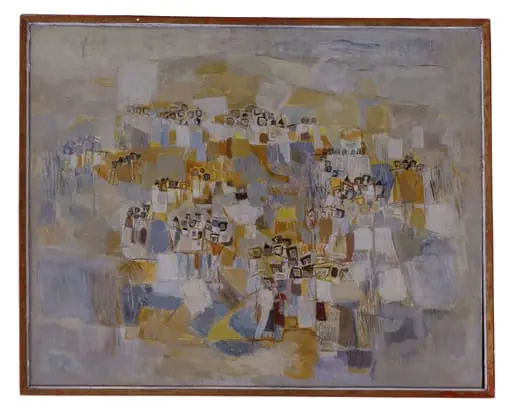 Târg
Târg