Artwork
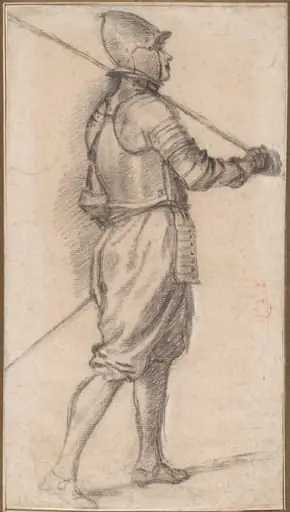
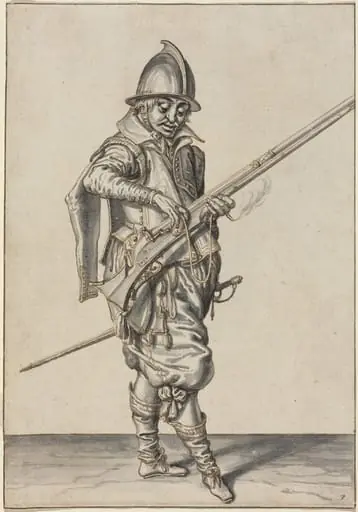
Elegantly Dressed Soldier Tamping His Caliver
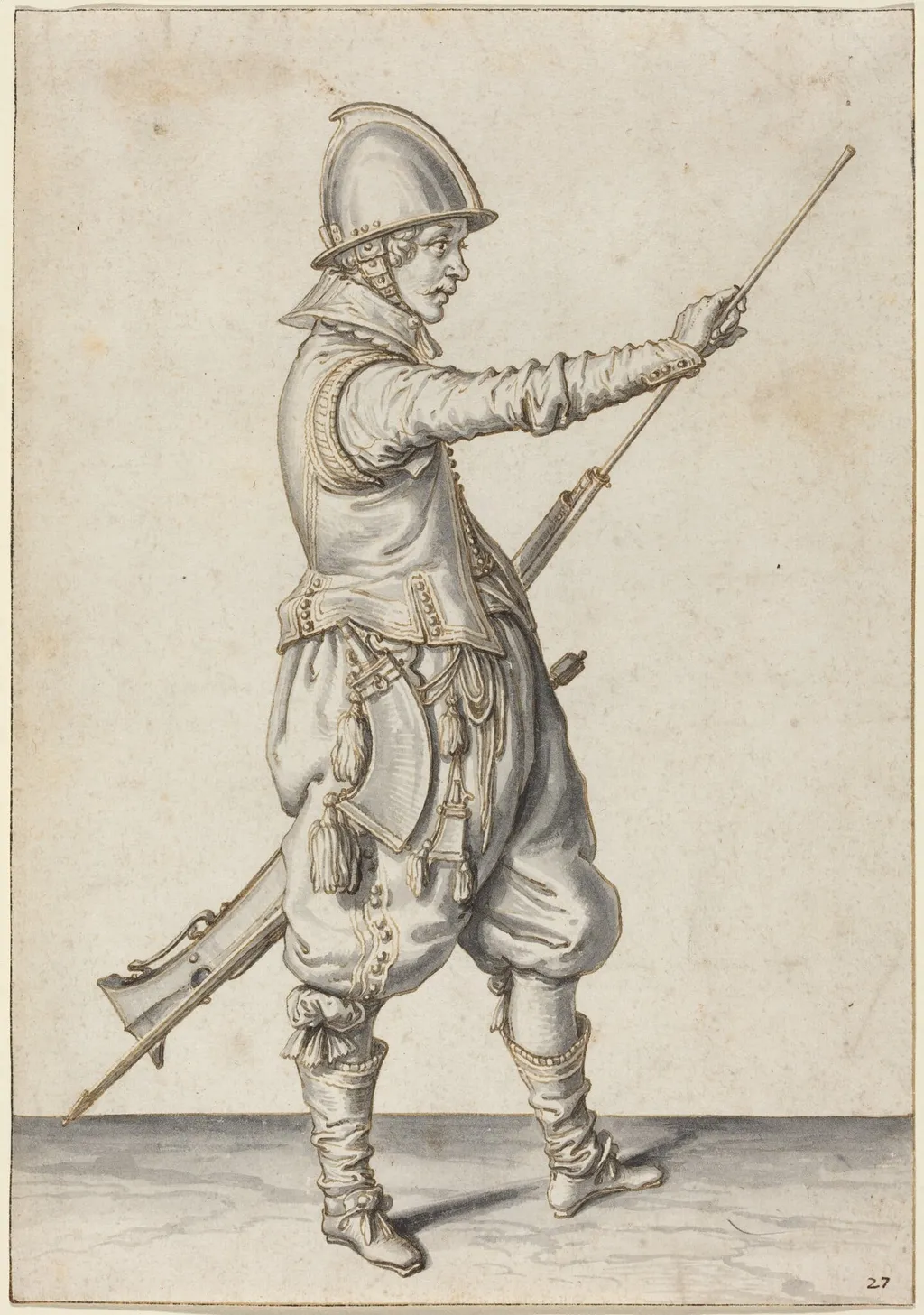
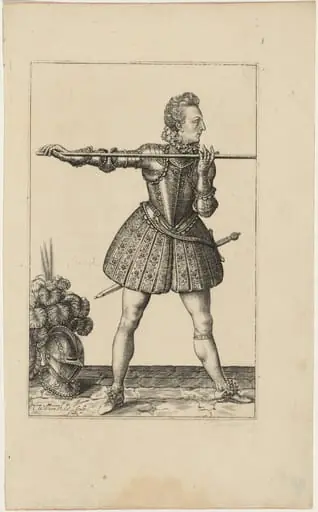
Elegantly Dressed Soldier Tamping His Caliver is an ink drawing by the Renaissance artist Jacques de Gheyn II. It dates from 1597 and is held in the collection of the National Gallery of Art.
About this work
The soldier's clothes and gun are detailed, which suggests the artist paid close attention to everyday life.
The painting shows a soldier in fancy clothes loading his gun.
He's dressed up, but he's still doing a practical task.
The soldier's clothes and gun are detailed, which suggests the artist paid close attention to everyday life.
The artist likely drew this scene from life or from stories about soldiers.
This kind of drawing was common in the 16th century, and it often showed people doing ordinary things.
To learn more about this style, look up the technique: cross-hatching.
Overview
Elegantly Dressed Soldier Tamping His Caliver, a pen and brown ink drawing with gray wash on laid paper, is attributed to Jacques de Gheyn II and dated to circa 1597. It depicts a soldier engaged in the practical task of loading his caliver while attire in elaborate clothing.
Subject & Meaning
The contrast between the soldier's refined attire and his mundane activity highlights the intersection of military life with everyday realities. The attention to detail in both the clothing and the caliver suggests an emphasis on observational accuracy, potentially drawn from life or contemporary accounts of soldiers.
Technique & Style
The drawing showcases de Gheyn II's use of pen and brown ink with gray wash, techniques common in 16th-century Dutch draughtsmanship. The level of detail, particularly in textures and forms, may imply the use of intricate hatching methods, such as cross-hatching, to achieve depth and dimensionality.
History & Provenance
Created circa 1597, this work is characteristic of the period's penchant for depicting ordinary activities. However, specific details regarding its commission, early ownership, or exhibition history are not provided in the available information.
Context
This drawing fits within the 16th-century artistic trend of focusing on everyday life and occupations. It reflects the era's interest in detailed, realistic representations of common subjects, bridging military and civilian themes.
Legacy
While the broader impact or influence of this specific drawing on subsequent art movements is not detailed, it contributes to the understanding of de Gheyn II's oeuvre and the broader tradition of 16th-century Dutch draughtsmanship focusing on daily life and military themes.
Artist & collection


![Witchcraft Scene with a Vampire [recto], by Jacques de Gheyn II](https://artifactworldgallery.com/img/jacques-de-gheyn-ii--witchcraft-scene-with-a-vampire-recto--a791adbd7e97db30-w320.webp)