Artwork
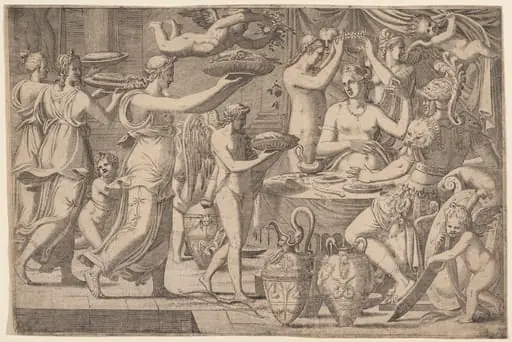
Banquet of the Gods at the Wedding of Peleus and Thetis
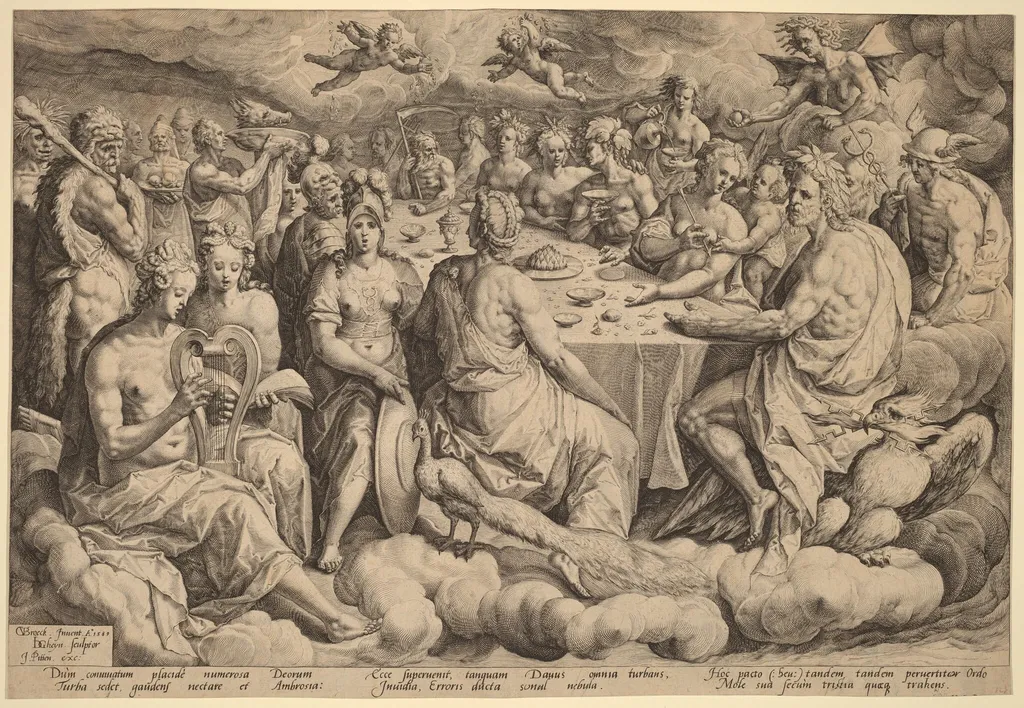
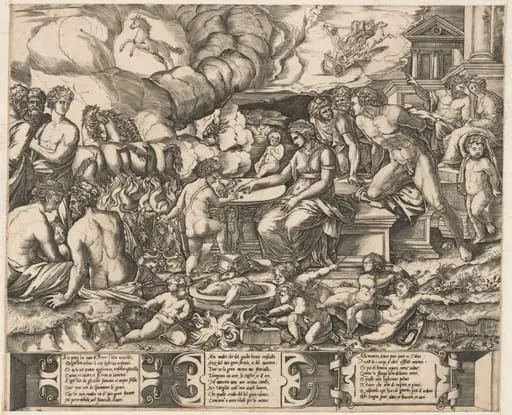
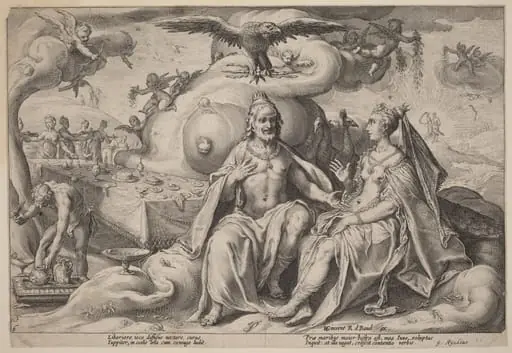
Banquet of the Gods at the Wedding of Peleus and Thetis is an ink print by the Renaissance artist Jacques de Gheyn II. It dates from 1589 and is held in the collection of the National Gallery of Art.
About this work
Overview
Jacques de Gheyn II’s print, executed in 1589, presents a bustling banquet scene that celebrates the mythic marriage of the mortal hero Peleus and the sea‑nymph Thetis. Rendered as an engraving on laid paper, the composition fills the picture plane with a multitude of deities gathered around a long table, their varied attire and gestures suggesting a festive, ceremonial atmosphere.
Subject & Meaning
The gathering of gods in human‑like revelry reflects Renaissance interests in antiquity and the moral symbolism of marriage as a cosmic order.
The work visualizes the legendary wedding attended by the Olympian gods, a narrative drawn from classical mythology. Central figures such as Jupiter preside over the feast, while Apollo is shown playing a lute, underscoring the harmony and divine approval surrounding the union. The gathering of gods in human‑like revelry reflects Renaissance interests in antiquity and the moral symbolism of marriage as a cosmic order.
Technique & Style
De Gheyn employs dense cross‑hatching to model forms, using fine, intersecting lines to suggest the folds of robes, the sheen of armor, and the depth of the interior space. The contrast between heavily inked shadows and lighter areas creates a dramatic chiaroscuro effect, typical of Northern European printmaking in the late sixteenth century. The intricate line work conveys texture and movement without reliance on color.
History & Provenance
The engraving was produced in the artist’s workshop in the Netherlands and later entered the collection of the National Gallery of Art in Washington, D.C., where it is currently displayed. Its survival on laid paper attests to the durability of de Gheyn’s technique and the continued interest of collectors in prints that illustrate classical themes.
Context
Created during the late Renaissance, the print reflects the period’s fascination with classical literature and the integration of myth into visual art. De Gheyn, known for his work as a court engraver, often combined detailed observation with allegorical content, catering to a learned audience that prized both technical skill and erudite subject matter.
Artist & collection


![Witchcraft Scene with a Vampire [recto], by Jacques de Gheyn II](https://artifactworldgallery.com/img/jacques-de-gheyn-ii--witchcraft-scene-with-a-vampire-recto--a791adbd7e97db30-w320.webp)