Artwork
Head of Medusa
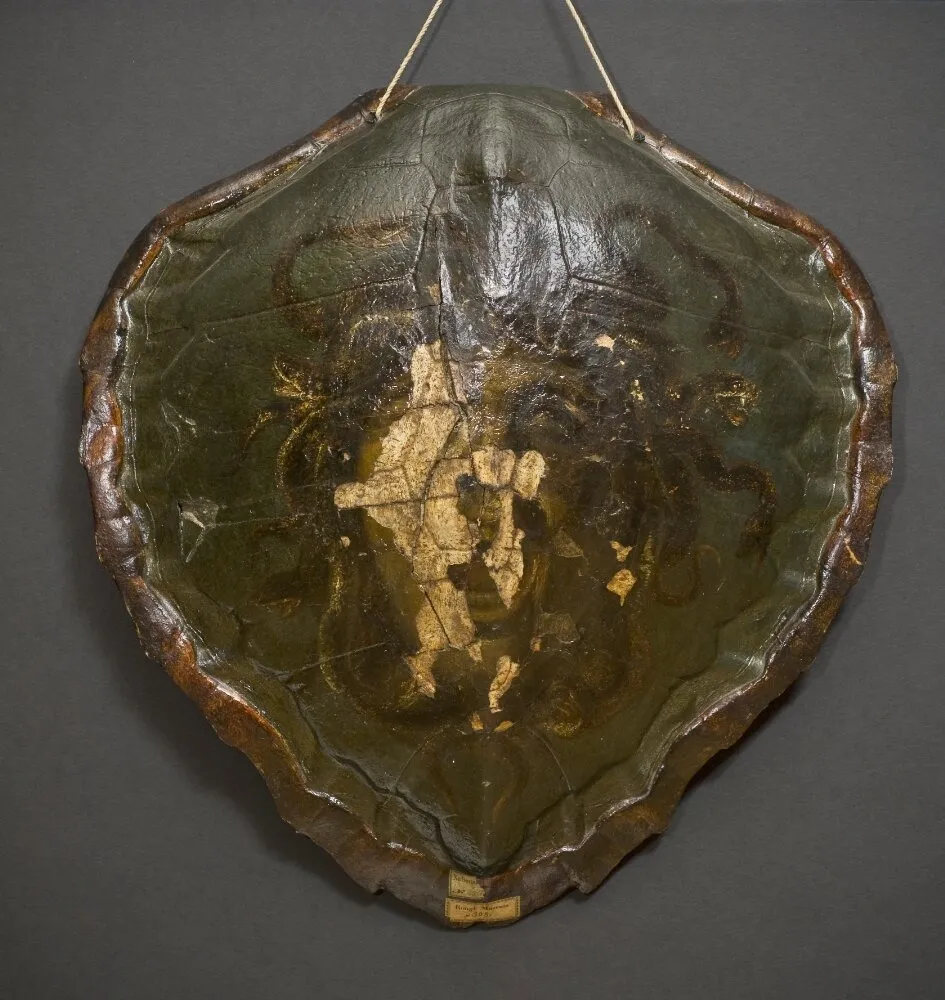
Head of Medusa is an unspecified painting by the Barbizon school artist Giacinto Calandrucci. It dates from 1686 and is held in the collection of the Nationalmuseum.
About this work
Overview
Created circa 1686 by the Sicilian-born Baroque painter Giacinto Calandrucci, the work presents a close‑up of the mythic Gorgon’s severed head. Executed in oil on canvas, it now belongs to the collection of Sweden’s Nationalmuseum and exemplifies the artist’s skill in rendering dramatic narrative subjects.
Subject & Meaning
The composition focuses on Medusa, the legendary figure whose hair is transformed into writhing snakes. Her expression is fierce and contorted, conveying the lethal power attributed to her gaze in Greek myth, while the isolated portrait emphasizes the terror and fascination surrounding the creature.
Technique & Style
Calandrucci employs a restrained, dark palette that heightens the three‑dimensionality of the figure through chiaroscuro shading. The rendering of the snakes and facial features shows a meticulous attention to anatomical detail, reflecting the classical realism favored by Baroque artists who sought to merge drama with naturalistic observation.
History & Provenance
After training in Palermo, Calandrucci moved to Rome where he assisted leading artists such as Carlo Maratta and Giuseppe Passeri on large decorative schemes for aristocratic palaces. The Medusa head, likely produced as an independent study or decorative panel, entered the Nationalmuseum’s holdings in the 20th century, though the exact acquisition date remains undocumented.
Context
The painting aligns with Calandrucci’s broader oeuvre of mythological and allegorical subjects, a genre popular among Roman patrons for its decorative and didactic potential. By isolating a single mythic figure, the work reflects the Baroque interest in intense emotional moments and the theatrical potential of classical narratives.
Artist & collection
Artist
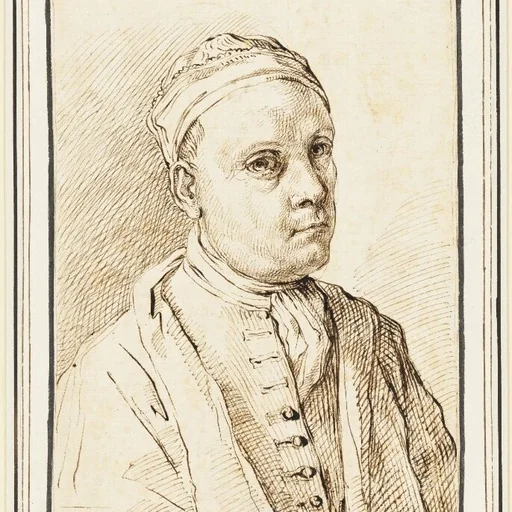
Giacinto Calandrucci (20 April 1646 – 22 February 1707) was an Italian painter of the Baroque period.

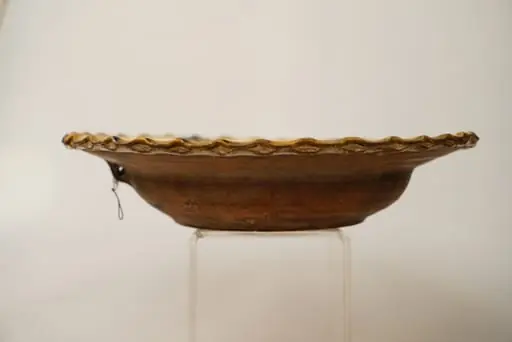 Farfurie adâncă cu buza evazată și muchia buzei ondulată; este acoperită pe suprafața interioară cu un strat de angobă albă peste care este pictat cu cornul și cu pensula decorul format din motive florale și vegetale stilizate și motive geometrice dispuse astfel: registrul decorativ de pe fundul farfuriei conține o tulpină cu cinci flori rotunde galbene cu contur albastru, cu petale mici realizate din linii drepte și mijlocul dintr-un cerc cu două linii intersectate în formă de X. Decorul din această zonă este completat cu trei flori stilizate asemănătoare celor care formează buchetul, și cu grupuri de câte patru linii hașurate intersectat, motive care se regăsesc și pe buza farfuriei, împreună cu motivul brăduțului, realizat cu linii galbene și albastre. Muchia buzei este marcată cu o dungă galbenă. Suprafața ornamentată a farfuriei este acoperită cu un strat de smalț transparent. Cromatica: alb, albastru, galben.
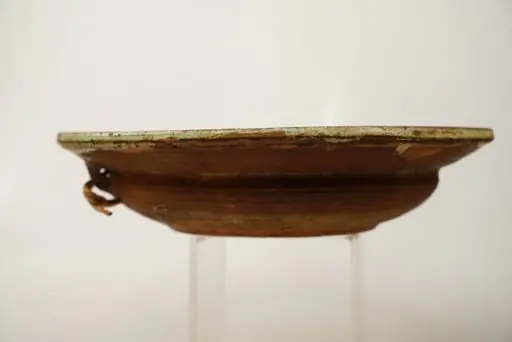 Farfurie adâncă cu buză dreaptă evazată; este acoperită pe suprafața interioară cu un strat de angobă albă peste care este pictat cu cornul decorul monocromatic format din motive florale și vegetale stilizate, dispuse astfel: centrul farfuriei conține un buchet format din trei flori mari rotunde decorate cu linii mici drepte și cu puncte, din doi boboci și o floare de lalea și din frunze mici. Registrul deorativ marginal de pe buza farfuriei conține opt motive aproximativ identice, formate dintr-o linie în formă de S decorată cu puncte și linii mici ușor curbe, sugerând niște frunze. Linii circulare simple și o linie circulară ondulată decorează muchia buzei și bordura interioară a farfuriei. Suprafața ornamentată a farfuriei este acoperită cu un strat de smalț transparent. Cromatica: alb, albastru.
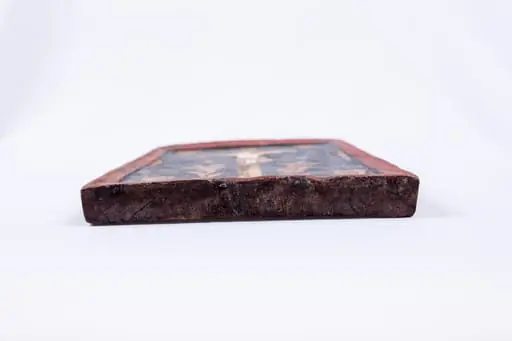 Mântuitorul Iisus Hristos, fiind răstignit pe Cruce, are în dreapta și în stânga două lujere înalte, elemente fitomorfice, înlocuind pe ucenicul cel iubit, care a stat lipit de pieptul Învățătorului, la Cina cea de Taină, mai precis, pe Sfântul Apostol și Evanghelist Ioan Teologul, Evanghelistul Iubirii și pe Maica Domnului Îndurerată, Jalnică și Plângătoare. În registrul superior, îndepărtat sunt simbolurile astrale: soarele, deasupra lujerului și florii Maicii Domnului, lujerului și florii Sfântului Ioan. Fondul icoanei este negru. Cromatica este armonioasă, dar foarte săracă: roșu vermillon, ocru, crem, bej, alb, negru. Inscripția din româno-chirilică se traduce IC XC Iisus Hristos.
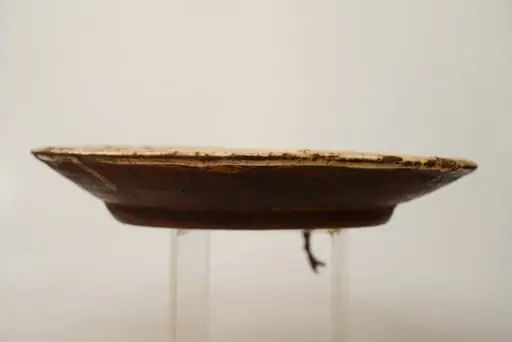 Farfurie semi-adâncă, cu buza dreaptă evazată; suprafața interioară este acoperită cu un strat de angobă albă, peste care este pictat cu cornul și cu pensula decorul format din motive florale și geometrice, dispuse astfel: registrul decorativ de pe fundul farfuriei conține, încadrat într-un cerc format dintr-o linie albastră dublă, un buchet desenat cu contur subțire maro, format dintr-o floare centrală de culoare maro, doi boboci galbeni la bază, o floare cu petale alungite, în partea superioară a buchetului și din frunze verzi. Registrul decorativ marginal de pe buza farfuriei, marcat de două linii circulare albastre, conține trei flori de lalea de culoare galbenă cu două frunze verzi, separate de câte un motiv format din șase linii maro subțiri, hașurate intersectat. Suprafața ornamentată a farfuriei este acoperită cu un strat de smalț transparent. Cromatica: alb, galben, verde, maro.
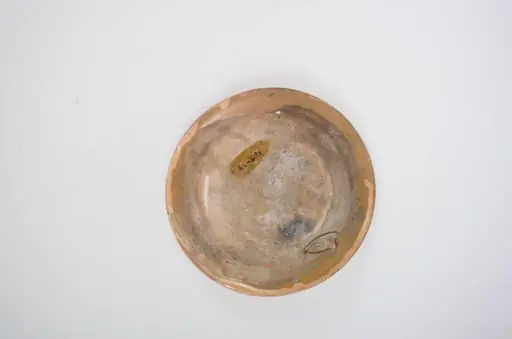 Blid de formă tronconică cu buza îngustă, smălțuit, cu decor floral stilizat amplasat pe fund și motive geometrice formate din două cercuri poziționate la baza buzei și perimetral, la partea interioară a fundului. Cromatică: fond: cărămiziu; decor: alb; verde; maro deschis.
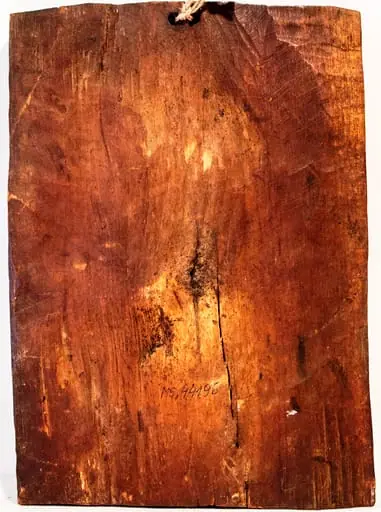 Suportul este rudimentar, inegal, cu defecte vizibile, profunde, cu o crăpătură verticală. Conturul reprezintă schematic pe Maica Domnului cu Pruncul. Trăsăturile sunt reduse la esențial(ochi, sprâncene, nas, gură), mâini, conturul corpului.Aureola trasată cu un instrument este un element disonant în contrast cu restul ansamblului.La urechea Maicii este săpată a floare mică, sub formă de cercel.Pruncul este redat înfășat, cu corpul fusiform, cu o mână supradimensionată în mâna Maicii. Aceasta este înveșmântată cu roșu. Corpul Pruncului este vrâstat cu benzi, sugerând înfășarea. Părul este negru, scurt, ochii cu pupilele negre.Pe marginea icoanei este incizată o linie sbțire sub formă de chenar, iar fondul este bleumarin înstelat cu steluțe liniare cu centrul roșu.Aureole pictate cu galben. Impresia de ansamblu este aceea a unui desen suprarealist. Icoana a fost restaurată, culorile fiind accentuate.
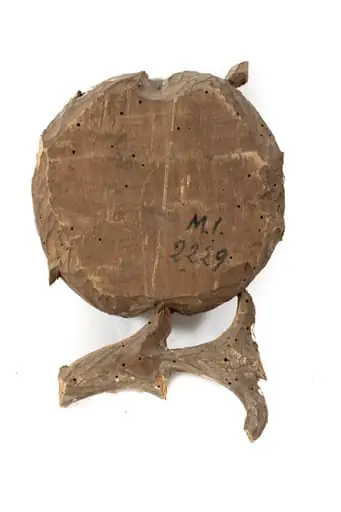 Naum
Naum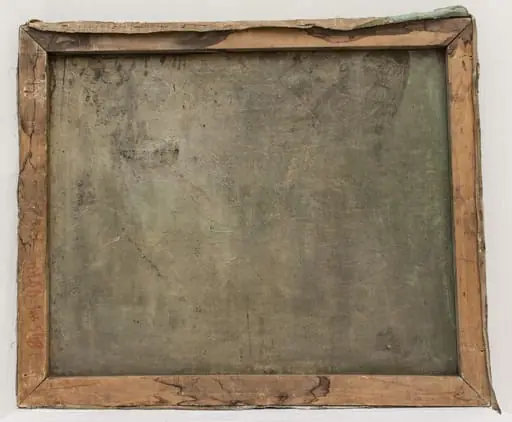 Portret de femeie
 Peisaj cu pomi și case
 Icoaceil
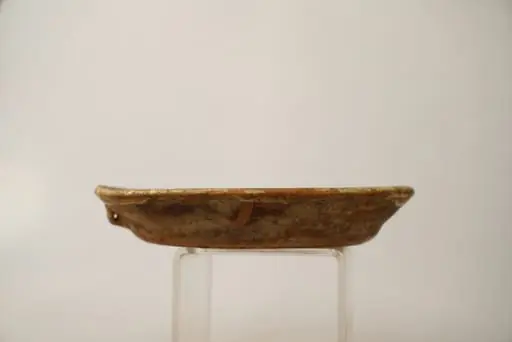 Farfurie semi-adâncă, cu buza evazată și foarte ușor concavă spre interior și cu muchia buzei rotunjită; este modelată la roata olarului și angobată cu humă albă pe fața interioară. Decorul este pictat cu cornul și cu pensula și se compune din motive florale stilizate (registrul decorativ de pe fundul farfuriei conține o tulpină cu o floare de lalea cu două petale verzi și centrul format din linii hașurate intersectat, de culoare maro, și cu patru frunze de culoare galbenă; de o parte și de alta a florii de lalea este pictată câte o floare cu petale rotunde în culorile maro, galben, verde și cu centrul format din linii hașurate intersectat, de culoare maro) și motive decorative geometrice (cinci grupuri, inegale ca lungime, formate din linii paralele drepte, de culoare maro, intercalate cu cinci grupuri de câte 2-3 linii maro sub formă de semicercuri umplute cu culorile galben și verde), dispuse pe buza farfuriei și încadrate de linii paralele sub formă de cerc, de culoare maro. Două grupuri de linii maro paralele, crescătoare și descrescătoare ca mărime, dispuse sub formă de triunghi, completează decorul central de pe fundul farfuriei. Piesa este acoperită pe suprafața ornamentată cu un strat de smalț transparent. Cromatica: alb, verde, maro, galben.
 Tema icoanei face parte din ciclul Pascal și înfățișează Pogorârea la Iad a Domnului. În plan central apare reprezentat biruitor Iisus Hristos, ținând în mâna stângă un steag cu cruce, iar cu dreapta îl prinde pe Adam. În dreapta lui Hristos e pictat sfântul Ioan Botezătorul, arătând cu mâna dreaptă spre Mântuitorul. Compoziția e încadrată în partea superioară cu un brâu ornat cu motivul torsadei. Cromatica icoanei se compune din tonuri de roșu vermillon, alb, verde, albastru, maro și gri. Rama icoanei e profilată, băițuită și e formată din îmbinarea a patru baghete de lemn. Sticla este spartă, iar din suport lipsește colțul din stânga-sus și colțul din dreapta-jos.