Artwork
Ecorche drawing of a dog
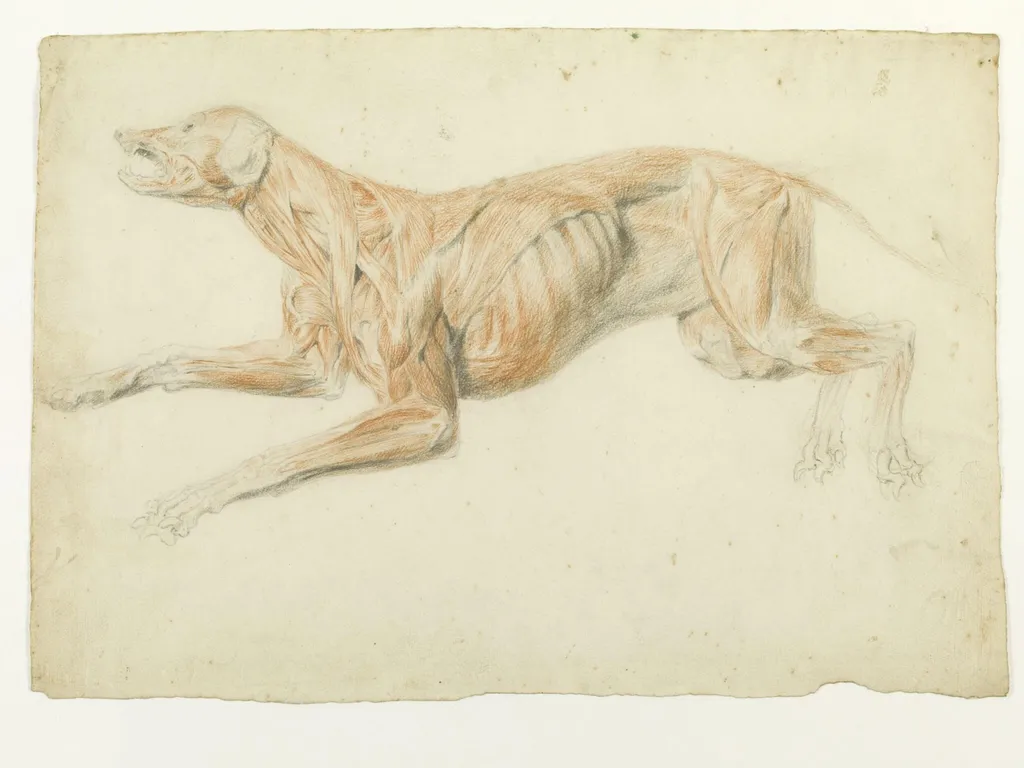
Ecorche drawing of a dog is a drawing by the Romanticist artist Thomas Landseer. It dates from 1816 and is held in the collection of the Victoria and Albert Museum.
About this work
Overview
This drawing depicts a skinned, or écorché, representation of a dog, rendered in pencil by Thomas Landseer (c.1793‑1880). Executed during his student years, it forms part of a trio of similar studies held by the Victoria & Albert Museum.
Subject & Meaning
The work serves as a anatomical study, exposing the musculature of the canine form. By removing the skin, Landseer could examine and record the underlying structures, a practice common in 19th‑century scientific illustration.
Technique & Style
Created with fine drawing implements, the piece shows meticulous line work that delineates muscle groups and bone outlines. The precision reflects the academic training Landseer received, emphasizing accurate, observational rendering over decorative effect.
History & Provenance
Landseer produced the drawing while attending Benjamin Robert Haydon’s alternative art school, which prioritized anatomical training. The piece bears an inscription referencing Sir Charles Bell, indicating it was drawn during a dissection demonstration at Bell’s Soho premises, where animal cadavers were used due to the scarcity of human bodies.
Context
In the early 1800s, anatomical drawing was integral to art education, especially for students at Haydon’s school who sought to rival the Royal Academy. Landseer’s focus on animal anatomy complemented the curriculum’s reliance on animal dissections as proxies for human studies.
Artist & collection

Artist
Thomas Landseer was a British artist best known for his engravings and etchings, particularly those of paintings by his youngest brother Edwin Landseer.

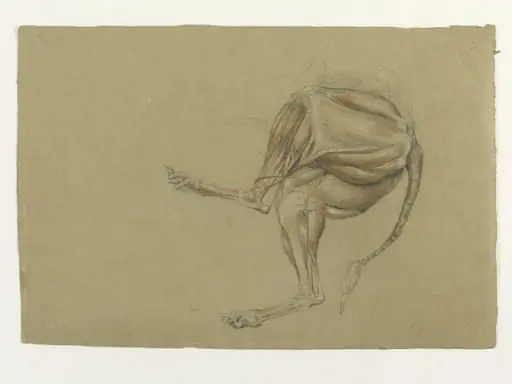
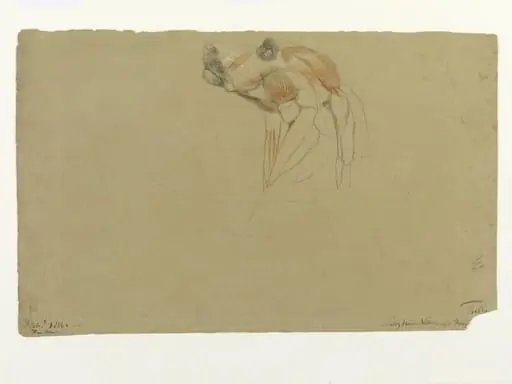
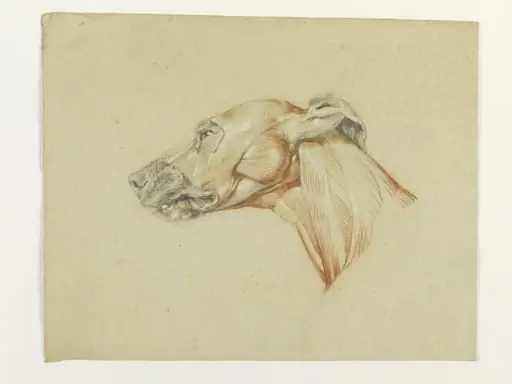 Ecorche drawing of the head of a greyhound
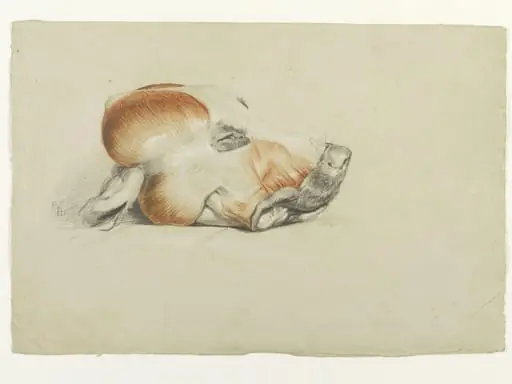 Ecorche drawing of the head of a dog
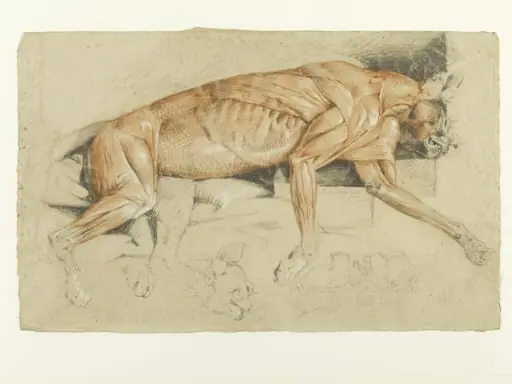 Ecorche drawing of a wild cat
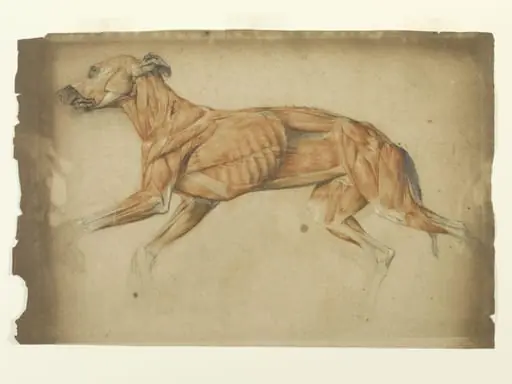 Ecorche drawing of a greyhound
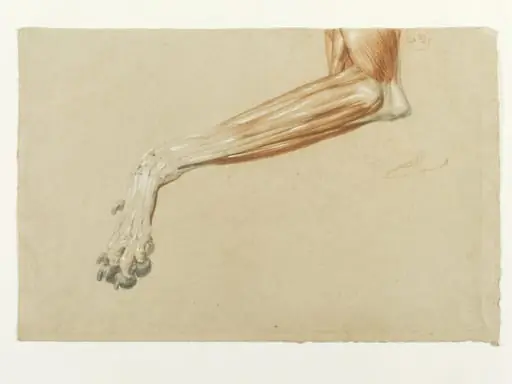 Ecorche drawing of a dog's leg
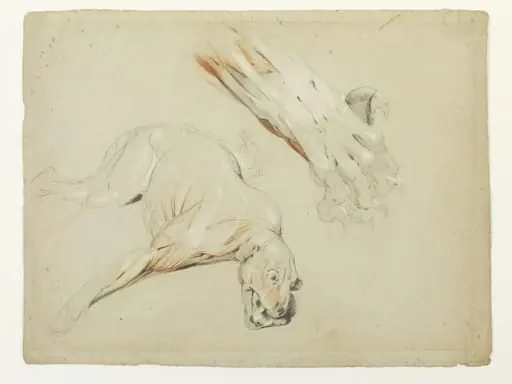 Ecorche drawing of a dog and enlarged detail of a paw
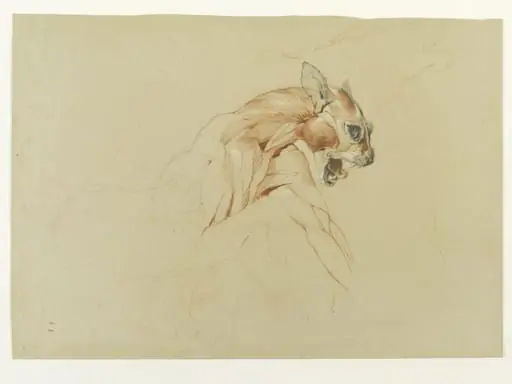 Ecorche drawing of the head and upper body of a wild cat
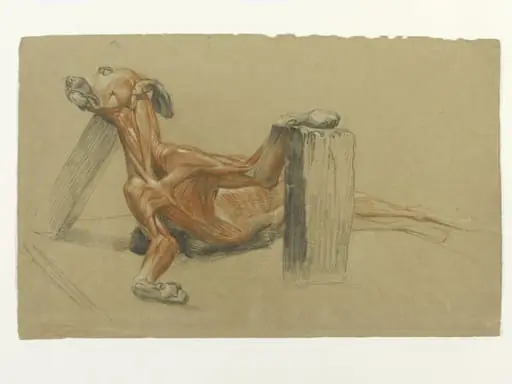 Ecorche drawing of a greyhound supported by planks