Artwork
Ecorche drawing of a wild cat
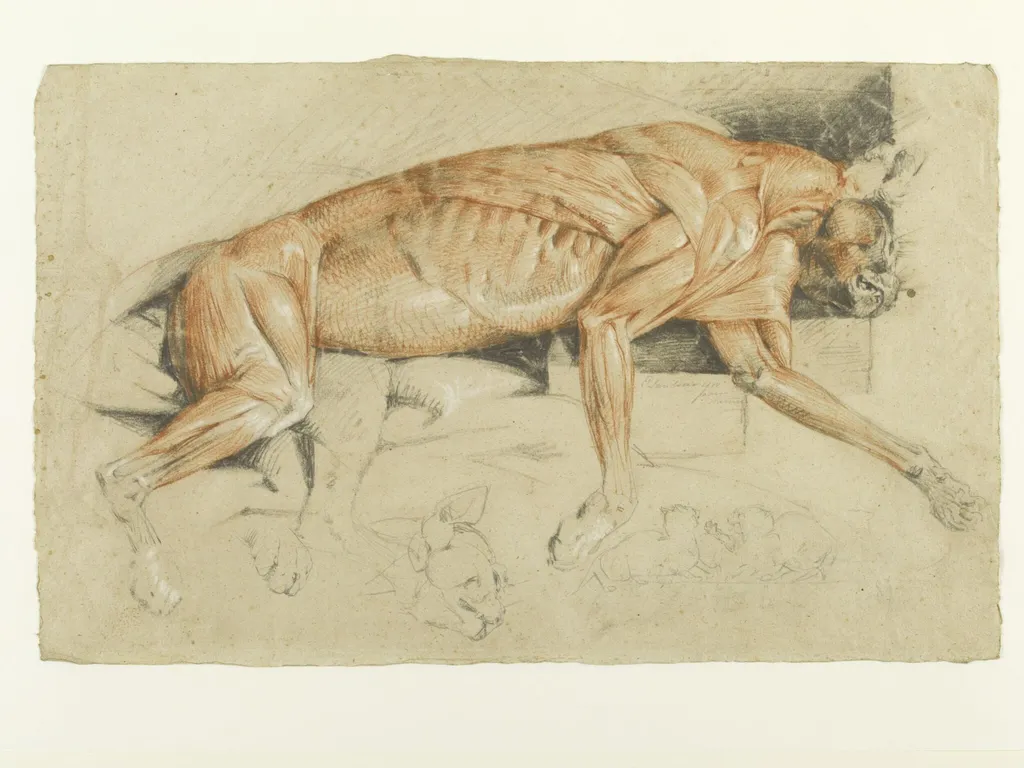
Ecorche drawing of a wild cat is a drawing by the Romanticist artist Edwin Landseer. It dates from 1817 and is held in the collection of the Victoria and Albert Museum. This drawing depicts an écorché wild cat, exposing its muscular structure beneath the skin.
About this work
Overview
This drawing depicts an écorché wild cat, exposing its muscular structure beneath the skin. Created by Edwin Landseer between 1817 and 1821, when the artist was in his teens, it demonstrates his early dedication to understanding animal anatomy through direct observation.
Subject & Meaning
The subject, a wild cat with its outer layer removed, illustrates Landseer's focus on anatomical accuracy. This approach, encouraged by his studies and mentors, laid the groundwork for his later career specializing in animal art.
Technique & Style
The drawing showcases Landseer's meticulous rendering of muscular and skeletal systems, reflecting his training under Sir Charles Bell and his practice of sketching from life, including visits to a menagerie in London.
History & Provenance
One of eight similar anatomical studies of dogs and cats by Landseer in the V&A collection, this work dates from his teenage years (1817-1821), highlighting an early period of intense anatomical study.
Context
Created during the Victorian era, this piece is part of Landseer's broader practice of combining artistic talent with scientific methodology, influenced by mentors like Benjamin Robert Haydon and surgeon Sir Charles Bell.
Legacy
While the drawing's direct legacy is not broadly documented, it represents a foundational step in Landseer's development as a prominent animal artist, known for his detailed and realistic depictions of animals.
Artist & collection

Artist
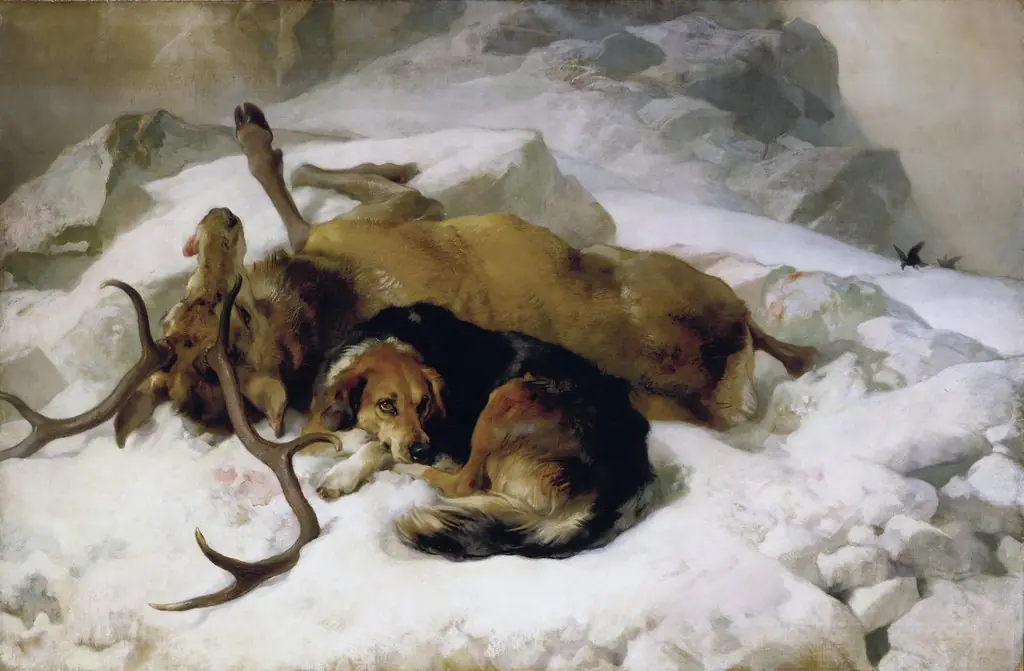
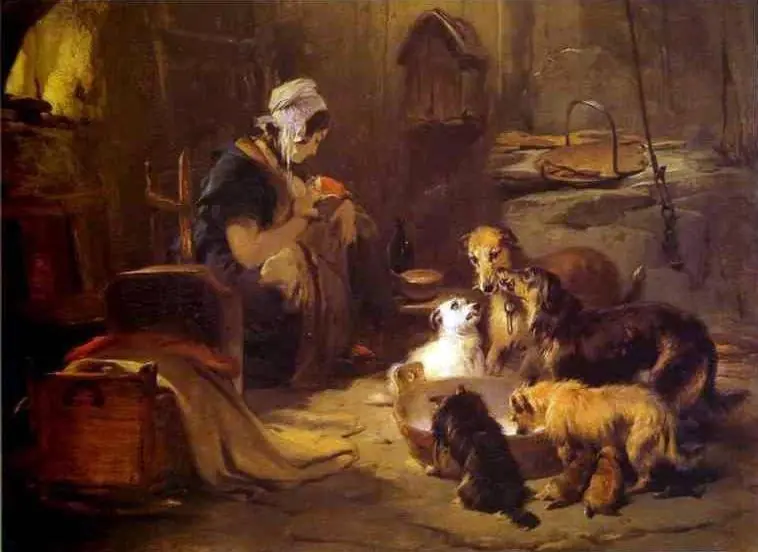
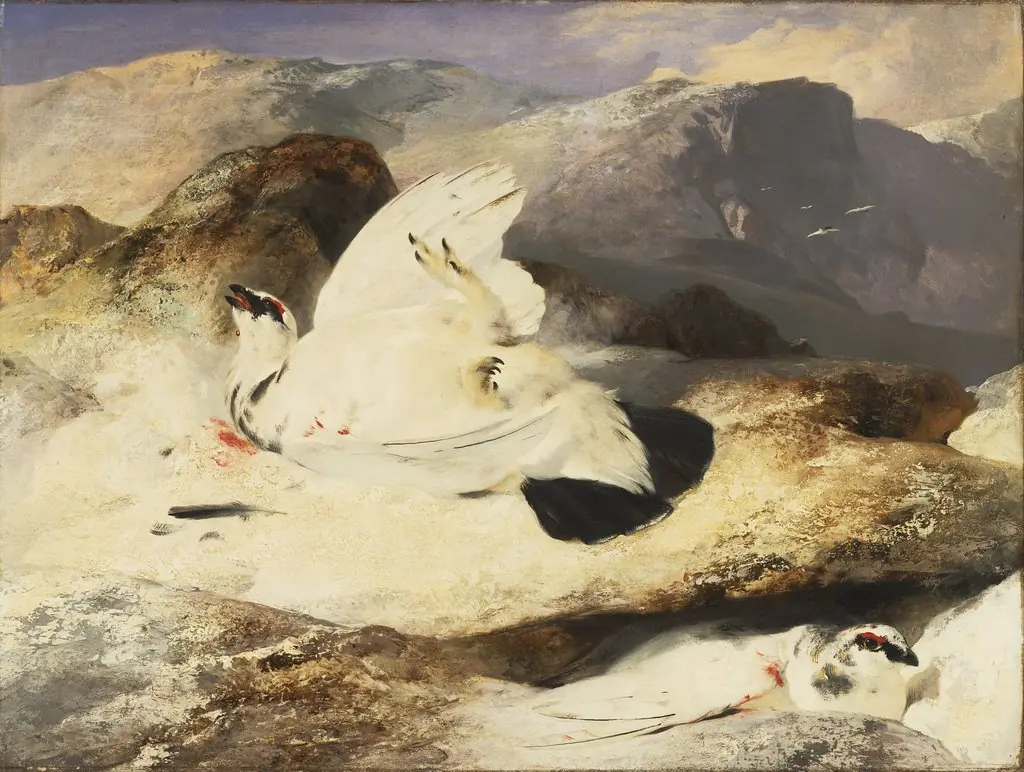
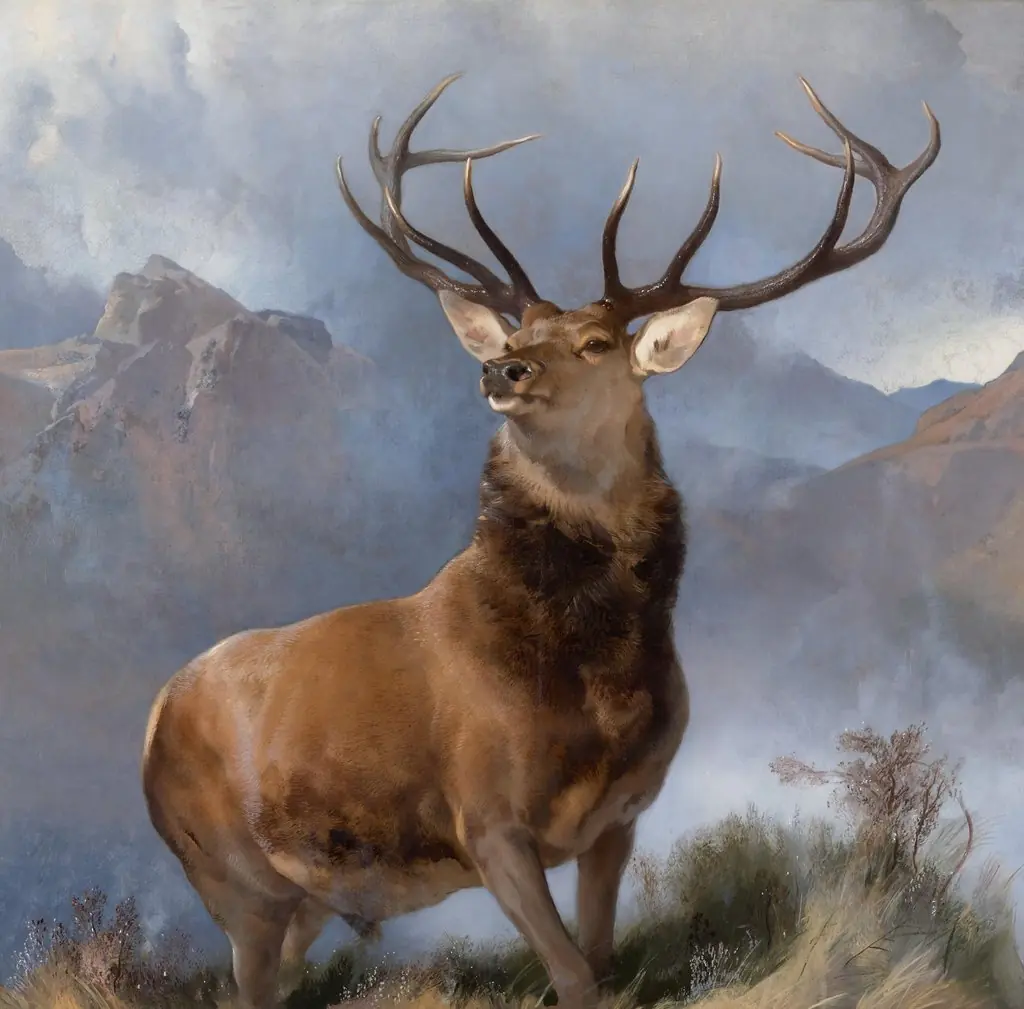
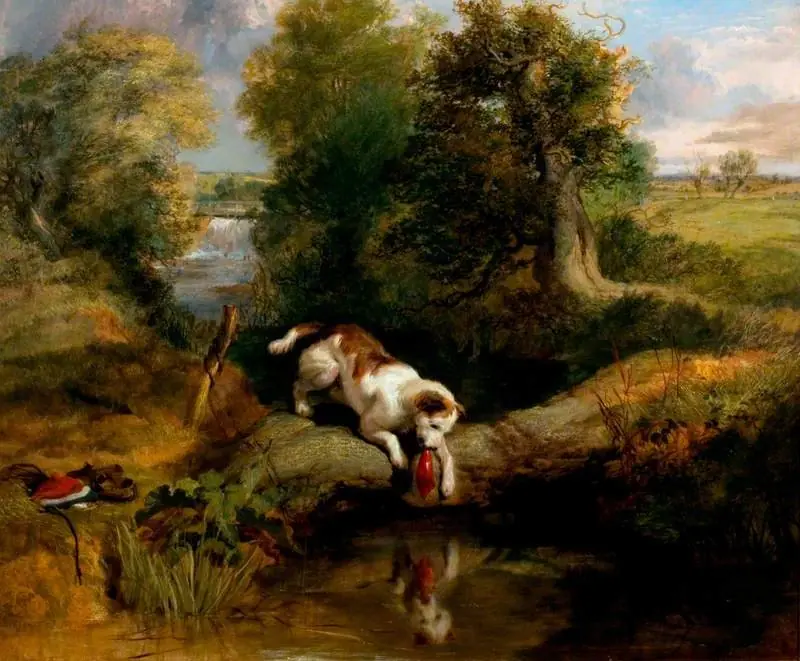
Sir Edwin Henry Landseer was an English painter and sculptor, well known for his paintings of animals – particularly horses, dogs, and stags. His best-known work is the lion sculptures at the base of Nelson's Column in Trafalgar Square.

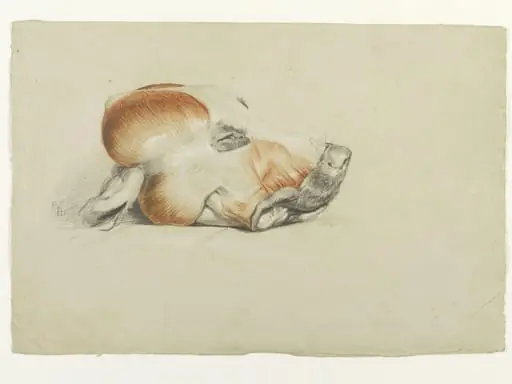 Ecorche drawing of the head of a dog
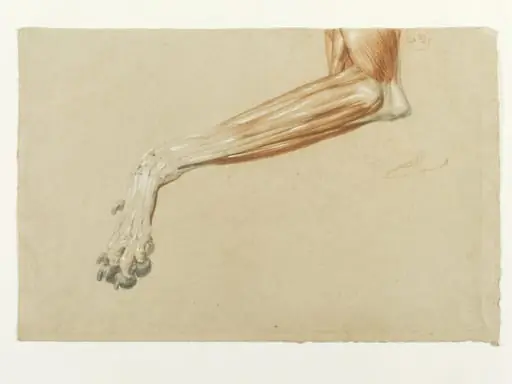 Ecorche drawing of a dog's leg
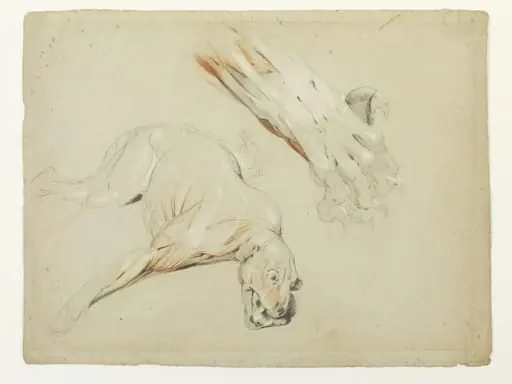 Ecorche drawing of a dog and enlarged detail of a paw
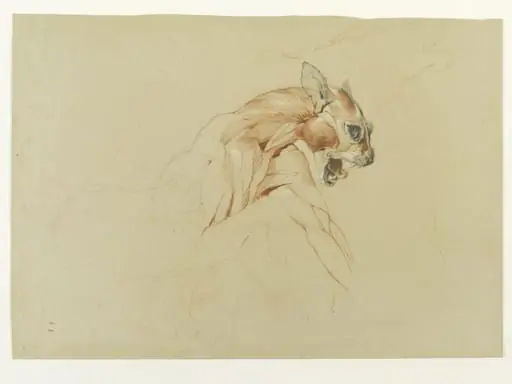 Ecorche drawing of the head and upper body of a wild cat
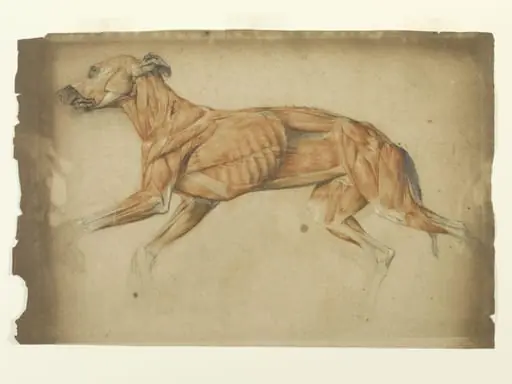 Ecorche drawing of a greyhound
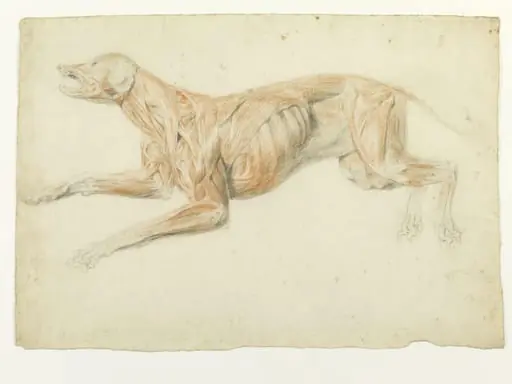 Ecorche drawing of a dog
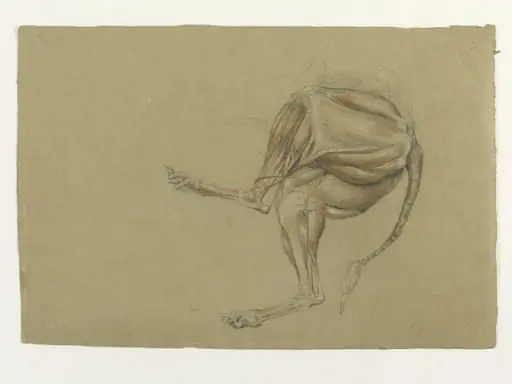 Ecorche drawing of the hind legs of a dog
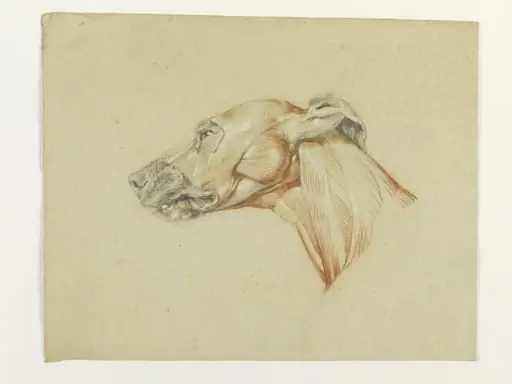 Ecorche drawing of the head of a greyhound
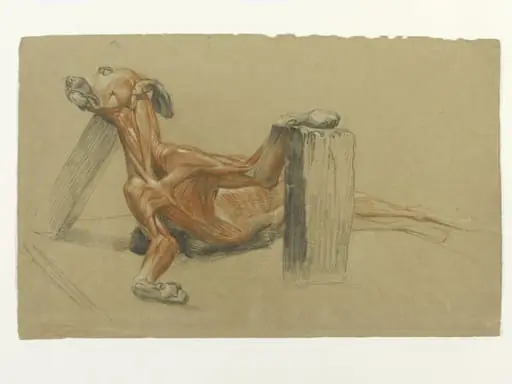 Ecorche drawing of a greyhound supported by planks
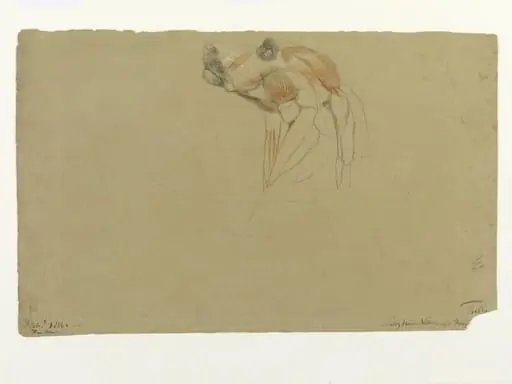 Ecorche drawing of the head of a dog